Heated baths / Guide
Bird Bath Depth, and the Stone Trick That Fixes It
A chickadee will not wade into three inches of water. Depth is the reason most decorative bird baths sit unused — and a handful of stones fixes it for a few dollars.
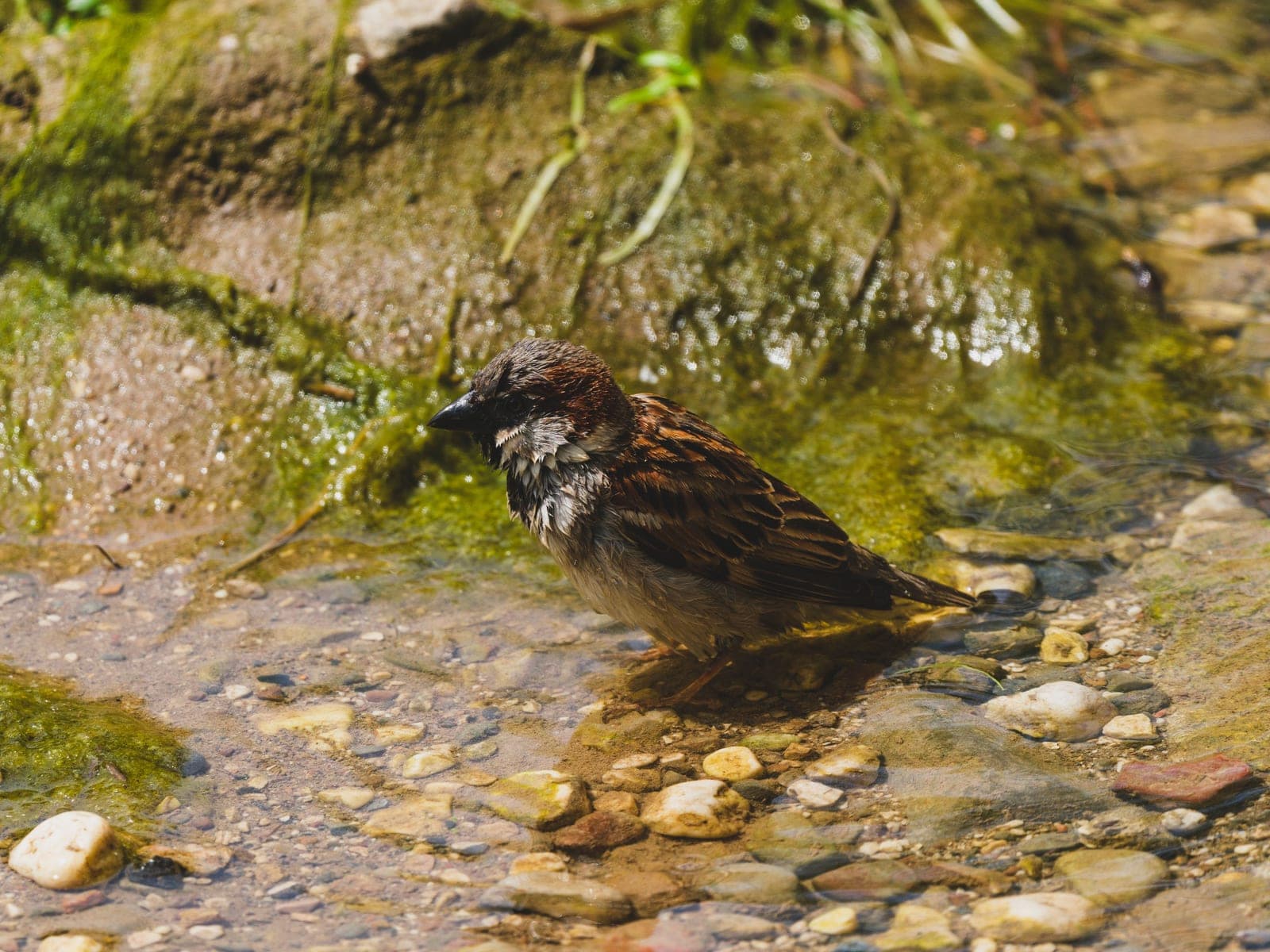
Aim for about an inch at the edge and no more than two inches in the middle. Most decorative baths are deeper than that, which is why birds ignore them. The fix costs almost nothing: a handful of smooth stones in the basin gives birds somewhere to stand, and it works in any bath you already own.
Winter Perch is funded by affiliate commission. If you buy through a link on this page we may earn a commission at no extra cost to you, and it never decides a ranking. Full disclosure · how we pick.
Quick picks
Ranked, with the trade-off named. Tap a row for the full write-up; the price button goes straight to Amazon.
| # | Product | Best for | Price |
|---|---|---|---|
| 1 |  NUPICK River Rocks, 2-3 in, 3 lbSold as a plant and vase filler, not as a bird product — and a handful of smooth 2-3 inch stones in a deep basin is the cheapest fix in this entire category. | Making a too-deep bath usable, for a few dollars | $9.99 · See it on Amazon |
| 2 |  Bleuhome Bird Bath Bowls, 12 in, 1.6 in deep, 2-packTwelve inches across and 1.6 inches deep, with the depth actually printed on the listing. That single number is the reason to buy these rather than guessing at a decorative basin. | A stated depth, which almost nothing else gives you | $14.99 · See it on Amazon |
| 3 |  Erva Ground-Level Bird BathA floor-standing bath at ground level, where most birds prefer to drink anyway. Shallow by design, which is the specification that decides whether small birds use a bath at all. | Shallow, and at the height birds actually drink | $41.99 · See it on Amazon |
| 4 | 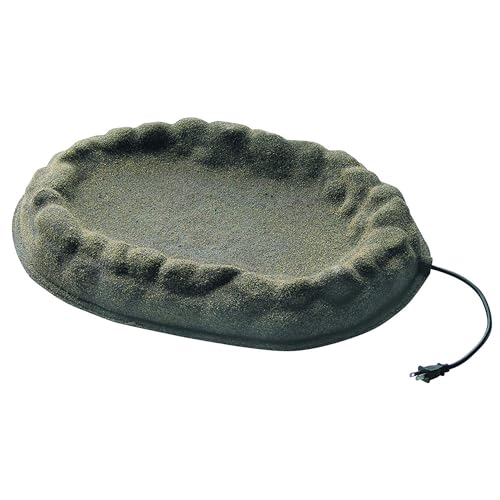 Farm Innovators Four Seasons Heated Bird Bath Tray, 70 WA shallow sand-coated tray at 70 W — the shallowest water here, which is exactly what small birds prefer and exactly what freezes first without an element. | A shallow tray that works as a summer bath too | $69.30 · See it on Amazon |
| 5 |  K&H Super Ice Eliminator Bird Bath De-Icer, 80 WThe 50 W unit with enough extra element to cope with a bigger basin and a colder night. If you are buying one de-icer without measuring anything, buy this one. | Most yards, most winters — the default de-icer | $28.91 · See it on Amazon |
#ad how we are funded · price as of September 21, 2026
The picks in full
Top pick Making a too-deep bath usable, for a few dollars
NUPICK River Rocks, 2-3 in, 3 lb
Sold as a plant and vase filler, not as a bird product — and a handful of smooth 2-3 inch stones in a deep basin is the cheapest fix in this entire category.
Specifications
- Size
- 2-3 in
- Weight
- 3 lb
- Sold as
- Plant and vase filler, not a bird product
Trade-offs
- Turns a basin that is too deep into one small birds will stand in, without buying a new bath
- Gives birds a grip on a slick glazed or concrete surface
- Larger stones also give insects and bees a place to land and drink without drowning
- Costs a fraction of any bath on this site
- Sold for vases and planters, so nothing about it is bird-specific — rinse before use
- Stones trap debris under them and make the weekly scrub slower
- In a heated bath, loose stones can sit against the element — check the maker's guidance before adding any
- Three pounds is a small bag; a wide basin may need two
Who it is forAnyone with a bath deeper than about two inches that birds are ignoring.
Skip it ifSkip it if your bath already has a stated shallow depth. Stones in a 1.5 inch basin leave nowhere to actually bathe.
#ad how we are funded · price as of September 21, 2026
Where these specs came from
No. 2 A stated depth, which almost nothing else gives you
Bleuhome Bird Bath Bowls, 12 in, 1.6 in deep, 2-pack
Twelve inches across and 1.6 inches deep, with the depth actually printed on the listing. That single number is the reason to buy these rather than guessing at a decorative basin.
Specifications
- Diameter
- 12 in
- Depth
- 1.6 in, as stated by the maker
- Quantity
- 2
Trade-offs
- A stated depth of 1.6 in is close to ideal — deep enough to bathe in, shallow enough not to frighten small birds
- Two bowls means one can be washed while the other is in use, which is what makes a weekly clean realistic
- Light and easy to tip, empty and refill, which is the winter routine
- Cheap enough to use as a ground dish, a deck dish or a replacement for a too-deep basin
- Plastic, and plastic bowls go brittle in hard frost — do not leave one to freeze solid with water in it
- No pedestal or mount; this is a bowl, and where it sits is your problem
- Not heated, and a shallow bowl freezes faster than a deep one because there is less water to cool
- Light enough to blow away empty
Who it is forReplacing a decorative bath that is too deep for the birds you actually have.
Skip it ifSkip it if you need the bath to survive a hard winter outdoors unattended. This is a bowl to bring in and refill, not a permanent installation.
#ad how we are funded · price as of September 21, 2026
No. 3 Shallow, and at the height birds actually drink
Erva Ground-Level Bird Bath
A floor-standing bath at ground level, where most birds prefer to drink anyway. Shallow by design, which is the specification that decides whether small birds use a bath at all.
Specifications
- Height
- Ground level, floor standing
- Maker
- Erva
Trade-offs
- Ground level is where juncos, doves, sparrows and towhees already feed and drink
- A shallow basin is usable by small birds without any stones added
- Erva build quality, and their metalwork holds up outdoors
- Nothing to tip over, which pedestal baths do in wind
- Ground level also means cat-accessible — site it in the open, away from cover
- Not heated; in a freeze it needs a de-icer or it simply freezes
- Leaves and debris reach a ground bath far faster than a pedestal one
- Harder to see from a window than a raised bath
Who it is forA yard with ground-feeding birds, and anyone whose pedestal bath is too deep to use.
Skip it ifSkip it if cats visit your yard and you have no open ground to place it in. A raised bath is the safer option there.
#ad how we are funded · price as of September 21, 2026
No. 4 A shallow tray that works as a summer bath too
Farm Innovators Four Seasons Heated Bird Bath Tray, 70 W
A shallow sand-coated tray at 70 W — the shallowest water here, which is exactly what small birds prefer and exactly what freezes first without an element.
Specifications
- Rated watts
- 70 W
- Profile
- Shallow tray
- Surface
- Sand-coated, non-slip
- Season
- Usable year round
Trade-offs
- Shallow water is what chickadees and finches will actually stand in
- Sand-coated surface gives grip on a wet rim
- 70 W published, and it earns its keep in summer as an ordinary bath
- Shallow means it evaporates fast in dry wind and needs topping up more often
- Low sides mean snow drifts straight into it
Wattage: 70 W
Farm Innovators states 70 watts for this tray. Shallow water loses heat faster per gallon than a deep basin, so a low wattage on a shallow tray works harder than the same number on a deep one.
At full draw for a four-month winter (120 days), plugged in around the clock: 70 W x 2880 h = 201.60 kWh, x $0.1834/kWh = $36.97 — $36.97 at $0.1834/kWh. A thermostatic unit will land under that.
Who it is forSmall-bird yards, and anyone who resents buying a thing that only works four months a year.
Skip it ifSkip it if you get real drifting snow. A shallow open tray fills with snow overnight and you will be clearing it every morning.
#ad how we are funded · price as of September 21, 2026
No. 5 Most yards, most winters — the default de-icer
K&H Super Ice Eliminator Bird Bath De-Icer, 80 W
The 50 W unit with enough extra element to cope with a bigger basin and a colder night. If you are buying one de-icer without measuring anything, buy this one.
Specifications
- Rated watts
- 80 W
- Form
- Submersible, natural rock shape
- Control
- Automatic
- Finish
- Paintable enamel
- Safety
- Safety listed for outdoor submersible use
Trade-offs
- 80 W is the sweet spot: enough for a 20-inch basin, well under a 150 W bath
- Automatic, so there is no switch to forget
- Same drop-in convenience as the 50 W, same paintable finish
- Works in the bath you already own, at any mount height
- 60 percent more draw than the 50 W for buyers with a small basin who did not need it
- Still a cord in the water
- The rock shape takes up basin space small birds could be standing in
Wattage: 80 W
K&H states 80 watts, and the listing is explicit that the unit is safety listed and automatic. Eighty watts holds a typical 16 to 20 inch basin open through a normal northern winter night.
At full draw for a four-month winter (120 days), plugged in around the clock: 80 W x 2880 h = 230.40 kWh, x $0.1834/kWh = $42.26 — $42.26 at $0.1834/kWh. A thermostatic unit will land under that.
Who it is forThe default buyer: an existing 16 to 20 inch bath, a normal northern winter, no interest in replacing the bath itself.
Skip it ifSkip it if your basin is under about 14 inches. The 50 W version does that job and costs less to run every single day of the winter.
#ad how we are funded · price as of September 21, 2026
Why depth decides whether a bath gets used
A bird bathing is a bird that cannot fly. Wet feathers are heavy and slow, and every small bird knows it — so they are extremely reluctant to enter water where they cannot feel the bottom and stand up.
A chickadee is about five inches long and stands maybe an inch and a half tall at the leg. Three inches of water is over its head. Even a robin, which is far bigger and a keen bather, wants to stand rather than swim. That is the whole mechanism: birds wade, they do not swim, and a basin deeper than their legs is a basin they will drink from at the rim at best.
The stone fix
If you already own a bath that is too deep — and most people do — you do not need a new one. A layer of smooth stones in the basin reduces the effective depth and gives birds a textured surface to grip.
- Use smooth, rounded stones, roughly two to three inches across. Large enough that they do not wash around, big enough to stand on.
- Cover the deep center, not the whole basin. Leave a shallow ring of open water at the edge for drinking.
- Rinse them first. Most river rock is sold as a plant or vase filler and arrives dusty.
- Texture matters as much as depth. A glazed or polished basin is slippery even when shallow; stones give grip.
- They help other things too. Bees and butterflies land on emergent stones to drink without drowning, which a smooth-sided basin does not allow.
Why this matters more in winter
In summer a too-deep bath is a wasted ornament. In winter it is worse than that.
A bird that gets thoroughly soaked in freezing weather is in real trouble: wet down loses its insulating loft, and the bird has to burn energy it may not have to dry out and rewarm. Birds manage this themselves by bathing briefly and carefully in cold weather, or by drinking without bathing at all — but a deep basin makes a careful approach harder and an accidental soaking more likely.
So the winter bath should be shallower than the summer one, and the stones matter more. What you want in January is a bird that can stand at the edge, drink, and leave dry. Open water is the single most valuable thing in a winter yard — but it has to be usable.
Depth and heating interact
Two practical points that only show up once an element is involved.
Shallow water freezes faster. There is less thermal mass, so a shallow basin loses heat quicker than a deep one — which is an argument for a slightly larger element in a shallow bath rather than for making the bath deeper.
Stones and heating elements need care together. Loose stones can sit directly against a submerged de-icer or a built-in element. Check the maker's guidance before adding any, keep stones clear of the element itself, and do not pack a heated basin so full that water cannot circulate. The de-icer roundup covers which units sit flat and which do not.
Buying for depth
- Look for a stated depth. Almost no decorative bath publishes one, and a listing that does is telling you the maker thought about birds.
- Prefer a sloped basin over a flat-bottomed one, so birds can choose their depth.
- Rough or textured surfaces beat glazed ones, whatever the depth.
- Ground-level baths are often the shallowest, and they suit the ground-feeding birds that make up a third of a winter yard.
- Width matters less than depth. A wide shallow dish is far better than a narrow deep one.
What we would skip
What we would skip
A deep decorative concrete bath
The classic pedestal bath is usually three inches or more of flat-bottomed water, which is over a chickadee's head. It also cracks when water freezes in it. If you own one, add stones; do not buy another.
Adding stones to an already-shallow basin
At one to one and a half inches there is nothing to fix, and stones just leave nowhere deep enough to actually bathe. Save the money.
Sharp or angular gravel
Birds stand on these with bare feet. Smooth, rounded river stone is what you want, and small sharp gravel also washes around and blocks drainage.
Packing a heated bath full of stones
Loose stones against a heating element is not what the element was designed for, and a basin packed solid stops water circulating. Check the maker's guidance and keep stones clear of the element.
A glazed or polished basin without stones
Slippery underfoot even at the right depth. Birds need grip as much as they need shallow water, and texture is the other half of the problem.
Where this fits
Depth is the cheapest improvement available in this category and the one nobody sells you. Once the basin is right, a heated bath or de-icer is what keeps it usable in a freeze, cleaning it weekly is what keeps it safe, and a water wiggler is what stops mosquitoes in the other eight months.
Questions people actually ask
- How deep should a bird bath be?
- About one inch at the edges, sloping to no more than two inches in the middle. Birds wade rather than swim, so water deeper than their legs goes unused by everything except the largest species.
- Why do birds ignore my bird bath?
- Depth is the most common reason. Most decorative baths are three inches or more of flat-bottomed water, which is over a small bird's head. Add smooth stones to the center and watch what changes.
- What kind of rocks do you put in a bird bath?
- Smooth, rounded river stones roughly two to three inches across — large enough not to wash around and big enough to stand on. Rinse them before use, and avoid sharp gravel.
- Should a winter bird bath be shallower than a summer one?
- Yes. A bird soaked in freezing weather loses the insulating loft of its down and has to burn energy to rewarm. A shallow basin lets birds drink and leave dry, which is what they need most in January.
- Can I put stones in a heated bird bath?
- Carefully. Keep stones clear of the element itself, do not pack the basin so full that water cannot circulate, and check the maker's guidance first — loose stones against a submerged de-icer are not what it was designed for.
- Does a shallow bird bath freeze faster?
- Yes, because there is less water to hold heat. That is an argument for a slightly larger heating element in a shallow bath rather than for making the bath deeper than birds will use.
Sources
Read next
- The Best Heated Bird Baths for Winter
Nine complete heated baths ranked on published wattage, basin size and mount type, with running cost computed for each.
- Heated Bird Bath vs De-Icer: Which One You Need
Complete heated bath or drop-in de-icer? The decision in one table, plus the concrete-basin case that changes the answer.
- Bird Bath Water Wigglers: What They Actually Do
Wigglers agitate water to stop mosquitoes. They do not heat it and will not keep a bath open in a freeze — here is what each product is genuinely for.
- Cleaning Bird Feeders and Baths in Winter
The winter cleaning schedule, the bleach-versus-enzyme question answered plainly, and the brushes and cleaners that make the job quick enough to actually do.