Heated bird baths / Comparison
Heated Bird Bath vs De-Icer: Which One You Need
This is the first decision in the category and the one most buying guides skip. It comes down to one question: do you already own a bath you like?

Own a bath you like? Buy a de-icer. It costs less, draws less power, and reuses a basin that already suits your yard — the 80 W K&H is the default choice and the one we reviewed in full. No bath, or a concrete one? Buy a complete heated bath. Concrete absorbs water into the material and spalls in a freeze, which no de-icer prevents.
The decision in one table
| Drop-in de-icer | Complete heated bath | |
|---|---|---|
| What you buy | An element only | Basin, element, thermostat and mount |
| Typical rated draw | 50-80 W for a normal basin | 60-150 W |
| Cost to run, 120-day winter at full draw | About $26-42 | About $32-79 |
| Uses your existing bath | Yes, that is the point | No, it replaces it |
| Cord routing | Improvised over the rim | Designed into the product |
| Works with concrete basins | Partially — the element does its job, the stone still spalls | N/A, the basin is plastic or metal |
| Looks like | A rock with a cable | A bird bath |
| Cheapest correct answer for | Most people | Anyone starting from nothing |
Buy a de-icer if...
- You already own a bath in plastic, resin, glazed ceramic or metal and you like where it sits.
- You want the lowest possible running cost. A 50 W element is the smallest published draw in this whole category.
- You are testing whether winter water is worth doing at all. This is the low-commitment way in.
- Your basin is an odd shape or size that no complete heated bath would replicate.
Buy a complete heated bath if...
- You do not own a bird bath. Buying a basin and separately buying an element to put in it costs more than buying them together.
- Your existing bath is concrete or unglazed ceramic. This is the case that flips the answer, and it is worth understanding properly.
- You want the cord routed rather than draped — most complete baths put the electrical connection under the basin.
- You need a specific mount. Deck-rail brackets, clamps and ground cradles come as part of the bath, not as a de-icer accessory.
The concrete problem
Concrete and unglazed ceramic are porous. They take water into the material itself, not just into the bowl. A de-icer keeps the water in the bowl liquid; it cannot keep water that is already inside the stone from freezing when the power fails or the temperature drops far enough. That water expands, and the surface spalls or the basin cracks through.
This is why concrete bird baths are traditionally emptied and turned over for the winter. If you want to keep one in service, a de-icer improves your odds and does not eliminate the risk. A plastic or metal heated bath eliminates it, and the concrete one can sit out the season upside down as it was designed to.
The case where both are wrong
If you have no outdoor socket within a sensible cord run, neither product works, and the honest answer is that nothing works nearly as well. Solar does not heat water, and the no-electricity methods are all partial. Getting an outdoor GFCI socket installed is a real answer that this category tends not to mention because it cannot be shipped in a box.
What we would buy, either way
Winter Perch is funded by affiliate commission. If you buy through a link on this page we may earn a commission at no extra cost to you, and it never decides a ranking. Full disclosure · how we pick.
Quick picks
Ranked, with the trade-off named. Tap a row for the full write-up; the price button goes straight to Amazon.
| # | Product | Best for | Price |
|---|---|---|---|
| 1 |  K&H Super Ice Eliminator Bird Bath De-Icer, 80 WThe 50 W unit with enough extra element to cope with a bigger basin and a colder night. If you are buying one de-icer without measuring anything, buy this one. | Most yards, most winters — the default de-icer | $28.91 · See it on Amazon |
| 2 |  Farm Innovators HBI-150 Heated Birdbath, 150 WThe one heated bath in this category whose maker puts the wattage on the listing, and it is also the easiest one to lift off and clean. | Deck rails, and anyone who wants a published wattage | $84.99 · See it on Amazon |
| 3 | 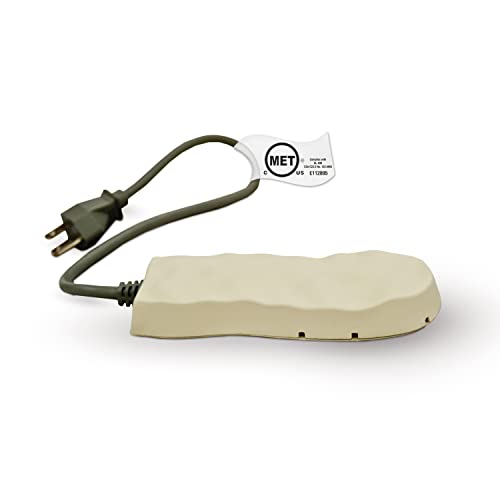 K&H Ice Eliminator Original Birdbath De-Icer, 50 WFifty watts is the smallest published draw of anything here, and it is a rock-shaped lump you drop into the bath you already own. For most people this is the cheapest correct answer. | The lowest running cost on the site | $24.99 · See it on Amazon |
| 4 |  Erva BA1H Clamp-Mount Heated Bird Bath, 14", 60 WSixty watts, a clamp that grips a rail or a post, and published thermostat set points. The most honest spec sheet in the category. | The lowest published draw of any complete heated bath here | Check price on Amazon |
#ad how we are funded · price as of October 15, 2026
The picks in full
Top pick Most yards, most winters — the default de-icer
K&H Super Ice Eliminator Bird Bath De-Icer, 80 W
The 50 W unit with enough extra element to cope with a bigger basin and a colder night. If you are buying one de-icer without measuring anything, buy this one.
Specifications
- Rated watts
- 80 W
- Form
- Submersible, natural rock shape
- Control
- Automatic
- Finish
- Paintable enamel
- Safety
- Safety listed for outdoor submersible use
Trade-offs
- 80 W is the sweet spot: enough for a 20-inch basin, well under a 150 W bath
- Automatic, so there is no switch to forget
- Same drop-in convenience as the 50 W, same paintable finish
- Works in the bath you already own, at any mount height
- 60 percent more draw than the 50 W for buyers with a small basin who did not need it
- Still a cord in the water
- The rock shape takes up basin space small birds could be standing in
Wattage: 80 W
K&H states 80 watts, and the listing is explicit that the unit is safety listed and automatic. Eighty watts holds a typical 16 to 20 inch basin open through a normal northern winter night.
At full draw for a four-month winter (120 days), plugged in around the clock: 80 W x 2880 h = 230.40 kWh, x $0.1834/kWh = $42.26 — $42.26 at $0.1834/kWh. A thermostatic unit will land under that.
Who it is forThe default buyer: an existing 16 to 20 inch bath, a normal northern winter, no interest in replacing the bath itself.
Skip it ifSkip it if your basin is under about 14 inches. The 50 W version does that job and costs less to run every single day of the winter.
#ad how we are funded · price as of October 15, 2026
No. 2 Deck rails, and anyone who wants a published wattage
Farm Innovators HBI-150 Heated Birdbath, 150 W
The one heated bath in this category whose maker puts the wattage on the listing, and it is also the easiest one to lift off and clean.
Specifications
- Rated watts
- 150 W
- Water capacity
- 1.5 gallons
- Dimensions
- 5" x 20" x 25"
- Weight
- 5.25 lb
- Mount
- Twist deck mount, hidden electrical connection
- Thermostat
- Internal
Trade-offs
- Publishes a rated wattage, which most of this category does not
- Twist-off dish lifts straight off to dump, scrub and refill
- The electrical connection sits under the dish, so the cord is not draped over your rail
- 1.5 gallons is a real reservoir, not a puddle that boils off in a dry wind
- 150 W is the top of the range here — the K&H de-icer draws a third of that
- Plastic, so it looks like equipment rather than garden furniture
- Deck-mount only; there is no pedestal version of this model
Wattage: 150 W
Farm Innovators states 150 watts, with an internal thermostat so the element only draws when the water is near freezing. At 150 W it is the highest rated draw of any complete bath here, and the thermostat is why that ceiling is rarely the real bill.
At full draw for a four-month winter (120 days), plugged in around the clock: 150 W x 2880 h = 432.00 kWh, x $0.1834/kWh = $79.23 — $79.23 at $0.1834/kWh. A thermostatic unit will land under that.
Who it is forThe established feeder owner adding water to a deck rail they can already reach from an outdoor socket.
Skip it ifSkip it if your bath already exists and you like it. A 50 W de-icer dropped into the bath you own does the same job for less power and less money.
#ad how we are funded · price as of October 15, 2026
No. 3 The lowest running cost on the site
K&H Ice Eliminator Original Birdbath De-Icer, 50 W
Fifty watts is the smallest published draw of anything here, and it is a rock-shaped lump you drop into the bath you already own. For most people this is the cheapest correct answer.
Specifications
- Rated watts
- 50 W
- Form
- Submersible rock-shaped housing
- Safety listing
- Tested and certified by MET Labs
- Finish
- Paintable — spray to match your basin
- Control
- Automatic
Trade-offs
- 50 W is the lowest published draw on this site
- Uses the bath you already own, so the whole purchase is the element
- Solid housing is weighted to stay put instead of floating out
- Paintable, so it stops looking like a gray lump in a stone bowl
- 50 W will not hold a large, deep or wind-exposed basin open in a hard freeze
- It is a cord in your bath water, which some people simply do not want to look at
- No published thermostat set points
Wattage: 50 W
K&H states 50 watts. That is the difference, at the cited EIA rate and at full draw for a four-month winter, between roughly twenty-six dollars and roughly a hundred and thirty — and no thermostatic de-icer runs at full draw all winter.
At full draw for a four-month winter (120 days), plugged in around the clock: 50 W x 2880 h = 144.00 kWh, x $0.1834/kWh = $26.41 — $26.41 at $0.1834/kWh. A thermostatic unit will land under that.
Who it is forAnyone who already owns a bath they like and wants water in it in December for the least money and the least power.
Skip it ifSkip it if your bath is wide, deep, or sits in open wind, or if you are routinely below about 10 F. Step up to the 80 W Super or an API de-icer.
#ad how we are funded · price as of October 15, 2026
No. 4 The lowest published draw of any complete heated bath here
Erva BA1H Clamp-Mount Heated Bird Bath, 14", 60 W
Sixty watts, a clamp that grips a rail or a post, and published thermostat set points. The most honest spec sheet in the category.
Specifications
- Rated watts
- 60 W
- Basin diameter
- 14"
- Thermostat
- On near 38 F, off near 65 F
- Mount
- Clamp — rail, post or 4x4
- Build
- Insulated, fire retardant, BPA-safe dish
- Warranty
- 1 year
Trade-offs
- 60 W published — under half the Farm Innovators' rated draw
- Publishes the thermostat set points, which is the number that actually predicts your bill
- Clamp mount fits things a bracket will not: fence posts, deck posts, 4x4s
- Insulated body, so more of the heat goes into the water
- 14" basin is the smallest complete bath here — a crowd will not fit
- Clamp mounts need a solid edge; they do not work on a wide flat cap rail
- Made-in-USA metalwork prices accordingly
Wattage: 60 W
Erva states 60 watts and — unusually — publishes the thermostat set points as well: on at about 38 F, off at about 65 F. That second figure is what tells you the element is not running all winter, and almost nobody else prints it.
At full draw for a four-month winter (120 days), plugged in around the clock: 60 W x 2880 h = 172.80 kWh, x $0.1834/kWh = $31.69 — $31.69 at $0.1834/kWh. A thermostatic unit will land under that.
Who it is forAnyone who cares what the thing costs to run and would rather have a small bath that draws 60 W than a big one that draws 150 W.
Skip it ifSkip it if your yard regularly has five birds queuing. Fourteen inches is a two-bird bath, and a robin will monopolize it.
#ad how we are funded · price as of October 15, 2026
What we would skip
What we would skip
Buying both
A de-icer in a heated bath is redundant — the bath already has an element sized to its own basin, and adding a second one doubles your draw for water that is already open.
A de-icer as a rescue for a concrete bath you care about
It reduces the risk rather than removing it, and a decorative concrete bath is exactly the thing people are most upset to lose. Turn it over for the winter and run a plastic or metal bath instead.
How we picked
- Published rated wattage on both sides, so the running-cost comparison is like for like.
- Total purchase cost, not element cost — a de-icer is only cheaper if you already own the basin.
- Material behavior in freeze-thaw, which is what decides the concrete case.
- Cord routing and mount, the practical constraints that actually determine where the water can go.
We have not tested any of these. What we did instead: read the manufacturers’ own listings, compiled the published specifications, computed the running cost at a cited electricity rate, and refreshed the prices daily. The full method is published.
Full rankings: the de-icer roundup and the heated bath roundup. Whichever you choose, the running cost is published in full, and the water only does its job alongside winter food.
Questions people actually ask
- Is a heated bird bath better than a de-icer?
- Only if you do not already own a bath, or the one you own is concrete. Otherwise a de-icer does the same job for less money and less power, in a basin that already suits your yard.
- Can I put a de-icer in a concrete bird bath?
- You can, and it will keep the water liquid. It will not stop water absorbed into the concrete from freezing and spalling the surface if the power fails or it gets cold enough. Concrete baths are the main reason to buy a complete heated bath instead.
- Which is cheaper to run?
- The de-icer, generally, because the low-wattage de-icers start at 50 W where the complete baths start at 60 W and reach 150 W. The gap over a four-month winter is real but modest — tens of dollars, not hundreds.
- Do I need to take the de-icer out in summer?
- Yes, take it out and store it dry. It will not switch on above freezing, but leaving a cord in a summer bath is unnecessary and shortens the life of the seal.
Sources
Read next
- The Best Heated Bird Baths for Winter
Nine complete heated baths ranked on published wattage, basin size and mount type, with running cost computed for each.
- The Best Bird Bath De-Icers
Five drop-in de-icers from 50 W to 250 W, matched to basin size, with the running cost worked out for each.
- What a Heated Bird Bath Actually Costs to Run
Watts to kilowatt-hours to dollars, at the current US average residential rate — the table nobody else in this category publishes.
- What to Feed Birds in Winter
The winter list ordered by fat content, what each food reaches, and the two purchases that cover almost everything.