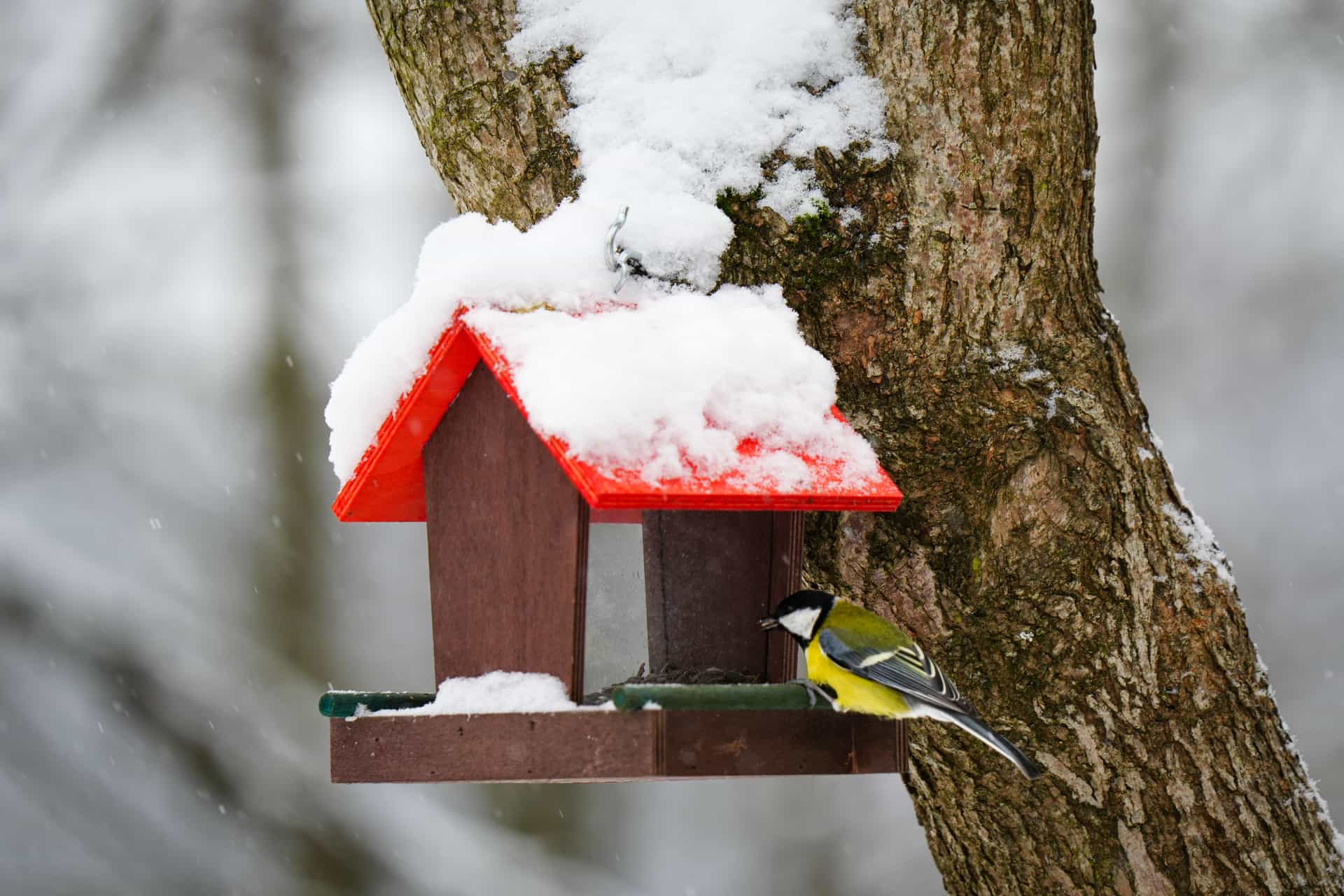
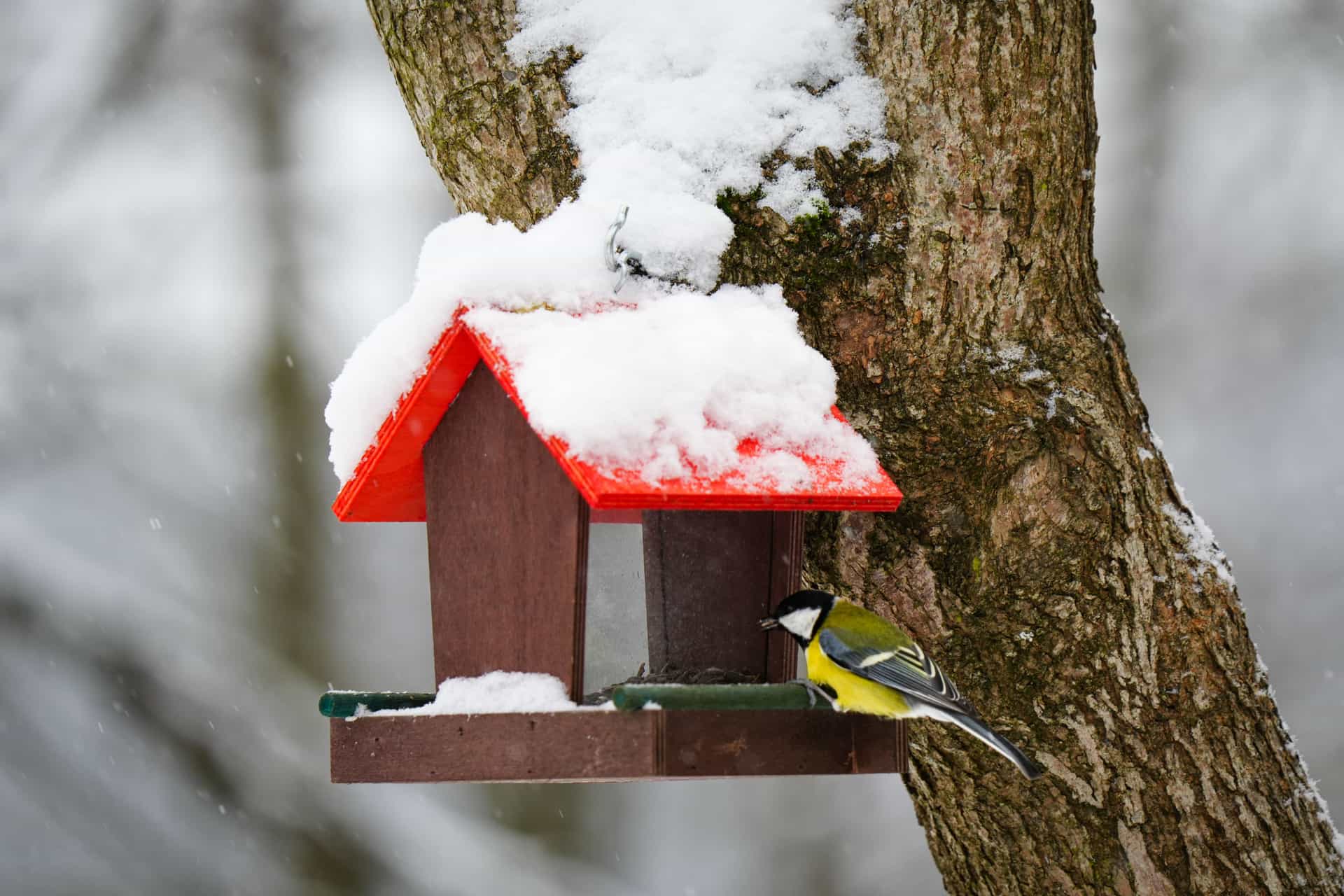
Winter changes what a feeder has to do. It has to hold enough food that you are not refilling in a blizzard, keep snow off the food, drain meltwater instead of pooling it, and exclude whichever animal is eating your budget. Capacity, a roof, and drainage are the three specs that matter, and none of them appear in most product photography.
Suet hardware: three shapes, one decision
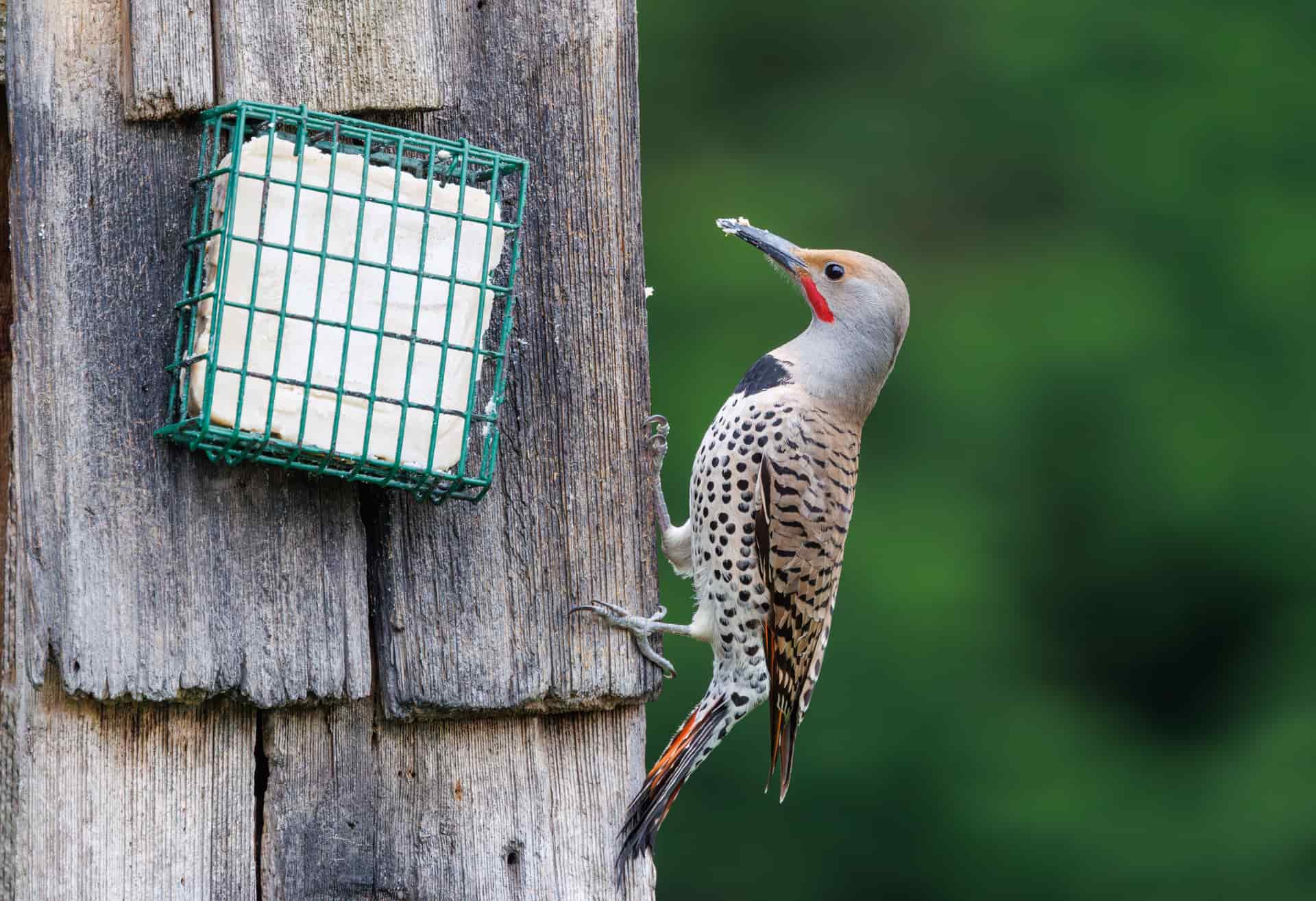
A suet cage is a wire box that holds a standard cake. The variations are about who gets to eat from it.
- Tail-prop cages extend a flat panel below the cage so woodpeckers can brace on their tail feathers. That prop genuinely changes which species will settle. Open to everything, including starlings.
- Upside-down cages face the cake downward so a bird must hang beneath it. Woodpeckers, nuthatches and chickadees do that happily; starlings and grackles largely will not. No mechanism, nothing to freeze. The comparison is here.
- Weight-activated feeders close a shroud when something heavy climbs on. The only thing that reliably beats a committed squirrel, and the most expensive option by a distance.
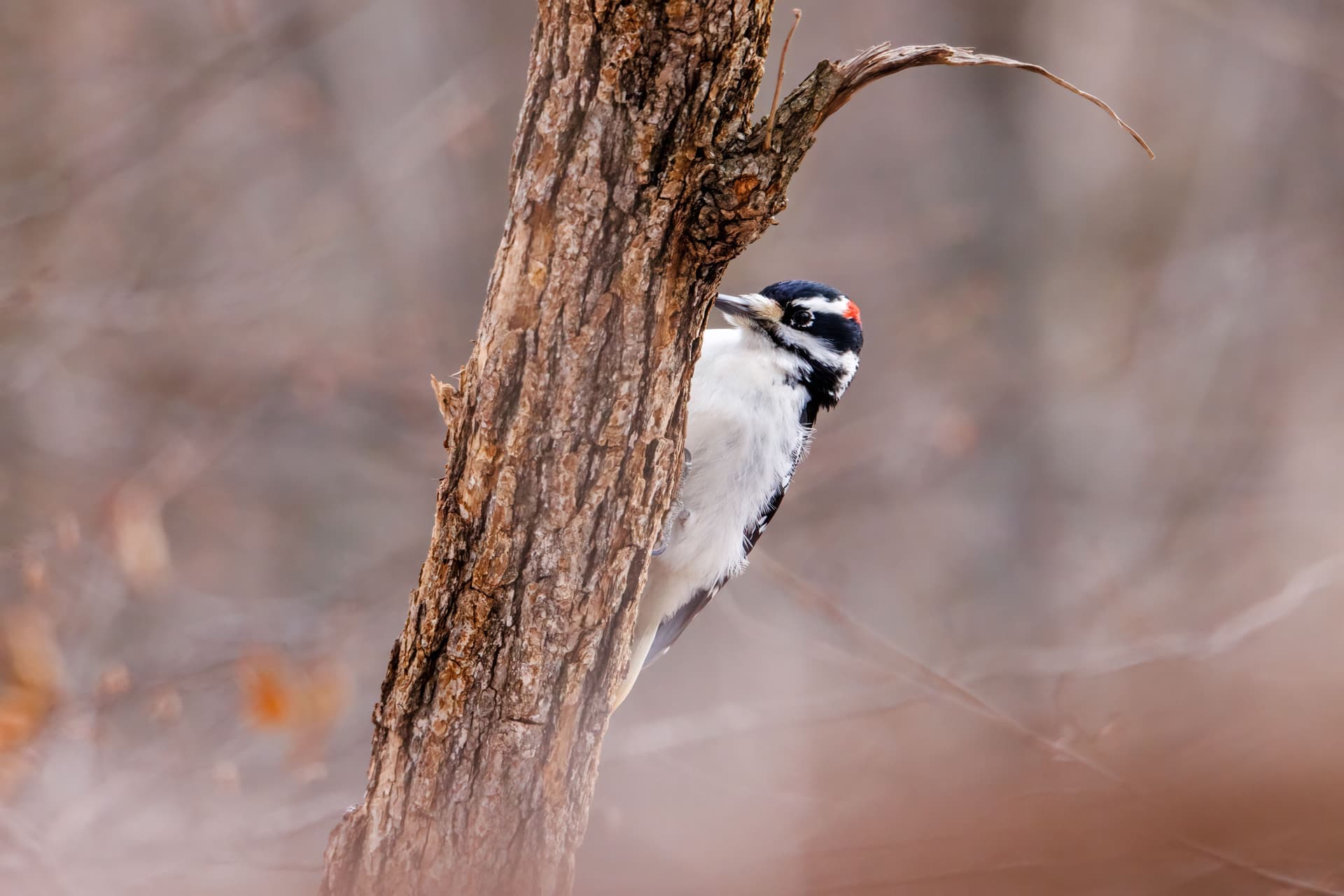
Start at the suet feeder roundup. If woodpeckers are the point, the woodpecker page narrows it further.
Seed hardware: capacity is the winter spec
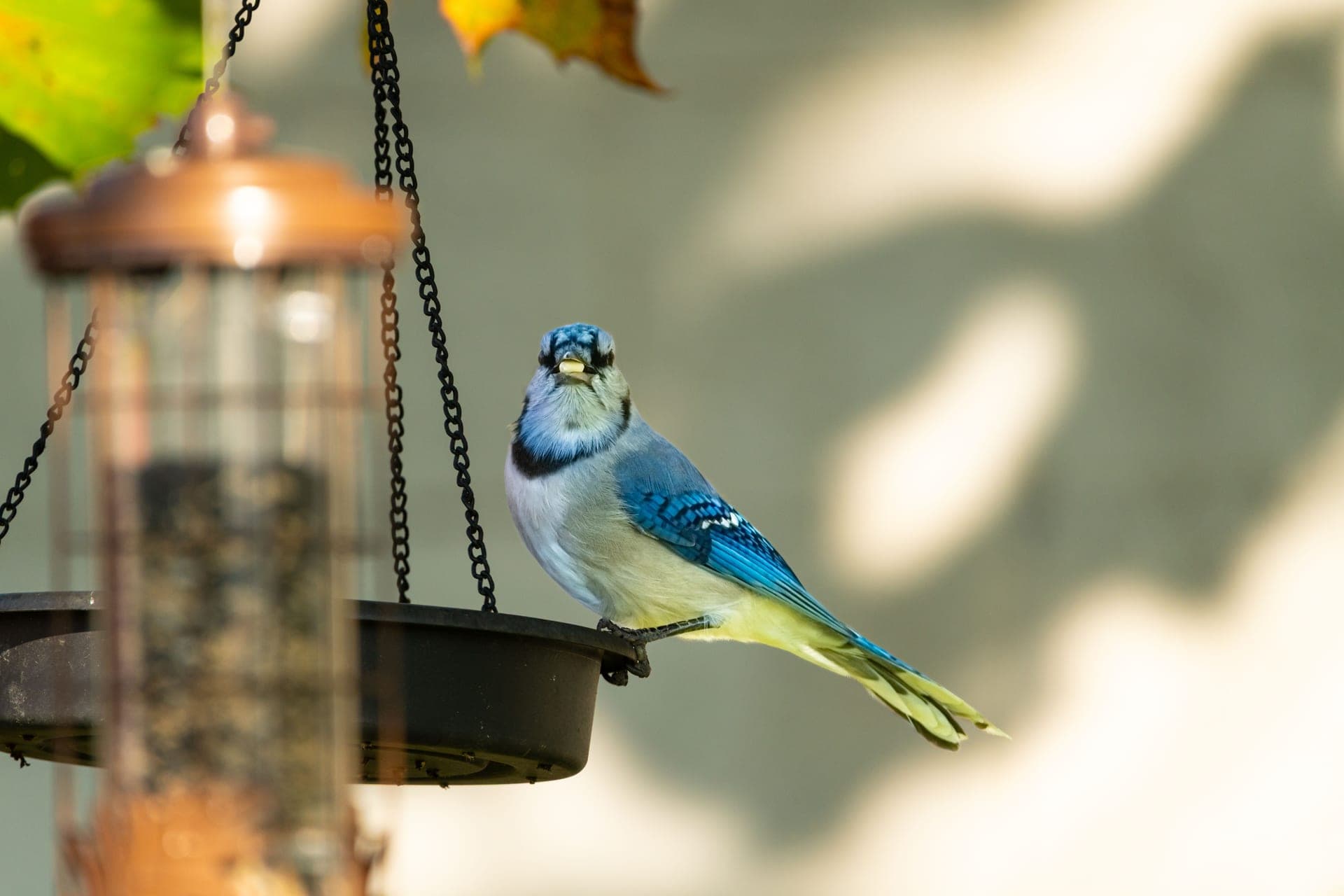
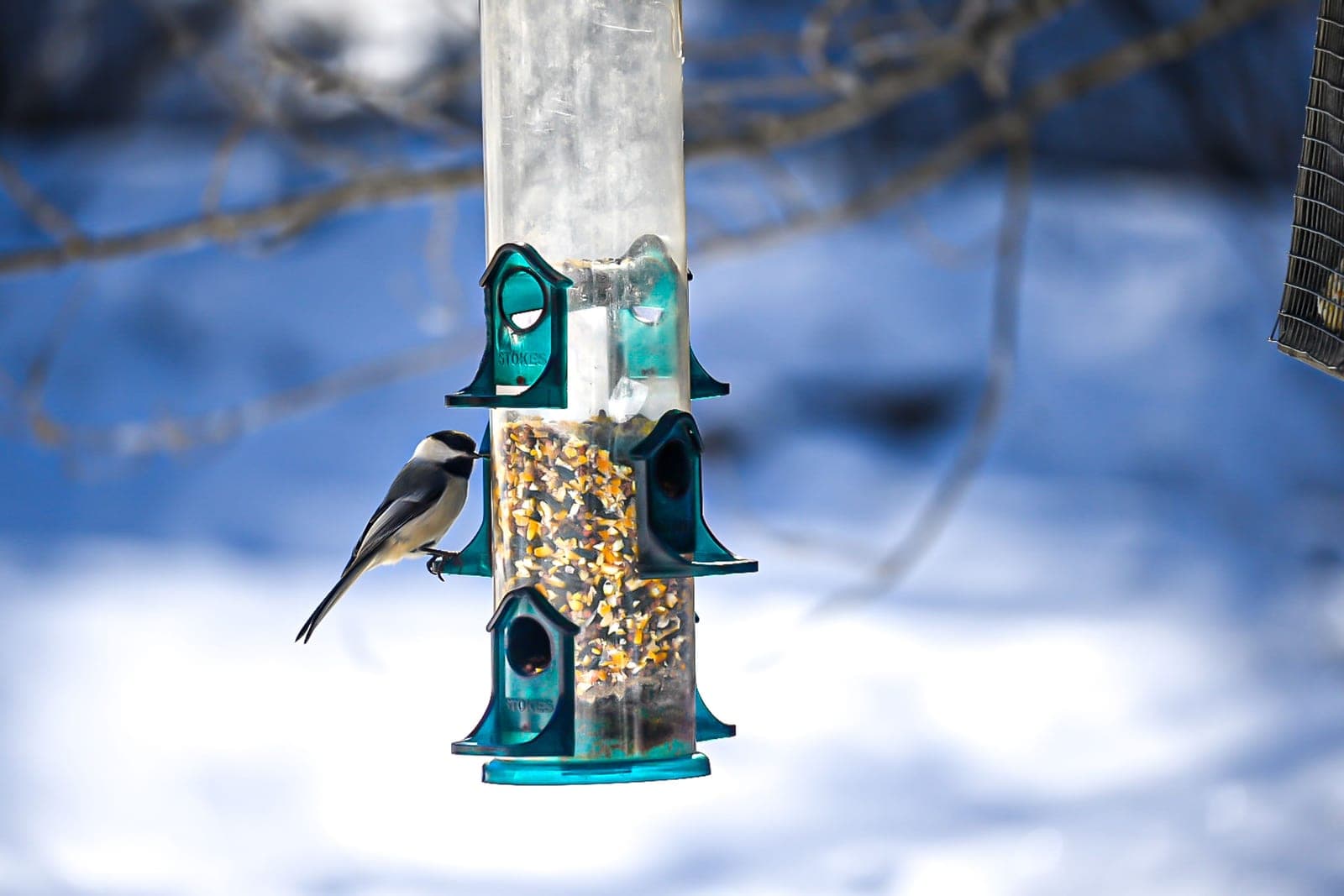
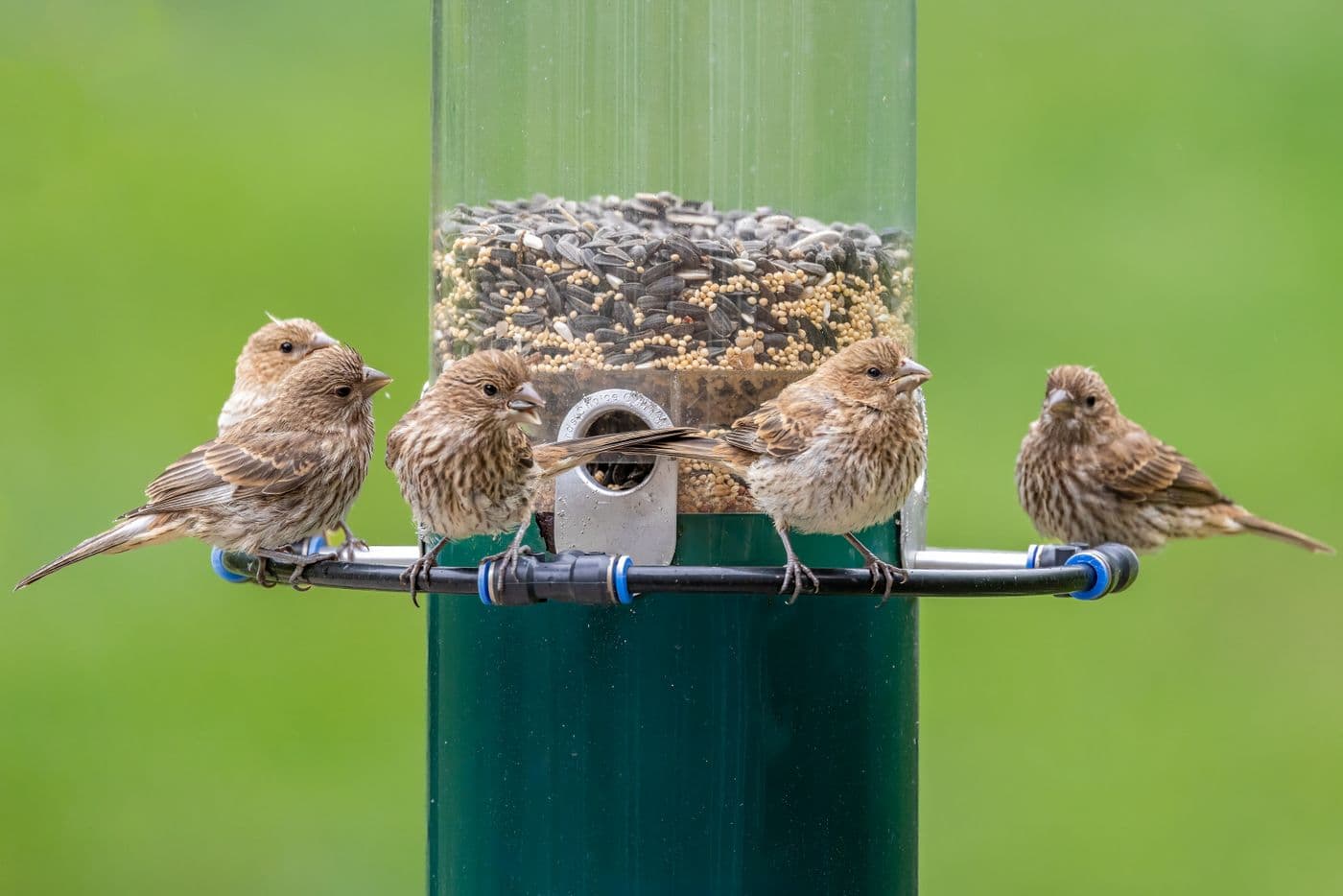
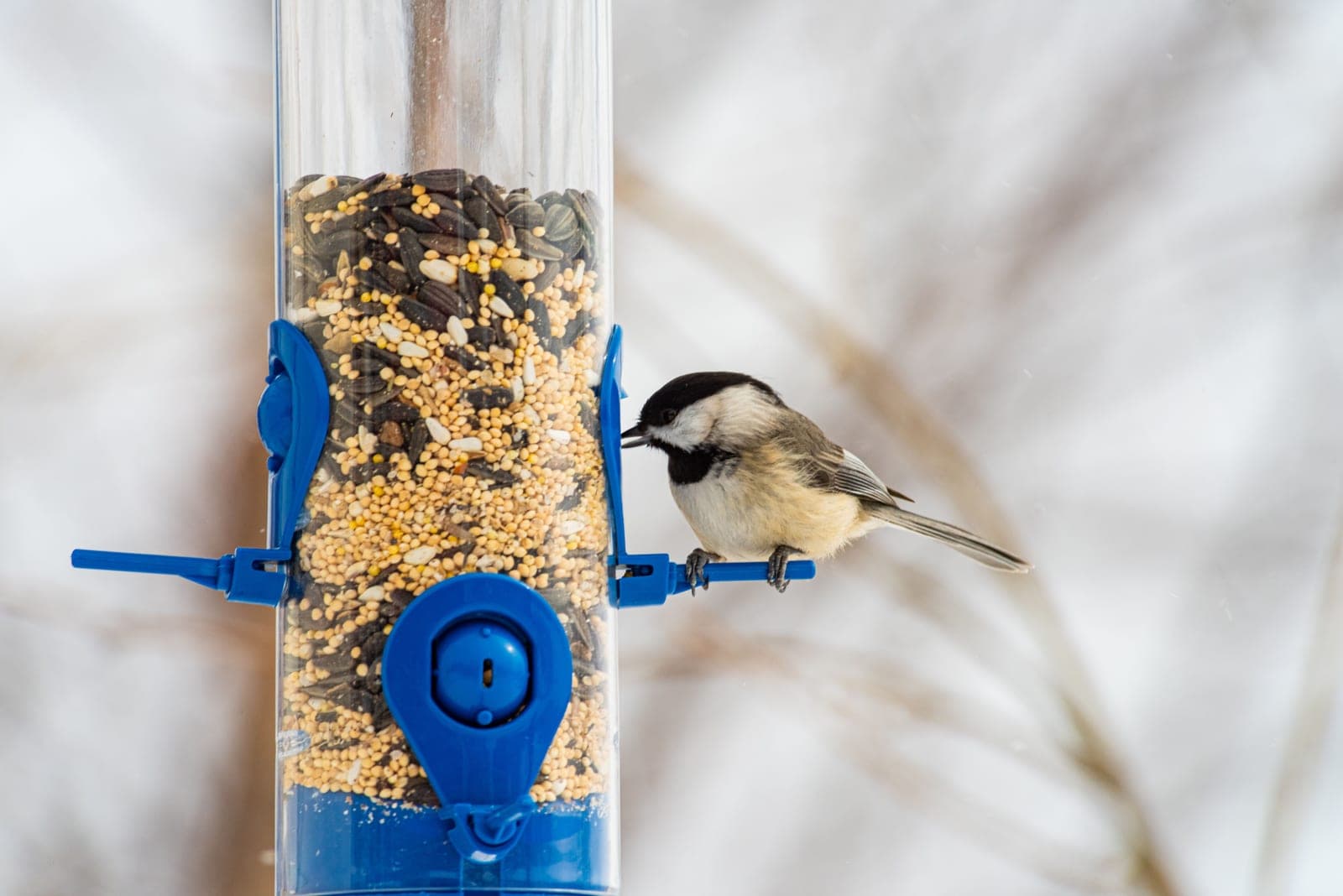
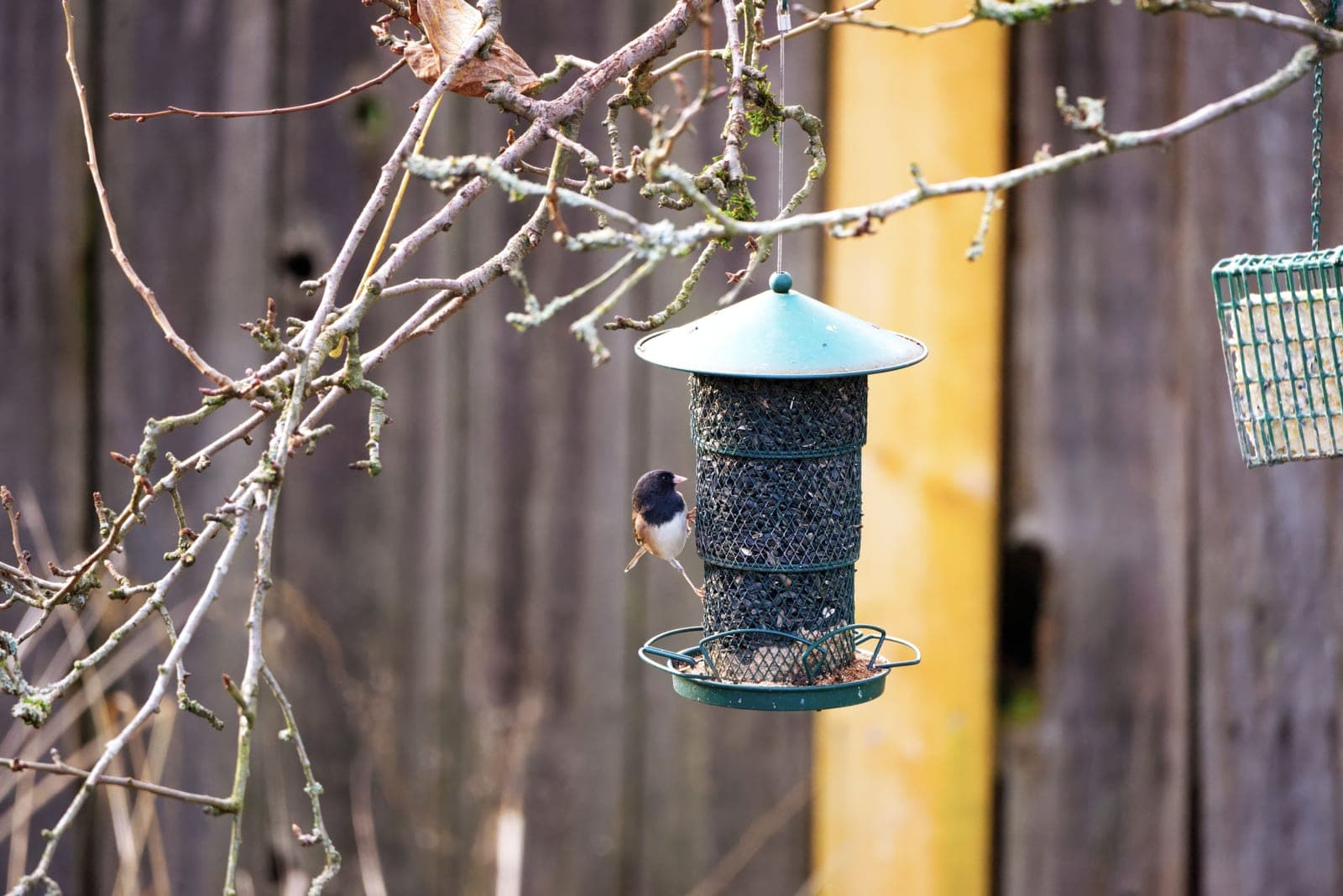
In summer, refilling a small feeder every couple of days is pleasant. In January, in the dark, in sleet, it is the reason people quit. A 5 lb seed feeder means a weekly trip; a 1 lb tube means a daily one. Buy more capacity than feels necessary. Best bird feeders for winter ranks them on exactly that basis, the best tube bird feeders narrows it to the format most people actually own — ranked on capacity, whether the base comes off without tools, and whether the ports are metal — and the cheap feeder roundup covers where spending less is genuinely the right call and the two situations where it costs more than it saves. If seed is arriving wet rather than running out, rain covers and weather domes are the accessory for that — bought on diameter, which is the specification almost everyone under-buys.
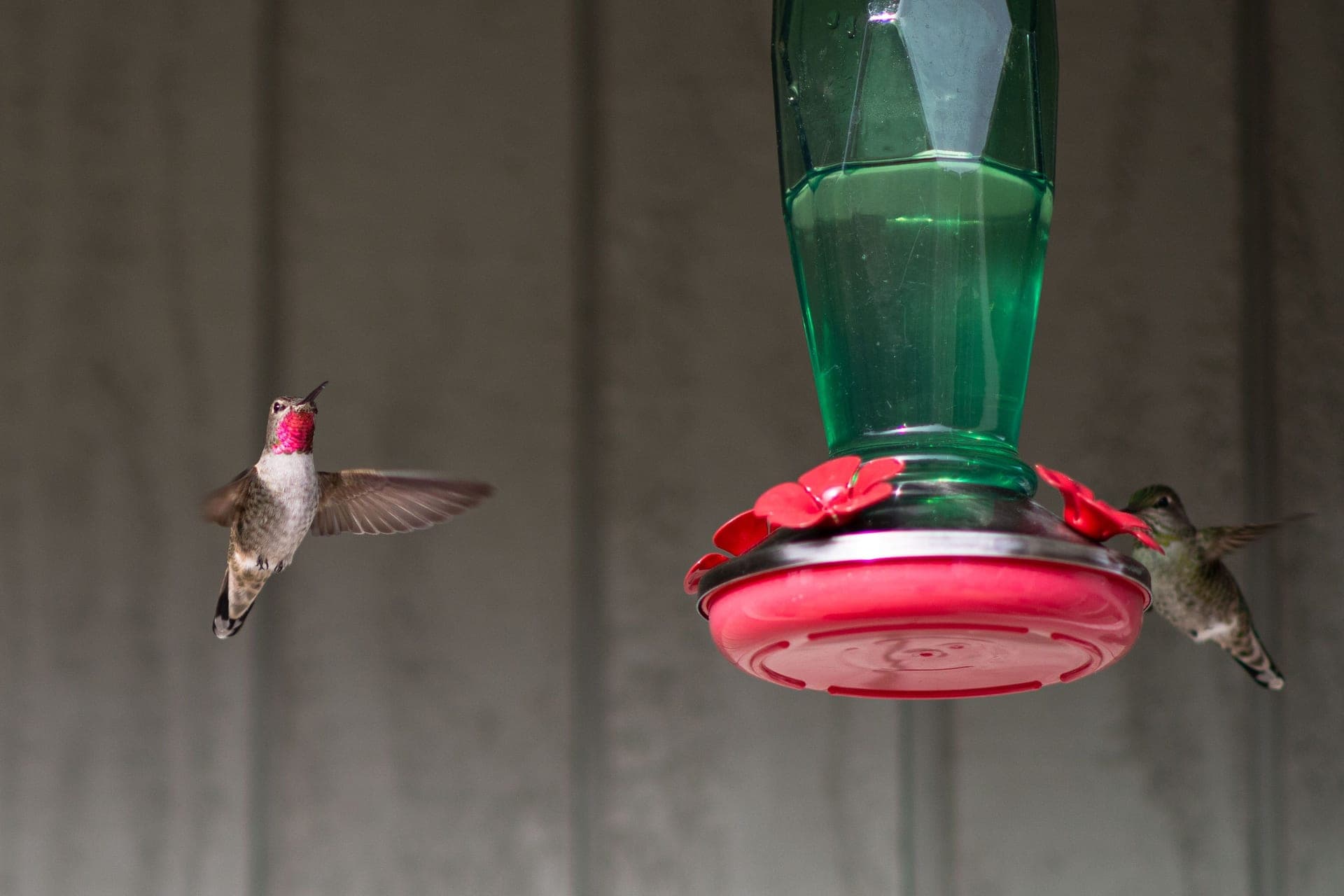
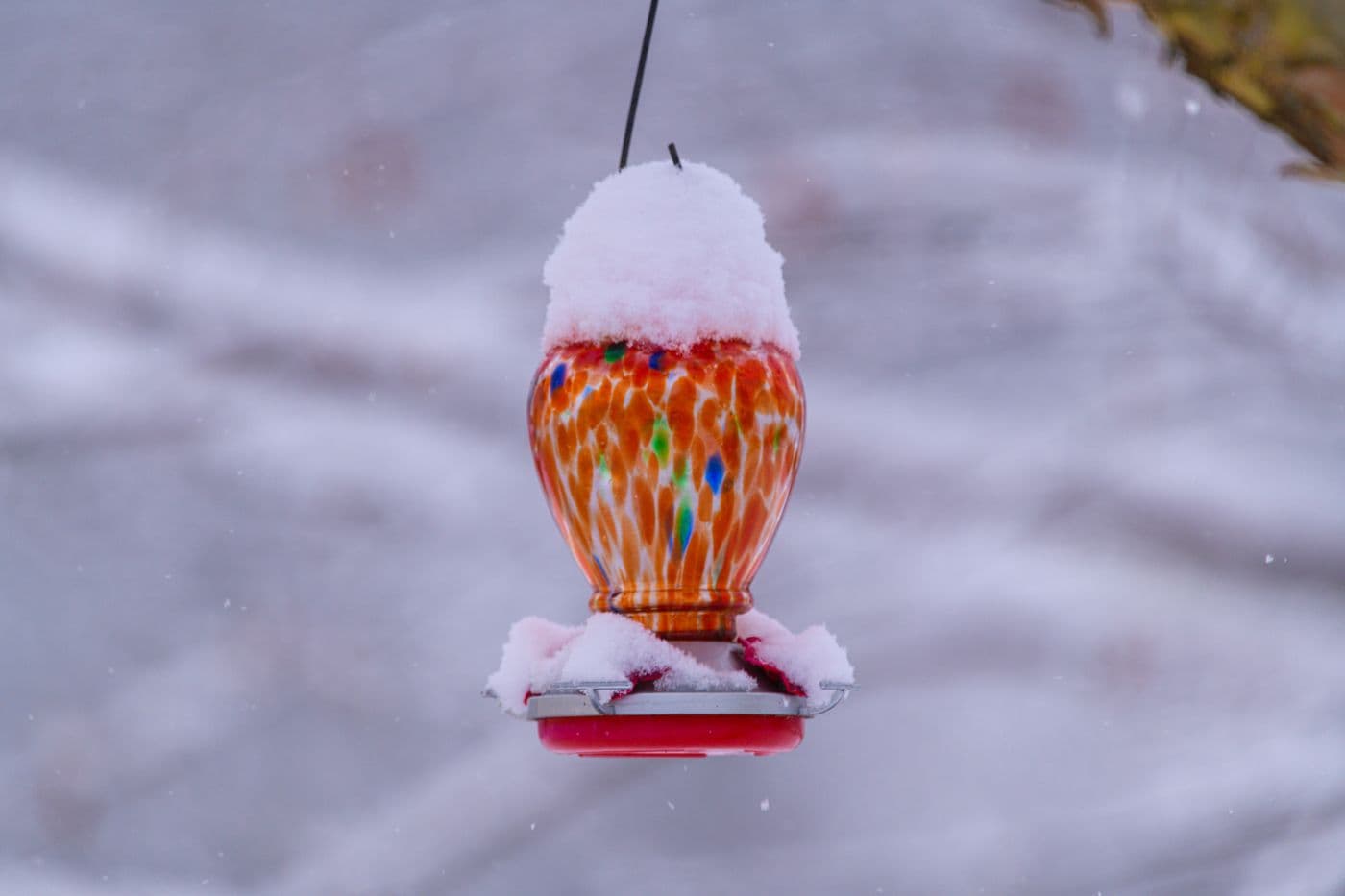
The second seed spec is ventilation and drainage. Damp seed cakes solid, blocks ports and grows mold; a feeder with a vented base and a real roof stays usable through a wet week, which is the argument for a hopper feeder — ranked there on the tray drainage that decides whether the seed stays usable. And roughly a third of your winter list — juncos, doves, some sparrows — will not use a tube at all, which is what a platform or ground feeder is for. Two more specialist feeders sit alongside the main station: peanut feeders, and — if you are somewhere hummingbirds overwinter — a heated nectar feeder.
What decides the price
Mechanism and material. A cedar cage is cheap because it is six pieces of wood and some wire. A weight-activated feeder is expensive because it is a mechanism built from chew-proof metal that has to keep working at minus fifteen. Recycled poly lumber sits in between: more than cedar, less than a mechanism, and it will outlast both.
The mistake buyers make
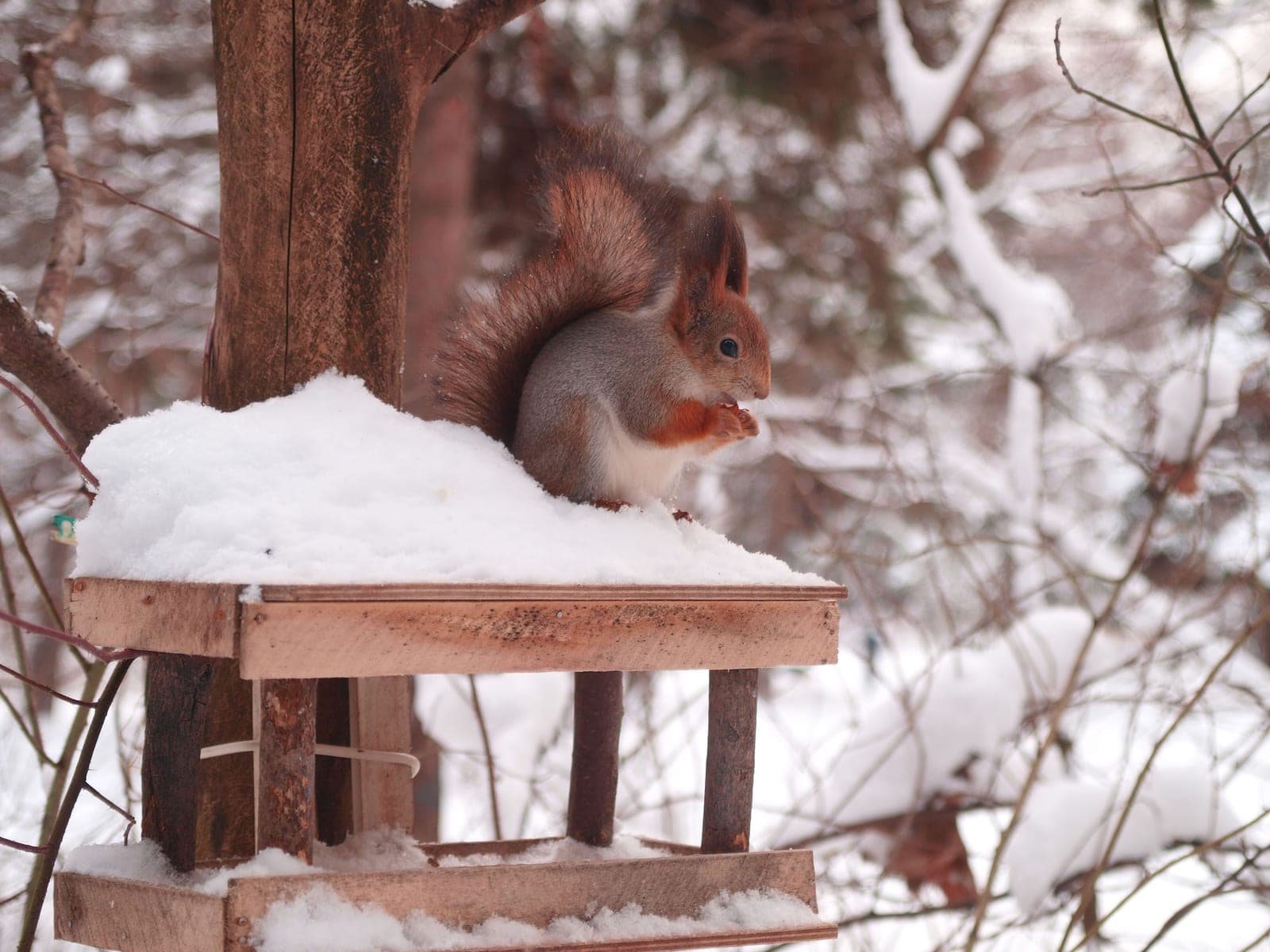
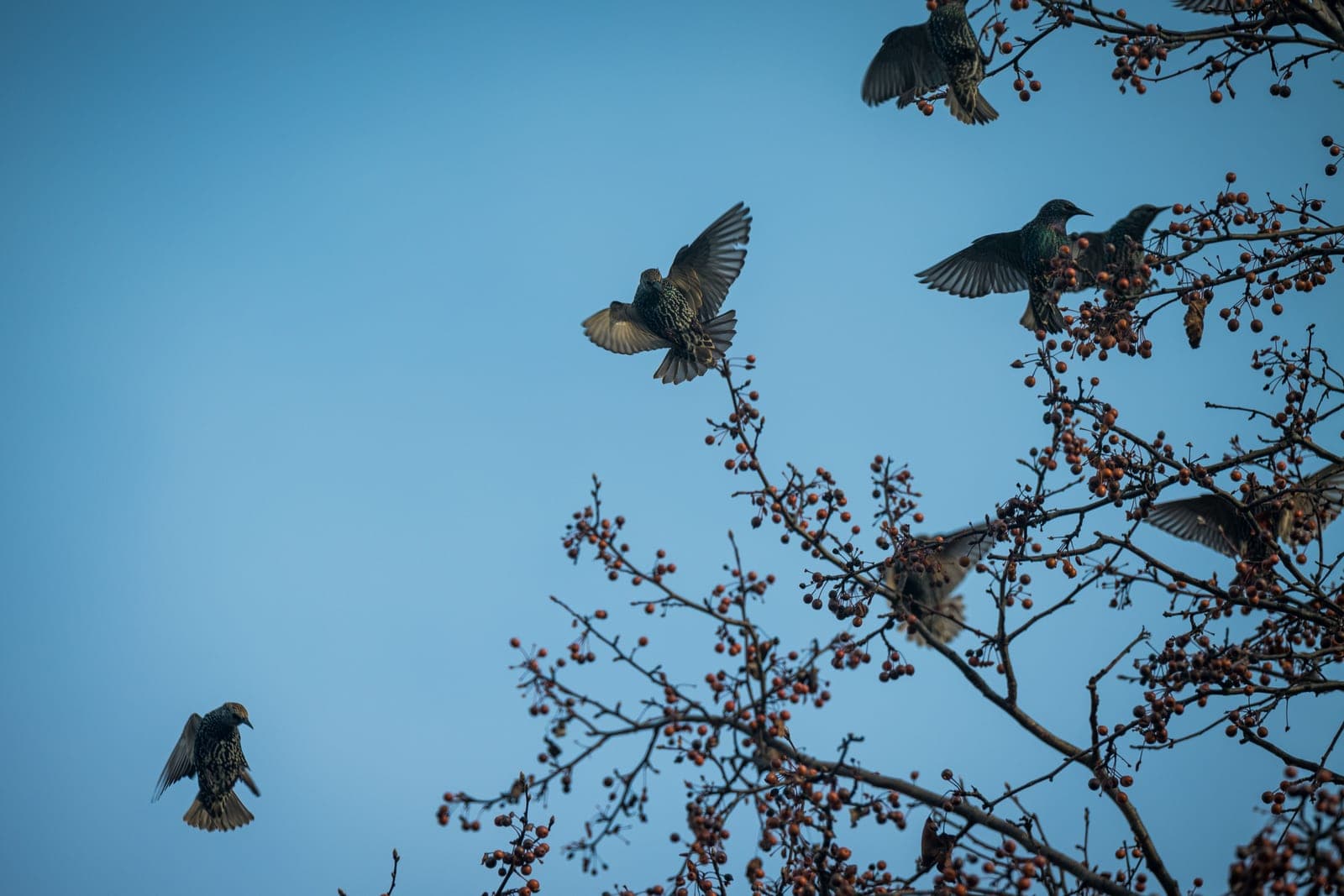
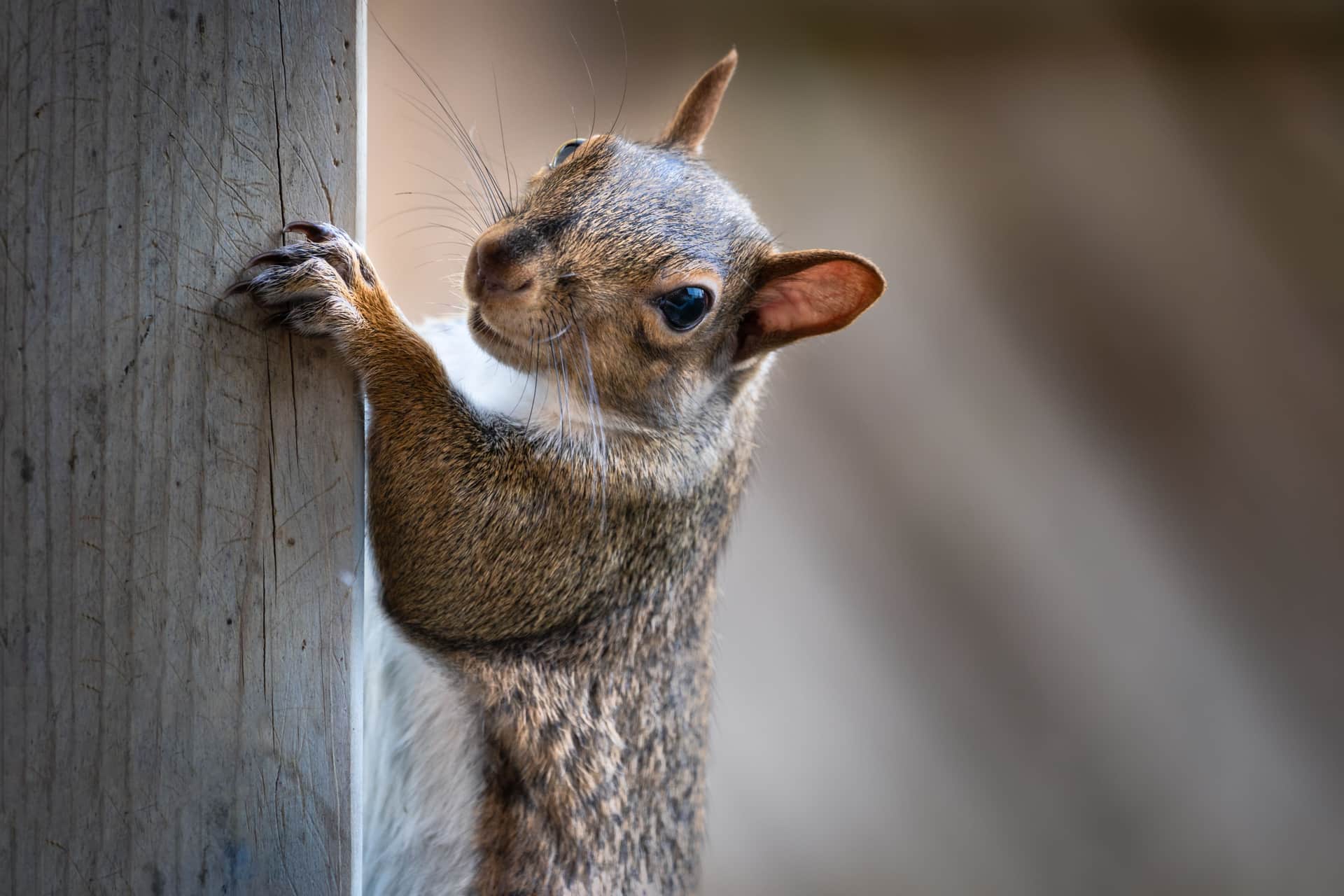
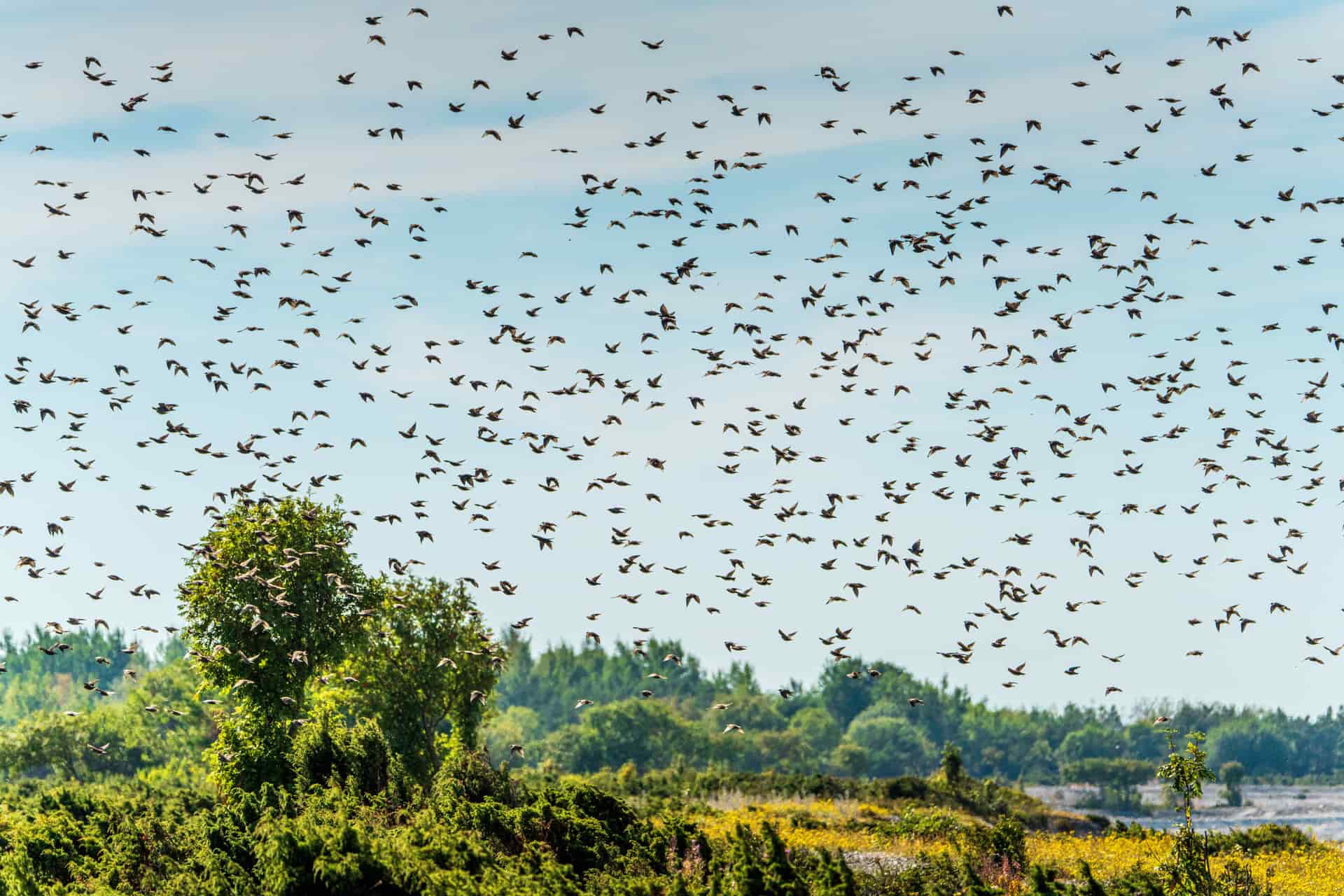
Solving the wrong animal. People buy a squirrel-proof feeder when the actual problem is a starling flock, or a starling-excluding upside-down cage when a squirrel is emptying it. Watch for a week before you buy. Squirrels take everything and leave the feeder swinging; starlings arrive as a group and strip a cake in an afternoon; grackles bully at the ports and leave the seed. Three different problems, three different fixes.
The other mistake is placement. Feeders in open wind get emptied by weather, not birds, and feeders too close to dense cover give cats a launch point. Feeder placement in snow and wind has the distances, and keeping feeders clear of snow and ice covers the maintenance nobody mentions when they sell you the thing.
Hardware is half a system
A feeder is worth what you put in it — see winter bird food — and a feeding station with no open water is doing two-thirds of a job. Winter feeding station setup puts feeders, water and shelter into one layout.
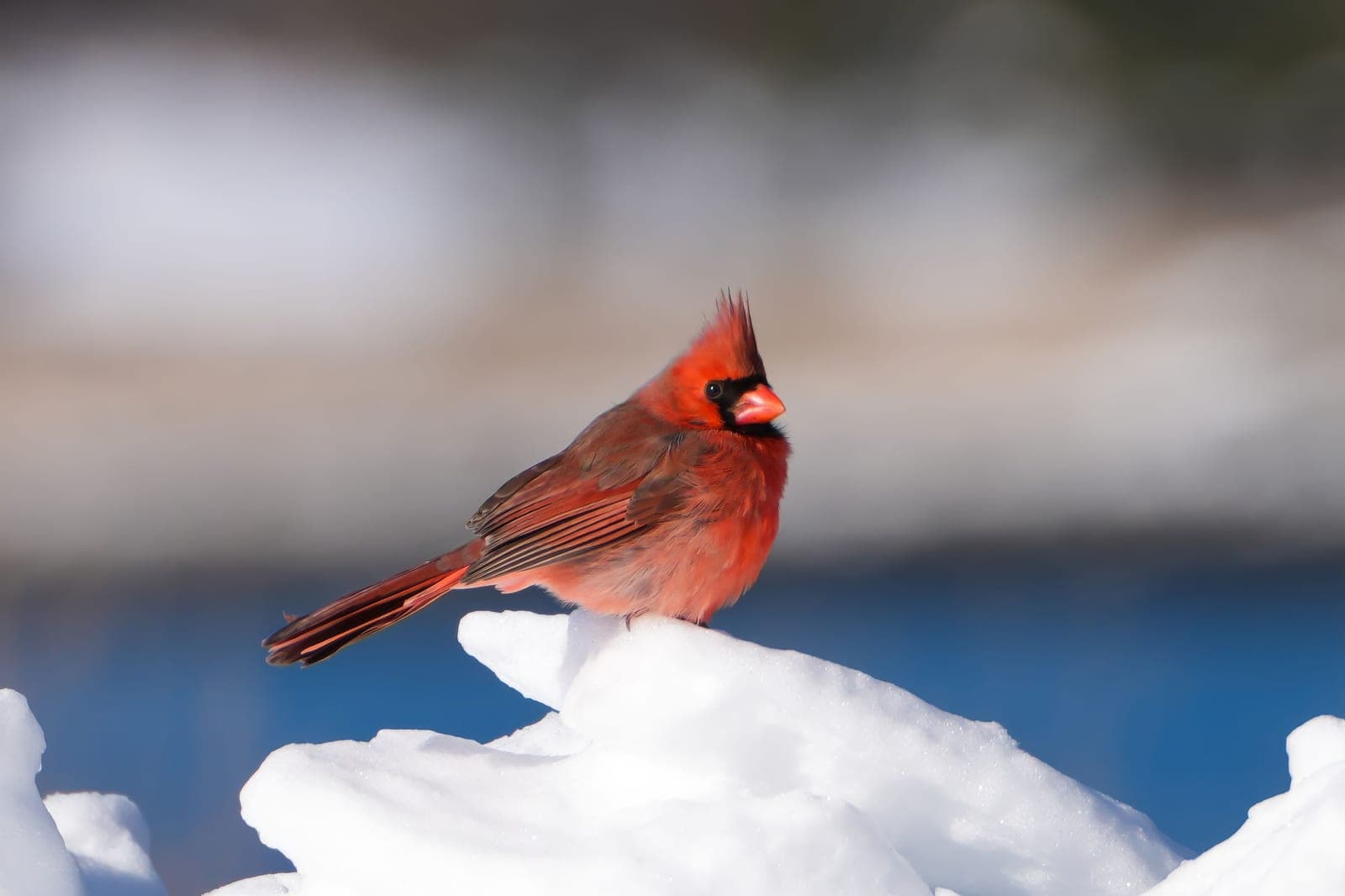
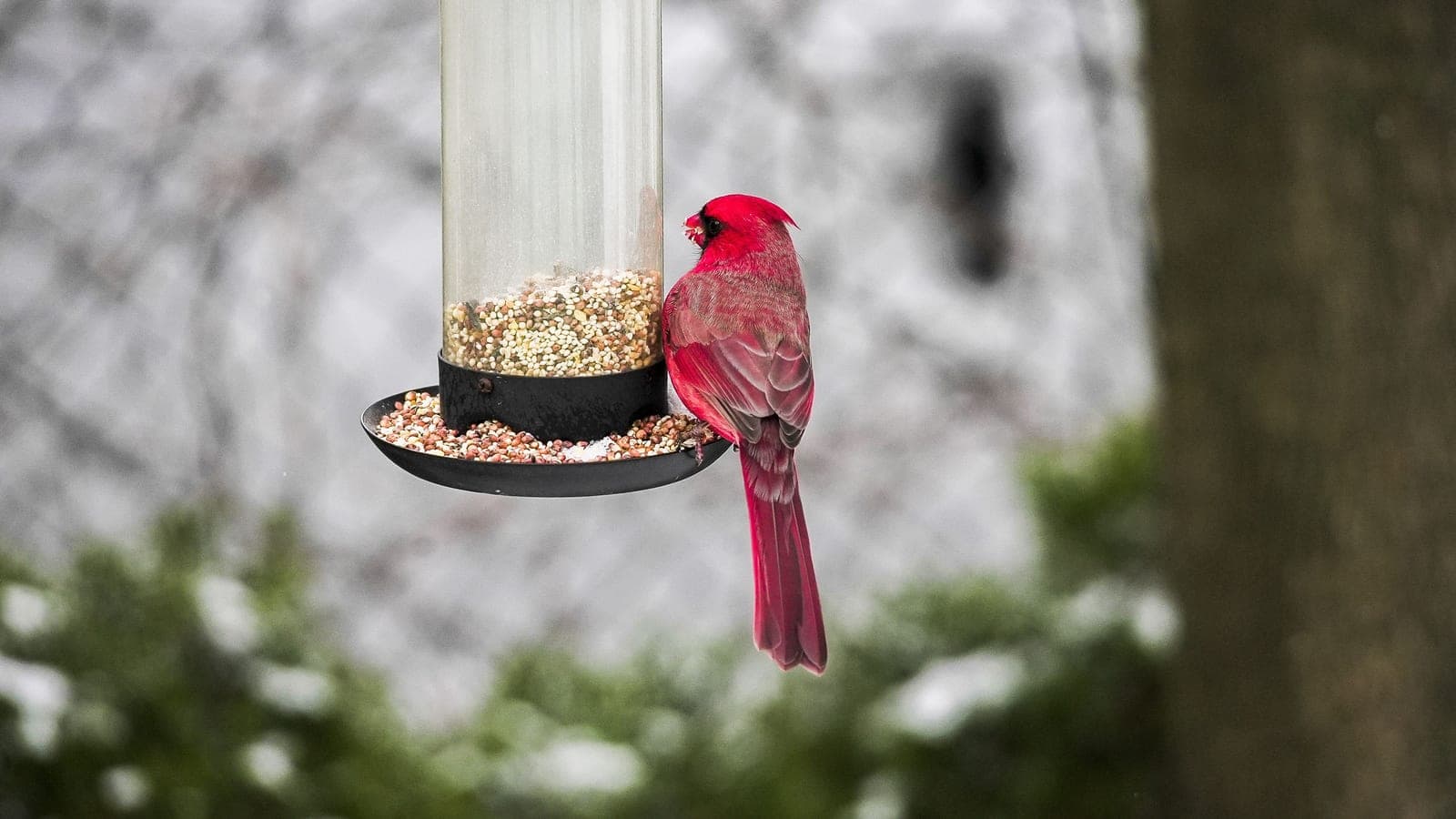
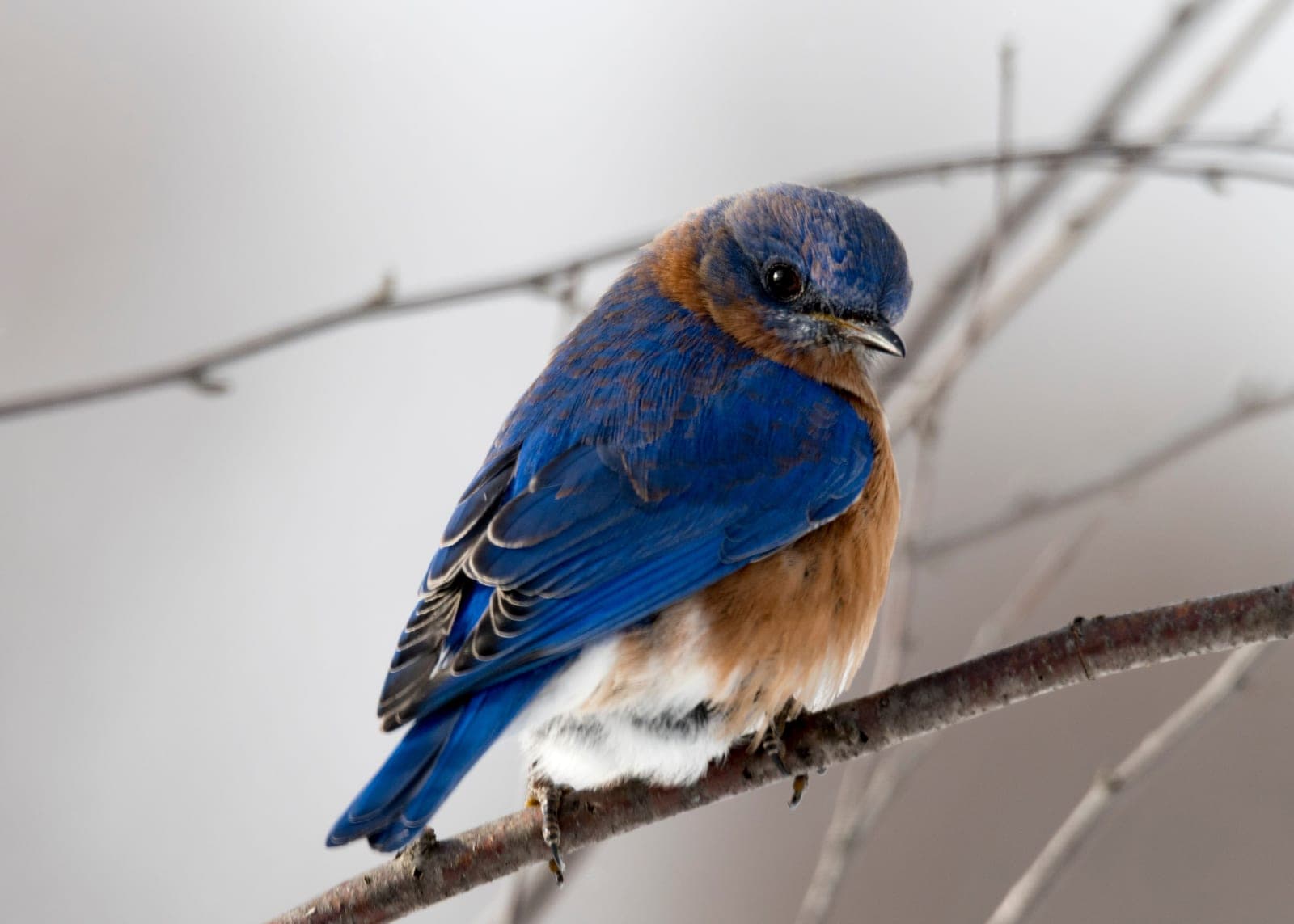
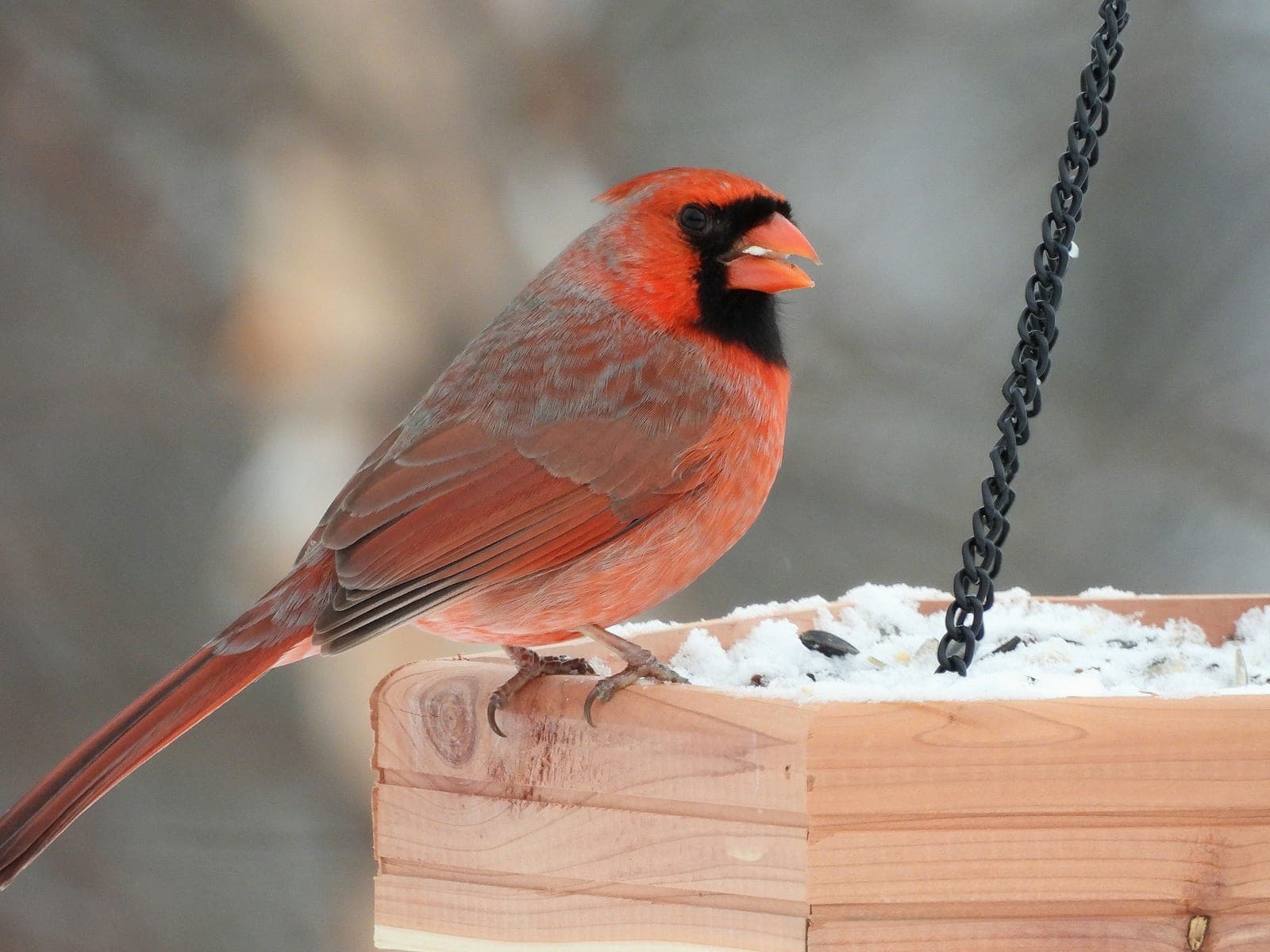
Nothing turning up at all is the other common outcome, and it is usually not a hardware problem — why birds are not coming to your feeder ranks the causes by how often each is actually to blame, starting with the one that is not a fault. Two narrower cases the standard advice skips. Bluebird feeders are an exclusion problem — a stated 1-1/2 inch entrance keeps starlings off the mealworms, and getting bluebirds to use an enclosed box takes a training period nobody warns you about. And with no yard at all, feeders for apartments and balconies covers the mounts that need no ground and the seed choice that keeps the mess off your neighbors. The ground beneath all of it is the part nobody plans for. Spilled seed under a winter feeder rots, draws mice toward the house, and holds a starling flock in the yard — seed catchers and no-mess feeding covers the hoop, tray or pole catcher that matches your mount, and when hulled seed is the better answer. Starlings and grackles are a different problem with different hardware: they are birds, so baffles, weight mechanisms and hot pepper do nothing at all to them. starling- and grackle-proof feeders covers the three approaches that actually work. Squirrels are the other constant. The honest order is placement first, then a baffle, then a mechanism — squirrel-proof bird feeders ranks the mechanisms that genuinely exclude one, and squirrel baffles for feeder poles covers the step most people skip — though priced honestly it is only the cheaper one if you already own the pole. If cardinals are what you are feeding for, note that the usual squirrel fixes exclude them too — bird feeders for cardinals works around that. And with no ground at all, a window feeder is the format that still works.
The piece under all of it is the pole. It decides where the station can go, which baffles will fit, and whether the whole thing is still upright in March — and it has to go into the ground before the ground freezes. The best bird feeder poles for winter ranks them on how they anchor, which is the spec that decides the rest.
Questions people actually ask
- What kind of bird feeder is best for winter?
- A high-capacity roofed seed feeder plus one suet cage. Capacity determines how often you go out in bad weather; the roof keeps the food dry; the suet cage reaches the clinging birds a tube feeder never will.
- How do I stop starlings taking all the suet?
- Use an upside-down suet feeder. Starlings are reluctant to hang beneath a downward-facing cake, while woodpeckers, nuthatches and chickadees do it without hesitating. No mechanism, so nothing to freeze.
- Do I need to clean feeders in winter?
- Yes, and arguably more than in summer. Damp seed and wet suet crumbs grow mold in a covered feeder even when it is cold out. A feeder that comes fully apart is worth paying for.
- How high should a winter feeder be?
- High enough to be out of easy reach of cats and drifting snow, and close enough to cover that birds have an escape route, without being so close that a predator can launch from it. A rough working distance is about ten feet from dense cover.