Winter food / Guide
What to Feed Birds in Winter
Ordered by fat content, because in cold weather that is the only ranking that matters. Two purchases cover almost everything.
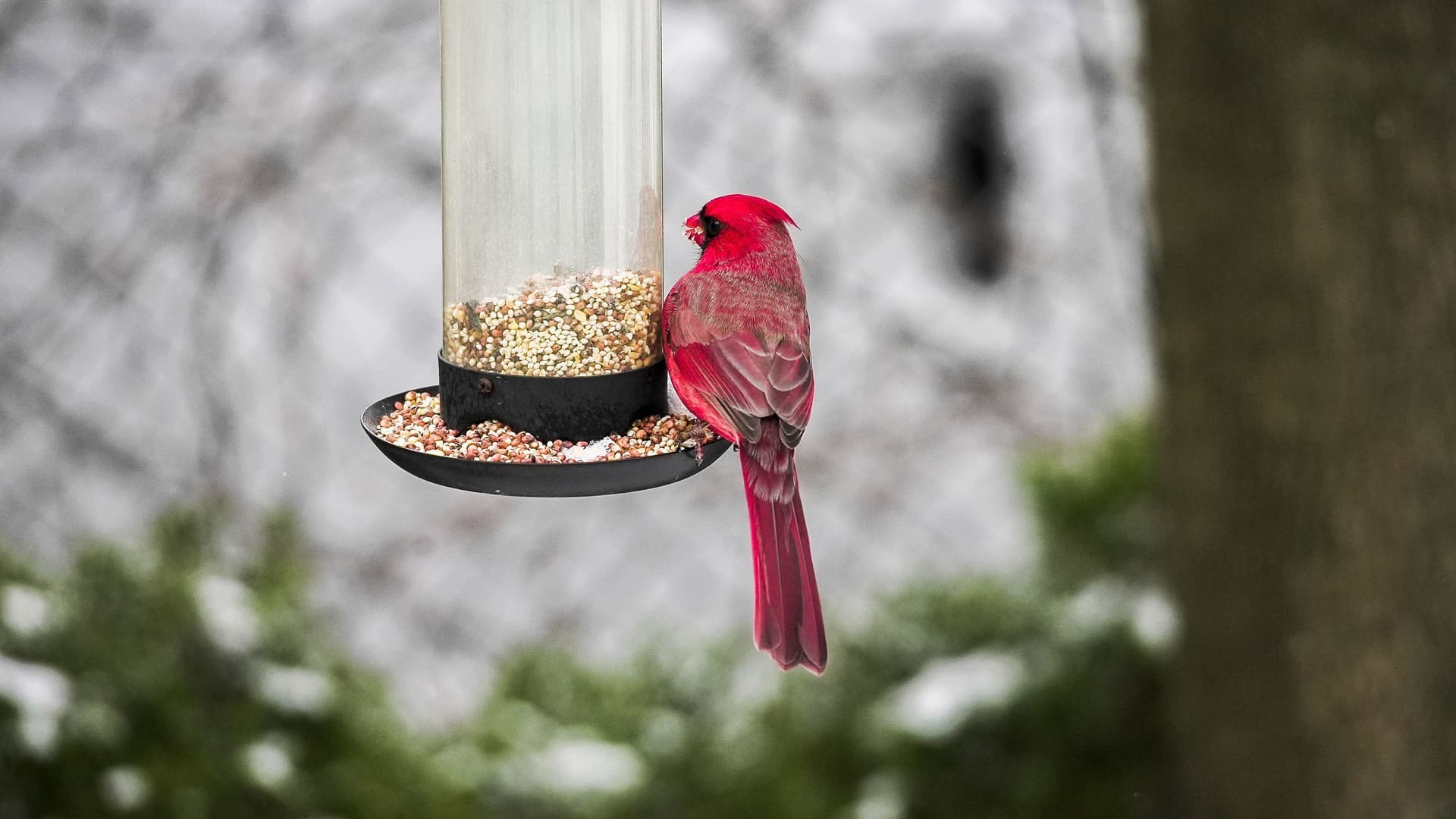
In order of usefulness: suet, black oil sunflower seed, peanuts, then everything else. Fat carries roughly twice the energy per gram of carbohydrate, and in winter the whole problem is banking enough calories in a few hours of daylight to survive a fifteen-hour night. Two purchases — a no-melt suet cake and a bag of black oil sunflower — cover most of a northern yard.
The list, in order
1. Suet — the highest-value thing you can put out
Rendered fat, usually blended with grain into a cake. It is the densest energy available and it reaches the insect-eating birds that ignore a seed feeder entirely: woodpeckers, nuthatches, creepers, wrens. Project FeederWatch is explicit that suet is how you reach those species.
Buy plain no-melt high-energy dough in a standard cake size — balls and plugs are the same fat in shapes that need different feeders. The full ranking, and what no-melt actually means.
2. Black oil sunflower — the one seed to run
Thin shell, high oil content, opened easily by small bills. It is eaten by nearly everything at a northern feeder and it is the correct default. Buy it straight, not in a mix, and buy 25 lb in autumn if you have somewhere sealed to keep it. The winter seed roundup covers safflower, nyjer and the hull-free blends alongside it.
3. Peanuts — the reliable draw
High fat, and the single most dependable way to bring in woodpeckers, titmice, jays and nuthatches. Available shelled in a mesh peanut feeder, or blended into a suet cake, which is the tidier route. Unsalted and unroasted only. The format decides which birds can use them.
4. Nyjer, safflower and the specialists
Nyjer brings goldfinches and siskins and almost nothing else, in a dedicated fine-port feeder — which seed and which feeder, and how to tell whether the seed has gone stale. Safflower is bitter to squirrels and grackles and acceptable to cardinals, which makes it a niche pest workaround rather than a staple — though in a cardinal-focused yard it is the smartest seed you can buy. Both are worth adding once the basics are running; neither is a first purchase.
5. Cracked corn — the ground-feeder option, with a caveat
Cheap, and juncos, doves and sparrows will eat it off a tray or the ground — white millet feeds the same birds with less of a rodent problem. The caveat is that it also brings deer, rodents and, in numbers, birds you may not want. Scatter small amounts — the full case for and against corn covers the ground-feeding rules that make it workable.
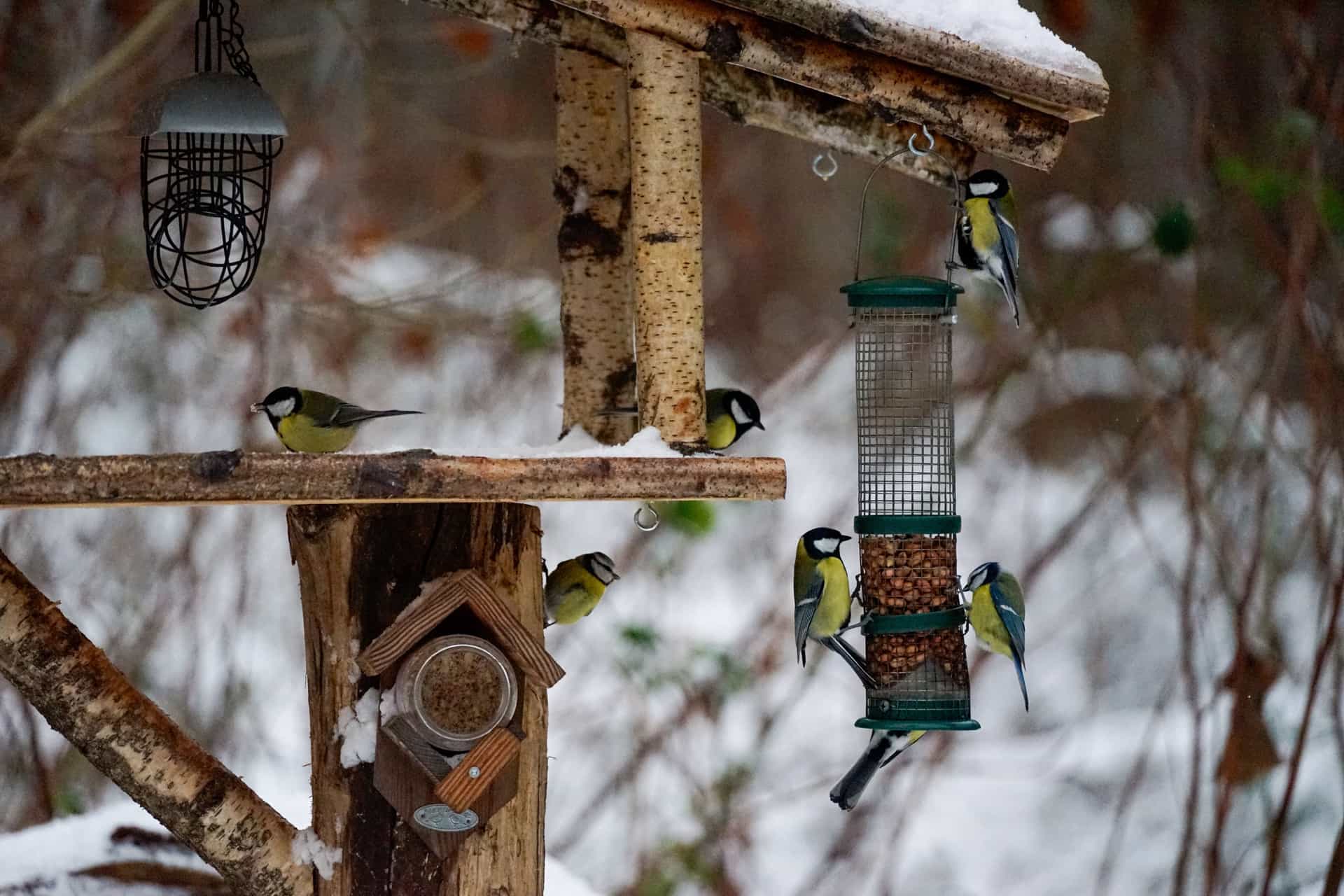
Kitchen items that are genuinely fine
- Unsalted, unroasted nuts — peanuts, walnuts, almonds, chopped.
- Plain rolled oats, uncooked and dry.
- Apple and pear, chopped, for thrushes and waxwings. Windfalls are ideal.
- Raisins and currants, soaked. Keep them away from dogs, for whom they are toxic.
- Hard cheese, grated, in small quantities. Wrens and robins take it.
- Plain cooked potato or rice, unsalted, in small amounts.
The list of things that are actively harmful is short, specific and worth reading properly: what not to feed birds in winter.
How much, and how often
| Food | Typical need | Refill cadence |
|---|---|---|
| No-melt suet cakes | 8 to 12 cakes | Every 3 to 10 days |
| Black oil sunflower | 25 lb | Weekly for a 5 lb feeder |
| Peanuts | 5 lb, or in cake form | As needed |
| Nyjer | 2 to 5 lb, if you run it | Slowly — it is a specialist |
Traffic rises sharply in cold snaps, so expect the interval to shorten exactly when you least want to go outside. That is the argument for buying capacity.
The thing most people forget
Water. A bird eating dry suet still has to melt snow with its own body heat to drink, which is precisely the metabolic cost you were trying to avoid by feeding it. The Cornell Lab notes birds get most of their winter water from snow and dripping ice, and have real mechanisms for conserving it — but liquid water is far cheaper for them than snow.
A heated bath or a drop-in de-icer costs roughly what your suet does over the same winter, and it is the thing most yards are missing. The running cost is published in full.
What to buy
Winter Perch is funded by affiliate commission. If you buy through a link on this page we may earn a commission at no extra cost to you, and it never decides a ranking. Full disclosure · how we pick.
Quick picks
Ranked, with the trade-off named. Tap a row for the full write-up; the price button goes straight to Amazon.
| # | Product | Best for | Price |
|---|---|---|---|
| 1 |  C&S High Energy Delight No-Melt Suet Dough, 8-packNo-melt dough at a price that lets you leave a cake out permanently, in the formulation woodpeckers, nuthatches and chickadees actually work at. | The default winter cake | $23.21 · See it on Amazon |
| 2 |  Wagner's 76027 Black Oil Sunflower Seed, 25 lbThin-shelled, high-fat, and eaten by nearly everything that comes to a winter feeder. Black oil sunflower is the correct default and this is the honest bulk bag. | The one seed to run if you only run one | $41.98 · See it on Amazon |
| 3 | 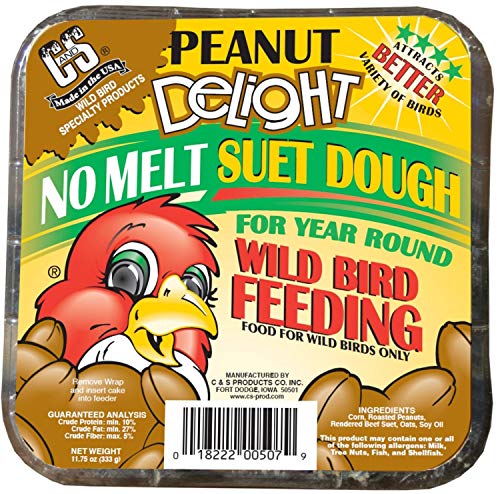 C&S Peanut Delight No-Melt Suet Dough, 12-packThe same no-melt dough with peanut through it, in the twelve-pack that is the sensible autumn purchase. | Bulk buying before the season | $36.99 · See it on Amazon |
| 4 |  C&S Insect Delight No-Melt Suet Dough, 12-packThe cake for wrens, bluebirds and anything else whose ordinary diet vanished the day the ground froze. | Insect eaters with nothing to eat in January | Check price on Amazon |
#ad how we are funded · price as of October 15, 2026
The picks in full
Top pick The default winter cake
C&S High Energy Delight No-Melt Suet Dough, 8-pack
No-melt dough at a price that lets you leave a cake out permanently, in the formulation woodpeckers, nuthatches and chickadees actually work at.
Specifications
- Format
- Standard 11.75 oz cake
- Pack
- 8
- Type
- No-melt dough
- Targets
- Woodpeckers, nuthatches, chickadees
Trade-offs
- No-melt dough holds shape above freezing, so an early thaw does not dump it on the ground
- Standard cake size fits every cage feeder on this site
- Eight cakes is roughly a winter for one feeder
- Plain high-fat formulation with nothing gimmicky in it
- No-melt dough is firmer than raw suet and slower going for small birds in deep cold
- Nothing in it deters squirrels or starlings
Who it is forThe first suet you buy, and the one you re-order without thinking about it.
Skip it ifSkip it if starlings have found your feeder. A plain cake in an open cage is a starling buffet — go to an upside-down feeder or a hot pepper cake.
#ad how we are funded · price as of October 15, 2026
No. 2 The one seed to run if you only run one
Wagner's 76027 Black Oil Sunflower Seed, 25 lb
Thin-shelled, high-fat, and eaten by nearly everything that comes to a winter feeder. Black oil sunflower is the correct default and this is the honest bulk bag.
Specifications
- Type
- 100% black oil sunflower
- Bag
- 25 lb
- Shell
- Thin — accessible to small bills
- Origin
- Made in USA
Trade-offs
- Thin shells mean chickadees and finches can open it, not just cardinals
- The highest usable fat of the common feeder seeds
- 25 lb is a real winter's supply for one or two feeders
- No filler — no milo, no wheat, no red millet nobody eats
- Shells pile up under the feeder and kill the grass beneath it
- 25 lb needs a sealed bin or you are feeding mice
- Sunflower is squirrel candy
Who it is forEvery winter feeder yard, as the base seed.
Skip it ifSkip the 25 lb bag if you feed one small tube on a balcony. Seed goes stale and moldy long before you finish twenty-five pounds.
#ad how we are funded · price as of October 15, 2026
No. 3 Bulk buying before the season
C&S Peanut Delight No-Melt Suet Dough, 12-pack
The same no-melt dough with peanut through it, in the twelve-pack that is the sensible autumn purchase.
Specifications
- Format
- 11.75 oz cake
- Pack
- 12
- Type
- No-melt dough, peanut
Trade-offs
- Twelve cakes covers a two-feeder yard through a full winter
- Peanut is the single most reliable draw for woodpeckers and titmice
- No-melt, so an autumn warm spell does not waste the first three cakes
- Peanut is also what squirrels can smell from the next yard
- Twelve cakes need dry, rodent-proof storage
Who it is forAnyone buying in September for a winter they already know is coming.
Skip it ifSkip the twelve-pack if you have nowhere dry to keep it. Suet dough left in a damp garage goes rancid, and rancid fat is worse than no fat.
#ad how we are funded · price as of October 15, 2026
No. 4 Insect eaters with nothing to eat in January
C&S Insect Delight No-Melt Suet Dough, 12-pack
The cake for wrens, bluebirds and anything else whose ordinary diet vanished the day the ground froze.
Specifications
- Format
- 11.75 oz cake
- Pack
- 12
- Type
- No-melt dough with insect content
Trade-offs
- Targets the birds a seed feeder never reaches
- Twelve-pack pricing
- No-melt behavior identical to the rest of the C&S range
- Less interesting to seed-eating regulars, so a single-feeder yard sees less traffic
- Insect blends attract more attention from raccoons in mild spells
Who it is forYards that hold wrens or overwintering bluebirds.
Skip it ifSkip it if your winter list is finches, sparrows and jays. They will pick at it and prefer the high-energy cake, and you will end up with eleven cakes of the wrong thing.
#ad how we are funded · price as of October 15, 2026
How we picked
- Ordered by energy density, because that is the binding constraint in cold weather.
- Species access accounted for, so the list covers clinging, perching and ground-feeding birds.
- Authority cited — Project FeederWatch on suet and insect eaters, Cornell Lab on winter water.
- Quantities given as ranges, not precise figures we cannot support.
We have not tested any of these. What we did instead: read the manufacturers’ own listings, compiled the published specifications, computed the running cost at a cited electricity rate, and refreshed the prices daily. The full method is published.
Hardware to put it in: winter feeders. The specific fat-vs-carbohydrate argument: suet vs seed in cold weather. And once food and water are handled, somewhere to spend the night is the third leg.
Questions people actually ask
- What is the best thing to feed birds in winter?
- Suet. Fat carries roughly twice the energy per gram of carbohydrate, and it reaches the insect-eating birds a seed feeder never will. Black oil sunflower is the seed to pair it with.
- Can I feed birds kitchen scraps in winter?
- Some. Unsalted nuts, dry rolled oats, chopped apple, soaked raisins, grated hard cheese and plain unsalted cooked potato or rice are all fine in small amounts. Bread, salted food and anything moldy are not.
- How often should I fill feeders in winter?
- Whenever they empty, which in a cold snap can be daily. Buying more capacity than you think you need is the change most likely to keep them full in February.
- Do birds need water in winter?
- Yes, and it is the resource most yards are missing. Eating snow costs a bird body heat to melt it, which is exactly the energy you are trying to help it save.
- Should I feed birds every day?
- Consistency helps, particularly during a sustained freeze when natural food genuinely disappears. Birds forage across many sources rather than depending on one feeder, so a missed day is not a crisis.
Sources
Read next
- What Not to Feed Birds in Winter
The genuinely harmful list — bread, salt, mold, desiccated coconut — with the reason for each and what to use instead.
- The Best Suet Cakes for Winter Birds
Seven suet cakes ranked on fat, no-melt behavior and who they actually attract, with pack-size advice.
- The Best Bird Feeders for Winter
Seed feeders ranked on capacity, roofing and drainage — the specs that decide how often you go out in bad weather.
- What a Heated Bird Bath Actually Costs to Run
Watts to kilowatt-hours to dollars, at the current US average residential rate — the table nobody else in this category publishes.