Heated bird baths / Comparison
Solar Heated Bird Baths: The Honest Answer
This is the most-searched term in the category and the answer is not the one the listings imply. A solar bird bath product moves water. It does not heat it.
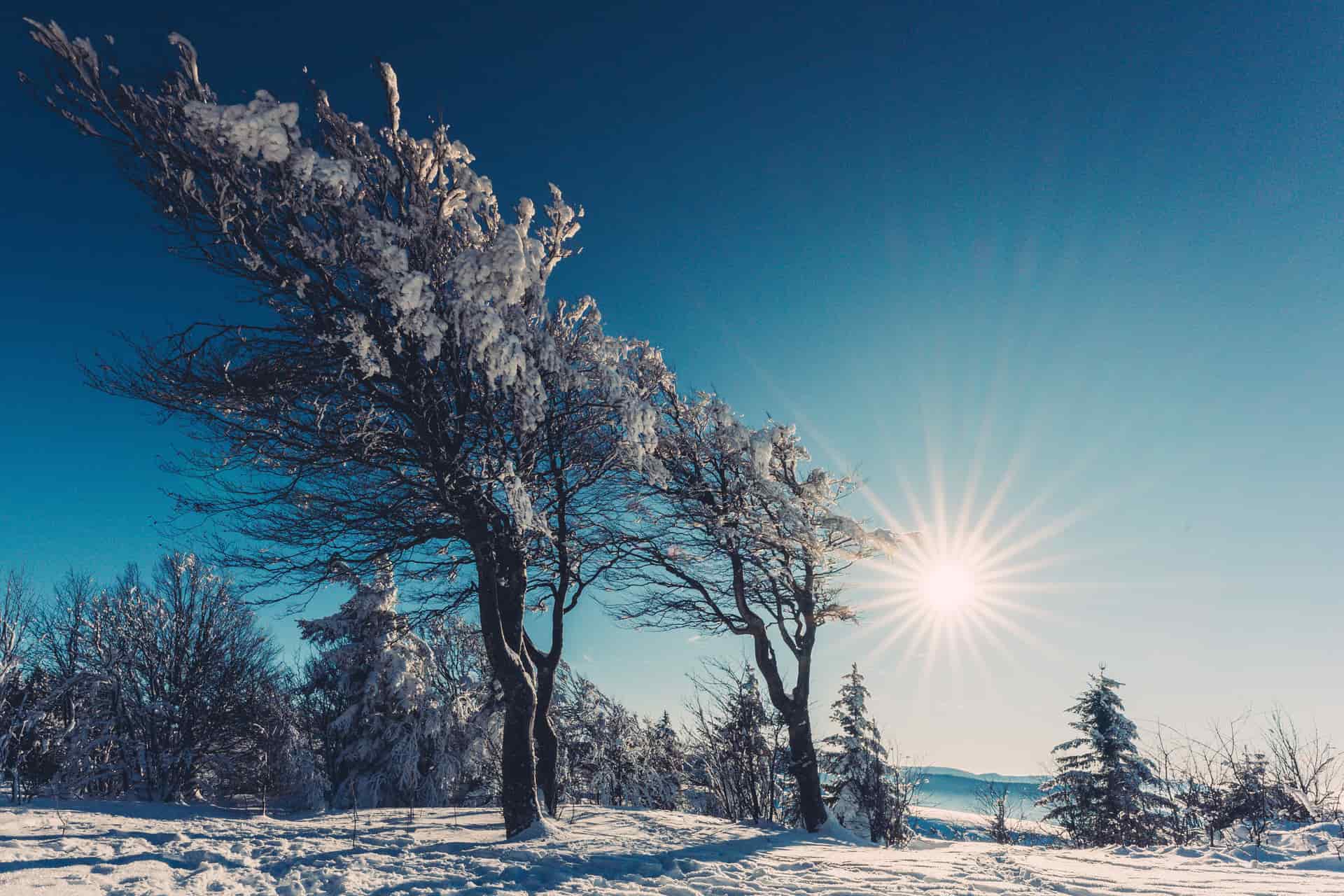
No solar product on the consumer market will keep a bird bath from freezing. What is sold as a solar bird bath is a solar fountain pump: a 1 to 7 watt panel driving a small pump. It circulates water. Circulation delays ice slightly and prevents nothing. If you want open water in a freeze, you need a thermostatic de-icer and a mains socket.
Why the physics does not work
Compare the numbers side by side and the answer stops being a matter of opinion.
| Product | Rated power | What it does |
|---|---|---|
| Solatec solar fountain pump | 1.4 W panel | Drives a small pump in direct sun |
| POPOSOAP solar fountain pump | 6.5 W panel | Same, with a battery so it does not stutter |
| K&H Ice Eliminator Original | 50 W element | Holds a small basin above freezing |
| K&H Super Ice Eliminator | 80 W element | Holds a typical basin above freezing |
| Farm Innovators HBI-150 | 150 W element | Heats a 1.5 gallon basin |
The smallest de-icer here draws roughly eight times the peak rating of the largest solar panel — and the solar figure is peak output in full sun, not what a panel delivers under a January overcast.
And that is before the second problem: solar panels produce nothing at night. Water freezes at night. A device whose power source shuts off exactly when the problem occurs is not a solution to that problem, whatever the listing photograph suggests.
What about the battery models?
A battery fixes the flicker — a bare floating solar pump stops the instant a cloud passes, which looks broken. The POPOSOAP carries a 3000 mAh backup and keeps running through cloud and for a while after dusk. That is a genuine improvement to a fountain.
It is not an improvement to a heater, because it is still not one. A 3000 mAh battery at pump voltage holds a few watt-hours. A 50 W element consumes that in minutes. Battery capacity also falls in the cold, which is when you were relying on it.
Does circulating water stop it freezing?
A little, and not enough. Moving water resists surface ice formation because the surface is being disturbed and warmer water from below is being brought up. In a shallow bird bath, in still air, at 30 F, that buys you some time. At 20 F with a wind, a fountain freezes — often with the nozzle iced into a lump and the pump running dry underneath it, which is how solar pumps die.
What solar is genuinely good for
- Spring through autumn. Moving water is a stronger bird attractant than still water — the sound and movement are visible and audible from much further away.
- Mosquito control. Standing water breeds mosquitoes; moving water largely does not.
- Keeping a bath fresher. Circulation slows the algae and film that make a still summer bath unpleasant — a water wiggler does the same job more simply, and neither one stops ice.
- Yards with no outdoor socket, in mild seasons. No cord, no install, nothing to trip over.
So the sensible setup for a lot of people is both: a solar pump from April to October, and a de-icer from November to March, in the same basin. They are two products for two seasons, and no single purchase covers both. If you want the moving water specifically in winter, the one product that does deliver it is a mains-powered combined unit — the heated bird bath fountains roundup covers those.
If you genuinely have no mains power
Then solar is still not the answer, and neither is anything else that works reliably. Keeping a bird bath from freezing without electricity covers the methods that do help — dark basins in sun, ping-pong balls, siting, and the boring one that actually works, which is carrying warm water out twice a day. All of them are worse than an element. We would rather say that than sell you a panel.
What to buy
Winter Perch is funded by affiliate commission. If you buy through a link on this page we may earn a commission at no extra cost to you, and it never decides a ranking. Full disclosure · how we pick.
Quick picks
Ranked, with the trade-off named. Tap a row for the full write-up; the price button goes straight to Amazon.
| # | Product | Best for | Price |
|---|---|---|---|
| 1 |  POPOSOAP Solar Fountain Pump with Battery Backup, 6.5 WThe one solar unit here with a battery, which fixes the flicker problem — and still does not fix the freezing problem, because 6.5 W is a pump, not a heater. | Solar that keeps running when the sun goes behind a cloud | $30.39 · See it on Amazon |
| 2 |  Solatec Solar Bird Bath Fountain Pump, 1.4 WA 1.4 W floating panel that runs only in direct sun. It moves water beautifully in October and does nothing at all on the January morning you actually needed it. | Moving water in shoulder season, not open water in a freeze | $12.99 · See it on Amazon |
| 3 |  K&H Super Ice Eliminator Bird Bath De-Icer, 80 WThe 50 W unit with enough extra element to cope with a bigger basin and a colder night. If you are buying one de-icer without measuring anything, buy this one. | Most yards, most winters — the default de-icer | $28.91 · See it on Amazon |
| 4 |  Erva BA1H Clamp-Mount Heated Bird Bath, 14", 60 WSixty watts, a clamp that grips a rail or a post, and published thermostat set points. The most honest spec sheet in the category. | The lowest published draw of any complete heated bath here | Check price on Amazon |
#ad how we are funded · price as of October 15, 2026
The picks in full
Top pick Solar that keeps running when the sun goes behind a cloud
POPOSOAP Solar Fountain Pump with Battery Backup, 6.5 W
The one solar unit here with a battery, which fixes the flicker problem — and still does not fix the freezing problem, because 6.5 W is a pump, not a heater.
Specifications
- Panel rating
- 6.5 W
- Battery
- 3000 mAh backup
- Protection
- Dry-run protection
- Tubing
- 5 ft
- Winter function
- Circulation only, no heating
Trade-offs
- The battery is the difference between a fountain and a strobe light
- Dry-run protection means it will not cook itself when the basin empties
- A 6.5 W panel keeps working in weaker light than a 1.4 W float
- 5 ft of tubing lets you site the panel in sun and the nozzle in shade
- Still not a de-icer. A pump adds no meaningful heat to the water
- More parts to freeze, crack and clog than a bare floating unit
- Battery capacity falls in the cold, exactly when you are relying on it
Who it is forSomeone who wants moving water for most of the year and has accepted they need a separate answer for January.
Skip it ifSkip it if you are shopping the phrase heated bird bath solar and expecting one purchase to do both jobs. It does not exist. Buy a de-icer for winter and a solar pump for the other eight months.
#ad how we are funded · price as of October 15, 2026
No. 2 Moving water in shoulder season, not open water in a freeze
Solatec Solar Bird Bath Fountain Pump, 1.4 W
A 1.4 W floating panel that runs only in direct sun. It moves water beautifully in October and does nothing at all on the January morning you actually needed it.
Specifications
- Panel rating
- 1.4 W
- Power source
- Direct sunlight only, no battery
- Install
- Free-floating, no wiring
- Winter function
- None below freezing
Trade-offs
- No cord, no socket, no install — it floats
- Moving water is genuinely a stronger bird attractant than still water
- Cheap enough to be a shoulder-season accessory rather than a decision
- 1.4 W of solar is not a heater and will not stop water freezing
- Stops the moment a cloud crosses, because there is no battery
- Moving water freezes too — circulation delays ice, it does not prevent it
Who it is forSpring through autumn, where the attraction of moving water is the point.
Skip it ifSkip it if you bought it to solve winter. It cannot. If you want water open in a freeze you need a thermostatic de-icer and a socket, and no amount of solar marketing changes the physics.
#ad how we are funded · price as of October 15, 2026
Where these specs came from
No. 3 Most yards, most winters — the default de-icer
K&H Super Ice Eliminator Bird Bath De-Icer, 80 W
The 50 W unit with enough extra element to cope with a bigger basin and a colder night. If you are buying one de-icer without measuring anything, buy this one.
Specifications
- Rated watts
- 80 W
- Form
- Submersible, natural rock shape
- Control
- Automatic
- Finish
- Paintable enamel
- Safety
- Safety listed for outdoor submersible use
Trade-offs
- 80 W is the sweet spot: enough for a 20-inch basin, well under a 150 W bath
- Automatic, so there is no switch to forget
- Same drop-in convenience as the 50 W, same paintable finish
- Works in the bath you already own, at any mount height
- 60 percent more draw than the 50 W for buyers with a small basin who did not need it
- Still a cord in the water
- The rock shape takes up basin space small birds could be standing in
Wattage: 80 W
K&H states 80 watts, and the listing is explicit that the unit is safety listed and automatic. Eighty watts holds a typical 16 to 20 inch basin open through a normal northern winter night.
At full draw for a four-month winter (120 days), plugged in around the clock: 80 W x 2880 h = 230.40 kWh, x $0.1834/kWh = $42.26 — $42.26 at $0.1834/kWh. A thermostatic unit will land under that.
Who it is forThe default buyer: an existing 16 to 20 inch bath, a normal northern winter, no interest in replacing the bath itself.
Skip it ifSkip it if your basin is under about 14 inches. The 50 W version does that job and costs less to run every single day of the winter.
#ad how we are funded · price as of October 15, 2026
No. 4 The lowest published draw of any complete heated bath here
Erva BA1H Clamp-Mount Heated Bird Bath, 14", 60 W
Sixty watts, a clamp that grips a rail or a post, and published thermostat set points. The most honest spec sheet in the category.
Specifications
- Rated watts
- 60 W
- Basin diameter
- 14"
- Thermostat
- On near 38 F, off near 65 F
- Mount
- Clamp — rail, post or 4x4
- Build
- Insulated, fire retardant, BPA-safe dish
- Warranty
- 1 year
Trade-offs
- 60 W published — under half the Farm Innovators' rated draw
- Publishes the thermostat set points, which is the number that actually predicts your bill
- Clamp mount fits things a bracket will not: fence posts, deck posts, 4x4s
- Insulated body, so more of the heat goes into the water
- 14" basin is the smallest complete bath here — a crowd will not fit
- Clamp mounts need a solid edge; they do not work on a wide flat cap rail
- Made-in-USA metalwork prices accordingly
Wattage: 60 W
Erva states 60 watts and — unusually — publishes the thermostat set points as well: on at about 38 F, off at about 65 F. That second figure is what tells you the element is not running all winter, and almost nobody else prints it.
At full draw for a four-month winter (120 days), plugged in around the clock: 60 W x 2880 h = 172.80 kWh, x $0.1834/kWh = $31.69 — $31.69 at $0.1834/kWh. A thermostatic unit will land under that.
Who it is forAnyone who cares what the thing costs to run and would rather have a small bath that draws 60 W than a big one that draws 150 W.
Skip it ifSkip it if your yard regularly has five birds queuing. Fourteen inches is a two-bird bath, and a robin will monopolize it.
#ad how we are funded · price as of October 15, 2026
What we would skip
What we would skip
Anything marketed as a solar heated bird bath
The phrase describes a product category that does not exist. Every listing under that heading is a solar fountain pump, a bath sold alongside one, or a bath with a solar light in it. None of them heats water.
A bare 1.4 W floating pump if you get any wind
Free-floating units drift into the rim, spray over the edge and empty the basin, and stop dead the moment cloud crosses. In an exposed yard the battery models are worth the difference even in summer.
How we picked
- Published panel rating against published element rating — the comparison the category avoids making.
- What the power source does at night, which is when water freezes.
- Battery capacity in cold, where lithium chemistry loses usable capacity.
- Honest seasonal fit: we recommend solar for the eight months it works and say plainly that it fails in the other four.
We have not tested any of these. What we did instead: read the manufacturers’ own listings, compiled the published specifications, computed the running cost at a cited electricity rate, and refreshed the prices daily. The full method is published.
For the full ranked lists, see the de-icer roundup and the heated bath roundup. For the running cost of doing it properly, the arithmetic is published.
Questions people actually ask
- Do solar heated bird baths work?
- No, because they are not heated. Solar bird bath products are 1 to 7 watt fountain pumps that circulate water. Circulation delays surface ice a little in mild conditions and does nothing in a real freeze.
- Is there any solar product that keeps water unfrozen?
- Not at consumer scale. A solar setup capable of driving a 50 W element through a winter night needs a panel and battery bank an order of magnitude larger than anything sold as a bird bath accessory, at many times the cost of just running a cord.
- Will a solar fountain stop my bird bath icing over?
- It will slow surface ice in still air just below freezing. It will not work in wind, in weak sun, or overnight — which is most of a northern winter.
- Should I buy solar at all then?
- Yes, for the other eight months. Moving water attracts more birds than still water and keeps a summer bath fresher. Just buy a de-icer as well and treat them as two seasonal products.
Sources
Read next
- How to Keep a Bird Bath From Freezing Without Electricity
Every no-power method rated honestly — what it buys you, and the temperature at which it stops working.
- The Best Bird Bath De-Icers
Five drop-in de-icers from 50 W to 250 W, matched to basin size, with the running cost worked out for each.
- What a Heated Bird Bath Actually Costs to Run
Watts to kilowatt-hours to dollars, at the current US average residential rate — the table nobody else in this category publishes.
- Winter Birding Tips
Why winter birding is easier than it looks, how to stay out long enough to enjoy it, and where the birds concentrate.