Heated bird baths / Guide
How to Keep a Bird Bath From Freezing Without Electricity
There is no method here as good as an element. These are the ones that genuinely help, in order, with an honest account of where each one stops working.

Without power, the method that reliably delivers water is carrying it out warm, twice a day, at the same times. Everything else — dark shallow basins in sun, floating balls, insulation underneath, siting out of wind — is a marginal gain that fails in a hard freeze. Solar does not solve this; a 1 to 7 watt panel drives a pump, not a heater.
Start with the honest framing
If you found this page hoping for a passive method that keeps water open through a January night, we do not have one and neither does anybody else. Keeping a few liters of water above freezing in sub-freezing air takes energy, continuously, and there is no clever arrangement of physical objects that produces it for free.
What follows is what genuinely helps, ranked. Several of these are worth doing even if you do run an element, because they cut your running cost.
1. The daily bowl — the one that works
The Cornell Lab's advice for this exact situation is disarmingly simple: set out a bowl of water at the same time each day, and bring it in when ice forms. Birds are creatures of routine and they learn a schedule fast. A reliable half-hour of open water at eight in the morning is worth more than an unreliable attempt at all-day water.
- Use warm, not hot, water — hot water can crack a cold ceramic or stone basin.
- Same times each day. Early morning matters most; birds have burned overnight reserves and need to drink.
- A shallow, dark, wide vessel gives you the longest window.
- Bring it in before it freezes solid if the basin is porous.
2. Siting — free, and it helps every other method
Put the bath out of the prevailing wind and in whatever winter sun your yard gets. Wind is the biggest single driver of heat loss from an open surface; direct sun on a dark basin is the only free energy input available. The lee of a hedge, a south-facing wall, the sheltered side of a shed — all of these buy you real time.
3. A dark, shallow, wide basin
Dark absorbs sun. Shallow warms faster. Wide catches more of it. On a clear day just below freezing, a black rubber tray in direct sun can stay open all afternoon while a deep stone basin two feet away is solid.
The limitation is obvious and worth stating: it needs sun, so it fails under cloud and it fails at night. It also refreezes fast once the sun moves off it, precisely because shallow water has little thermal mass.
4. Insulate underneath, and around
A basin loses heat downward into whatever it stands on. Break that path — a slab of rigid foam, a wooden block, an upturned crate — and you slow it. Wrapping the outside of a deep basin does a similar job for the sides. Erva builds an insulated body into its heated baths, which is a decent signal that the effect is real.
5. Floating objects
A ping-pong ball or a small float moved by wind disturbs the surface and slows the formation of a thin ice skin. It is the most-repeated tip in this category and the weakest one. It helps at around freezing and is defeated by real cold. Cost is near zero, so try it; do not count on it.
6. Volume and depth — a genuine trade-off
More water freezes more slowly, because there is more thermal mass to lose. That argues for a deep basin. But deep water is worse for small birds, and a deep basin that does freeze traps a large block of ice that takes all day to clear. Somewhere around two to three inches is the practical compromise: enough mass to slow the freeze, shallow enough to be usable.
What about solar?
It is the obvious idea and it does not work. The largest solar bird bath product on this site is a 6.5 W panel — that is peak output in full sun — against a 50 W element as the smallest thing that reliably keeps water open. The gap is roughly eightfold before you account for cloud, short winter days, and the fact that panels produce nothing at night, when water freezes. The full comparison is here.
A solar pump is still worth owning for the other eight months of the year, and the battery models genuinely work better than the bare floats. Just do not buy one expecting it to solve January.
The thing worth considering instead
Getting an outdoor GFCI socket fitted. It is not a product this category can sell you, which is why nobody mentions it, but for a lot of yards it is a one-off job that converts a permanently mediocre situation into a solved one. After that, a 50 W de-icer costs about twenty-six dollars to run for a whole winter at the current national average rate.
If you can get power, or want the solar pump anyway
Winter Perch is funded by affiliate commission. If you buy through a link on this page we may earn a commission at no extra cost to you, and it never decides a ranking. Full disclosure · how we pick.
Quick picks
Ranked, with the trade-off named. Tap a row for the full write-up; the price button goes straight to Amazon.
| # | Product | Best for | Price |
|---|---|---|---|
| 1 |  POPOSOAP Solar Fountain Pump with Battery Backup, 6.5 WThe one solar unit here with a battery, which fixes the flicker problem — and still does not fix the freezing problem, because 6.5 W is a pump, not a heater. | Solar that keeps running when the sun goes behind a cloud | $30.39 · See it on Amazon |
| 2 | 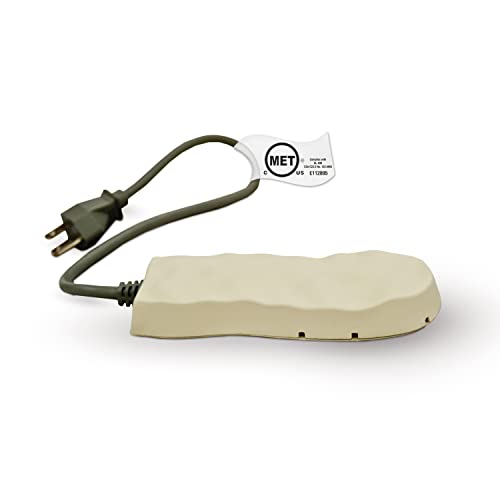 K&H Ice Eliminator Original Birdbath De-Icer, 50 WFifty watts is the smallest published draw of anything here, and it is a rock-shaped lump you drop into the bath you already own. For most people this is the cheapest correct answer. | The lowest running cost on the site | $24.99 · See it on Amazon |
#ad how we are funded · price as of October 15, 2026
The picks in full
Top pick Solar that keeps running when the sun goes behind a cloud
POPOSOAP Solar Fountain Pump with Battery Backup, 6.5 W
The one solar unit here with a battery, which fixes the flicker problem — and still does not fix the freezing problem, because 6.5 W is a pump, not a heater.
Specifications
- Panel rating
- 6.5 W
- Battery
- 3000 mAh backup
- Protection
- Dry-run protection
- Tubing
- 5 ft
- Winter function
- Circulation only, no heating
Trade-offs
- The battery is the difference between a fountain and a strobe light
- Dry-run protection means it will not cook itself when the basin empties
- A 6.5 W panel keeps working in weaker light than a 1.4 W float
- 5 ft of tubing lets you site the panel in sun and the nozzle in shade
- Still not a de-icer. A pump adds no meaningful heat to the water
- More parts to freeze, crack and clog than a bare floating unit
- Battery capacity falls in the cold, exactly when you are relying on it
Who it is forSomeone who wants moving water for most of the year and has accepted they need a separate answer for January.
Skip it ifSkip it if you are shopping the phrase heated bird bath solar and expecting one purchase to do both jobs. It does not exist. Buy a de-icer for winter and a solar pump for the other eight months.
#ad how we are funded · price as of October 15, 2026
No. 2 The lowest running cost on the site
K&H Ice Eliminator Original Birdbath De-Icer, 50 W
Fifty watts is the smallest published draw of anything here, and it is a rock-shaped lump you drop into the bath you already own. For most people this is the cheapest correct answer.
Specifications
- Rated watts
- 50 W
- Form
- Submersible rock-shaped housing
- Safety listing
- Tested and certified by MET Labs
- Finish
- Paintable — spray to match your basin
- Control
- Automatic
Trade-offs
- 50 W is the lowest published draw on this site
- Uses the bath you already own, so the whole purchase is the element
- Solid housing is weighted to stay put instead of floating out
- Paintable, so it stops looking like a gray lump in a stone bowl
- 50 W will not hold a large, deep or wind-exposed basin open in a hard freeze
- It is a cord in your bath water, which some people simply do not want to look at
- No published thermostat set points
Wattage: 50 W
K&H states 50 watts. That is the difference, at the cited EIA rate and at full draw for a four-month winter, between roughly twenty-six dollars and roughly a hundred and thirty — and no thermostatic de-icer runs at full draw all winter.
At full draw for a four-month winter (120 days), plugged in around the clock: 50 W x 2880 h = 144.00 kWh, x $0.1834/kWh = $26.41 — $26.41 at $0.1834/kWh. A thermostatic unit will land under that.
Who it is forAnyone who already owns a bath they like and wants water in it in December for the least money and the least power.
Skip it ifSkip it if your bath is wide, deep, or sits in open wind, or if you are routinely below about 10 F. Step up to the 80 W Super or an API de-icer.
#ad how we are funded · price as of October 15, 2026
How we picked
- Ranked by whether the method delivers water overnight and in a hard freeze, not by cost or convenience.
- The daily-bowl method is cited to the Cornell Lab, not paraphrased from memory.
- Solar rated against published panel and element wattages, so the comparison is arithmetic rather than opinion.
- No method is oversold. Where something only works above about 25 F in sun, we say so.
We have not tested any of these. What we did instead: read the manufacturers’ own listings, compiled the published specifications, computed the running cost at a cited electricity rate, and refreshed the prices daily. The full method is published.
The broader ranking of all methods, including the powered ones, is on how to keep a bird bath from freezing. Whatever you manage on water, high-fat food is the other half of the answer, and it needs no electricity at all.
Questions people actually ask
- How do you keep a bird bath from freezing without electricity?
- The only reliable method is carrying warm water out at the same time each day and bringing the bowl in when it freezes. Siting out of the wind, a dark shallow basin in sun, and insulating underneath all help at the margins.
- Do ping-pong balls really work?
- Barely. Wind-driven movement delays a thin surface skin near freezing and is defeated by real cold. It costs nothing, so it is worth trying, but it is not a solution.
- Will a solar bird bath work without mains power?
- It will circulate water in direct sun and do nothing at night or in a freeze — the same limitation a water wiggler has. Solar bird bath products are 1 to 7 watt pumps, not heaters.
- Can I use hot water?
- Warm, not hot. Hot water can crack a cold ceramic or stone basin, and it cools to ambient quickly anyway.
- Is a deeper bird bath better in winter?
- More water freezes more slowly, so depth helps — but deep water is worse for small birds and traps a big block of ice when it does freeze. Two to three inches is the practical compromise.
Sources
Read next
- How to Keep a Bird Bath From Freezing
Six methods ranked by how well they work in a real freeze, and the three folk remedies that actively harm birds.
- Solar Heated Bird Baths: The Honest Answer
Why no solar product on the market keeps a bird bath unfrozen, what solar is actually good for, and what to buy for a real freeze.
- The Best Bird Bath De-Icers
Five drop-in de-icers from 50 W to 250 W, matched to basin size, with the running cost worked out for each.
- What to Feed Birds in Winter
The winter list ordered by fat content, what each food reaches, and the two purchases that cover almost everything.