Heated bird baths / Guide
How to Keep a Bird Bath From Freezing
Ranked honestly by effectiveness, not by how cheap they are. One method works reliably; the rest buy you time on a mild day.

A thermostatic de-icer is the only method that works reliably below freezing. Everything else — dark basins in sun, ping-pong balls, siting out of the wind, topping up with warm water — helps at the margins on a mild day and fails on the cold nights when it matters. Ranked honestly below.
The methods, ranked by how well they work
1. A thermostatic de-icer or heated bath — works every time
An element in the water, controlled by a thermostat. It works at any temperature the element is sized for, it works overnight, it works in wind, and it works while you are asleep or away. There is no second method with those properties.
The cost is an outdoor socket and roughly $26 to $79 for a four-month winter, computed at the current national average rate — the arithmetic is published in full. If you have mains power within reach, this is the answer and the rest of this page is background.
2. Siting out of the wind — free, and genuinely effective
Wind is the largest single driver of heat loss from an open water surface. A bath in the lee of a hedge, a shed or the house freezes measurably later than the same bath on the exposed side, and if you are running an element, it costs less to run there.
This does not keep water open through a hard freeze on its own. It does buy hours on a marginal night, and it costs nothing but the decision.
3. Carrying warm water out twice a day — works, and is tedious
The Cornell Lab's suggestion for people without power at the bath is the plainest one: set out a bowl of water at the same time each day and bring it in when it freezes. Birds learn the schedule quickly, and a reliable daily window of open water is worth a great deal.
It works. It is also two trips a day in bad weather all winter, and it does nothing at three in the morning. Most people who try this switch to an element by January, which is the honest thing to say about it.
4. A dark, shallow basin in direct sun — marginal
A dark surface absorbs more solar radiation, and shallow water heats faster. On a clear day just below freezing this can keep a bath open through the afternoon. On an overcast day, or at night, or below about 25 F, it does nothing at all — and clear winter nights are also the coldest ones.
5. Ping-pong balls or a floating object — very marginal
The theory is that a floating ball moved by wind disturbs the surface and delays ice formation. In practice it delays a thin surface skin in light freezing conditions and is defeated by anything colder. It costs almost nothing and is worth trying if you have no power; do not expect it to be the answer.
6. Insulating the basin underneath — marginal, and worth doing anyway
A basin sitting on cold stone loses heat downward as well as upward. Insulating underneath — a foam pad, a wooden block, anything that breaks the thermal path — slows that. Erva is the only maker here that builds an insulated body into the product, which tells you it is a real effect and also that most makers do not bother.
Three things that harm birds — never do these
A quick comparison
| Method | Works below 25 F | Works overnight | Cost |
|---|---|---|---|
| Thermostatic de-icer | Yes | Yes | About $26-42 per winter to run |
| Complete heated bath | Yes | Yes | About $32-79 per winter to run |
| Siting out of wind | Helps | Helps | Free |
| Warm water twice a day | For a while, twice a day | No | Free, plus your time |
| Dark basin in sun | No | No | Free |
| Floating ball | No | No | Near zero |
| Insulating underneath | Helps | Helps | Near zero |
If you have no electricity at the bath
Read keeping a bird bath from freezing without electricity, which goes deeper into the methods above and is honest about their limits. And note that solar is not the workaround — a 1 to 7 watt panel drives a pump, not a heater.
What to buy if you do have power
Winter Perch is funded by affiliate commission. If you buy through a link on this page we may earn a commission at no extra cost to you, and it never decides a ranking. Full disclosure · how we pick.
Quick picks
Ranked, with the trade-off named. Tap a row for the full write-up; the price button goes straight to Amazon.
| # | Product | Best for | Price |
|---|---|---|---|
| 1 |  K&H Super Ice Eliminator Bird Bath De-Icer, 80 WThe 50 W unit with enough extra element to cope with a bigger basin and a colder night. If you are buying one de-icer without measuring anything, buy this one. | Most yards, most winters — the default de-icer | $28.91 · See it on Amazon |
| 2 | 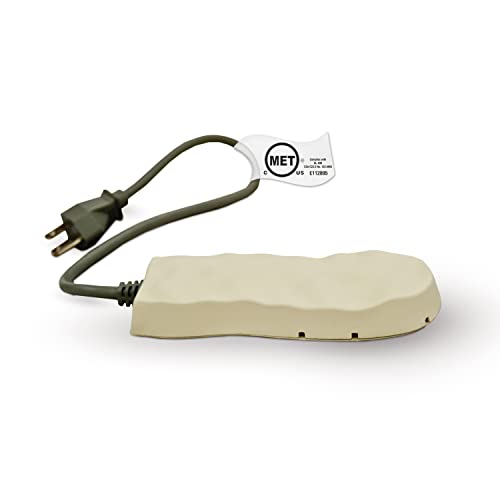 K&H Ice Eliminator Original Birdbath De-Icer, 50 WFifty watts is the smallest published draw of anything here, and it is a rock-shaped lump you drop into the bath you already own. For most people this is the cheapest correct answer. | The lowest running cost on the site | $24.99 · See it on Amazon |
| 3 |  Farm Innovators HBI-150 Heated Birdbath, 150 WThe one heated bath in this category whose maker puts the wattage on the listing, and it is also the easiest one to lift off and clean. | Deck rails, and anyone who wants a published wattage | $84.99 · See it on Amazon |
#ad how we are funded · price as of October 15, 2026
The picks in full
Top pick Most yards, most winters — the default de-icer
K&H Super Ice Eliminator Bird Bath De-Icer, 80 W
The 50 W unit with enough extra element to cope with a bigger basin and a colder night. If you are buying one de-icer without measuring anything, buy this one.
Specifications
- Rated watts
- 80 W
- Form
- Submersible, natural rock shape
- Control
- Automatic
- Finish
- Paintable enamel
- Safety
- Safety listed for outdoor submersible use
Trade-offs
- 80 W is the sweet spot: enough for a 20-inch basin, well under a 150 W bath
- Automatic, so there is no switch to forget
- Same drop-in convenience as the 50 W, same paintable finish
- Works in the bath you already own, at any mount height
- 60 percent more draw than the 50 W for buyers with a small basin who did not need it
- Still a cord in the water
- The rock shape takes up basin space small birds could be standing in
Wattage: 80 W
K&H states 80 watts, and the listing is explicit that the unit is safety listed and automatic. Eighty watts holds a typical 16 to 20 inch basin open through a normal northern winter night.
At full draw for a four-month winter (120 days), plugged in around the clock: 80 W x 2880 h = 230.40 kWh, x $0.1834/kWh = $42.26 — $42.26 at $0.1834/kWh. A thermostatic unit will land under that.
Who it is forThe default buyer: an existing 16 to 20 inch bath, a normal northern winter, no interest in replacing the bath itself.
Skip it ifSkip it if your basin is under about 14 inches. The 50 W version does that job and costs less to run every single day of the winter.
#ad how we are funded · price as of October 15, 2026
No. 2 The lowest running cost on the site
K&H Ice Eliminator Original Birdbath De-Icer, 50 W
Fifty watts is the smallest published draw of anything here, and it is a rock-shaped lump you drop into the bath you already own. For most people this is the cheapest correct answer.
Specifications
- Rated watts
- 50 W
- Form
- Submersible rock-shaped housing
- Safety listing
- Tested and certified by MET Labs
- Finish
- Paintable — spray to match your basin
- Control
- Automatic
Trade-offs
- 50 W is the lowest published draw on this site
- Uses the bath you already own, so the whole purchase is the element
- Solid housing is weighted to stay put instead of floating out
- Paintable, so it stops looking like a gray lump in a stone bowl
- 50 W will not hold a large, deep or wind-exposed basin open in a hard freeze
- It is a cord in your bath water, which some people simply do not want to look at
- No published thermostat set points
Wattage: 50 W
K&H states 50 watts. That is the difference, at the cited EIA rate and at full draw for a four-month winter, between roughly twenty-six dollars and roughly a hundred and thirty — and no thermostatic de-icer runs at full draw all winter.
At full draw for a four-month winter (120 days), plugged in around the clock: 50 W x 2880 h = 144.00 kWh, x $0.1834/kWh = $26.41 — $26.41 at $0.1834/kWh. A thermostatic unit will land under that.
Who it is forAnyone who already owns a bath they like and wants water in it in December for the least money and the least power.
Skip it ifSkip it if your bath is wide, deep, or sits in open wind, or if you are routinely below about 10 F. Step up to the 80 W Super or an API de-icer.
#ad how we are funded · price as of October 15, 2026
No. 3 Deck rails, and anyone who wants a published wattage
Farm Innovators HBI-150 Heated Birdbath, 150 W
The one heated bath in this category whose maker puts the wattage on the listing, and it is also the easiest one to lift off and clean.
Specifications
- Rated watts
- 150 W
- Water capacity
- 1.5 gallons
- Dimensions
- 5" x 20" x 25"
- Weight
- 5.25 lb
- Mount
- Twist deck mount, hidden electrical connection
- Thermostat
- Internal
Trade-offs
- Publishes a rated wattage, which most of this category does not
- Twist-off dish lifts straight off to dump, scrub and refill
- The electrical connection sits under the dish, so the cord is not draped over your rail
- 1.5 gallons is a real reservoir, not a puddle that boils off in a dry wind
- 150 W is the top of the range here — the K&H de-icer draws a third of that
- Plastic, so it looks like equipment rather than garden furniture
- Deck-mount only; there is no pedestal version of this model
Wattage: 150 W
Farm Innovators states 150 watts, with an internal thermostat so the element only draws when the water is near freezing. At 150 W it is the highest rated draw of any complete bath here, and the thermostat is why that ceiling is rarely the real bill.
At full draw for a four-month winter (120 days), plugged in around the clock: 150 W x 2880 h = 432.00 kWh, x $0.1834/kWh = $79.23 — $79.23 at $0.1834/kWh. A thermostatic unit will land under that.
Who it is forThe established feeder owner adding water to a deck rail they can already reach from an outdoor socket.
Skip it ifSkip it if your bath already exists and you like it. A 50 W de-icer dropped into the bath you own does the same job for less power and less money.
#ad how we are funded · price as of October 15, 2026
How we picked
- Ranked by whether the method works overnight and below 25 F, which is when it matters, rather than by cost.
- Published wattage and computed running cost for the methods that involve a product.
- Named authority for the low-tech method — the Cornell Lab's daily-bowl suggestion is cited, not paraphrased from memory.
- Explicit warnings on the three additives that appear in folk advice and harm birds.
We have not tested any of these. What we did instead: read the manufacturers’ own listings, compiled the published specifications, computed the running cost at a cited electricity rate, and refreshed the prices daily. The full method is published.
Full lists: de-icers and complete heated baths. Water is only one part of a winter yard — food and shelter are the other two.
Questions people actually ask
- What is the best way to keep a bird bath from freezing?
- A thermostatic de-icer. It is the only method that works overnight, in wind and in a real freeze. Everything else buys hours on a mild day.
- Can I put salt in a bird bath to stop it freezing?
- No. Salt is toxic to birds at the concentrations needed to lower the freezing point usefully, and it damages the plants and soil around the bath. Never add anything to the water.
- Do ping-pong balls keep a bird bath from freezing?
- Barely. A floating ball moved by wind delays a thin surface skin in light freezing conditions and is defeated by anything colder. It costs almost nothing, so it is worth trying if you have no power, but it is not a solution.
- Will a dark bird bath in the sun stay unfrozen?
- Sometimes, on a clear day just below freezing. Not overnight, not under cloud, and not in a hard freeze — and clear nights are the coldest ones.
- How often should I add warm water?
- Twice a day is the realistic cadence, at the same times, so birds learn the schedule. The Cornell Lab suggests exactly this for people without power at the bath.
Sources
Read next
- How to Keep a Bird Bath From Freezing Without Electricity
Every no-power method rated honestly — what it buys you, and the temperature at which it stops working.
- The Best Bird Bath De-Icers
Five drop-in de-icers from 50 W to 250 W, matched to basin size, with the running cost worked out for each.
- What a Heated Bird Bath Actually Costs to Run
Watts to kilowatt-hours to dollars, at the current US average residential rate — the table nobody else in this category publishes.
- The Winter Bird Yard Checklist
The October changeover in order: feeders, water, shelter, what to leave standing, and the winter maintenance schedule.