Heated bird baths / Guide
Outdoor Power for a Heated Bird Bath
Everything electrical on this site ends at the same sentence: use an outdoor-rated cord on a GFCI circuit. This is the page that explains what that actually means.
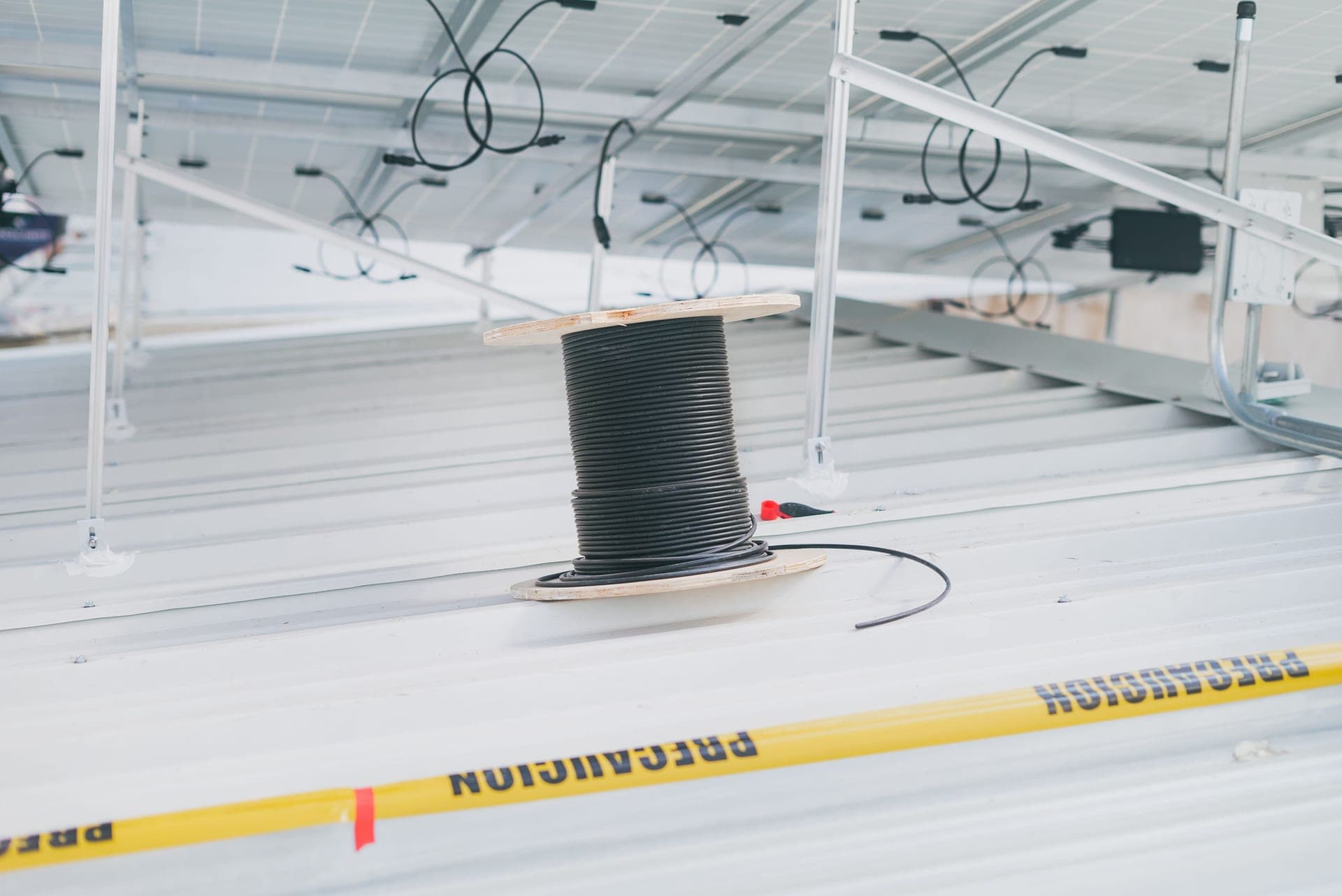
Three things, in order. A GFCI-protected outlet — non-negotiable, because this is water and electricity in a yard. An outdoor-rated cord if the unit does not reach: look for SJTW on the jacket and 12 or 14 gauge, not a thin indoor cord in a green sleeve. And a drip loop at every connection. Get those right and the rest of this category is unremarkable.
Winter Perch is funded by affiliate commission. If you buy through a link on this page we may earn a commission at no extra cost to you, and it never decides a ranking. Full disclosure · how we pick.
Quick picks
Ranked, with the trade-off named. Tap a row for the full write-up; the price button goes straight to Amazon.
| # | Product | Best for | Price |
|---|---|---|---|
| 1 | Electriduct Inline GFCI Adapter, UL OutdoorThe single most important object on this page. If your outdoor socket is not GFCI-protected, this is what stands between water, electricity and a bad afternoon. | Adding ground-fault protection to a socket that has none | Check price on Amazon |
| 2 | Iron Forge Cable 25 ft Lighted Outdoor Extension Cord, 12/3 SJTWTwelve-gauge, SJTW-jacketed and lit at the plug end, which is how you know at a glance in December whether the bath is actually powered. | The default cord for a de-icer | Check price on Amazon |
| 3 | Watts Wire 25 ft Outdoor Extension Cord, 12 GaugeThe same 12-gauge spec with a jacket specified down to well below zero — which matters, because a cord that goes rigid in January is a cord that cracks. | Cold-weather flexibility | Check price on Amazon |
| 4 | Intermatic HB51K Outdoor Timer with PhotocellA weatherproof 24-hour timer with a light sensor. The honest use here is narrow but real: cutting the hours a de-icer is energized in a mild climate. | Running a de-icer only when it is actually needed | Check price on Amazon |
#ad how we are funded · no live price right now
The picks in full
Top pick Adding ground-fault protection to a socket that has none
Electriduct Inline GFCI Adapter, UL Outdoor
The single most important object on this page. If your outdoor socket is not GFCI-protected, this is what stands between water, electricity and a bad afternoon.
Specifications
- Type
- Inline GFCI adapter, 18 in single-outlet cord
- Rating
- 15 A, 12 gauge
- Listing
- UL, outdoor waterproof
- Reset
- Auto reset
- Variants
- Right-angle triple-tap version also listed
Trade-offs
- Turns an unprotected outdoor socket into a protected one for a fraction of an electrician's call-out
- UL listed and specified for outdoor waterproof service
- 12-gauge lead matches the cords worth using with it
- The triple-tap variant powers a bath, a heated fountain and a timer from one protected point
- A plug-in adapter is a second-best solution — a properly wired GFCI outlet is better and permanent
- Auto-reset means it can re-energize a circuit that tripped for a real reason; check why it tripped
- One more connection point sitting outdoors, so it needs a drip loop like everything else
Who it is forAnyone whose outdoor socket predates GFCI requirements, or who is not certain whether it is protected.
Skip it ifSkip it if your outdoor circuit is already GFCI-protected at the outlet or the breaker — doubling up gains nothing and adds a failure point.
#ad how we are funded · no live price right now
No. 2 The default cord for a de-icer
Iron Forge Cable 25 ft Lighted Outdoor Extension Cord, 12/3 SJTW
Twelve-gauge, SJTW-jacketed and lit at the plug end, which is how you know at a glance in December whether the bath is actually powered.
Specifications
- Gauge
- 12/3 (12 AWG, 3 conductor)
- Jacket
- SJTW — rated for outdoor wet use
- Length
- 25 ft
- Rating
- 15 A
- Plug
- 3-prong grounded, lighted end
Trade-offs
- 12-gauge is heavier than a de-icer needs, which is the right direction to err in
- SJTW is the jacket rating that actually means outdoor wet service — not just a green cord
- The lit end tells you the circuit is live without walking out to the bath
- 25 ft covers the gap between most sockets and most bath placements
- Heavier and stiffer than a 16-gauge cord, and it stiffens further in deep cold
- Still needs GFCI protection — a cord is not a safety device
- Yellow is visible, which is good for not tripping over it and bad for looking at
Who it is forAnyone running a de-icer or a heated bath more than a few feet from a socket.
Skip it ifSkip it if your unit already reaches the socket. An unnecessary cord is one more connection sitting outdoors in weather, and connections are where this category actually fails.
#ad how we are funded · no live price right now
No. 3 Cold-weather flexibility
Watts Wire 25 ft Outdoor Extension Cord, 12 Gauge
The same 12-gauge spec with a jacket specified down to well below zero — which matters, because a cord that goes rigid in January is a cord that cracks.
Specifications
- Gauge
- 12 AWG
- Length
- 25 ft (100 ft also listed)
- Jacket
- Flexible vinyl, moisture and UV resistant
- Temperature range
- Stated -40 F to +140 F
- End
- Lighted, grounded
Trade-offs
- A stated cold-temperature rating, which most cord listings simply do not give
- 12 gauge with a flexible jacket — the combination is unusual and useful outdoors
- UV-resistant jacket survives being left out season after season
- Also sold in 100 ft for a bath at the far end of a yard
- Costs more than a generic outdoor cord of the same gauge
- Still not a GFCI device, and it does not make an unprotected socket safe
- 100 ft of 12-gauge is heavy and awkward to coil
Who it is forNorthern-tier yards where the cord stays outdoors through a real winter.
Skip it ifSkip it if the cord run is short and sheltered. The cold rating is what you are paying for, and under a deck it is doing nothing for you.
#ad how we are funded · no live price right now
No. 4 Running a de-icer only when it is actually needed
Intermatic HB51K Outdoor Timer with Photocell
A weatherproof 24-hour timer with a light sensor. The honest use here is narrow but real: cutting the hours a de-icer is energized in a mild climate.
Specifications
- Type
- 24-hour outdoor plug-in timer
- Sensor
- Photocell light sensor
- Enclosure
- Weatherproof
- Mode
- Dusk-to-dawn and scheduled
Trade-offs
- Weatherproof housing designed to sit outdoors, unlike an indoor timer in a bag
- Dusk-to-dawn covers the hours water actually freezes in a marginal climate
- A mechanical timer has nothing to lose its settings in a power cut
- Cheap relative to the electricity it can save over a long season
- A timer cannot tell whether the water is frozen. A thermostat can; that is what your de-icer already has, and it is better at this job
- Set it wrong in a cold snap and the bath freezes solid overnight
- Adds a second outdoor connection point to a circuit that already has one
- Saves nothing in a genuinely cold climate, where the element should simply be left to cycle
Who it is forMild or marginal climates where freezing is an overnight event rather than a season-long condition.
Skip it ifSkip it in a real winter, which is most of the audience for this site. Your de-icer's thermostat already runs the element only when the water needs it, and a timer layered on top can only make that decision worse.
#ad how we are funded · no live price right now
The one genuinely dangerous thing people do
Almost every page on this site ends up warning about the same practice, so it belongs on its own page: running a de-icer from an indoor extension cord.
It happens for an ordinary reason. The unit ships with three or six feet of lead, the bath is fifteen feet from the socket, and there is a perfectly good brown cord in a kitchen drawer. Nobody sets out to build something unsafe — they solve a length problem with the cord they own.
GFCI: what it is and why it is first
A ground-fault circuit interrupter watches the current going out against the current coming back. If some of it is leaking to ground — through water, through a damaged cord, through a person — the difference triggers a cutoff in milliseconds.
That is precisely the failure mode this category creates: an energized element in a basin of water, outdoors, all winter, with a cord joint sitting in the weather. GFCI is the protection designed for exactly this situation, and it is why it comes before cord selection rather than after it.
How to tell whether you already have it
- Look at the outlet. A GFCI receptacle has TEST and RESET buttons on its face. If yours has them, you are protected at the outlet.
- Look at the breaker panel. A GFCI breaker also has a TEST button. Some outdoor circuits are protected at the panel rather than the outlet, so an ordinary-looking socket can still be covered.
- Look upstream. One GFCI outlet can protect others downstream of it on the same circuit. A plain outdoor socket fed from a protected garage outlet is protected.
- If you cannot establish any of the above, assume you are not protected and add an inline GFCI adapter, or have an outlet fitted.
Test whatever you have before the season and again midwinter. Press TEST, confirm the power drops, press RESET. A GFCI that does not trip on its own test button is a dead GFCI, and it fails silently.
Reading a cord specification
Two numbers and a letter code decide whether a cord belongs outdoors. All three are printed on the jacket, which is the only place worth reading — the packaging is marketing.
| Marking | What it means | What you want |
|---|---|---|
| SJTW | Junior service, thermoplastic, W = weather/water resistant | The W is the outdoor rating. Insist on it |
| SJT (no W) | Same cord, no weather rating | Indoor only. This is the cord people wrongly use |
| Gauge (AWG) | Conductor thickness. Lower number is thicker | 12 or 14 gauge. 16 is thin for a long run |
| Amp rating | Continuous current the cord can carry | 15 A covers anything on this site several times over |
Counter-intuitively, gauge numbers run backwards: 12 AWG is thicker and better than 16 AWG. A longer run needs a thicker cord, because voltage drops over distance.
How much cord do you actually need?
Less than you think, and buying far more than you need is its own problem — surplus cord gets coiled on the ground, which is where it gets damaged, buried and mown. Measure the real route, not the straight line: along a fence, down a post, around the bed edge.
For reference, the units on this site ship with anywhere from 3.3 to 6 feet of lead. The heated fountain roundup lists the cord length on every pick, because it is the constraint that decides where a bath can go.
The drip loop, which costs nothing
Where two cords join, let the cord hang below the connection before rising into it. Water running along the cable then collects at the bottom of that loop and drips off, instead of tracking along the jacket and into the plug.
It is thirty seconds of arranging and it is the single most effective thing you can do with a connection that has to live outdoors. Do the same where the cord enters the socket.
Siting the connection
- Off the ground. Snow melts and refreezes around a joint lying on a path. Put it on a post, a block, or inside a weatherproof cord cover.
- Out of the mower's world. Cord routed along a bed edge or a fence line survives spring; cord across a lawn does not.
- Not across a path. Both for tripping and because that is where snow gets compacted and cleared with a shovel.
- Secured against wind. A cord swinging from a rail works its own connection loose over a season.
- Checked in autumn. UV, frost and rodents all degrade a jacket. A cracked cord in November is a fault waiting for the first wet week.
On timers — mostly, do not
It is a reasonable-sounding idea: put the de-icer on a timer and cut the hours it runs. In most of this site's audience it is a bad one, and the reason is worth stating plainly.
Your de-icer already has a better controller than any timer. It is thermostatic: it energizes the element when the water approaches freezing and stops when it is clear. A timer knows the hour and nothing else. Layering a clock on top of a thermostat can only make the decision worse — the thermostat was already declining to draw power when it was not needed.
There is a narrow real case: a mild or marginal climate where freezing is an overnight event rather than a season-long condition, and where a dusk-to-dawn photocell genuinely matches the risk window. That is why a timer is on this page at all, ranked last and with the caveat attached. The full running-cost arithmetic is the better place to start if the electricity bill is what is bothering you — the numbers are smaller than most people expect.
What we would skip
What we would skip
Any indoor extension cord, used outdoors
The one genuinely dangerous practice in this category. The jacket is not rated to keep water out, the connection is not designed to sit in weather, and the joint ends up in melting snow. If the cord does not say SJTW or equivalent on the jacket, it does not go outside.
A 16-gauge cord on a long run
Thin conductors over distance mean voltage drop and a warm cord. For a 25 ft run to a de-icer, 12 or 14 gauge costs a few dollars more and removes the question entirely.
A timer on a de-icer in a real winter
Your unit's thermostat already runs the element only when the water needs it. A clock has no idea whether the bath is frozen. In a genuine cold climate a timer can only turn a working system into one that fails on the coldest night.
Burying a cord to tidy it up
Ordinary extension cord is not rated for direct burial and the jacket will fail underground. Route it along a fence or bed edge instead, or have a proper outdoor circuit installed.
Where this fits
This page exists because six others on the site end with the same sentence. Are heated bird baths safe covers the bird-side questions — wet feathers, water depth, what never to add to the water. The de-icer roundup and the heated bath roundup list the cord length on every unit, because it decides placement before anything else does.
Questions people actually ask
- Do I need a GFCI outlet for a heated bird bath?
- Yes. It is the single most important safety measure in this category — water and electricity in a yard is exactly the situation a ground-fault interrupter exists for. If your outdoor socket has no TEST and RESET buttons and is not protected at the breaker, add an inline GFCI adapter or have an outlet fitted.
- Can I use a regular extension cord for a bird bath de-icer?
- No. Use a cord whose jacket is marked SJTW or an equivalent weather rating. An indoor cord used outdoors is the one genuinely hazardous practice here, because the jacket and the connection are not built to sit in weather.
- What gauge extension cord do I need?
- 12 or 14 gauge for a typical run to a bird bath. Gauge numbers run backwards — 12 AWG is thicker than 16 AWG — and a longer run needs a thicker conductor to avoid voltage drop.
- What is a drip loop?
- Letting the cord hang below a connection before rising into it, so water running along the cable drips off the low point instead of tracking into the plug. It costs nothing and it is the most effective thing you can do with an outdoor joint.
- Should I put my bird bath de-icer on a timer?
- Usually not. Your de-icer is already thermostatic — it runs the element only when the water approaches freezing, which is a better decision than any clock can make. A timer has a narrow use in mild climates where freezing is an overnight event.
- Can I bury the extension cord?
- No. Standard extension cord is not rated for direct burial and the jacket fails underground. Route it along a fence line or bed edge, or have a proper outdoor circuit installed by an electrician.
Sources
Read next
- Are Heated Bird Baths Safe?
The GFCI, cord and placement rules, plus the wet-feather question and what the safety listings on these products actually mean.
- The Best Bird Bath De-Icers
Five drop-in de-icers from 50 W to 250 W, matched to basin size, with the running cost worked out for each.
- What a Heated Bird Bath Actually Costs to Run
Watts to kilowatt-hours to dollars, at the current US average residential rate — the table nobody else in this category publishes.
- The Best Heated Bird Bath Fountains
Combined heater-and-pump units that keep water both moving and unfrozen, ranked on published wattage and cord length.