Cold-weather care / Guide
The Winter Bird Yard Checklist
The seasonal changeover, in the order that makes sense. Most of it is one afternoon in October, and about half of it costs nothing.
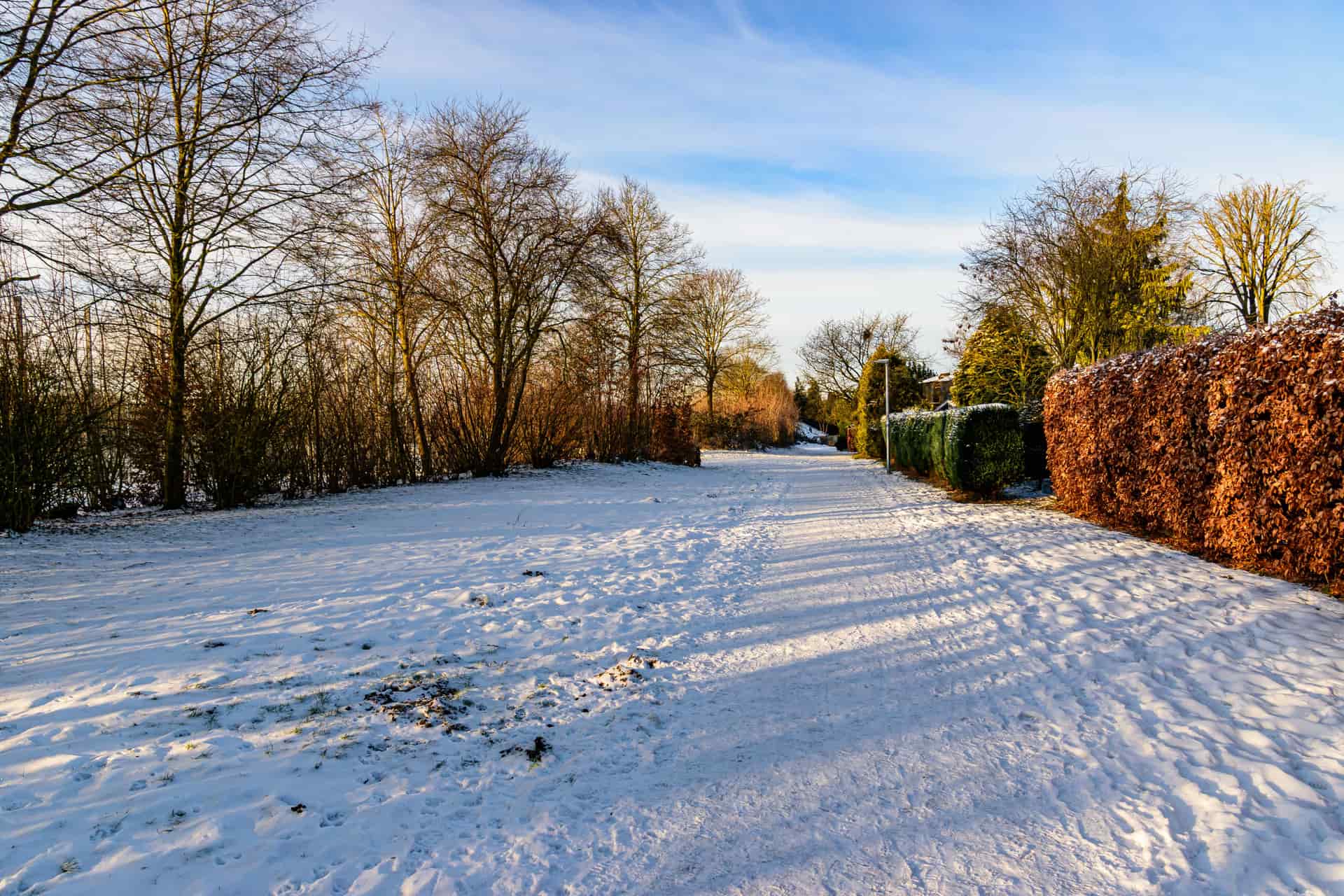
Do it in October, before the first hard freeze. Feeders up and stocked, water sorted, shelter in place, and stop tidying. The four things that matter are dense food, liquid water, windproof cover, and leaving the seedheads and brush that are already free food in your yard.
October: the changeover
Feeders
- Deep-clean everything you stored over summer. Dismantle, hot soapy water, rinse, dry fully — the cleaning guide has the method and the intervals to keep to once the season starts.
- Check hangers, poles and brackets. A hanger that is fine in July fails under a snow load.
- Upgrade capacity if you were refilling constantly last year. Capacity is a winter specification. The roundup.
- Site them out of the prevailing wind, about ten feet from cover, five to six feet up. Placement.
- Add a suet cage if you do not run one. It is the single biggest change to your visitor list. Suet feeders.
Food
- Buy suet in bulk now. Eight to twelve cakes for one feeder, more for two. Prices and stock are both better pre-season. The suet roundup.
- Buy one 25 lb bag of straight black oil sunflower. Not a mix with milo and wheat in it.
- Find somewhere dry and rodent-proof to store it. A sealed bin, off the floor. Damp suet goes rancid, and rancid fat harms birds.
- Start feeding before the weather turns, so birds have found the station before they need it.
Water — the step most yards skip
- Decide now, because it may involve an electrician. If you have no outdoor GFCI socket, that is the autumn job.
- Own a bath already? A drop-in de-icer is the cheapest correct answer.
- No bath, or a concrete one? Buy a complete heated bath — concrete cracks when trapped water freezes.
- Turn concrete baths over for the season if you are not keeping them in service.
- Budget for it honestly: about $26 to $79 for a whole winter of running, at the current national average rate. The arithmetic.
Shelter
- Build a brush pile from your autumn prunings. Free, and often used more than any box.
- Put up a roost box if you want one, facing away from the wind, eight to twelve feet up. The roundup.
- Clean out nest boxes and leave them up.
- Do not prune evergreens hard in autumn. Dense evergreen cover is the best winter shelter most yards have.
Stop tidying — the free half of the work
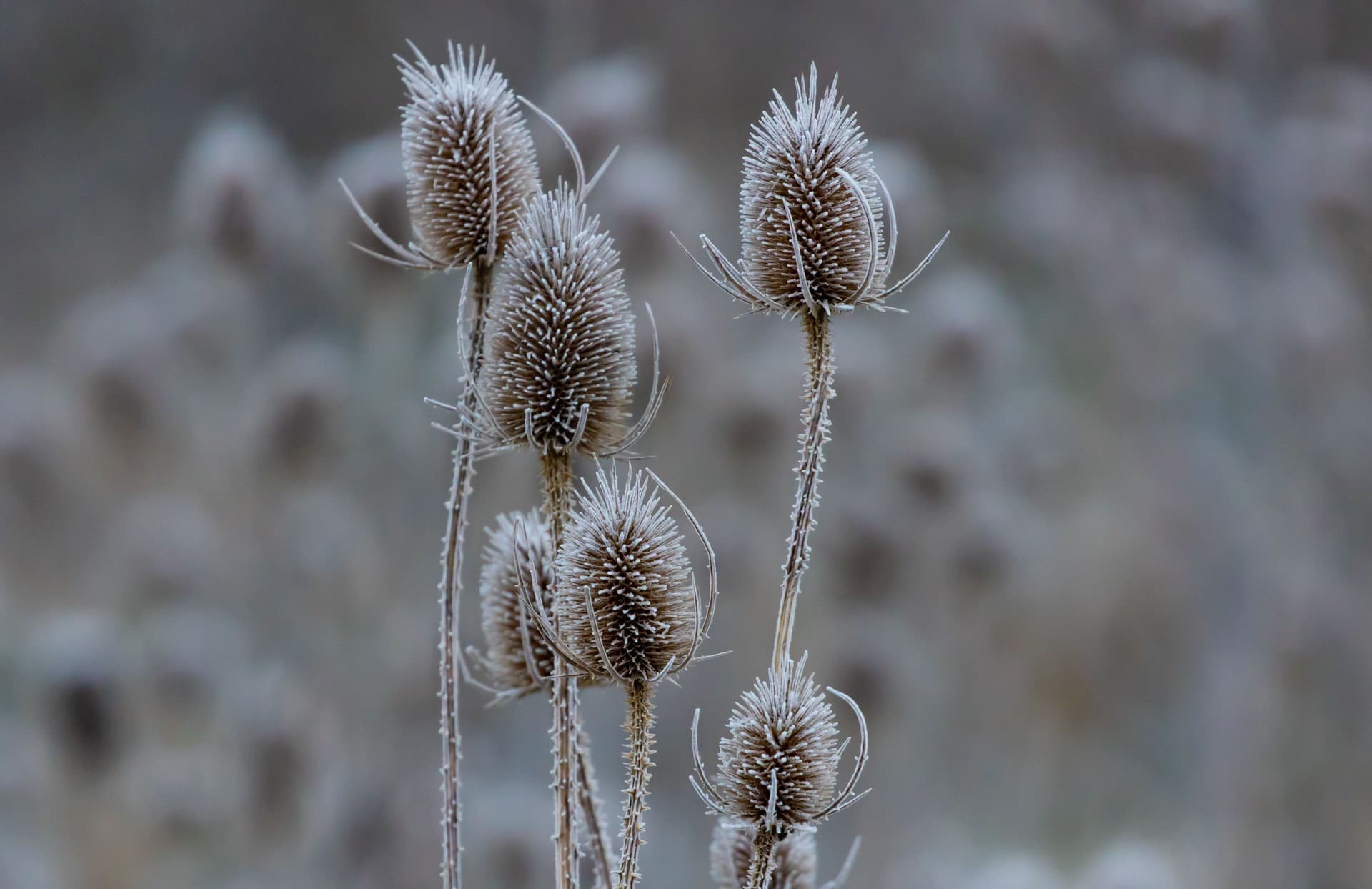
The most valuable thing on this list costs nothing and consists of not doing something.
| Leave | Why |
|---|---|
| Seedheads — coneflower, rudbeckia, sunflower, teasel, grasses | Free food through the winter, and structure that holds snow |
| Leaf litter under shrubs | Overwintering insects, which is foraging for ground feeders |
| Fallen fruit | Thrushes and waxwings; windfall apples are ideal |
| Standing dead stems | Overwintering insects and nesting material for next year |
| Brush and prunings, piled loosely | Dense, windproof, predator-resistant cover |
A completely tidy garden is a garden with no winter food and no winter cover. Tidy the paths and leave the beds.
The winter maintenance schedule
| Frequency | Task |
|---|---|
| After every snowfall | Brush snow off trays and feeder roofs; clear your access path |
| After freezing rain | Clear iced feeding ports; check any mechanism |
| Weekly | Top up feeders; empty and scrub the bath; rake fallout underneath |
| Every 2-4 weeks | Full feeder wash — dismantle, hot soapy water, dry fully |
| Monthly | Inspect the de-icer cord and connections |
| Late winter | Keep going. February and March are the leanest months, not December |
Late winter is the hard part
People stock up in October and taper off in February, which is precisely backwards. By late winter the natural food from autumn is gone and nothing new has arrived; that is the leanest period of the year for a bird. Keep the feeders full into early spring.
March: the changeover back
- Keep feeding through early spring. Do not stop at the first mild week.
- Take down the roost box or flip a convertible once the weather settles.
- Clean nest boxes ready for the season.
- Take the de-icer out and store it dry.
- Cut back the standing stems — but late, once the overwintering insects have emerged.
The four purchases this list comes down to
Winter Perch is funded by affiliate commission. If you buy through a link on this page we may earn a commission at no extra cost to you, and it never decides a ranking. Full disclosure · how we pick.
Quick picks
Ranked, with the trade-off named. Tap a row for the full write-up; the price button goes straight to Amazon.
| # | Product | Best for | Price |
|---|---|---|---|
| 1 |  Nature's Way CWF19 Cedar Hopper Feeder with Suet Cages, 6 qtSix quarts of seed with a suet cage on each end — the best single answer to the winter refill problem if you are only hanging one thing. | One feeder that runs seed and suet together | Check price on Amazon |
| 2 |  K&H Super Ice Eliminator Bird Bath De-Icer, 80 WThe 50 W unit with enough extra element to cope with a bigger basin and a colder night. If you are buying one de-icer without measuring anything, buy this one. | Most yards, most winters — the default de-icer | $28.91 · See it on Amazon |
| 3 | 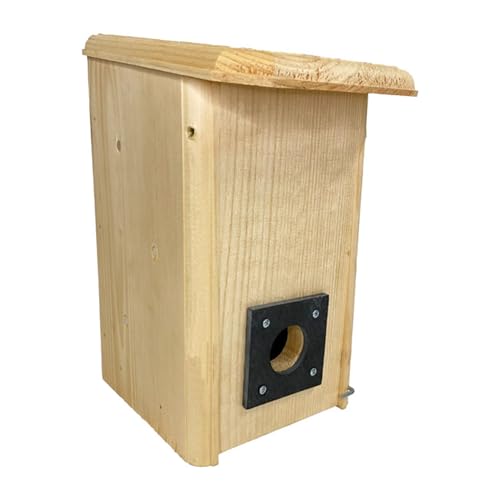 Coveside Small Winter RoostInch-thick Eastern white pine, internal perches and a slate predator guard. Insulation, not decoration — and 1" pine genuinely insulates where half-inch cedar does not. | The default winter roost box | $75.99 · See it on Amazon |
| 4 |  C&S High Energy Delight No-Melt Suet Dough, 8-packNo-melt dough at a price that lets you leave a cake out permanently, in the formulation woodpeckers, nuthatches and chickadees actually work at. | The default winter cake | $23.21 · See it on Amazon |
#ad how we are funded · price as of October 15, 2026
The picks in full
Top pick One feeder that runs seed and suet together
Nature's Way CWF19 Cedar Hopper Feeder with Suet Cages, 6 qt
Six quarts of seed with a suet cage on each end — the best single answer to the winter refill problem if you are only hanging one thing.
Specifications
- Seed capacity
- 6 quarts
- Suet
- Integrated cages
- Material
- Cedar
- Roof
- Yes — covers seed and both cages
Trade-offs
- Six quarts is the longest refill interval on this page
- Seed and suet in one visit, which matters when the visit is in a blizzard
- The roof covers everything, so wet seed is much less of an issue
- Cedar, and it looks like furniture rather than kit
- No squirrel exclusion at all — it is a hopper, and hoppers are open
- A full six quarts of damp seed is a lot of seed to spoil at once
- Big and heavy on a hanger
Who it is forThe single-station yard, where one feeder has to do everything.
Skip it ifSkip it if squirrels run your yard. A hopper feeder with no mechanism is the easiest meal on this site.
#ad how we are funded · price as of October 15, 2026
No. 2 Most yards, most winters — the default de-icer
K&H Super Ice Eliminator Bird Bath De-Icer, 80 W
The 50 W unit with enough extra element to cope with a bigger basin and a colder night. If you are buying one de-icer without measuring anything, buy this one.
Specifications
- Rated watts
- 80 W
- Form
- Submersible, natural rock shape
- Control
- Automatic
- Finish
- Paintable enamel
- Safety
- Safety listed for outdoor submersible use
Trade-offs
- 80 W is the sweet spot: enough for a 20-inch basin, well under a 150 W bath
- Automatic, so there is no switch to forget
- Same drop-in convenience as the 50 W, same paintable finish
- Works in the bath you already own, at any mount height
- 60 percent more draw than the 50 W for buyers with a small basin who did not need it
- Still a cord in the water
- The rock shape takes up basin space small birds could be standing in
Wattage: 80 W
K&H states 80 watts, and the listing is explicit that the unit is safety listed and automatic. Eighty watts holds a typical 16 to 20 inch basin open through a normal northern winter night.
At full draw for a four-month winter (120 days), plugged in around the clock: 80 W x 2880 h = 230.40 kWh, x $0.1834/kWh = $42.26 — $42.26 at $0.1834/kWh. A thermostatic unit will land under that.
Who it is forThe default buyer: an existing 16 to 20 inch bath, a normal northern winter, no interest in replacing the bath itself.
Skip it ifSkip it if your basin is under about 14 inches. The 50 W version does that job and costs less to run every single day of the winter.
#ad how we are funded · price as of October 15, 2026
No. 3 The default winter roost box
Coveside Small Winter Roost
Inch-thick Eastern white pine, internal perches and a slate predator guard. Insulation, not decoration — and 1" pine genuinely insulates where half-inch cedar does not.
Specifications
- Wall thickness
- 1" Eastern white pine
- Entrance
- Low, with slate predator guard
- Interior
- Staggered internal perches
- Origin
- Made in Maine, USA
Trade-offs
- Inch-thick pine is the insulation spec that matters; most "roosting boxes" are half that
- The low entrance keeps rising warm air inside instead of venting it out the top
- Internal perches let several birds stack rather than pile on the floor
- The slate guard stops a raccoon reaching in
- Small — it is a chickadee-and-wren box, not a starling hotel
- Roost boxes are a slow sell to birds; occupancy can take a season or two
- Made-in-USA pine prices accordingly
Who it is forAnyone who has the feeders and the water sorted and wants to add shelter.
Skip it ifSkip it if you expect immediate results. Roost boxes are found by accident in a storm, and an empty box in year one is normal, not a fault.
#ad how we are funded · price as of October 15, 2026
No. 4 The default winter cake
C&S High Energy Delight No-Melt Suet Dough, 8-pack
No-melt dough at a price that lets you leave a cake out permanently, in the formulation woodpeckers, nuthatches and chickadees actually work at.
Specifications
- Format
- Standard 11.75 oz cake
- Pack
- 8
- Type
- No-melt dough
- Targets
- Woodpeckers, nuthatches, chickadees
Trade-offs
- No-melt dough holds shape above freezing, so an early thaw does not dump it on the ground
- Standard cake size fits every cage feeder on this site
- Eight cakes is roughly a winter for one feeder
- Plain high-fat formulation with nothing gimmicky in it
- No-melt dough is firmer than raw suet and slower going for small birds in deep cold
- Nothing in it deters squirrels or starlings
Who it is forThe first suet you buy, and the one you re-order without thinking about it.
Skip it ifSkip it if starlings have found your feeder. A plain cake in an open cage is a starling buffet — go to an upside-down feeder or a hot pepper cake.
#ad how we are funded · price as of October 15, 2026
How we picked
- Ordered by season and by dependency, so the electrical work happens before the freeze rather than after it.
- Free actions listed alongside purchases, because leaving seedheads standing outperforms a third feeder.
- Running costs cited, not asserted, so the water decision can be made on a real number.
We have not tested any of these. What we did instead: read the manufacturers’ own listings, compiled the published specifications, computed the running cost at a cited electricity rate, and refreshed the prices daily. The full method is published.
This is the hub-of-hubs page: it touches water, food, feeders and shelter. If you want the reasoning behind all of it, how birds survive winter is the page that explains why each item is on the list.
Questions people actually ask
- When should I set up for winter bird feeding?
- October, before the first hard freeze. Birds need to have found the station before they need it, and any electrical work for water has to happen before the ground and the weather turn.
- Should I cut back my garden in autumn?
- Tidy the paths and leave the beds. Seedheads, standing stems, leaf litter and fallen fruit are all winter food and cover. A completely tidy garden has neither.
- What is the one thing most winter yards are missing?
- Liquid water. Almost everyone puts up feeders; far fewer put out water, and in a freeze it is the scarcer resource.
- When should I stop feeding in spring?
- Later than you think. Late winter and early spring are the leanest period — autumn's natural food is gone and nothing new has arrived. Keep going through March. While the feeder is busy, treat the glass near it — stopping birds hitting windows is the cheapest high-impact job on this list.
- How much time does this take through the winter?
- Roughly a weekly top-up and scrub, plus clearing snow after a fall, plus a full feeder wash every few weeks. The October setup is an afternoon.
Sources
Read next
- How Birds Survive Winter
The four mechanisms small birds use to survive a freezing night, what breaks them, and what a yard can actually contribute.
- How to Set Up a Winter Bird Feeding Station
The complete winter station: feeders, water and cover, with the distances and the order to build it in.
- What a Heated Bird Bath Actually Costs to Run
Watts to kilowatt-hours to dollars, at the current US average residential rate — the table nobody else in this category publishes.
- What to Feed Birds in Winter
The winter list ordered by fat content, what each food reaches, and the two purchases that cover almost everything.