Winter birding / Guide
Winter Birding Tips
Everything visible is easier and everything physical is harder. Solve the second problem and winter is the best birding of the year.
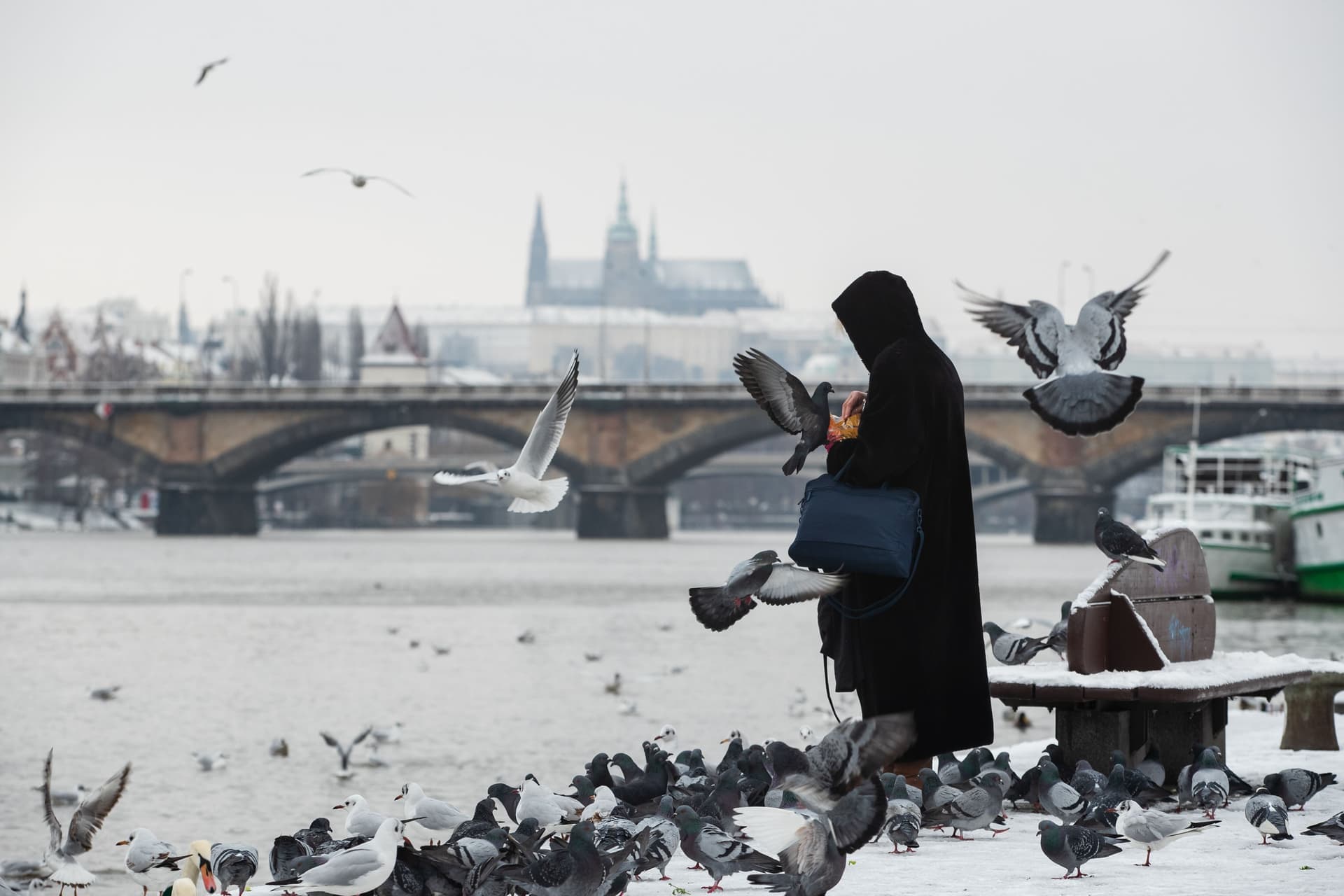
Winter is the easiest birding of the year: no foliage, flocks concentrated at a few food sources, and birds too busy feeding to care about you. The difficulty is entirely physical — cold hands, short light, fogging optics. Fix those and you will see more in a January hour than a June morning.
Why it is easier
- No leaves. A bird thirty feet up in an oak is simply visible. In June it is a rustle.
- Concentration. Food is patchy in winter, so birds concentrate at the patches — your feeder, a fruiting shrub, an open patch of water. Find the food and you have found the birds.
- Busy birds. A chickadee spending nine hours a day rebuilding its fat reserves has no attention to spare for a person standing twenty feet away.
- Mixed flocks. Chickadees, titmice, nuthatches, kinglets and downy woodpeckers move through woodland together in winter. Find one and you have found six species.
- Snow as a background. Contrast is your friend, and a bird against snow is far easier to pick up than one against dappled summer leaves.
Staying out long enough to enjoy it
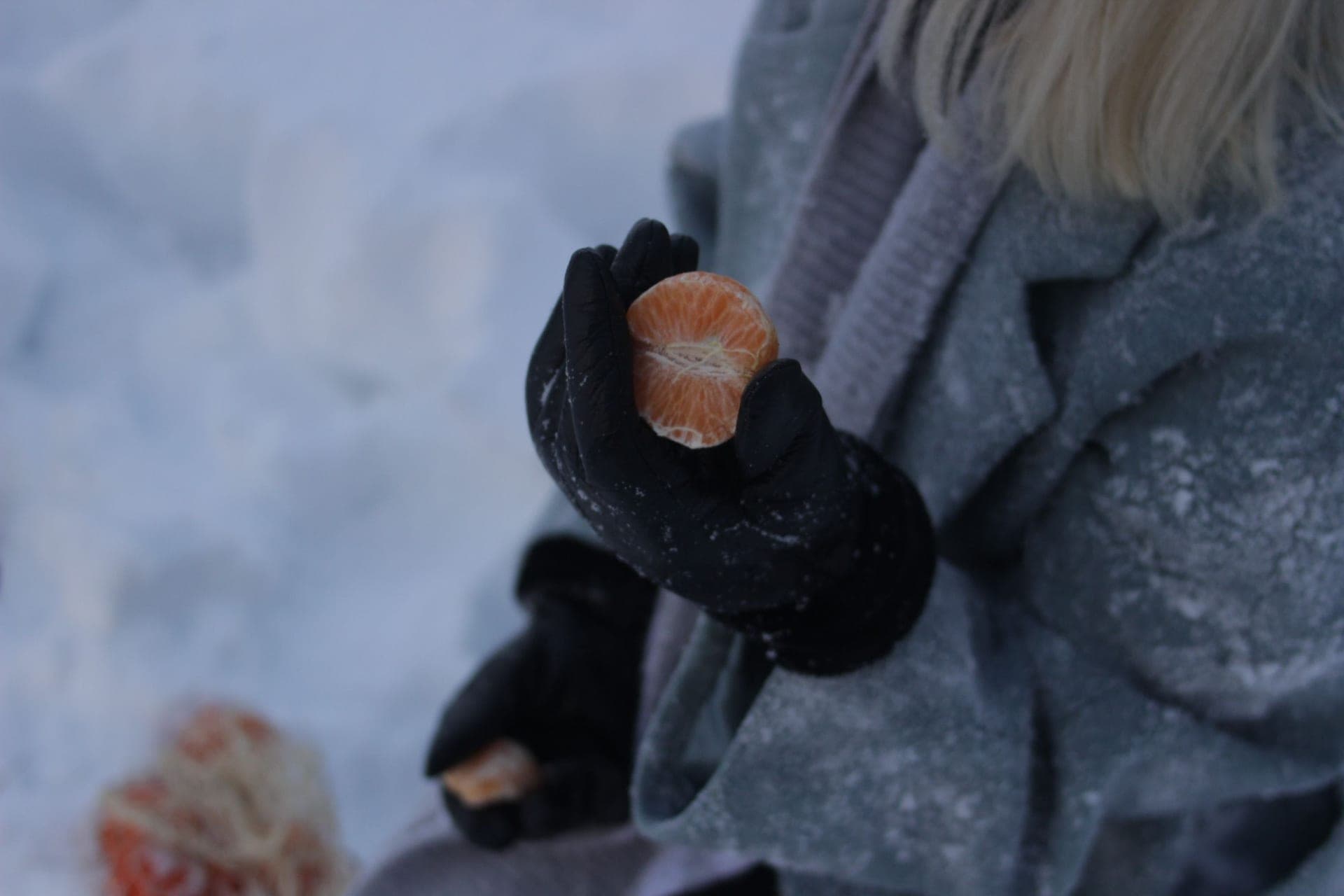
This is the actual skill. Standing still in cold weather is much colder than walking, and birding involves a lot of standing still.
- Layer, and vent. Sweating on the walk in and then standing still is how you get cold. Arrive slightly cool.
- Hands are the problem. Thin liner gloves inside mittens you can pull off, so you can work a focus wheel without exposing bare skin.
- Insulate from the ground. Standing still on frozen ground drains heat through your feet faster than anything else. Boots with a real sole, and step onto grass or leaf litter rather than ice where you can.
- Something hot in a flask. Unglamorous and it works — it buys another half hour.
- Go out mid-morning. Feeder activity peaks after dawn and again before dusk, and mid-morning is the warmest of the three.
Where to look
| Place | What to expect |
|---|---|
| Your own feeders | The most productive winter patch most people have. Chickadees, nuthatches, woodpeckers, juncos, finches |
| Open water in a frozen landscape | Anything that needs to drink. A heated bath turns your yard into this |
| Fruiting shrubs and trees | Robins, waxwings, thrushes. Crab apple, holly, hawthorn, sumac |
| Woodland edge and hedgerow | Mixed flocks moving through. Follow the noise |
| Stubble and weedy field margins | Sparrows, buntings, finches on seedheads |
| Sheltered south-facing slopes | Warmer, so more insect activity and more birds |
Optics in the cold
Two things ruin winter optics, and both are solvable.
Internal fogging happens when cold glass meets warm indoor air and moisture inside the barrels condenses where you cannot wipe it. Nitrogen-purged binoculars have that air replaced with dry nitrogen, so it does not occur. This is the spec that matters.
Stiff focus wheels in deep cold, combined with thick gloves, mean you miss things. Liner gloves under mittens is the fix, and it is worth practicing the mitten-off, focus, mitten-on sequence before you need it.
The days that look worst are often best
Feeder activity rises sharply in cold snaps and just before a storm, because the energy demand goes up exactly as foraging gets harder. The morning after heavy snow is often the busiest feeder day of the year — natural food is buried, and your feeder is the only thing above the snow line.
So the miserable-looking days are the productive ones. That is also when a feeder camera earns its keep, if going out is genuinely not an option.
Turn your own yard into the patch
The highest-return birding investment most people can make is not optics — it is making their own yard the concentration. A high-capacity feeder, a suet cage, and open water will bring more species within twenty feet of your window than any amount of walking around in the cold.
What to carry
Winter Perch is funded by affiliate commission. If you buy through a link on this page we may earn a commission at no extra cost to you, and it never decides a ranking. Full disclosure · how we pick.
Quick picks
Ranked, with the trade-off named. Tap a row for the full write-up; the price button goes straight to Amazon.
| # | Product | Best for | Price |
|---|---|---|---|
| 1 |  Nikon PROSTAFF P3 8x42 BinocularsO-ring sealed and nitrogen purged, which is the spec that matters when you carry glass from a cold yard into a warm kitchen twice a day. | Winter birding, because of the nitrogen purge | $156.95 · See it on Amazon |
| 2 |  Celestron Nature DX 8x42 BinocularsA 7.4-degree field on fully multi-coated BaK-4 glass, waterproof and fogproof — the widest view in this group, and width is what finds a chickadee in a thicket. | The widest field of view at this price | $129.00 · See it on Amazon |
| 3 |  Bird Buddy Pro Solar Smart Feeder with Camera2K video off a larger sensor with HDR, which is the specification that matters in December: winter light is flat, gray and brief. | Watching the feeder from inside on the days you will not go out | $239.99 · See it on Amazon |
#ad how we are funded · price as of October 15, 2026
The picks in full
Top pick Winter birding, because of the nitrogen purge
Nikon PROSTAFF P3 8x42 Binoculars
O-ring sealed and nitrogen purged, which is the spec that matters when you carry glass from a cold yard into a warm kitchen twice a day.
Specifications
- Configuration
- 8x42
- Field of view
- 377 ft at 1,000 yd
- Sealing
- O-ring sealed, nitrogen purged
- Body
- Rubber armored
- Eye relief
- Long — works over glasses
Trade-offs
- Nitrogen purging stops internal fogging on the cold-to-warm transition that defines winter birding
- 377 ft of field makes finding a moving bird in bare branches far easier
- 8x is steady in gloved, cold hands where 10x is not
- Long eye relief means it works with spectacles on
- 42 mm objectives are bulky for a coat pocket
- 8x is not enough reach for distant waterfowl
- The rubber armor stiffens noticeably in deep cold
Who it is forThe main pair for backyard and local winter birding.
Skip it ifSkip it if you mostly scan a frozen lake for ducks at range. You want 10x and a tripod, not 8x42.
#ad how we are funded · price as of October 15, 2026
No. 2 The widest field of view at this price
Celestron Nature DX 8x42 Binoculars
A 7.4-degree field on fully multi-coated BaK-4 glass, waterproof and fogproof — the widest view in this group, and width is what finds a chickadee in a thicket.
Specifications
- Configuration
- 8x42
- Field of view
- 7.4 degrees
- Prisms
- BaK-4
- Coatings
- Fully multi-coated
- Sealing
- Waterproof and fogproof
Trade-offs
- 7.4 degrees is a wide field, and width beats magnification for feeder birding
- BaK-4 prisms with full multi-coating at an entry price
- Waterproof and fogproof, so winter condensation is handled
- Rubber armored body survives being set down on a frozen deck rail
- Edge sharpness falls off before the Nikon's does
- Celestron lists several near-identical Nature DX variants, which makes buying confusing
- The focus wheel is stiffer in cold than the Nikon's
Who it is forA first serious pair, where field of view matters more than last-ten-percent sharpness.
Skip it ifSkip it if you already own decent glass. The upgrade from a competent entry pair to this one is small; the upgrade to genuinely good optics is a different budget entirely.
#ad how we are funded · price as of October 15, 2026
No. 3 Watching the feeder from inside on the days you will not go out
Bird Buddy Pro Solar Smart Feeder with Camera
2K video off a larger sensor with HDR, which is the specification that matters in December: winter light is flat, gray and brief.
Specifications
- Video
- 2K
- Stills
- 5 MP
- Sensor
- 1/2.7", HDR
- Power
- Solar roof
- Software
- AI species identification
Trade-offs
- The larger sensor and HDR are the difference between a usable and a useless winter image
- The solar roof reduces the number of times you carry a battery indoors at minus five
- Species ID is genuinely good on the common feeder birds
- It gets people watching birds on days nobody goes outside
- Solar charging in a northern December is thin — expect to charge it by hand anyway
- Lithium batteries lose capacity in the cold, and this lives outdoors
- It is a seed feeder first, so it does nothing for suet or water
- Costs several times a good pair of binoculars
Who it is forHouseholds where the feeder is a shared thing, and anyone who cannot get out much.
Skip it ifSkip it if you want to see birds well. A camera shows you one perch; binoculars show you the whole yard, and cost far less.
#ad how we are funded · price as of October 15, 2026
How we picked
- Practical field advice, framed around what actually stops people staying out — hands and standing still.
- No invented statistics. Where a claim about behavior is made, it is one that follows from the energy argument covered on how birds survive winter.
- Optics recommendations tied to the winter-specific specification, not to general optics ranking.
We have not tested any of these. What we did instead: read the manufacturers’ own listings, compiled the published specifications, computed the running cost at a cited electricity rate, and refreshed the prices daily. The full method is published.
What you will be looking at: winter backyard birds. Where to go beyond the yard: winter birding destinations. What to identify it with: field guides for winter bird ID.
Questions people actually ask
- Is winter a good time for birding?
- It is the easiest time. No foliage, birds concentrated at a few food sources, and birds too busy feeding to be wary. The difficulty is staying comfortable, not finding birds.
- What time of day is best for winter birding?
- Just after dawn and again before dusk are the busiest for feeder activity. Mid-morning is the best compromise between activity and temperature.
- How do I keep my hands warm while using binoculars?
- Thin liner gloves inside mittens you can pull off. That lets you work a focus wheel without exposing bare skin to cold metal.
- Where do birds go in winter?
- To wherever the food and shelter are. Feeders, fruiting shrubs, open water, woodland edge, weedy field margins and sheltered south-facing slopes are the reliable concentrations.
- Why do binoculars fog in winter?
- Moisture in the air inside the barrels condenses on internal surfaces when cold glass meets warm air. Nitrogen-purged binoculars do not have that air, so they do not fog.
Sources
Read next
- Winter Backyard Birds: Who Shows Up, and What Brings Them
The regular winter feeder cast, what each species eats, and the specific feeder or food that brings each one in.
- The Best Binoculars for Winter Birding
Why 8x42 and nitrogen purging are the winter answer, and two pairs worth the money — plus the honest note about our keyword data.
- Where to Go Winter Birding
The habitat types that hold birds in January, and state-by-state notes for Massachusetts, Minnesota, Arizona, Texas and New York City.
- How to Set Up a Winter Bird Feeding Station
The complete winter station: feeders, water and cover, with the distances and the order to build it in.