Winter feeders / Comparison
Upside-Down vs Cage Suet Feeders
One decision, and it turns entirely on whether starlings have found your yard. Geometry beats mechanism here — there is nothing to jam, freeze or maintain.
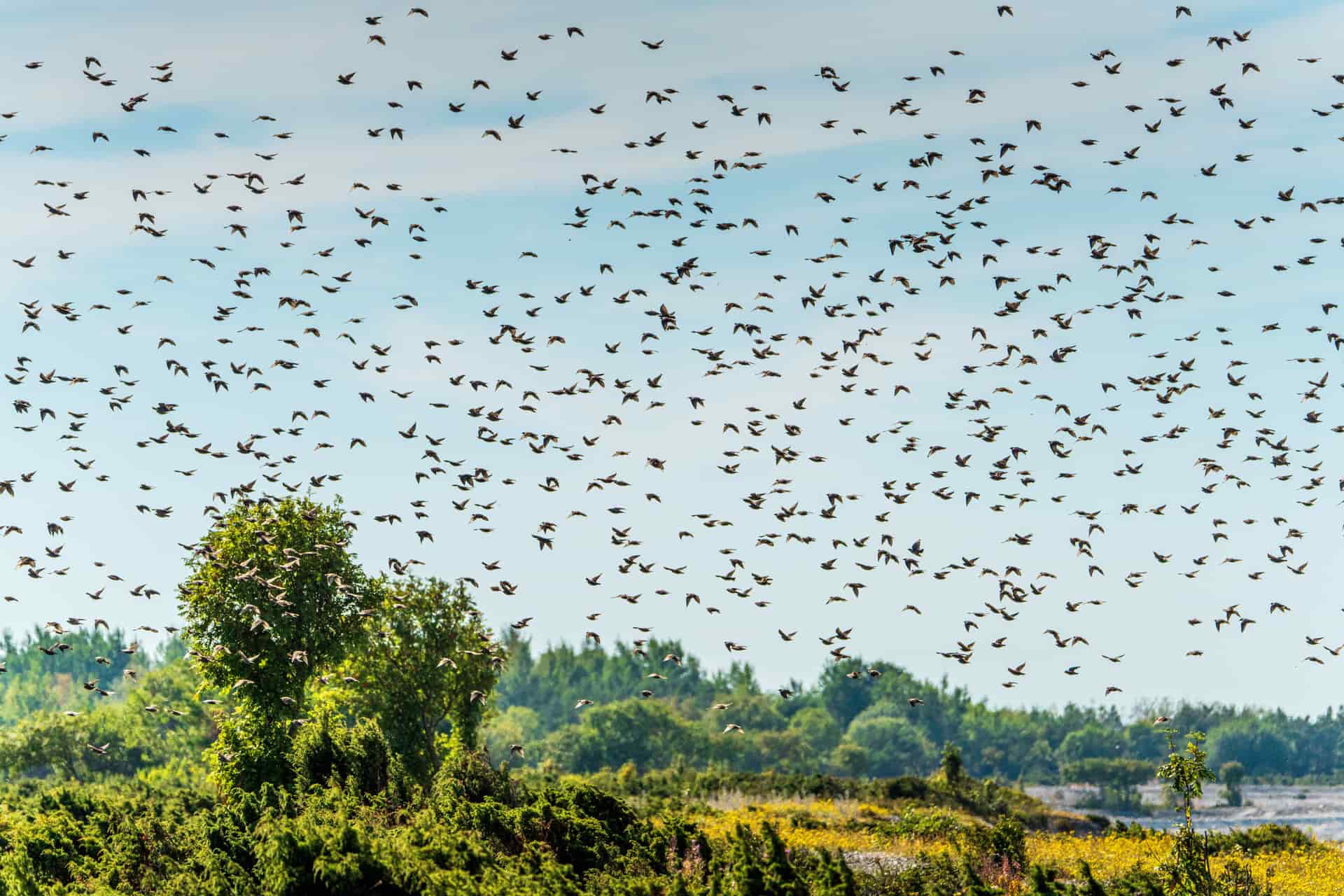
Starlings in your yard? Buy upside-down. The cake faces downward, so a bird must hang beneath it — woodpeckers, nuthatches and chickadees do that naturally and starlings mostly will not. No starlings? Buy an open cage, ideally with a tail prop: easier loading, better posture for woodpeckers, and cheaper.
Winter Perch is funded by affiliate commission. If you buy through a link on this page we may earn a commission at no extra cost to you, and it never decides a ranking. Full disclosure · how we pick.
Quick picks
Ranked, with the trade-off named. Tap a row for the full write-up; the price button goes straight to Amazon.
| # | Product | Best for | Price |
|---|---|---|---|
| 1 |  Nature's Way CWF2 Cedar Upside-Down Suet FeederThe cake faces down, so a bird has to hang underneath to eat. Woodpeckers, nuthatches and chickadees do that happily. Starlings largely will not. | Starling exclusion without a mechanism | Check price on Amazon |
| 2 |  Nature's Way CWF1 Cedar Tail-Prop Suet FeederThe extended cedar tail is not decoration: woodpeckers brace on their tail feathers, and a feeder without a prop makes them work at an angle they do not like. | Woodpeckers, because of the tail prop | Check price on Amazon |
| 3 |  Birds Choice Upside-Down Suet Feeder, multi-cakeRecycled poly lumber, a roof, and room for more than one cake — the upside-down feeder for a yard where one cake lasts three days. | Multi-cake capacity in recycled poly that will outlive the cedar | $54.99 · See it on Amazon |
| 4 |  Brome Squirrel Buster Suet FeederA weight-activated shroud closes over the cake when a squirrel climbs on. It is the only mechanical answer here that works on a determined animal, and it holds two cakes. | Squirrels that have defeated everything else | $108.15 · See it on Amazon |
#ad how we are funded · price as of October 15, 2026
The picks in full
Top pick Starling exclusion without a mechanism
Nature's Way CWF2 Cedar Upside-Down Suet Feeder
The cake faces down, so a bird has to hang underneath to eat. Woodpeckers, nuthatches and chickadees do that happily. Starlings largely will not.
Specifications
- Capacity
- 1 standard cake
- Orientation
- Downward-facing cake
- Material
- Cedar with roof
- Mechanism
- None — geometry only
Trade-offs
- Excludes most starlings through geometry, with nothing to break or freeze
- The roof keeps snow and rain off the cake
- Cedar body, weathers well
- Clinging birds are the ones you wanted anyway
- It is not perfect — determined starlings learn to hang
- Loading a cake face-down is fiddlier than a front-opening cage
- One cake
Who it is forAnyone whose plain cage feeder has been taken over by starlings or grackles.
Skip it ifSkip it if your main visitors are cardinals and jays, which will not hang upside down. You will have excluded the birds you were feeding.
#ad how we are funded · price as of October 15, 2026
Where these specs came from
No. 2 Woodpeckers, because of the tail prop
Nature's Way CWF1 Cedar Tail-Prop Suet Feeder
The extended cedar tail is not decoration: woodpeckers brace on their tail feathers, and a feeder without a prop makes them work at an angle they do not like.
Specifications
- Capacity
- 1 standard cake
- Dimensions
- 12"H x 7.875"L x 3"W
- Material
- Cedar
- Feature
- Extended tail prop
Trade-offs
- The tail prop measurably changes which species will settle and feed
- Cedar weathers gray instead of rotting
- A simple cage front — no mechanism to jam with ice
- Fits every standard cake on this site
- One cake only
- The open cage means starlings feed as easily as woodpeckers
- No roof, so the cake takes weather directly
Who it is forA first suet feeder in a yard with downy or hairy woodpeckers around.
Skip it ifSkip it if starlings dominate your yard. An open tail-prop cage is the easiest feeder in this category for a flock to strip.
#ad how we are funded · price as of October 15, 2026
Where these specs came from
No. 3 Multi-cake capacity in recycled poly that will outlive the cedar
Birds Choice Upside-Down Suet Feeder, multi-cake
Recycled poly lumber, a roof, and room for more than one cake — the upside-down feeder for a yard where one cake lasts three days.
Specifications
- Capacity
- Multiple standard cakes
- Dimensions
- 11.75" x 8.75" x 4"
- Material
- Recycled poly lumber
- Roof
- Yes
- Color
- Taupe with green roof
Trade-offs
- Poly lumber does not crack, split, fade or rot — it will outlast several cedar feeders
- Multiple cakes means fewer trips out in weather you would rather not be in
- Roofed and upside-down: weather protection and starling exclusion together
- Wipes clean, which cedar never really does
- Heavier than cedar, so it needs a solid hanger
- Plastic-looking up close, whatever the finish
- Multi-cake capacity is wasted on a quiet yard, and unused suet goes rancid
Who it is forA busy yard that is tired of refilling a one-cake feeder every other day.
Skip it ifSkip it if a single cake currently lasts you a week. Loading four cakes into a slow feeder just means three of them go off before they get eaten.
#ad how we are funded · price as of October 15, 2026
No. 4 Squirrels that have defeated everything else
Brome Squirrel Buster Suet Feeder
A weight-activated shroud closes over the cake when a squirrel climbs on. It is the only mechanical answer here that works on a determined animal, and it holds two cakes.
Specifications
- Capacity
- Two 5" x 5" cakes
- Mechanism
- Weight-activated shroud
- Materials
- Chew-proof metal and RoxResin on exposed parts
- Loading
- Mess-free, detachable
- Extras
- Two crumb ports for smaller birds
Trade-offs
- Weight activation is the only approach that reliably beats a committed squirrel
- Every squirrel-accessible part is chew-proof by design, not by hope
- Two cakes, plus crumb ports so the fallout still feeds chickadees
- Comes apart for cleaning without tools
- The most expensive feeder on this site by a distance
- A mechanism is a thing that can freeze; it needs an occasional check in an ice storm
- Heavier and bulkier than a plain cage
Who it is forAnyone who has already bought a cheap cage, a baffle and a pepper cake and still lost.
Skip it ifSkip it if you have no squirrels. It costs several times a cedar cage to solve a problem you do not have, and a plain tail-prop feeder feeds birds just as well.
#ad how we are funded · price as of October 15, 2026
How the exclusion works
The same behavioral principle drives suet plugs in a drilled log, which asks for a vertical brace rather than an inverted hang. It is behavioral, not mechanical. Clinging birds — woodpeckers, nuthatches, chickadees, creepers — spend their lives on vertical and inverted surfaces and think nothing of hanging below a cake. Starlings and grackles feed by perching and leaning in; hanging upside down is possible for them and awkward, and given an easier food source elsewhere they take it.
That is the strength and the weakness. There is no mechanism, so nothing freezes, jams or wears out, and the feeder costs a fraction of a weight-activated one. But it is a preference, not a barrier: a persistent starling flock with no alternative will eventually learn to hang.
The side-by-side
| Open cage | Upside-down | |
|---|---|---|
| Starlings | Feed freely; can strip a cake in an afternoon | Mostly excluded |
| Woodpeckers | Yes, especially with a tail prop | Yes, no difficulty |
| Nuthatches and chickadees | Yes | Yes |
| Cardinals and jays | Yes | Largely excluded — they will not hang |
| Squirrels | No obstacle | No obstacle |
| Loading a cake | Front opens, easy | Face-down, fiddlier |
| Mechanism | None | None |
| Cost | Lowest | Slightly more |
What upside-down costs you
Cardinals and jays. Neither will hang beneath a cake, so if they were using your suet, they stop. Most people consider that an acceptable trade — cardinals and jays are well served by a seed feeder or a platform tray, and starlings are not well served by anything you want to encourage.
You also lose a little convenience. Loading a cake into a face-down cage is fiddlier than a front-opening cage, particularly with gloves on in bad weather. Multi-cake poly models are better here than the small cedar ones.
Neither one stops squirrels
Worth being explicit about, because people buy an upside-down feeder for a squirrel problem and are disappointed. A squirrel hangs upside down without a second thought — that is what squirrels do. Starling exclusion and squirrel exclusion are different problems with different answers. The squirrel page.
The diagnosis, since it decides the purchase
- Starlings: a group of dark, glossy, short-tailed birds that arrive together and strip a cake in one visit. Noisy. Often a dozen or more at once.
- Grackles: larger, longer-tailed, iridescent. Bully at ports rather than stripping cakes, and are more of a seed-feeder problem.
- Squirrels: cake gone overnight, feeder swinging, sometimes on the ground, sometimes chewed.
- Raccoons: overnight, and the feeder is usually damaged or removed entirely.
Watch for a week before buying. The four problems look different and buying the wrong fix is the standard way to spend money and change nothing.
What we would skip
What we would skip
An upside-down feeder bought to solve a squirrel problem
Squirrels hang upside down effortlessly. This design solves starlings and nothing else. Buying it for the wrong problem is the commonest mistake in this category.
An open cage in a yard with an established starling flock
You are feeding a flock an eleven-ounce cake at a time. Nothing about the cake changes that; the geometry has to.
How we picked
- Which birds each geometry admits and excludes, described in terms of feeding behavior rather than brand claims.
- Honest limits: geometry is a preference, not a barrier, and neither design touches squirrels.
- Loading practicality in gloves, which is a real winter consideration.
- Live price and availability, refreshed daily.
We have not tested any of these. What we did instead: read the manufacturers’ own listings, compiled the published specifications, computed the running cost at a cited electricity rate, and refreshed the prices daily. The full method is published.
For the full ranking, the suet feeder roundup. For woodpecker-specific setups, the woodpecker page. For what goes inside, the suet cake roundup.
Questions people actually ask
- Do upside-down suet feeders keep starlings away?
- Mostly. Starlings prefer to perch and lean in rather than hang beneath a cake, so given any easier food source they take it. Woodpeckers, nuthatches and chickadees hang without difficulty.
- Will an upside-down feeder stop squirrels?
- No. Squirrels hang upside down effortlessly. That is a different problem with a different fix — a weight-activated feeder.
- Which birds will I lose with an upside-down feeder?
- Cardinals and jays, which will not hang. Both are well served by a seed feeder or a platform tray instead.
- Are upside-down feeders harder to fill?
- Slightly, and noticeably so with gloves on. Multi-cake poly models handle better than small cedar ones.
Sources
Read next
- The Best Suet Feeders for Winter
Four suet cages ranked on exclusion — tail-prop, upside-down and weight-activated — and who each one lets eat.
- Squirrel-Proof Suet Feeders
Weight-activated feeders, pepper cakes and baffles compared — what actually stops a committed squirrel.
- Suet Feeders for Woodpeckers
Why the tail prop matters, which cages have one, and where to hang a woodpecker feeder so they actually find it.
- Hot Pepper Suet: Does It Actually Stop Squirrels?
How capsaicin works on mammals and not birds, how far it gets you, and the three pepper cakes worth the premium.