Winter feeders / Guide
Feeder Placement in Snow and Wind
A well-chosen feeder in a bad spot is worse than a mediocre feeder in a good one. Placement is free and it is the highest-leverage decision you make.
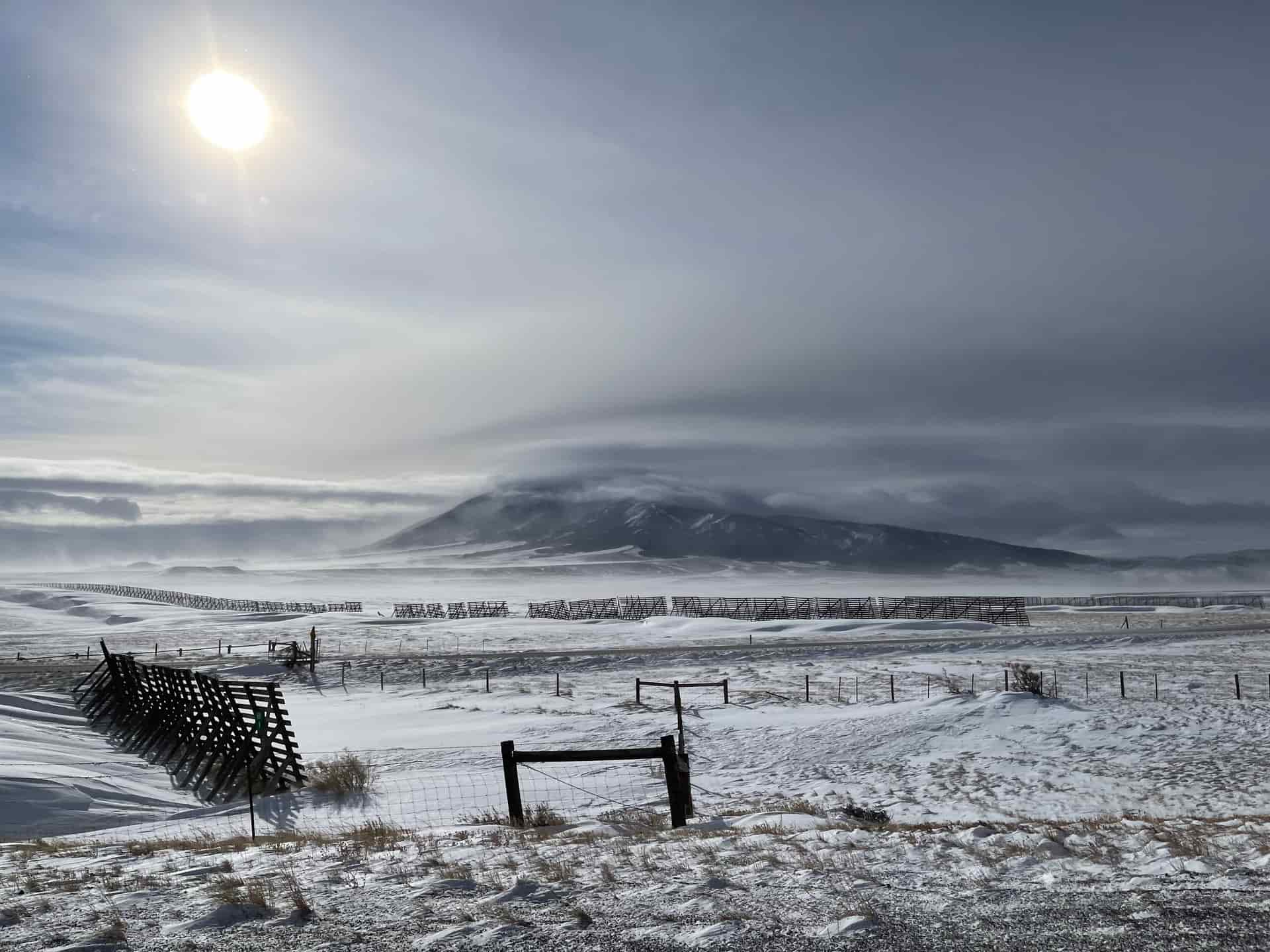
Put the feeder in the lee of the prevailing wind, about ten feet from dense cover, five to six feet above the ground, out of roof drip and snow-slide lines, and either under three feet or over thirty feet from a window. Every one of those is free and each one measurably changes how much the feeder gets used.
Wind is the first consideration
Wind does three bad things to a feeding station. It makes birds unwilling to feed, because a small bird in a crosswind is spending energy staying put. It empties feeders physically — seed blows out of trays and open ports. And if you are running a heated bath, it is the largest single driver of heat loss, which shows up on your electricity bill.
Find the sheltered side. The lee of a hedge, a fence, a shed, or the house itself. Where no sheltered spot exists, a rain cover or weather dome is the second-best answer, bought on diameter rather than on looks. In most of the northern US the prevailing winter wind is from the north and west, so a south or east aspect is usually the answer — but watch your own yard in a storm rather than trusting the generalization.
The distances
| Relationship | Target | Reason |
|---|---|---|
| Feeder to dense cover | About 10 ft | Escape route from hawks without giving cats a launch point |
| Feeder to ground | 5 to 6 ft | Above accumulated snow, above easy cat reach, still reachable for you |
| Feeder to window | Under 3 ft, or over 30 ft | The two zones where strikes are least likely |
| Feeder to a launch point | Over 10 ft if you can | Squirrels jump further than people expect |
| Feeder to roof edge | Well clear | Drip, ice fall and snow slide will bury or destroy it |
The window figure, which surprises people
It is not a straight line where closer is worse. Very close to the glass — within about three feet — a bird taking off from a feeder cannot build up enough speed for a strike to be lethal. Far away, over about thirty feet, it reads the window as part of a building rather than as open sky or reflected vegetation. The dangerous zone is the middle, which is unfortunately where most people hang a feeder to watch it.
Snow
- Drift lines. Snow accumulates on the lee side of obstacles — fences, walls, hedges. A feeder in a drift line ends up at ground level after one storm.
- Roof slide. A pitched roof sheds its load all at once. A feeder under that line is destroyed rather than inconvenienced.
- Drip lines. Meltwater from a roof edge refreezes overnight into an ice column. Directly under a gutterless eave is the worst place in the yard.
- Access for you. A feeder you cannot reach after eight inches of snow is a feeder that stays empty. Keep the approach on a path you will clear anyway.
Height, and the trade-off
Five to six feet is the working answer: above accumulated snow, above easy cat reach, and still within your own reach for refilling without a ladder in ice. Higher is safer from cats and harder for you; lower is convenient and puts the feeder in the snow.
Ground-feeding species are a separate case. Juncos and doves feed off flat surfaces and will use a low tray happily. Site a tray in the open with clear sight lines rather than tucked beside a shrub, for exactly the cat reason.
Once it is up, leave it
Birds learn locations. Moving a feeder in midwinter costs several days of traffic while they relearn it, and midwinter is when the traffic matters. Choose the site carefully in autumn and then commit.
The exception is disease: if you see sick birds at a feeder, take it down, clean it thoroughly, and consider a different site. That is worth the lost traffic, and the cleaning guide covers what disinfecting actually requires.
What to hang there
Winter Perch is funded by affiliate commission. If you buy through a link on this page we may earn a commission at no extra cost to you, and it never decides a ranking. Full disclosure · how we pick.
Quick picks
Ranked, with the trade-off named. Tap a row for the full write-up; the price button goes straight to Amazon.
| # | Product | Best for | Price |
|---|---|---|---|
| 1 |  Nature's Way CWF19 Cedar Hopper Feeder with Suet Cages, 6 qtSix quarts of seed with a suet cage on each end — the best single answer to the winter refill problem if you are only hanging one thing. | One feeder that runs seed and suet together | Check price on Amazon |
| 2 |  Brome Squirrel Buster Plus Seed Feeder, 5.1 lbFive pounds of seed, six ports, a cardinal ring for the big birds and the same weight-activated shroud. In winter, the refill interval is the point. | The main winter seed feeder | $129.25 · See it on Amazon |
| 3 | 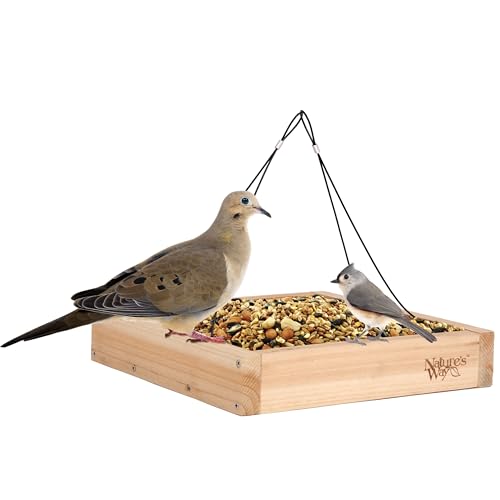 Nature's Way CWF3 Cedar Platform Tray Feeder, 12 x 12 inA flat cedar tray with a screen bottom. Juncos, doves and cardinals feed from flat surfaces and largely ignore tubes. | Ground feeders that will not use a tube | Check price on Amazon |
#ad how we are funded · price as of October 15, 2026
The picks in full
Top pick One feeder that runs seed and suet together
Nature's Way CWF19 Cedar Hopper Feeder with Suet Cages, 6 qt
Six quarts of seed with a suet cage on each end — the best single answer to the winter refill problem if you are only hanging one thing.
Specifications
- Seed capacity
- 6 quarts
- Suet
- Integrated cages
- Material
- Cedar
- Roof
- Yes — covers seed and both cages
Trade-offs
- Six quarts is the longest refill interval on this page
- Seed and suet in one visit, which matters when the visit is in a blizzard
- The roof covers everything, so wet seed is much less of an issue
- Cedar, and it looks like furniture rather than kit
- No squirrel exclusion at all — it is a hopper, and hoppers are open
- A full six quarts of damp seed is a lot of seed to spoil at once
- Big and heavy on a hanger
Who it is forThe single-station yard, where one feeder has to do everything.
Skip it ifSkip it if squirrels run your yard. A hopper feeder with no mechanism is the easiest meal on this site.
#ad how we are funded · price as of October 15, 2026
No. 2 The main winter seed feeder
Brome Squirrel Buster Plus Seed Feeder, 5.1 lb
Five pounds of seed, six ports, a cardinal ring for the big birds and the same weight-activated shroud. In winter, the refill interval is the point.
Specifications
- Seed capacity
- 5.1 lb
- Ports
- 6
- Height
- 28" base to hanger
- Mechanism
- Weight-activated shroud, adjustable
- Mounting
- Hang or pole (pole adaptor sold separately)
Trade-offs
- 5.1 lb means you refill once a week in a hard winter, not every other day
- The adjustable weight setting excludes grackles as well as squirrels
- The cardinal ring gives perching room to birds a bare port rejects
- Comes fully apart for the cleaning that winter feeders genuinely need
- The pole adaptor is a separate purchase and most buyers do not notice until it arrives
- 28 inches is a big object to hang from a slim branch
- Premium price
Who it is forThe main seed station in a yard where squirrels are a standing problem.
Skip it ifSkip it if you feed one small tube on a balcony. The Squirrel Buster Classic does the same trick in a 2.4 lb body for less.
#ad how we are funded · price as of October 15, 2026
No. 3 Ground feeders that will not use a tube
Nature's Way CWF3 Cedar Platform Tray Feeder, 12 x 12 in
A flat cedar tray with a screen bottom. Juncos, doves and cardinals feed from flat surfaces and largely ignore tubes.
Specifications
- Size
- 12" x 12"
- Material
- Cedar with mesh base
- Drainage
- Screen bottom
- Mount
- Hang or set low
Trade-offs
- Reaches the third of your winter list that will not use a tube feeder
- The screen base drains meltwater instead of pooling it
- Takes seed, cracked corn, fruit and suet nuggets equally
- The easiest feeder on this site to clean properly
- An open tray, so snow lands directly in it
- No exclusion of anything — squirrels, starlings and deer all welcome
- Needs clearing after every snowfall
Who it is forYards with ground-feeding regulars, and anyone who has noticed the juncos never land on the tube.
Skip it ifSkip it if you cannot get out to clear it. A tray under six inches of snow is not a feeder, it is a bird-shaped disappointment.
#ad how we are funded · price as of October 15, 2026
How we picked
- Standard feeder-siting distances, each stated with the reason rather than as a bare number.
- Winter-specific hazards — drift lines, roof slide, drip lines — which general feeder guidance tends to omit.
- Capacity-first product picks, because a well-sited feeder still has to be worth walking to.
We have not tested any of these. What we did instead: read the manufacturers’ own listings, compiled the published specifications, computed the running cost at a cited electricity rate, and refreshed the prices daily. The full method is published.
The complete layout, including water and shelter, is on the feeding station setup guide. For the maintenance side once snow starts, keeping feeders clear of snow and ice.
Questions people actually ask
- Where should I put a bird feeder in winter?
- In the lee of the prevailing wind, about ten feet from dense cover, five to six feet up, and clear of roof drip and snow-slide lines.
- How far from a window should a feeder be?
- Either under three feet or over thirty. Very close, a bird cannot build up lethal speed; far away, it reads the glass as part of a building. The middle distance is where strikes happen.
- Should I move feeders when it snows?
- No. Birds learn locations, and moving a feeder in midwinter costs several days of traffic. Choose the site carefully in autumn and clear the snow instead.
- How high should a winter bird feeder be?
- Five to six feet. Above accumulated snow and easy cat reach, and still reachable by you without a ladder on ice.
- Does wind really matter that much?
- Yes. Birds avoid feeding in a crosswind, wind empties open feeders physically, and it is the largest driver of heat loss if you are also running a heated bath.
Sources
Read next
- How to Set Up a Winter Bird Feeding Station
The complete winter station: feeders, water and cover, with the distances and the order to build it in.
- Keeping Feeders Clear of Snow and Ice
Iced ports, caked seed and feeder mold — the winter maintenance routine, and the hardware that reduces it.
- The Best Bird Feeders for Winter
Seed feeders ranked on capacity, roofing and drainage — the specs that decide how often you go out in bad weather.
- Heated Bird Baths With a Stand
Stand and pedestal heated baths, and the three winter problems — heave, wind and cord routing — that come with them.