Winter feeders / Roundup
The Best Bird Feeders for Winter
Capacity is a winter specification. A feeder that empties every day is a feeder you eventually stop filling, in February, in the dark.
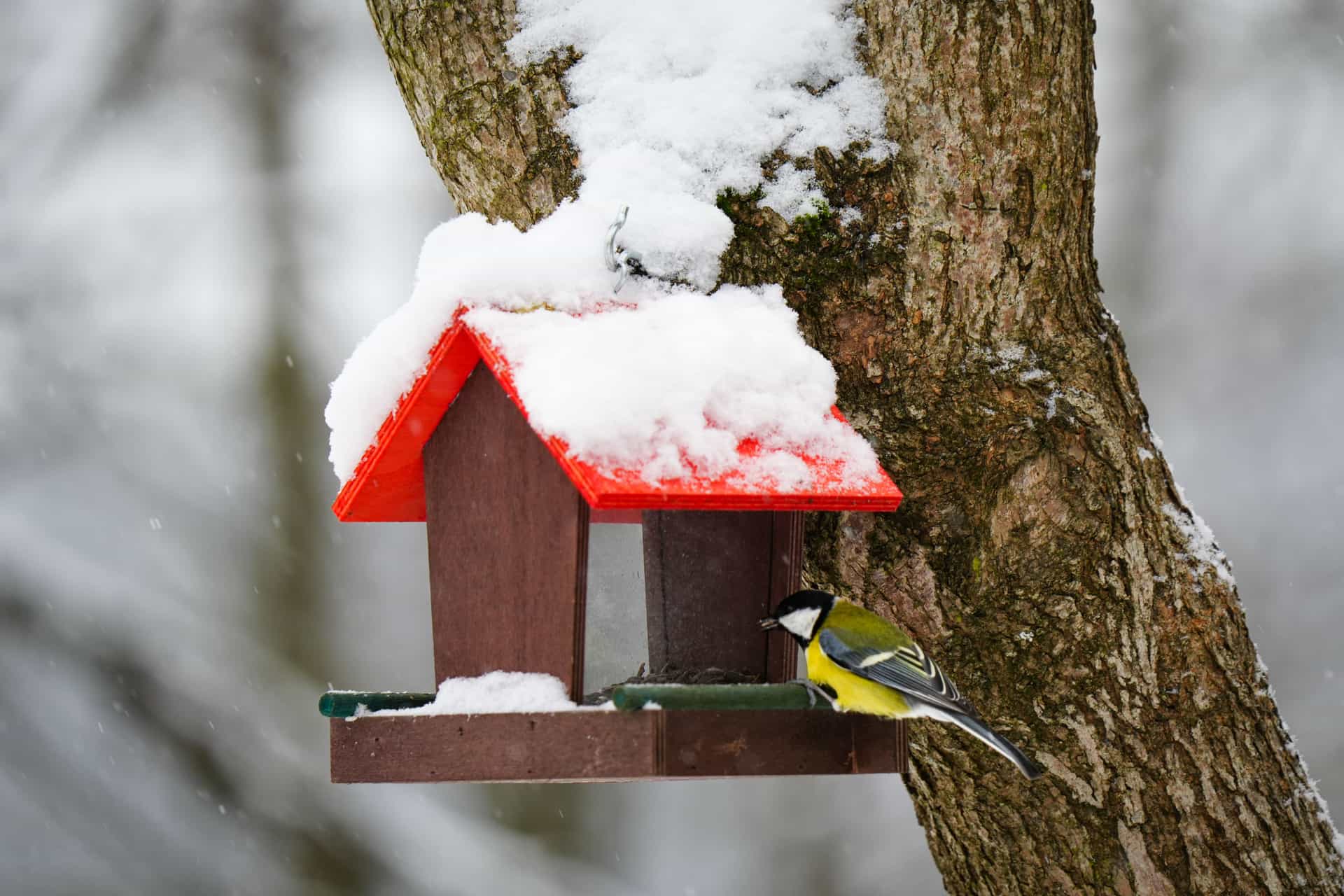
The Nature's Way CWF19 cedar hopper with integrated suet cages is the pick, because it holds six quarts of seed and two suet cakes under one roof — one trip outside does everything. If squirrels run your yard, the Squirrel Buster Plus at 5.1 lb is the answer instead.
Winter Perch is funded by affiliate commission. If you buy through a link on this page we may earn a commission at no extra cost to you, and it never decides a ranking. Full disclosure · how we pick.
Quick picks
Ranked, with the trade-off named. Tap a row for the full write-up; the price button goes straight to Amazon.
| # | Product | Best for | Price |
|---|---|---|---|
| 1 |  Nature's Way CWF19 Cedar Hopper Feeder with Suet Cages, 6 qtSix quarts of seed with a suet cage on each end — the best single answer to the winter refill problem if you are only hanging one thing. | One feeder that runs seed and suet together | Check price on Amazon |
| 2 |  Brome Squirrel Buster Plus Seed Feeder, 5.1 lbFive pounds of seed, six ports, a cardinal ring for the big birds and the same weight-activated shroud. In winter, the refill interval is the point. | The main winter seed feeder | $129.25 · See it on Amazon |
| 3 | 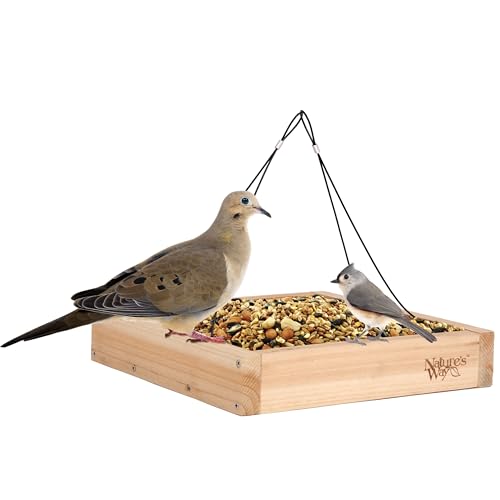 Nature's Way CWF3 Cedar Platform Tray Feeder, 12 x 12 inA flat cedar tray with a screen bottom. Juncos, doves and cardinals feed from flat surfaces and largely ignore tubes. | Ground feeders that will not use a tube | Check price on Amazon |
| 4 |  Brome Squirrel Buster Classic Seed Feeder, 2.4 lbThe same weight-activated shroud in a smaller, cheaper body. Four ports, 2.4 lb, and everything the Plus does except capacity. | Small yards and balconies with a squirrel problem | $79.22 · See it on Amazon |
| 5 |  Nature's Way CWF2 Cedar Upside-Down Suet FeederThe cake faces down, so a bird has to hang underneath to eat. Woodpeckers, nuthatches and chickadees do that happily. Starlings largely will not. | Starling exclusion without a mechanism | Check price on Amazon |
#ad how we are funded · price as of October 15, 2026
The picks in full
Top pick One feeder that runs seed and suet together
Nature's Way CWF19 Cedar Hopper Feeder with Suet Cages, 6 qt
Six quarts of seed with a suet cage on each end — the best single answer to the winter refill problem if you are only hanging one thing.
Specifications
- Seed capacity
- 6 quarts
- Suet
- Integrated cages
- Material
- Cedar
- Roof
- Yes — covers seed and both cages
Trade-offs
- Six quarts is the longest refill interval on this page
- Seed and suet in one visit, which matters when the visit is in a blizzard
- The roof covers everything, so wet seed is much less of an issue
- Cedar, and it looks like furniture rather than kit
- No squirrel exclusion at all — it is a hopper, and hoppers are open
- A full six quarts of damp seed is a lot of seed to spoil at once
- Big and heavy on a hanger
Who it is forThe single-station yard, where one feeder has to do everything.
Skip it ifSkip it if squirrels run your yard. A hopper feeder with no mechanism is the easiest meal on this site.
#ad how we are funded · price as of October 15, 2026
No. 2 The main winter seed feeder
Brome Squirrel Buster Plus Seed Feeder, 5.1 lb
Five pounds of seed, six ports, a cardinal ring for the big birds and the same weight-activated shroud. In winter, the refill interval is the point.
Specifications
- Seed capacity
- 5.1 lb
- Ports
- 6
- Height
- 28" base to hanger
- Mechanism
- Weight-activated shroud, adjustable
- Mounting
- Hang or pole (pole adaptor sold separately)
Trade-offs
- 5.1 lb means you refill once a week in a hard winter, not every other day
- The adjustable weight setting excludes grackles as well as squirrels
- The cardinal ring gives perching room to birds a bare port rejects
- Comes fully apart for the cleaning that winter feeders genuinely need
- The pole adaptor is a separate purchase and most buyers do not notice until it arrives
- 28 inches is a big object to hang from a slim branch
- Premium price
Who it is forThe main seed station in a yard where squirrels are a standing problem.
Skip it ifSkip it if you feed one small tube on a balcony. The Squirrel Buster Classic does the same trick in a 2.4 lb body for less.
#ad how we are funded · price as of October 15, 2026
No. 3 Ground feeders that will not use a tube
Nature's Way CWF3 Cedar Platform Tray Feeder, 12 x 12 in
A flat cedar tray with a screen bottom. Juncos, doves and cardinals feed from flat surfaces and largely ignore tubes.
Specifications
- Size
- 12" x 12"
- Material
- Cedar with mesh base
- Drainage
- Screen bottom
- Mount
- Hang or set low
Trade-offs
- Reaches the third of your winter list that will not use a tube feeder
- The screen base drains meltwater instead of pooling it
- Takes seed, cracked corn, fruit and suet nuggets equally
- The easiest feeder on this site to clean properly
- An open tray, so snow lands directly in it
- No exclusion of anything — squirrels, starlings and deer all welcome
- Needs clearing after every snowfall
Who it is forYards with ground-feeding regulars, and anyone who has noticed the juncos never land on the tube.
Skip it ifSkip it if you cannot get out to clear it. A tray under six inches of snow is not a feeder, it is a bird-shaped disappointment.
#ad how we are funded · price as of October 15, 2026
No. 4 Small yards and balconies with a squirrel problem
Brome Squirrel Buster Classic Seed Feeder, 2.4 lb
The same weight-activated shroud in a smaller, cheaper body. Four ports, 2.4 lb, and everything the Plus does except capacity.
Specifications
- Seed capacity
- 2.4 lb
- Ports
- 4
- Mechanism
- Weight-sensitive closure
- Extras
- Seed ventilation, wire mesh for shared feeding
Trade-offs
- Squirrel-proofing at roughly half the size and cost of the Plus
- Seed ventilation matters in winter, when damp seed cakes solid
- Small enough to hang almost anywhere
- 2.4 lb empties fast in a cold snap when birds feed all day
- Four ports means queuing in a busy yard
- No cardinal ring
Who it is forBalconies, small gardens, and second feeders.
Skip it ifSkip it if your yard is busy. Refilling a small feeder daily in January, in the dark, stops being charming by week two.
#ad how we are funded · price as of October 15, 2026
No. 5 Starling exclusion without a mechanism
Nature's Way CWF2 Cedar Upside-Down Suet Feeder
The cake faces down, so a bird has to hang underneath to eat. Woodpeckers, nuthatches and chickadees do that happily. Starlings largely will not.
Specifications
- Capacity
- 1 standard cake
- Orientation
- Downward-facing cake
- Material
- Cedar with roof
- Mechanism
- None — geometry only
Trade-offs
- Excludes most starlings through geometry, with nothing to break or freeze
- The roof keeps snow and rain off the cake
- Cedar body, weathers well
- Clinging birds are the ones you wanted anyway
- It is not perfect — determined starlings learn to hang
- Loading a cake face-down is fiddlier than a front-opening cage
- One cake
Who it is forAnyone whose plain cage feeder has been taken over by starlings or grackles.
Skip it ifSkip it if your main visitors are cardinals and jays, which will not hang upside down. You will have excluded the birds you were feeding.
#ad how we are funded · price as of October 15, 2026
Where these specs came from
The three winter specs
1. Capacity, which decides whether you keep doing this
In July, refilling a small tube every couple of days is a pleasant excuse to go outside. In January, at 4:30pm in the dark, in sleet, it is a chore — and it is the specific reason people stop feeding birds partway through a winter.
Buy more capacity than seems necessary — or sidestep the problem with a seed cylinder, which lasts weeks because birds have to work it rather than scoop it. A 5 lb feeder is a weekly trip. A 6-quart hopper with suet cages is a weekly trip that also handles the suet. A 1 lb tube in a busy yard during a cold snap is a daily one.
2. A roof, because wet seed is dead seed
Damp seed cakes solid, blocks feeding ports, and grows mold. Mold at feeders is linked to fatal respiratory infection in birds, which makes this a health specification and not just a convenience one. Anything you leave out all winter needs a roof that actually overhangs the ports.
3. Drainage and ventilation
Water gets in anyway — blowing snow, driving rain, condensation. What separates a feeder that survives a wet week from one that turns into a block is whether the base drains and the body breathes. The Squirrel Buster Classic publishes seed ventilation as a feature; a platform tray with a screen base drains by design.
Feeder types, and who each one reaches
| Type | Capacity | Reaches | Winter weakness |
|---|---|---|---|
| Hopper | High — quarts, not ounces | Almost everything that perches | No squirrel exclusion at all |
| Tube, weight-activated | Medium to high | Finches, chickadees, nuthatches, titmice | Mechanism wants a check after ice |
| Platform tray | Low | Juncos, doves, cardinals, sparrows | Fills with snow; needs clearing |
| Suet cage | One or more cakes | Woodpeckers, nuthatches, wrens, creepers | Starlings, unless it is upside-down |
A complete winter setup is a high-capacity seed feeder, a suet cage and — if you have juncos and doves — a low tray. The suet side is here. Where hummingbirds overwinter, a heated nectar feeder is a fourth station.
The squirrel decision
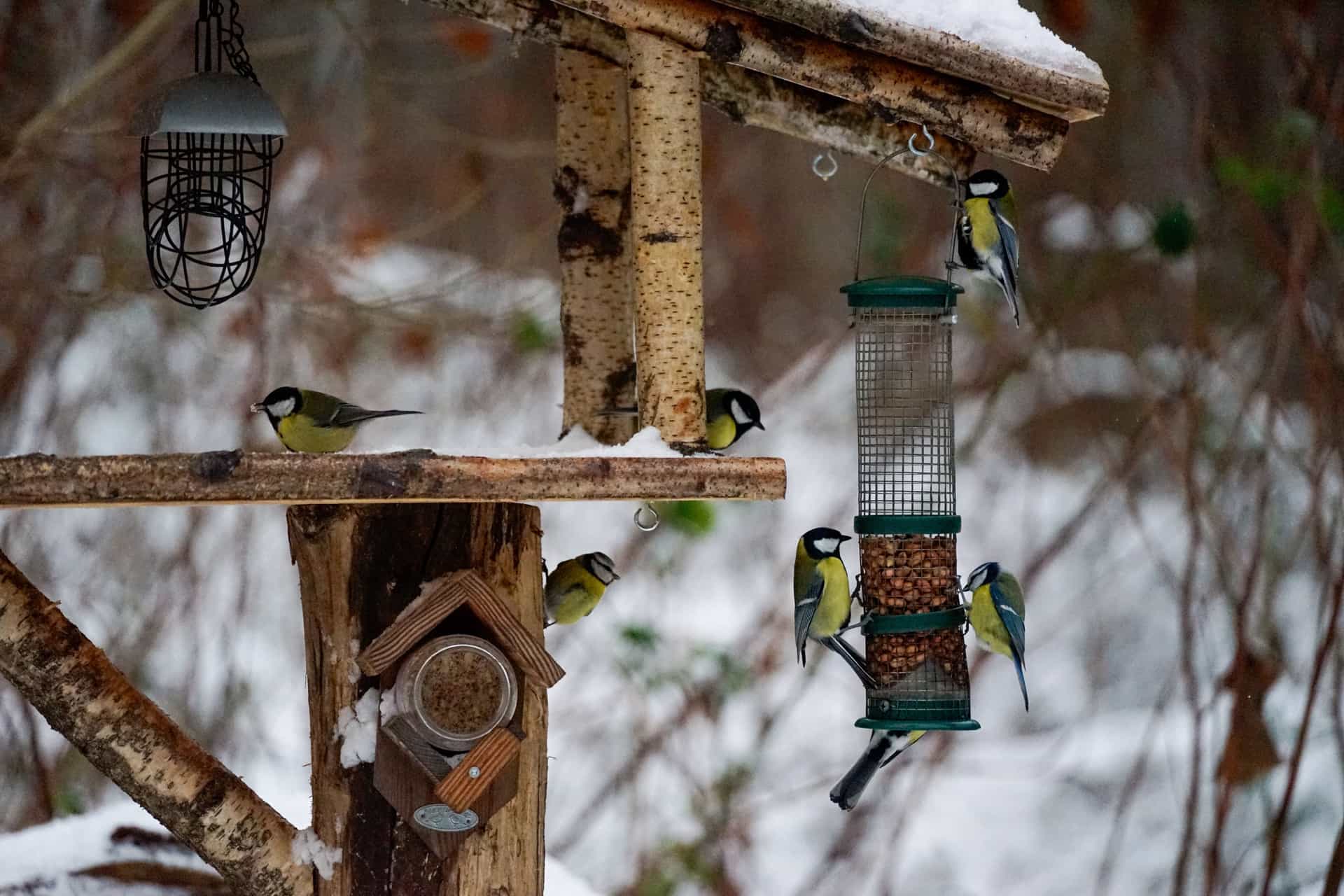
Weight-activated feeders work. A squirrel climbs on, its weight pulls a shroud down over the ports, and it gets nothing. The adjustable models will also exclude grackles if you set the threshold low enough, which is a useful second job.
They cost several times a cedar hopper, and there is a mechanism that can ice up in a freezing-rain event. In practice that means an occasional shake and check, not a real maintenance burden. If squirrels are emptying your feeder, this is the purchase that ends it. If they are not, you are buying a mechanism you do not need. The suet-side version.
What to put in it
Straight black oil sunflower. Thin shell, high oil, opened by small bills, eaten by almost everything at a northern feeder. Not a mixed bag with milo and wheat in it — those fillers get kicked to the ground, rot, and draw rodents. The seed and suet argument in full.
What we would skip
What we would skip
A 1 lb tube feeder as your main winter station
It empties daily during a cold snap, which is exactly when you least want to be outside. Capacity is the winter specification and this is where people quit. The tube feeder roundup ranks the format on capacity first for exactly this reason.
Any feeder with no roof over the ports
Wet seed cakes, blocks ports and grows mold — and mold at feeders is a genuine health risk to birds, not just a nuisance.
A hopper feeder in a squirrel-heavy yard
A hopper is an open box of seed with a lid. There is nothing in the design that a squirrel has to solve. Good feeder, wrong yard — the hopper roundup covers the one model here that does solve it, and the baffle that is cheaper than buying a mechanism.
How we picked
- Capacity first, because refill interval is what decides whether feeders stay full in February.
- Roof coverage over the feeding ports, from the maker's own listing.
- Drainage and ventilation, where the maker states it.
- Species reach — whether the design serves clinging, perching or ground-feeding birds.
- Whether it comes fully apart for the cleaning winter feeders genuinely need.
- Live price and availability, refreshed daily.
We have not tested any of these. What we did instead: read the manufacturers’ own listings, compiled the published specifications, computed the running cost at a cited electricity rate, and refreshed the prices daily. The full method is published.
Placement matters as much as the feeder: feeder placement in snow and wind covers the distances. And a feeding station without open water is doing two-thirds of a job — the setup guide puts it together.
Questions people actually ask
- What kind of bird feeder is best for winter?
- A high-capacity roofed feeder, ideally a hopper with integrated suet cages so one trip outside handles both seed and fat. Capacity matters more in winter than any other specification.
- How big should a winter bird feeder be?
- Big enough that you refill weekly rather than daily. Five pounds of seed or six quarts of hopper capacity is the practical target for a single-station yard. On a tight budget, the cheap feeder roundup covers what you give up and where it genuinely does not matter.
- Do I need a squirrel-proof feeder?
- Only if you have squirrels emptying your feeder. Weight-activated designs work reliably, cost several times a plain hopper, and add a mechanism worth checking after freezing rain.
- Should I bring feeders in during a storm?
- No. Storms and cold snaps are exactly when demand peaks. Make sure the feeder is roofed and secure instead.
- How do I stop seed getting wet?
- A roof that genuinely overhangs the ports, a vented body, and a drained base. Wet seed cakes solid and grows mold, which is a health risk rather than a nuisance.
Sources
Read next
- The Best Suet Feeders for Winter
Four suet cages ranked on exclusion — tail-prop, upside-down and weight-activated — and who each one lets eat.
- How to Set Up a Winter Bird Feeding Station
The complete winter station: feeders, water and cover, with the distances and the order to build it in.
- Suet vs Seed in Cold Weather
Fat versus carbohydrate in the cold, who eats which, and the proportion to run in a real winter yard.
- The Best Heated Bird Baths for Winter
Nine complete heated baths ranked on published wattage, basin size and mount type, with running cost computed for each.