Winter feeders / Guide
Keeping Feeders Clear of Snow and Ice
The unglamorous half of winter feeding. Wet seed cakes solid, ports ice shut, and mold at a feeder is a genuine health risk rather than an aesthetic one.
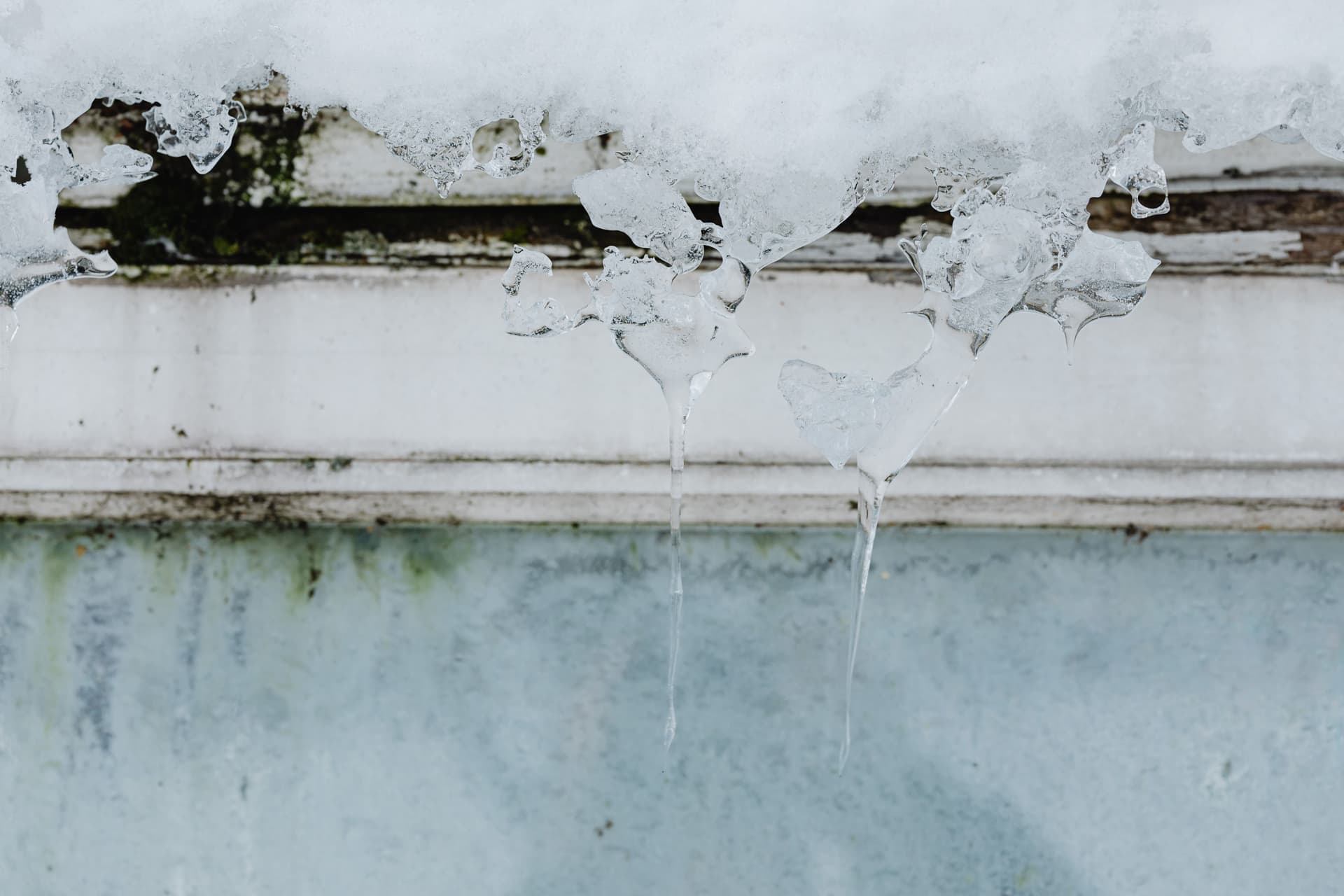
Clear snow after every fall, knock ice out of ports before refilling, and wash feeders every few weeks through the season. Damp seed cakes solid and grows mold, and mold at feeders is linked to fatal respiratory infection in birds. Roofed, vented, fully-dismantlable feeders make all of this quicker — the tube feeder roundup records which tubes publish a ventilation claim and which ones open without tools.
The four winter failure modes
1. Ports ice shut
Freezing rain, or a thaw-refreeze cycle, glazes the feeding ports. The feeder looks full and is functionally empty, and birds work it briefly and leave. This is the failure people miss for days because from a window the feeder looks fine.
Fix: check after any freezing-rain event, and clear the ports with a gloved finger or a wooden skewer. Never with hot water — thermal shock cracks cold plastic.
2. Seed cakes into a solid block
Damp seed compacts and then freezes into a plug that will not flow to the ports. Same visible symptom: a full-looking feeder nobody is using.
Fix: empty it, break up the plug, dry the body, refill with dry seed. Prevention is a roof that overhangs the ports and a vented body — a rain cover or weather dome retrofits the first part onto a feeder that lacks it — this is why seed ventilation is a feature worth having rather than marketing copy.
3. Trays and platforms fill with snow
An open tray is a snow collector. After a fall it is a block of snow with seed somewhere underneath, and the meltwater soaks whatever survives.
Fix: brush it out after each fall, and prefer trays with a screen base that drains rather than a solid one that pools. Trays need the most attention of anything in the yard, which is the price of reaching the ground feeders.
4. Mold — the one that matters
Fat residue and damp seed in a covered feeder grow mold even in cold weather, and mold at feeders is associated with fatal respiratory infection in birds. It is not a cosmetic problem and it is the reason this page exists.
Fix: wash feeders every few weeks. Take them fully apart, scrub with hot soapy water, rinse, and dry completely before refilling. A feeder that does not come apart is a feeder you will not clean properly. Cleaning feeders and baths in winter sets out the full schedule and the brushes that reach the ports.
The routine
| When | Task |
|---|---|
| After every snowfall | Brush trays and feeder roofs; clear the approach path |
| After freezing rain | Check and clear ports; check any weight-activated mechanism |
| Weekly | Top up; empty and scrub the bath; rake fallout under the feeders |
| Every 2 to 4 weeks | Full feeder wash: dismantle, hot soapy water, rinse, dry fully |
| Monthly | Check cords and connections if you run a heated bath |
| End of season | Deep clean everything and store dry |
Hardware choices that reduce the work
- A roof that genuinely overhangs the ports, not a decorative cap.
- A vented body and a drained base. Both are stated features on some feeders and absent on others.
- Fully dismantlable. If you cannot get inside it, you cannot clean it, and you will tell yourself it is fine.
- Recycled poly over cedar where cleaning matters — poly wipes clean and does not absorb fat the way wood does.
- High capacity, so there are fewer trips and fewer chances for a part-full feeder to sit damp.
Never use hot water on a cold feeder
Thermal shock cracks cold plastic and can split glued cedar joints. Bring the feeder indoors to warm before washing it, which is another argument for owning two of something and rotating them.
The bath needs it more, not less
A heated bath in constant use is the dirtiest thing in a winter yard: every bird in the neighborhood is drinking from one bowl and nothing evaporates. Empty and scrub it weekly. Disease transmission at a shared water source is a far more realistic risk than anything electrical. The bath side of this.
Feeders that make this easier
Winter Perch is funded by affiliate commission. If you buy through a link on this page we may earn a commission at no extra cost to you, and it never decides a ranking. Full disclosure · how we pick.
Quick picks
Ranked, with the trade-off named. Tap a row for the full write-up; the price button goes straight to Amazon.
| # | Product | Best for | Price |
|---|---|---|---|
| 1 |  Nature's Way CWF19 Cedar Hopper Feeder with Suet Cages, 6 qtSix quarts of seed with a suet cage on each end — the best single answer to the winter refill problem if you are only hanging one thing. | One feeder that runs seed and suet together | Check price on Amazon |
| 2 |  Brome Squirrel Buster Classic Seed Feeder, 2.4 lbThe same weight-activated shroud in a smaller, cheaper body. Four ports, 2.4 lb, and everything the Plus does except capacity. | Small yards and balconies with a squirrel problem | $79.22 · See it on Amazon |
| 3 | 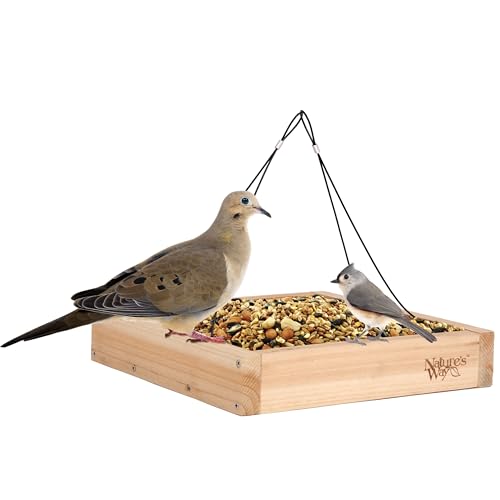 Nature's Way CWF3 Cedar Platform Tray Feeder, 12 x 12 inA flat cedar tray with a screen bottom. Juncos, doves and cardinals feed from flat surfaces and largely ignore tubes. | Ground feeders that will not use a tube | Check price on Amazon |
#ad how we are funded · price as of October 15, 2026
The picks in full
Top pick One feeder that runs seed and suet together
Nature's Way CWF19 Cedar Hopper Feeder with Suet Cages, 6 qt
Six quarts of seed with a suet cage on each end — the best single answer to the winter refill problem if you are only hanging one thing.
Specifications
- Seed capacity
- 6 quarts
- Suet
- Integrated cages
- Material
- Cedar
- Roof
- Yes — covers seed and both cages
Trade-offs
- Six quarts is the longest refill interval on this page
- Seed and suet in one visit, which matters when the visit is in a blizzard
- The roof covers everything, so wet seed is much less of an issue
- Cedar, and it looks like furniture rather than kit
- No squirrel exclusion at all — it is a hopper, and hoppers are open
- A full six quarts of damp seed is a lot of seed to spoil at once
- Big and heavy on a hanger
Who it is forThe single-station yard, where one feeder has to do everything.
Skip it ifSkip it if squirrels run your yard. A hopper feeder with no mechanism is the easiest meal on this site.
#ad how we are funded · price as of October 15, 2026
No. 2 Small yards and balconies with a squirrel problem
Brome Squirrel Buster Classic Seed Feeder, 2.4 lb
The same weight-activated shroud in a smaller, cheaper body. Four ports, 2.4 lb, and everything the Plus does except capacity.
Specifications
- Seed capacity
- 2.4 lb
- Ports
- 4
- Mechanism
- Weight-sensitive closure
- Extras
- Seed ventilation, wire mesh for shared feeding
Trade-offs
- Squirrel-proofing at roughly half the size and cost of the Plus
- Seed ventilation matters in winter, when damp seed cakes solid
- Small enough to hang almost anywhere
- 2.4 lb empties fast in a cold snap when birds feed all day
- Four ports means queuing in a busy yard
- No cardinal ring
Who it is forBalconies, small gardens, and second feeders.
Skip it ifSkip it if your yard is busy. Refilling a small feeder daily in January, in the dark, stops being charming by week two.
#ad how we are funded · price as of October 15, 2026
No. 3 Ground feeders that will not use a tube
Nature's Way CWF3 Cedar Platform Tray Feeder, 12 x 12 in
A flat cedar tray with a screen bottom. Juncos, doves and cardinals feed from flat surfaces and largely ignore tubes.
Specifications
- Size
- 12" x 12"
- Material
- Cedar with mesh base
- Drainage
- Screen bottom
- Mount
- Hang or set low
Trade-offs
- Reaches the third of your winter list that will not use a tube feeder
- The screen base drains meltwater instead of pooling it
- Takes seed, cracked corn, fruit and suet nuggets equally
- The easiest feeder on this site to clean properly
- An open tray, so snow lands directly in it
- No exclusion of anything — squirrels, starlings and deer all welcome
- Needs clearing after every snowfall
Who it is forYards with ground-feeding regulars, and anyone who has noticed the juncos never land on the tube.
Skip it ifSkip it if you cannot get out to clear it. A tray under six inches of snow is not a feeder, it is a bird-shaped disappointment.
#ad how we are funded · price as of October 15, 2026
How we picked
- Failure modes described from how they present, since the common ones are invisible from a window.
- Mold treated as a health risk, which is how the feeding literature treats it.
- Hardware features that reduce maintenance taken from makers' own listings — ventilation, drainage, dismantlability.
We have not tested any of these. What we did instead: read the manufacturers’ own listings, compiled the published specifications, computed the running cost at a cited electricity rate, and refreshed the prices daily. The full method is published.
Placement determines how much snow you deal with in the first place: feeder placement in snow and wind. And what not to feed birds in winter covers the mold risk from the food side.
Questions people actually ask
- How do I stop bird feeder ports icing up?
- Check after freezing rain and clear them with a gloved finger or a wooden skewer. Never use hot water — thermal shock cracks cold plastic. A roof that overhangs the ports prevents most of it.
- How often should I clean feeders in winter?
- A full wash every two to four weeks, plus a weekly scrub of the bath. Mold at feeders is linked to fatal respiratory infection, so it is a health measure rather than housekeeping.
- Can I use hot water to clear ice from a feeder?
- No. Thermal shock cracks cold plastic and splits glued cedar joints. Bring the feeder indoors to warm up first.
- What do I do when seed cakes solid?
- Empty the feeder, break up the plug, dry the body completely, and refill with dry seed. Prevention is a roof over the ports and a vented body.
- Should I clear snow off feeders after every fall?
- Yes, especially trays and platforms. A snow-filled tray is not a feeder, and the meltwater soaks whatever seed is underneath.
Sources
Read next
- Feeder Placement in Snow and Wind
Wind shelter, drift lines, roof drip and height above snow — where to hang a feeder so the weather does not close it.
- The Best Bird Feeders for Winter
Seed feeders ranked on capacity, roofing and drainage — the specs that decide how often you go out in bad weather.
- What Not to Feed Birds in Winter
The genuinely harmful list — bread, salt, mold, desiccated coconut — with the reason for each and what to use instead.
- Are Heated Bird Baths Safe?
The GFCI, cord and placement rules, plus the wet-feather question and what the safety listings on these products actually mean.