Winter food / Guide
Is Suet Good for Birds in Winter?
Yes, and it is the single most useful thing most people can add to a winter yard. Here is why, and the three caveats that matter.
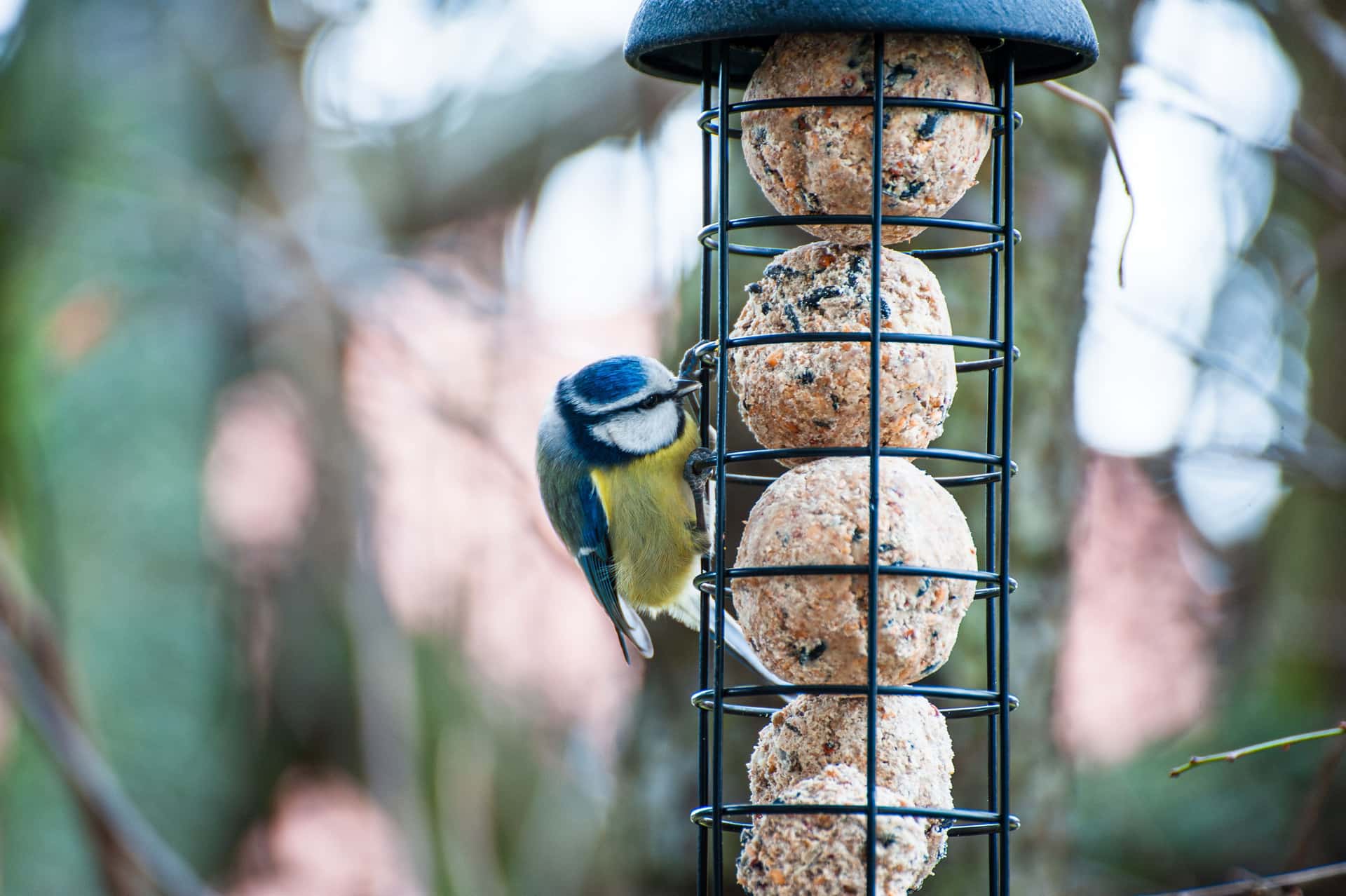
Yes. Suet is rendered animal fat, and fat carries roughly twice the energy per gram of carbohydrate or protein. In winter, when a small bird has a few hours of daylight to bank enough fuel for a fifteen-hour freezing night, that ratio is decisive. It also reaches insect-eating birds that ignore a seed feeder entirely.
The energy argument, properly
A small bird's winter problem is arithmetic. It loses heat continuously, faster the colder and windier it gets. It can only replace that energy while there is light to forage by, and in December there are maybe nine hours of usable light. Audubon's account of how birds cope with cold describes the other side of the same equation: increased insulation, fluffed feathers trapping air, and shivering to generate heat — all of which run on fat banked during the day.
Suet is the densest thing you can put in front of a bird to close that gap. Not the tastiest, not the most popular by species count — the densest. That is the whole case.
The birds a seed feeder never reaches
Project FeederWatch makes the second argument: suet is how you attract insect-eating birds. Woodpeckers, nuthatches, brown creepers, wrens, kinglets — their ordinary food supply vanished when the ground froze and the insects went dormant. They do not eat sunflower seed in any quantity. For bluebirds and wrens specifically, dried mealworms go a step further than a suet cake.
Put up a suet cage and, within a week or two, you will typically see downy woodpeckers, nuthatches and chickadees on it — a set of birds that were in your yard already and had no reason to visit a tube feeder. That change in the visitor list is the most noticeable single effect of anything on this site.
The three caveats
1. Raw suet spoils above about 70 F
Unrendered butcher's suet carries tissue and moisture that go rancid in warmth, and rancid fat is harmful. This is entirely solved by no-melt rendered dough, which is what almost everyone should buy.
2. It attracts everything, not just what you wanted
Starlings can strip a cake from an open cage in an afternoon. Squirrels will empty one. Raccoons take an interest in mild spells. None of this is a reason not to feed suet; it is a reason to think about the cage. The feeder decides who eats, and hot pepper cakes handle the mammals.
3. Never use fine plastic mesh
Suet sold in fine plastic mesh bags is a genuine hazard: mesh can catch a foot or a bill. If you buy a fat ball in mesh, cut it out and put the ball in a cage. Wire cage feeders are the safe format, and the ball format is covered in full here.
Does feeding suet make birds dependent?
No. Birds forage across many food sources and treat a feeder as one of them, which is why a missed day is not a crisis and why going away for a week does not doom your visitors. What feeding does is improve the odds during a sustained freeze, when natural food genuinely does disappear — and that is the period where it matters most and where consistency is worth the effort.
When to start and stop
- Start in autumn, before the first hard weather, so birds have found the feeder before they need it.
- Run through the whole winter. Cold snaps sharply increase demand.
- Keep going into early spring. Late winter is the leanest period — autumn's natural food is gone and nothing new has arrived yet.
- No-melt dough can stay out year-round. Raw suet should come down when it warms up.
What to buy
Winter Perch is funded by affiliate commission. If you buy through a link on this page we may earn a commission at no extra cost to you, and it never decides a ranking. Full disclosure · how we pick.
Quick picks
Ranked, with the trade-off named. Tap a row for the full write-up; the price button goes straight to Amazon.
| # | Product | Best for | Price |
|---|---|---|---|
| 1 |  C&S High Energy Delight No-Melt Suet Dough, 8-packNo-melt dough at a price that lets you leave a cake out permanently, in the formulation woodpeckers, nuthatches and chickadees actually work at. | The default winter cake | $23.21 · See it on Amazon |
| 2 |  C&S Woodpecker Delight No-Melt Suet DoughA coarser, nuttier blend aimed at the birds that cling and hammer rather than perch and peck. | Downies, hairies and red-bellied woodpeckers specifically | $7.14 · See it on Amazon |
| 3 |  C&S Insect Delight No-Melt Suet Dough, 12-packThe cake for wrens, bluebirds and anything else whose ordinary diet vanished the day the ground froze. | Insect eaters with nothing to eat in January | Check price on Amazon |
| 4 | 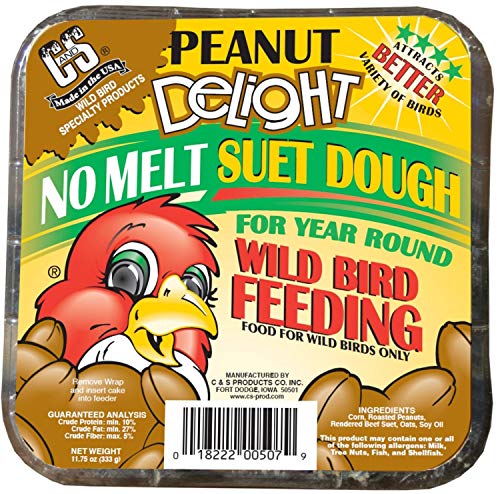 C&S Peanut Delight No-Melt Suet Dough, 12-packThe same no-melt dough with peanut through it, in the twelve-pack that is the sensible autumn purchase. | Bulk buying before the season | $36.99 · See it on Amazon |
#ad how we are funded · price as of October 15, 2026
The picks in full
Top pick The default winter cake
C&S High Energy Delight No-Melt Suet Dough, 8-pack
No-melt dough at a price that lets you leave a cake out permanently, in the formulation woodpeckers, nuthatches and chickadees actually work at.
Specifications
- Format
- Standard 11.75 oz cake
- Pack
- 8
- Type
- No-melt dough
- Targets
- Woodpeckers, nuthatches, chickadees
Trade-offs
- No-melt dough holds shape above freezing, so an early thaw does not dump it on the ground
- Standard cake size fits every cage feeder on this site
- Eight cakes is roughly a winter for one feeder
- Plain high-fat formulation with nothing gimmicky in it
- No-melt dough is firmer than raw suet and slower going for small birds in deep cold
- Nothing in it deters squirrels or starlings
Who it is forThe first suet you buy, and the one you re-order without thinking about it.
Skip it ifSkip it if starlings have found your feeder. A plain cake in an open cage is a starling buffet — go to an upside-down feeder or a hot pepper cake.
#ad how we are funded · price as of October 15, 2026
No. 2 Downies, hairies and red-bellied woodpeckers specifically
C&S Woodpecker Delight No-Melt Suet Dough
A coarser, nuttier blend aimed at the birds that cling and hammer rather than perch and peck.
Specifications
- Format
- Standard cake
- Type
- No-melt dough
- Targets
- Woodpeckers
Trade-offs
- Formulated around the species most people put a suet feeder up for
- No-melt dough, so it survives a thaw on a tail-prop feeder
- Pairs directly with a tail-prop or upside-down cage
- Narrower appeal than a general high-energy cake
- The coarse texture is less useful to the smallest birds
Who it is forYards with woodpeckers already visiting, where the point is to keep them.
Skip it ifSkip it if you are still trying to attract your first woodpecker. Get them in on a general high-energy cake first; a specialist blend does not create traffic that is not already there.
#ad how we are funded · price as of October 15, 2026
Where these specs came from
No. 3 Insect eaters with nothing to eat in January
C&S Insect Delight No-Melt Suet Dough, 12-pack
The cake for wrens, bluebirds and anything else whose ordinary diet vanished the day the ground froze.
Specifications
- Format
- 11.75 oz cake
- Pack
- 12
- Type
- No-melt dough with insect content
Trade-offs
- Targets the birds a seed feeder never reaches
- Twelve-pack pricing
- No-melt behavior identical to the rest of the C&S range
- Less interesting to seed-eating regulars, so a single-feeder yard sees less traffic
- Insect blends attract more attention from raccoons in mild spells
Who it is forYards that hold wrens or overwintering bluebirds.
Skip it ifSkip it if your winter list is finches, sparrows and jays. They will pick at it and prefer the high-energy cake, and you will end up with eleven cakes of the wrong thing.
#ad how we are funded · price as of October 15, 2026
No. 4 Bulk buying before the season
C&S Peanut Delight No-Melt Suet Dough, 12-pack
The same no-melt dough with peanut through it, in the twelve-pack that is the sensible autumn purchase.
Specifications
- Format
- 11.75 oz cake
- Pack
- 12
- Type
- No-melt dough, peanut
Trade-offs
- Twelve cakes covers a two-feeder yard through a full winter
- Peanut is the single most reliable draw for woodpeckers and titmice
- No-melt, so an autumn warm spell does not waste the first three cakes
- Peanut is also what squirrels can smell from the next yard
- Twelve cakes need dry, rodent-proof storage
Who it is forAnyone buying in September for a winter they already know is coming.
Skip it ifSkip the twelve-pack if you have nowhere dry to keep it. Suet dough left in a damp garage goes rancid, and rancid fat is worse than no fat.
#ad how we are funded · price as of October 15, 2026
How we picked
- Energy density as the core argument, with named authority for the physiology.
- Species access cited to Project FeederWatch, not asserted.
- Caveats stated plainly, including the mesh-bag hazard that most suet coverage omits.
- Live price and availability on every pick, refreshed daily.
We have not tested any of these. What we did instead: read the manufacturers’ own listings, compiled the published specifications, computed the running cost at a cited electricity rate, and refreshed the prices daily. The full method is published.
The full ranking is on the suet cake roundup, and the hardware is on the suet feeder roundup. Suet is one leg of three: open water and overnight shelter are the other two, and a bird eating dry fat still has to find something to drink.
Questions people actually ask
- Is suet good for birds in winter?
- Yes. It is the densest energy source you can offer, at roughly twice the energy per gram of carbohydrate, and it reaches insect-eating birds like woodpeckers, nuthatches and creepers that a seed feeder never will.
- Can suet harm birds?
- Raw suet that has gone rancid can, and fine plastic mesh bags are a physical hazard. Rendered no-melt cakes in a wire cage avoid both problems.
- Do birds become dependent on suet feeders?
- No. Birds forage across many sources and treat a feeder as one of them. Consistency matters most during a sustained freeze, when natural food genuinely disappears.
- When should I put suet out?
- Autumn, before the first hard weather, so birds have found it before they need it. Keep going into early spring, which is the leanest part of the year.
- Which birds eat suet?
- Woodpeckers, nuthatches, chickadees, titmice, wrens, creepers and kinglets primarily — plus starlings, jays and anything else that finds it.
Sources
Read next
- The Best Suet Cakes for Winter Birds
Seven suet cakes ranked on fat, no-melt behavior and who they actually attract, with pack-size advice.
- The Best Suet Feeders for Winter
Four suet cages ranked on exclusion — tail-prop, upside-down and weight-activated — and who each one lets eat.
- No-Melt Suet: What the Label Actually Promises
What no-melt actually means, where it beats raw suet, and the one place a firm cake is a disadvantage.
- How Birds Survive Winter
The four mechanisms small birds use to survive a freezing night, what breaks them, and what a yard can actually contribute.