Winter food / Roundup
The Best Bird Seed for Winter
One seed does most of the work and the other four solve specific problems. Ranked on oil content, shell thickness and which birds a bag actually reaches.
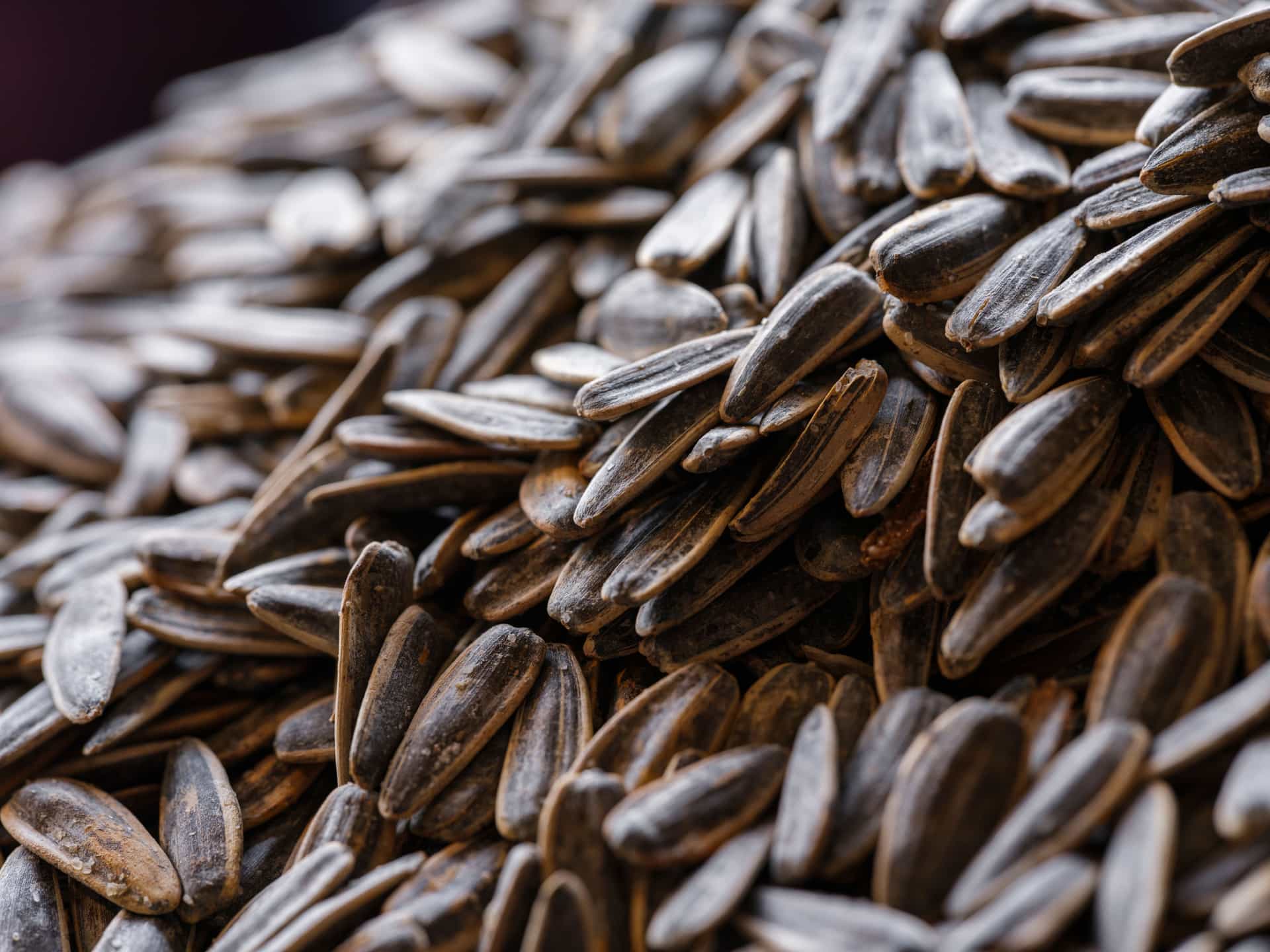
Buy straight black oil sunflower. Thin shell, high oil content, and eaten by nearly everything at a northern feeder — it is the correct default and nothing else on this page displaces it. The other four seeds here exist to solve specific problems: squirrels, mess, finches, or a species list that has stopped growing.
Winter Perch is funded by affiliate commission. If you buy through a link on this page we may earn a commission at no extra cost to you, and it never decides a ranking. Full disclosure · how we pick.
Quick picks
Ranked, with the trade-off named. Tap a row for the full write-up; the price button goes straight to Amazon.
| # | Product | Best for | Price |
|---|---|---|---|
| 1 |  Wagner's 76027 Black Oil Sunflower Seed, 25 lbThin-shelled, high-fat, and eaten by nearly everything that comes to a winter feeder. Black oil sunflower is the correct default and this is the honest bulk bag. | The one seed to run if you only run one | $41.98 · See it on Amazon |
| 2 |  Wagner's 57075 Safflower Seed, 5 lbThe one seed on this page that solves a pest problem through taste rather than hardware — squirrels and grackles largely leave safflower alone, and cardinals prefer it. | Cardinals, when squirrels and grackles have taken over | $11.98 · See it on Amazon |
| 3 |  Kaytee Ultimate No Mess Wild Bird Seed, 9.75 lbEvery seed pre-hulled, so nothing accumulates underneath. The right answer over a deck or a path, and the wrong one if you are buying on price per pound. | Decks, patios and balconies where hulls are not welcome | $21.99 · See it on Amazon |
| 4 |  Kaytee Nyjer Seed, 8 lbA specialist, and honest about it: tiny, high-oil, hull-free seed that finches work all winter and most other birds ignore entirely. | Goldfinches, siskins and redpolls, and almost nothing else | Check price on Amazon |
| 5 |  Kaytee Ultra No Mess Nut & Fruit Blend, 5.5 lbSafflower, peanuts, striped sunflower and millet with the sunflower hulls removed — a widener rather than a staple, and priced like one. | Pulling in the birds a plain sunflower feeder misses | $19.99 · See it on Amazon |
#ad how we are funded · price as of October 17, 2026
The picks in full
Top pick The one seed to run if you only run one
Wagner's 76027 Black Oil Sunflower Seed, 25 lb
Thin-shelled, high-fat, and eaten by nearly everything that comes to a winter feeder. Black oil sunflower is the correct default and this is the honest bulk bag.
Specifications
- Type
- 100% black oil sunflower
- Bag
- 25 lb
- Shell
- Thin — accessible to small bills
- Origin
- Made in USA
Trade-offs
- Thin shells mean chickadees and finches can open it, not just cardinals
- The highest usable fat of the common feeder seeds
- 25 lb is a real winter's supply for one or two feeders
- No filler — no milo, no wheat, no red millet nobody eats
- Shells pile up under the feeder and kill the grass beneath it
- 25 lb needs a sealed bin or you are feeding mice
- Sunflower is squirrel candy
Who it is forEvery winter feeder yard, as the base seed.
Skip it ifSkip the 25 lb bag if you feed one small tube on a balcony. Seed goes stale and moldy long before you finish twenty-five pounds.
#ad how we are funded · price as of October 17, 2026
No. 2 Cardinals, when squirrels and grackles have taken over
Wagner's 57075 Safflower Seed, 5 lb
The one seed on this page that solves a pest problem through taste rather than hardware — squirrels and grackles largely leave safflower alone, and cardinals prefer it.
Specifications
- Type
- 100% safflower
- Bag
- 5 lb (a 2-pack and a 50 lb bag are also listed)
- Shell
- Thick, white
- Origin
- Made in USA
- Targets
- Cardinals, chickadees, titmice, grosbeaks, doves
Trade-offs
- Most squirrels dislike it, which makes it the cheapest squirrel answer on the site — no mechanism, no baffle
- Grackles and starlings largely ignore it too, so it thins two pest problems at once
- Cardinals genuinely prefer it, and cardinals are the bird most people are trying to attract
- A 5 lb bag is a sensible way to test whether it works in your yard before committing
- Costs noticeably more per pound than black oil sunflower
- The thick white shell is harder work for the smallest bills than thin-shelled sunflower
- Fewer species eat it, so it narrows your feeder traffic rather than widening it
- Squirrel avoidance is a preference, not a barrier — a hungry animal will still eat it
Who it is forA yard with cardinals and a squirrel or grackle problem, run as a second feeder alongside sunflower.
Skip it ifSkip it as your only seed. You will lose the finches, and you are paying a premium to feed a narrower list than sunflower brings in.
#ad how we are funded · price as of October 17, 2026
No. 3 Decks, patios and balconies where hulls are not welcome
Kaytee Ultimate No Mess Wild Bird Seed, 9.75 lb
Every seed pre-hulled, so nothing accumulates underneath. The right answer over a deck or a path, and the wrong one if you are buying on price per pound.
Specifications
- Type
- Hull-free blend
- Bag
- 9.75 lb
- Hulls
- None — 100% edible
- Waste
- No shell debris under the feeder
- Targets
- Cardinals, finches, chickadees, nuthatches, woodpeckers, juncos
Trade-offs
- Nothing to sweep up, which is the entire point over a deck, a patio or a path
- 100% edible means you are not paying to ship and then dispose of shells
- No hulls also means no seed hull mat killing the grass under the feeder
- Broad species appeal, unlike the single-seed options here
- Considerably more expensive per pound than sunflower in the shell
- Hulled seed absorbs moisture faster and spoils sooner once it is damp — a real issue in a wet winter
- Because nothing is discarded, squirrels and starlings get full value from every beakful too
- 9.75 lb goes faster than the weight suggests, since none of it is shell
Who it is forFeeders over a deck, patio, balcony or path, where the mess under the feeder is the deciding factor.
Skip it ifSkip it if your feeder hangs over lawn or a border and you do not mind the hulls. You are paying a real premium purely for tidiness, and a wet week will spoil it faster than shelled seed.
#ad how we are funded · price as of October 17, 2026
No. 4 Goldfinches, siskins and redpolls, and almost nothing else
Kaytee Nyjer Seed, 8 lb
A specialist, and honest about it: tiny, high-oil, hull-free seed that finches work all winter and most other birds ignore entirely.
Specifications
- Type
- 100% nyjer (thistle)
- Bag
- 8 lb (3 lb and 20 lb also listed)
- Hulls
- None — 100% edible
- Feeder
- Requires a fine-port nyjer feeder or a mesh sock
- Targets
- Goldfinches, house finches, siskins, redpolls, juncos
Trade-offs
- High oil content in a very small seed, which is exactly what a small bill needs in cold weather
- No hulls, so nothing accumulates under the feeder and nothing rots into the lawn
- The only reliable way to hold a goldfinch flock through the winter
- In an irruption year it is what brings siskins and redpolls into the yard
- Needs a dedicated fine-port feeder — it pours straight through a standard sunflower tube
- The narrowest species appeal of anything on this page
- Nyjer goes stale and oily faster than sunflower; a large bag can spoil before a small flock finishes it
- Costs more per pound than any other seed here
Who it is forA yard that already sees goldfinches and wants to keep them there all winter.
Skip it ifSkip it if you do not already have finches and a feeder to suit. Nyjer does not attract them from nowhere, and an 8 lb bag feeding a bird that never arrives is money and seed wasted.
#ad how we are funded · price as of October 17, 2026
No. 5 Pulling in the birds a plain sunflower feeder misses
Kaytee Ultra No Mess Nut & Fruit Blend, 5.5 lb
Safflower, peanuts, striped sunflower and millet with the sunflower hulls removed — a widener rather than a staple, and priced like one.
Specifications
- Type
- Hull-free nut and fruit blend
- Contents
- Safflower, peanuts, striped sunflower, millet
- Bag
- 5.5 lb
- Hulls
- Zero sunflower hulls
- Targets
- Blue jays, woodpeckers, juncos, cardinals, grosbeaks, sparrows, finches
Trade-offs
- Peanuts are the single most reliable draw for woodpeckers, jays and titmice, and they are in the mix
- The safflower share brings cardinals without a separate feeder
- No sunflower hulls, so it keeps the tidiness benefit of the no-mess range
- Genuinely widens the species list rather than just repackaging sunflower
- The most expensive per pound of anything on this page
- Millet is the weakest ingredient here — ground feeders will take it, tube feeders will scatter it
- 5.5 lb is a small bag for the money in a busy yard
- A blend means you cannot tune the ratio; you get the maker's proportions
Who it is forA yard already running sunflower, where the goal is adding species rather than adding volume.
Skip it ifSkip it as a first purchase. Get straight black oil sunflower working first — a blend cannot fix a badly sited feeder, and it costs several times as much to find that out.
#ad how we are funded · price as of October 17, 2026
What actually makes a seed good in winter
Four criteria, in the order they matter. Everything on this page is ranked against them, and the ranking barely moves once you apply the first two.
1. Usable fat per pound — not fat per seed
Fat carries roughly twice the energy per gram of carbohydrate, which is why suet outranks every seed in cold weather. Among seeds, the oily ones win: sunflower and nyjer are high-oil, millet and cracked corn are mostly starch.
The word *usable* is doing real work there. A bag that is 40 percent filler by weight is not a cheap bag of seed, it is an expensive bag of sunflower with ballast in it. Judge on what the birds actually eat, not on the price sticker.
2. Shell thickness, which decides who can open it
This is the criterion people skip, and it is why black oil sunflower beats striped sunflower for winter feeding. Black oil has a thin shell a chickadee can crack; striped sunflower has a thick one that effectively restricts it to cardinals, jays and grosbeaks. The full black oil sunflower comparison.
Safflower sits at the thick end too, which is part of why squirrels bother with it less — and also why it narrows your visitor list. Hull-free blends remove the question entirely, at a price.
3. Species reach — how many birds one bag serves
A seed that four species eat is doing four times the work of a seed one species eats, at the same price per pound. Black oil sunflower has the widest reach of anything here by a distance. Nyjer has the narrowest.
That is not a mark against nyjer — it is what a specialist is for. It is a mark against buying a specialist first. Winter backyard birds lists which species take what, and it is worth checking your own yard against it before you buy a narrow seed.
4. What it leaves behind
Shells accumulate. Under a busy feeder that means a mat of hulls that kills the grass, holds damp, and eventually attracts rodents. Over a lawn or a border it is a minor annoyance you rake off in spring. Over a deck, a patio or a path it is the thing that makes people stop feeding birds.
That single consideration is what the whole hull-free category exists for, and it is why a no-mess blend is on this page despite costing a real premium per pound. Seed cylinders attack the same problem from the other direction: birds chip seed off a solid block instead of flicking it out of a port. The hardware alternative — a catcher under the feeder you already own — is weighed against it here.
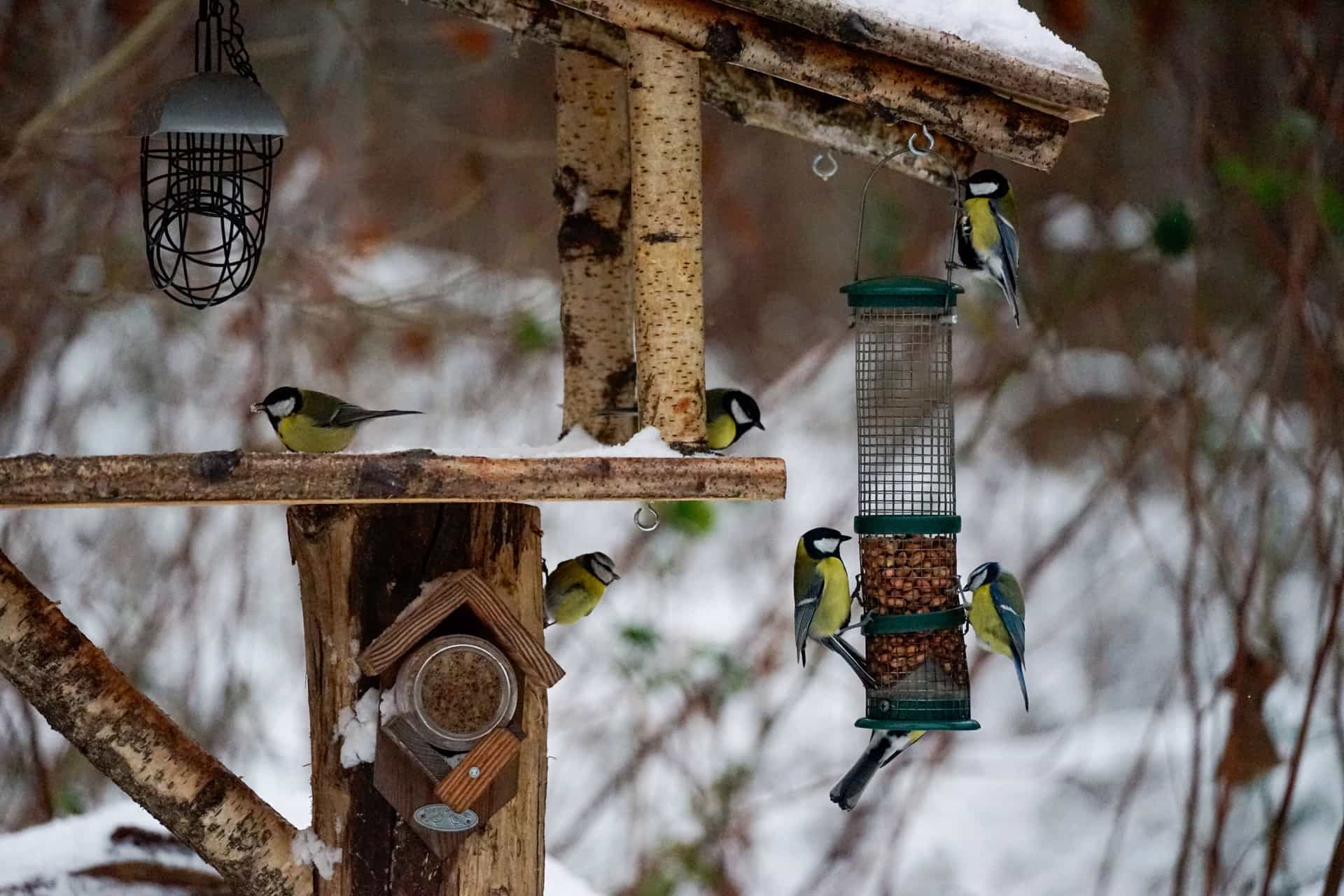
The seeds, side by side
| Seed | Oil content | Shell | Reaches | Main drawback |
|---|---|---|---|---|
| Black oil sunflower | High | Thin | Nearly everything | Hulls pile up under the feeder |
| Safflower | Moderate | Thick | Cardinals, chickadees, titmice, doves | Narrower list, costs more |
| Nyjer | High | None (hull-free) | Finches, siskins, redpolls | Needs its own feeder; spoils faster |
| Hull-free blend | Moderate to high | None | Broad | Premium price; spoils faster when damp |
| Nut and fruit blend | High | None | Jays, woodpeckers, cardinals, finches | Most expensive per pound here |
Straight black oil sunflower is the base seed in every setup on this site. Everything else on this table is a second feeder, not a replacement.
How we ranked them
How we picked
- Usable fat per pound, judged on what birds actually eat rather than on bag weight — a bag that is 40 percent filler is not cheap seed.
- Shell thickness, which decides whether a chickadee can open it or only a cardinal can.
- Species reach, from the maker's own stated target list, because a seed four birds eat does four times the work at the same price.
- What it leaves under the feeder, which is the deciding factor over a deck, patio or path.
- Storage behavior — hulled seed spoils faster than seed in the shell, and that changes what size bag makes sense.
- Live price and availability, refreshed daily. Availability was confirmed for every pick before it was featured.
We have not tested any of these. What we did instead: read the manufacturers’ own listings, compiled the published specifications, computed the running cost at a cited electricity rate, and refreshed the prices daily. The full method is published.
The filler problem, and how to spot it
The cheapest bags on the shelf are cheap because of what is padding them out. Milo, wheat, oats and red millet are the usual culprits, and almost nothing at a northern feeder eats them. Note the word red — white proso millet is a different seed, and ground feeders do eat it.
What happens next is predictable: birds kick the filler out to reach the sunflower underneath, it lands on the ground, it gets wet, and it rots. You have paid to ship weight that becomes a mess you then clear up — and a damp pile of spoiled grain under a feeder is a genuine mold risk, not just an eyesore.
Buying and storing it
- Buy in autumn. Prices and availability are both better before the season, and seed does not go off if it is stored properly.
- Buy the big bag only if you have somewhere to put it. A sealed metal or heavy plastic bin, off the floor. Seed left in its paper sack in a garage is a mouse invitation.
- A 25 lb bag is roughly a winter for one or two feeders. If you run a single small tube on a balcony, buy 5 lb — seed goes stale and moldy long before you finish twenty-five pounds.
- Keep it dry above everything else. Damp seed cakes, clogs feeder ports and grows mold, and mold at feeders is linked to fatal respiratory infection.
- Do not stockpile hulled seed. No-mess blends and nyjer have no shell protecting them, so they spoil faster than seed in the shell. Buy those in smaller quantities.
What we would skip
What we would skip
Cheap mixed seed with milo, wheat, oats or red millet
The single clearest waste of money in winter bird feeding. Northern feeder birds do not eat these fillers; they kick them to the ground where they rot, draw rodents and grow mold. You are paying to ship ballast and then clearing it up. Buy straight black oil sunflower instead.
Nyjer as your first or only seed
It is a specialist that reaches finches and very little else, needs its own fine-port feeder, costs the most per pound here, and spoils faster than sunflower. Excellent as a second feeder in a yard that already has goldfinches. A poor place to start.
Striped sunflower for general winter feeding
The thick shell restricts it to cardinals, jays and grosbeaks — the birds least likely to be short of options. Black oil sunflower has a thin shell a chickadee can open, which is the whole reason it is the default.
A 25 lb bag with nowhere dry to keep it
Seed stored in a damp garage in its paper sack goes moldy and feeds mice — and stale seed is one of the commonest reasons birds ignore a feeder. If you do not have a sealed bin, buy smaller bags more often — it costs a little more per pound and a lot less than a ruined sack.
The seed is half the job
A good seed in a bad feeder is wasted. Capacity is the winter specification — a feeder you refill weekly rather than daily is the difference between still feeding birds in February and having quietly stopped. The winter feeder roundup ranks on exactly that, and a roof over the ports keeps the seed you just bought from caking solid.
And seed is only one of the two food halves. Suet is the denser energy source and reaches the woodpeckers, nuthatches and wrens that ignore a seed feeder entirely. A complete setup runs both, plus open water, which is the resource most yards are actually missing.
Questions people actually ask
- What is the best bird seed for winter?
- Straight black oil sunflower. It has a thin shell small bills can open, the highest usable oil content of the common feeder seeds, and nearly everything at a northern feeder eats it. Buy it on its own rather than in a mix.
- Is expensive bird seed worth it?
- Sometimes. A hull-free blend is worth the premium if your feeder hangs over a deck or path, because you are buying the absence of mess. A cheap mix padded with milo and wheat is never worth it, because you are buying weight the birds will not eat.
- What seed do squirrels not like?
- Safflower. Most squirrels leave it alone and grackles largely ignore it too, while cardinals actively prefer it. It is a preference rather than a barrier, so a hungry squirrel will still eat it — but it thins the traffic without any hardware.
- Why is my seed left uneaten under the feeder?
- Almost always filler. Birds kick milo, wheat and red millet out to reach the sunflower underneath. If there is a pile of untouched seed below your feeder, check the ingredient list on the bag.
- How much seed will I need for a winter?
- Roughly 25 lb for one or two feeders across a season, though a cold snap sharply increases the rate. Buy in autumn and store it in a sealed bin off the floor.
- Does bird seed go bad?
- Yes. Damp seed cakes and grows mold, which is linked to fatal respiratory infection in birds. Hulled seed and nyjer spoil faster than seed still in the shell, so buy those in smaller quantities.
Sources
Read next
- Suet vs Seed in Cold Weather
Fat versus carbohydrate in the cold, who eats which, and the proportion to run in a real winter yard.
- What to Feed Birds in Winter
The winter list ordered by fat content, what each food reaches, and the two purchases that cover almost everything.
- The Best Bird Feeders for Winter
Seed feeders ranked on capacity, roofing and drainage — the specs that decide how often you go out in bad weather.
- What Not to Feed Birds in Winter
The genuinely harmful list — bread, salt, mold, desiccated coconut — with the reason for each and what to use instead.