Winter food / Guide
What Not to Feed Birds in Winter
A short list, and most of it is genuinely harmful rather than merely unhelpful. Bread is the one almost everybody gets wrong.
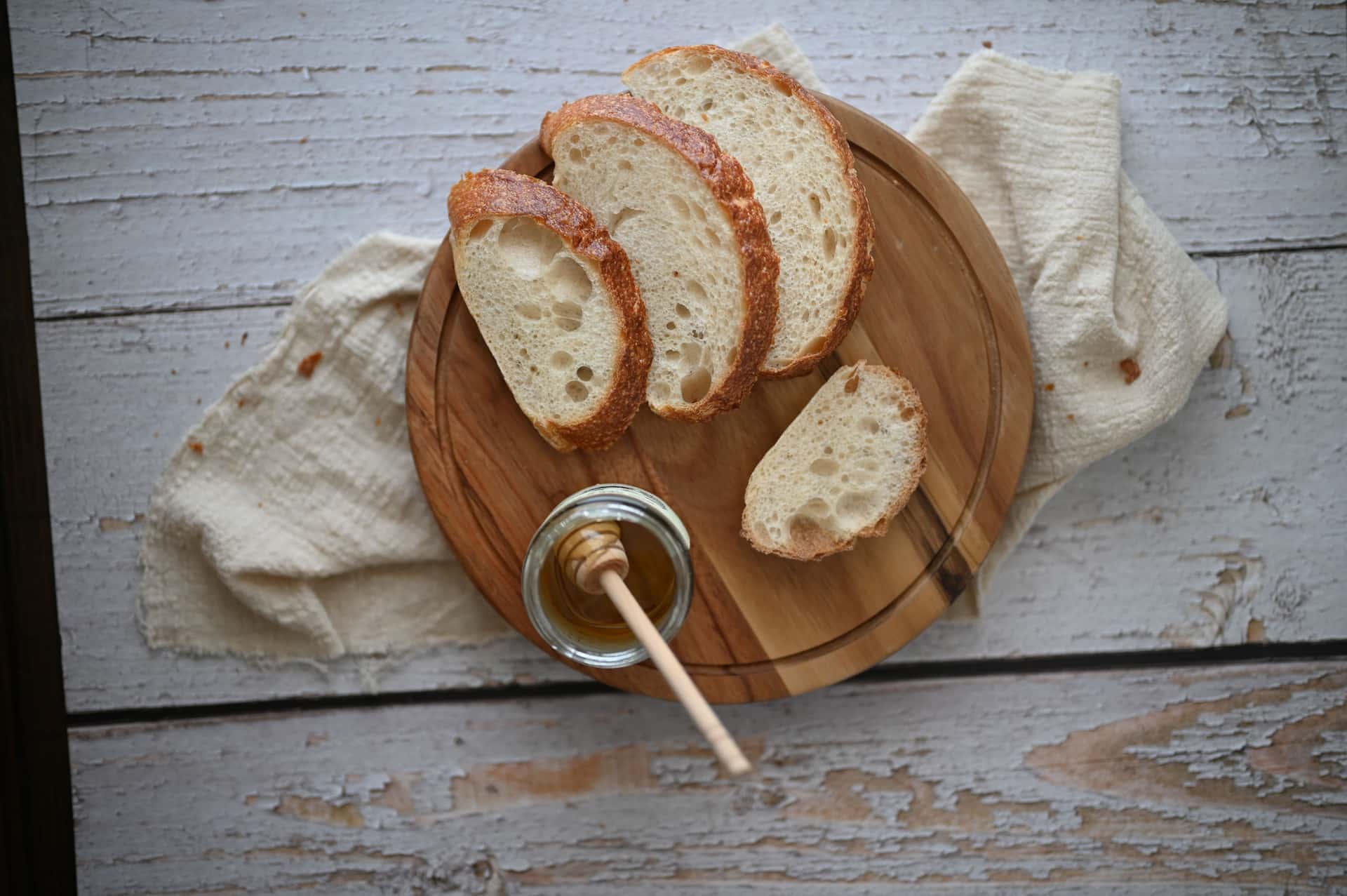
Avoid bread, anything salted, anything moldy, desiccated coconut, cooking fat and drippings, and milk. Note what is *not* on that list: peanut butter is safe, and the choking warning attached to it has no evidence behind it. Most of these are not neutral — they cause real harm. In winter the stakes are higher than in summer, because a bird that fills up on empty calories has wasted the short feeding window it had.
The list
Bread — the one everybody gets wrong
Bread is not toxic, and that is why the advice against it never quite lands. The problem is opportunity cost. A bird that fills its crop with white bread has spent its feeding window on something that is mostly starch and water, and in winter that window is a few hours long. It goes into a fifteen-hour freezing night with nothing banked.
Moldy bread is worse and is genuinely dangerous. And bread left on the ground attracts rats. If you have bread going stale, compost it and put out suet.
Salt — actively toxic
Birds are small and cannot process sodium at anything like the levels we tolerate. Salted peanuts, salted crisps, salted popcorn, and anything cooked with salt are all off the list. This includes de-icing salt near a feeding area, and it certainly includes putting salt in a bird bath to stop it freezing, which appears in folk advice and should not.
Mold — dangerous, and easy to create accidentally
Moldy seed, moldy suet and moldy bread can cause fatal respiratory infection. Aspergillosis is a real and well-documented risk at feeders.
The way most people create this problem is not by putting out moldy food deliberately — it is by letting seed sit damp in a feeder through a wet week, or storing a twelve-pack of suet in a humid garage. Buy feeders with drainage and ventilation, and store food dry. The feeder page covers the drainage side.
Desiccated coconut — swells after eating
Dried, shredded coconut absorbs moisture and can swell inside a bird after it is eaten. Fresh coconut in the shell is fine and is a good high-fat food; the desiccated kind sold for baking is not.
Cooking fat, bacon grease and drippings
Two problems. Roasting-tin fat is mixed with meat juices and salt, and it goes rancid quickly. It also stays soft at temperatures where rendered suet is firm, which means it smears on feathers — and fat on plumage destroys the trapped-air insulation a bird depends on overnight.
Rendered suet from a proper cake does not do this. That is what rendering is for.
Milk
Birds do not have the enzyme to digest lactose and milk causes serious digestive upset. Hard cheese is a different matter — the lactose is largely gone — and grated hard cheese in small amounts is fine.
The quick table
| Avoid | Why | Instead |
|---|---|---|
| Bread | Fills the crop with almost no fat; moldy bread is dangerous | A no-melt suet cake |
| Salted anything | Birds cannot process sodium at our levels | Unsalted, unroasted nuts |
| Moldy food | Fatal respiratory infection risk | Fresh food, dry storage, drained feeders |
| Desiccated coconut | Swells after being eaten | Fresh coconut in the shell |
| Cooking fat and drippings | Rancid fast; smears feathers and destroys insulation | Rendered suet cake |
| Milk | Birds cannot digest lactose | Grated hard cheese in small amounts |
| Cheap mixed seed with milo and wheat | Not eaten; rots on the ground and draws rodents | Straight black oil sunflower |
Things that are fine despite the folklore
- Whole peanuts — fine in a mesh peanut feeder that forces birds to take pieces. Unsalted and unroasted.
- Uncooked rice — harmless. The story about it swelling inside birds is not true.
- Apple and pear — good, and windfalls are ideal for thrushes and waxwings.
- Fat balls — fine, but remove any plastic mesh bag before hanging them; the mesh can trap feet and bills.
What to put out instead
Winter Perch is funded by affiliate commission. If you buy through a link on this page we may earn a commission at no extra cost to you, and it never decides a ranking. Full disclosure · how we pick.
Quick picks
Ranked, with the trade-off named. Tap a row for the full write-up; the price button goes straight to Amazon.
| # | Product | Best for | Price |
|---|---|---|---|
| 1 |  C&S High Energy Delight No-Melt Suet Dough, 8-packNo-melt dough at a price that lets you leave a cake out permanently, in the formulation woodpeckers, nuthatches and chickadees actually work at. | The default winter cake | $23.21 · See it on Amazon |
| 2 |  Wagner's 76027 Black Oil Sunflower Seed, 25 lbThin-shelled, high-fat, and eaten by nearly everything that comes to a winter feeder. Black oil sunflower is the correct default and this is the honest bulk bag. | The one seed to run if you only run one | $41.98 · See it on Amazon |
#ad how we are funded · price as of October 15, 2026
The picks in full
Top pick The default winter cake
C&S High Energy Delight No-Melt Suet Dough, 8-pack
No-melt dough at a price that lets you leave a cake out permanently, in the formulation woodpeckers, nuthatches and chickadees actually work at.
Specifications
- Format
- Standard 11.75 oz cake
- Pack
- 8
- Type
- No-melt dough
- Targets
- Woodpeckers, nuthatches, chickadees
Trade-offs
- No-melt dough holds shape above freezing, so an early thaw does not dump it on the ground
- Standard cake size fits every cage feeder on this site
- Eight cakes is roughly a winter for one feeder
- Plain high-fat formulation with nothing gimmicky in it
- No-melt dough is firmer than raw suet and slower going for small birds in deep cold
- Nothing in it deters squirrels or starlings
Who it is forThe first suet you buy, and the one you re-order without thinking about it.
Skip it ifSkip it if starlings have found your feeder. A plain cake in an open cage is a starling buffet — go to an upside-down feeder or a hot pepper cake.
#ad how we are funded · price as of October 15, 2026
No. 2 The one seed to run if you only run one
Wagner's 76027 Black Oil Sunflower Seed, 25 lb
Thin-shelled, high-fat, and eaten by nearly everything that comes to a winter feeder. Black oil sunflower is the correct default and this is the honest bulk bag.
Specifications
- Type
- 100% black oil sunflower
- Bag
- 25 lb
- Shell
- Thin — accessible to small bills
- Origin
- Made in USA
Trade-offs
- Thin shells mean chickadees and finches can open it, not just cardinals
- The highest usable fat of the common feeder seeds
- 25 lb is a real winter's supply for one or two feeders
- No filler — no milo, no wheat, no red millet nobody eats
- Shells pile up under the feeder and kill the grass beneath it
- 25 lb needs a sealed bin or you are feeding mice
- Sunflower is squirrel candy
Who it is forEvery winter feeder yard, as the base seed.
Skip it ifSkip the 25 lb bag if you feed one small tube on a balcony. Seed goes stale and moldy long before you finish twenty-five pounds.
#ad how we are funded · price as of October 15, 2026
How we picked
- Harm, not preference. Everything on the avoid list is either toxic, a physical hazard, or a serious opportunity cost in a short winter feeding window.
- Folklore separated from fact — uncooked rice and whole peanuts are on the fine list because the warnings about them are not supported.
- Named authority for the winter energy argument, cited below.
We have not tested any of these. What we did instead: read the manufacturers’ own listings, compiled the published specifications, computed the running cost at a cited electricity rate, and refreshed the prices daily. The full method is published.
The positive list is on what to feed birds in winter, and the ranked cakes are on the suet roundup. Feeder hygiene is where most of the mold risk actually lives: keeping feeders clear.
Questions people actually ask
- Is bread bad for birds?
- It is not toxic, but it fills a bird's crop with starch during the few hours of winter daylight it had to bank fat. Moldy bread is genuinely dangerous, and bread on the ground attracts rats.
- Can birds eat salted peanuts?
- No. Birds are small and cannot process sodium at the levels we tolerate. Unsalted, unroasted peanuts are excellent.
- Is bacon fat okay for birds?
- No. Cooking fat is salted, goes rancid quickly, and stays soft enough to smear on feathers — which destroys the insulation that keeps a bird alive overnight. Rendered suet does not behave this way.
- Can birds eat uncooked rice?
- Yes. The claim that it swells inside birds and harms them is not true. It is not a great food, but it is harmless.
- Is moldy seed really dangerous?
- Yes. Mold at feeders is linked to fatal respiratory infection. Most of the risk comes from damp seed sitting in a feeder or food stored somewhere humid, not from deliberately putting out spoiled food.
Sources
Read next
- What to Feed Birds in Winter
The winter list ordered by fat content, what each food reaches, and the two purchases that cover almost everything.
- The Best Suet Cakes for Winter Birds
Seven suet cakes ranked on fat, no-melt behavior and who they actually attract, with pack-size advice.
- Keeping Feeders Clear of Snow and Ice
Iced ports, caked seed and feeder mold — the winter maintenance routine, and the hardware that reduces it.
- Are Heated Bird Baths Safe?
The GFCI, cord and placement rules, plus the wet-feather question and what the safety listings on these products actually mean.