Winter food / Comparison
Suet vs Seed in Cold Weather
Fat carries about twice the energy of carbohydrate, which settles the calorie question. It does not settle the feeding question, because a third of your visitors will not touch a suet cage.
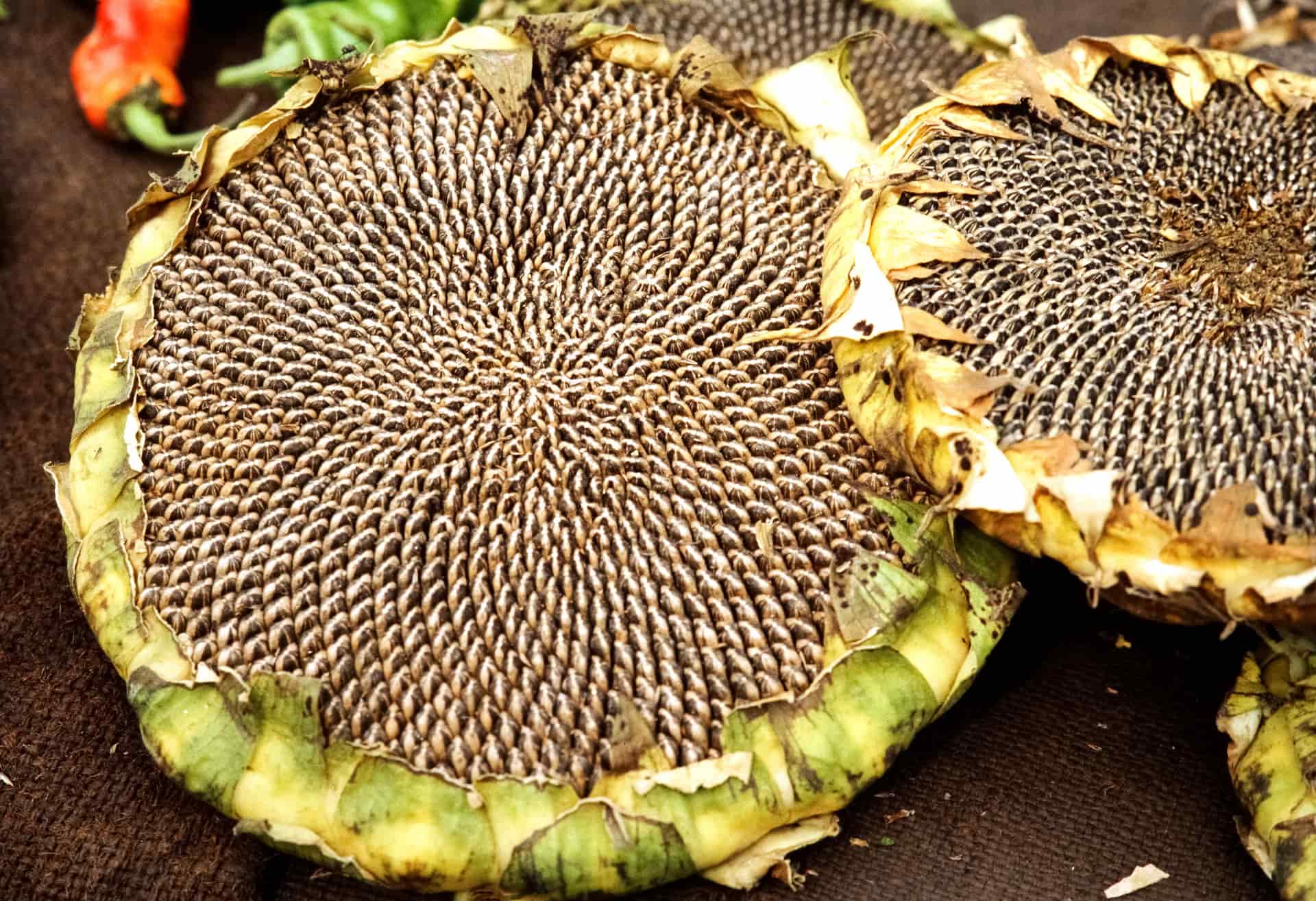
Run both. Fat carries roughly twice the energy per gram of carbohydrate, so suet wins the calorie argument outright. But suet only reaches birds that cling to a cage, and a large share of a winter yard — juncos, cardinals, doves, finches — feeds from perches, trays and the ground. Seed reaches them. One of each is the correct setup.
The calorie argument
This part is not close. Fat is the densest energy source available to a bird, at roughly double the energy per gram of carbohydrate or protein. In cold weather, when the constraint is calories banked per hour of daylight, that ratio is decisive.
Black oil sunflower is the closest seed gets, and it gets close precisely because it is oily — thin shell, high fat content, easy for a small bill to open. That combination is why it outperforms every mixed bag on the shelf and why it is the only seed we recommend as a default. Why the shell matters more than the oil.
The access argument, which is the real one
| Bird | Suet cage | Tube or hopper | Ground or tray |
|---|---|---|---|
| Downy and hairy woodpeckers | Yes, primary | Rarely | Rarely |
| Nuthatches | Yes | Yes | Sometimes |
| Chickadees and titmice | Yes | Yes | Sometimes |
| Wrens and creepers | Yes, primary | No | No |
| Cardinals | Rarely | Yes, with a perch | Yes, preferred |
| Juncos and sparrows | No | Rarely | Yes, primary |
| Doves | No | No | Yes, primary |
| Finches | Rarely | Yes, primary | Sometimes |
| Jays | Sometimes | Yes | Yes |
Run suet only and you have fed the clinging birds and nothing else. Run seed only and the woodpeckers, wrens and creepers get nothing.
The proportions that actually work
- One suet cage and one seed feeder is the minimum complete setup, and it covers most of a northern yard.
- Add a low platform tray if you have juncos and doves. They will largely ignore a tube feeder and feed happily off a flat surface.
- Two suet cages if woodpeckers dominate. A single cage in a busy yard becomes a queue, and woodpeckers are not patient with each other.
- One hopper with integrated suet cages if you only want to hang one thing. It is the shortest path to a complete setup and the longest refill interval.
Refill interval matters more in winter than anything
This is the practical argument that gets ignored. In July, refilling a small tube every two days is pleasant. In January, in the dark, in sleet, it is why people stop feeding birds. Capacity is a winter specification: a 5 lb seed feeder means a weekly trip, a 1 lb one means a daily one, and a 6-quart hopper with suet cages means one trip does everything.
Buy more capacity than feels necessary. It is the single change most likely to keep your feeders full in February. The winter feeder roundup ranks on exactly that.
The seed you should not buy
Mixed bags containing milo, wheat and red millet — and cracked corn, which is its own argument. Note the word red: white proso millet is a different seed and a genuine ground-feeder food. Those fillers are cheap because almost nothing at a northern feeder eats them: birds kick them out to get at the sunflower, they rot on the ground, and they attract rodents. You paid for weight that becomes a mess.
One bag of straight black oil sunflower outperforms three bags of mix, costs less per usable calorie, and produces a fraction of the ground waste. The best bird seed for winter ranks the whole shelf on usable fat and shell thickness, and what not to feed birds in winter covers the rest of the list.
What to buy
Winter Perch is funded by affiliate commission. If you buy through a link on this page we may earn a commission at no extra cost to you, and it never decides a ranking. Full disclosure · how we pick.
Quick picks
Ranked, with the trade-off named. Tap a row for the full write-up; the price button goes straight to Amazon.
| # | Product | Best for | Price |
|---|---|---|---|
| 1 |  C&S High Energy Delight No-Melt Suet Dough, 8-packNo-melt dough at a price that lets you leave a cake out permanently, in the formulation woodpeckers, nuthatches and chickadees actually work at. | The default winter cake | $23.21 · See it on Amazon |
| 2 |  Wagner's 76027 Black Oil Sunflower Seed, 25 lbThin-shelled, high-fat, and eaten by nearly everything that comes to a winter feeder. Black oil sunflower is the correct default and this is the honest bulk bag. | The one seed to run if you only run one | $41.98 · See it on Amazon |
| 3 |  Nature's Way CWF19 Cedar Hopper Feeder with Suet Cages, 6 qtSix quarts of seed with a suet cage on each end — the best single answer to the winter refill problem if you are only hanging one thing. | One feeder that runs seed and suet together | Check price on Amazon |
| 4 | 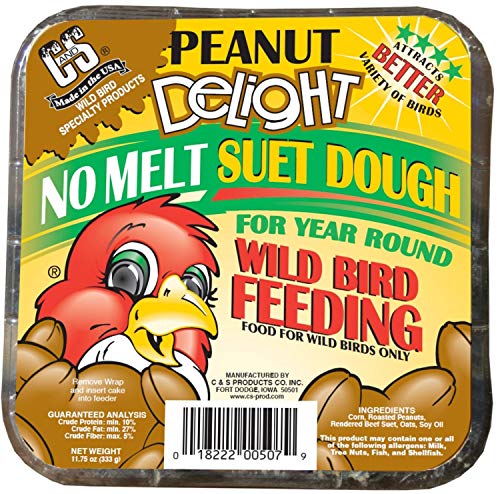 C&S Peanut Delight No-Melt Suet Dough, 12-packThe same no-melt dough with peanut through it, in the twelve-pack that is the sensible autumn purchase. | Bulk buying before the season | $36.99 · See it on Amazon |
#ad how we are funded · price as of October 15, 2026
The picks in full
Top pick The default winter cake
C&S High Energy Delight No-Melt Suet Dough, 8-pack
No-melt dough at a price that lets you leave a cake out permanently, in the formulation woodpeckers, nuthatches and chickadees actually work at.
Specifications
- Format
- Standard 11.75 oz cake
- Pack
- 8
- Type
- No-melt dough
- Targets
- Woodpeckers, nuthatches, chickadees
Trade-offs
- No-melt dough holds shape above freezing, so an early thaw does not dump it on the ground
- Standard cake size fits every cage feeder on this site
- Eight cakes is roughly a winter for one feeder
- Plain high-fat formulation with nothing gimmicky in it
- No-melt dough is firmer than raw suet and slower going for small birds in deep cold
- Nothing in it deters squirrels or starlings
Who it is forThe first suet you buy, and the one you re-order without thinking about it.
Skip it ifSkip it if starlings have found your feeder. A plain cake in an open cage is a starling buffet — go to an upside-down feeder or a hot pepper cake.
#ad how we are funded · price as of October 15, 2026
No. 2 The one seed to run if you only run one
Wagner's 76027 Black Oil Sunflower Seed, 25 lb
Thin-shelled, high-fat, and eaten by nearly everything that comes to a winter feeder. Black oil sunflower is the correct default and this is the honest bulk bag.
Specifications
- Type
- 100% black oil sunflower
- Bag
- 25 lb
- Shell
- Thin — accessible to small bills
- Origin
- Made in USA
Trade-offs
- Thin shells mean chickadees and finches can open it, not just cardinals
- The highest usable fat of the common feeder seeds
- 25 lb is a real winter's supply for one or two feeders
- No filler — no milo, no wheat, no red millet nobody eats
- Shells pile up under the feeder and kill the grass beneath it
- 25 lb needs a sealed bin or you are feeding mice
- Sunflower is squirrel candy
Who it is forEvery winter feeder yard, as the base seed.
Skip it ifSkip the 25 lb bag if you feed one small tube on a balcony. Seed goes stale and moldy long before you finish twenty-five pounds.
#ad how we are funded · price as of October 15, 2026
No. 3 One feeder that runs seed and suet together
Nature's Way CWF19 Cedar Hopper Feeder with Suet Cages, 6 qt
Six quarts of seed with a suet cage on each end — the best single answer to the winter refill problem if you are only hanging one thing.
Specifications
- Seed capacity
- 6 quarts
- Suet
- Integrated cages
- Material
- Cedar
- Roof
- Yes — covers seed and both cages
Trade-offs
- Six quarts is the longest refill interval on this page
- Seed and suet in one visit, which matters when the visit is in a blizzard
- The roof covers everything, so wet seed is much less of an issue
- Cedar, and it looks like furniture rather than kit
- No squirrel exclusion at all — it is a hopper, and hoppers are open
- A full six quarts of damp seed is a lot of seed to spoil at once
- Big and heavy on a hanger
Who it is forThe single-station yard, where one feeder has to do everything.
Skip it ifSkip it if squirrels run your yard. A hopper feeder with no mechanism is the easiest meal on this site.
#ad how we are funded · price as of October 15, 2026
No. 4 Bulk buying before the season
C&S Peanut Delight No-Melt Suet Dough, 12-pack
The same no-melt dough with peanut through it, in the twelve-pack that is the sensible autumn purchase.
Specifications
- Format
- 11.75 oz cake
- Pack
- 12
- Type
- No-melt dough, peanut
Trade-offs
- Twelve cakes covers a two-feeder yard through a full winter
- Peanut is the single most reliable draw for woodpeckers and titmice
- No-melt, so an autumn warm spell does not waste the first three cakes
- Peanut is also what squirrels can smell from the next yard
- Twelve cakes need dry, rodent-proof storage
Who it is forAnyone buying in September for a winter they already know is coming.
Skip it ifSkip the twelve-pack if you have nowhere dry to keep it. Suet dough left in a damp garage goes rancid, and rancid fat is worse than no fat.
#ad how we are funded · price as of October 15, 2026
What we would skip
What we would skip
Mixed seed with milo, wheat or red millet
Cheap filler that northern feeder birds do not eat. It gets kicked to the ground, rots, and attracts rodents. Buy straight black oil sunflower.
A suet-only setup
You have fed the clinging birds and excluded the juncos, doves, cardinals and finches entirely. One seed feeder alongside roughly doubles the species using your yard.
A 1 lb tube feeder as your main winter station
It empties daily in a cold snap and you will be refilling it in the dark. Capacity is a winter specification, not a luxury.
How we picked
- Energy density as the primary nutritional criterion, which is what makes fat the winter answer.
- Feeding behavior by species, so the recommendation covers access and not just calories.
- Refill interval treated as a first-class spec, because it is what decides whether feeders stay full in February.
- Live price and availability, refreshed daily.
We have not tested any of these. What we did instead: read the manufacturers’ own listings, compiled the published specifications, computed the running cost at a cited electricity rate, and refreshed the prices daily. The full method is published.
For the cake shortlist, the suet roundup. For the hardware, winter feeders. And remember that food without open water is a partial answer — a bird eating dry suet still has to melt snow with its own body heat.
Questions people actually ask
- Is suet or seed better in winter?
- Suet, on calories — fat carries roughly twice the energy per gram of carbohydrate. But seed reaches birds that will not cling to a cage, so a complete winter setup runs both.
- What is the best seed for winter?
- Straight black oil sunflower. Thin shells that small bills can open, the highest usable fat of the common feeder seeds, and no filler to kick onto the ground.
- Should I stop feeding seed and only use suet?
- No. You would be excluding juncos, doves, cardinals and finches, which are a large share of a northern winter yard.
- How much seed will I get through in a winter?
- A 25 lb bag is roughly a season for one or two feeders. Buy it in autumn and store it in a sealed bin, or you are feeding mice.
Sources
Read next
- The Best Suet Cakes for Winter Birds
Seven suet cakes ranked on fat, no-melt behavior and who they actually attract, with pack-size advice.
- The Best Bird Feeders for Winter
Seed feeders ranked on capacity, roofing and drainage — the specs that decide how often you go out in bad weather.
- What to Feed Birds in Winter
The winter list ordered by fat content, what each food reaches, and the two purchases that cover almost everything.
- The Best Bird Bath De-Icers
Five drop-in de-icers from 50 W to 250 W, matched to basin size, with the running cost worked out for each.