Cold-weather care / Guide
How Birds Survive Winter
Four mechanisms, one binding constraint, and a fifteen-hour night to get through. Understanding this is what makes every other decision in a winter yard obvious.
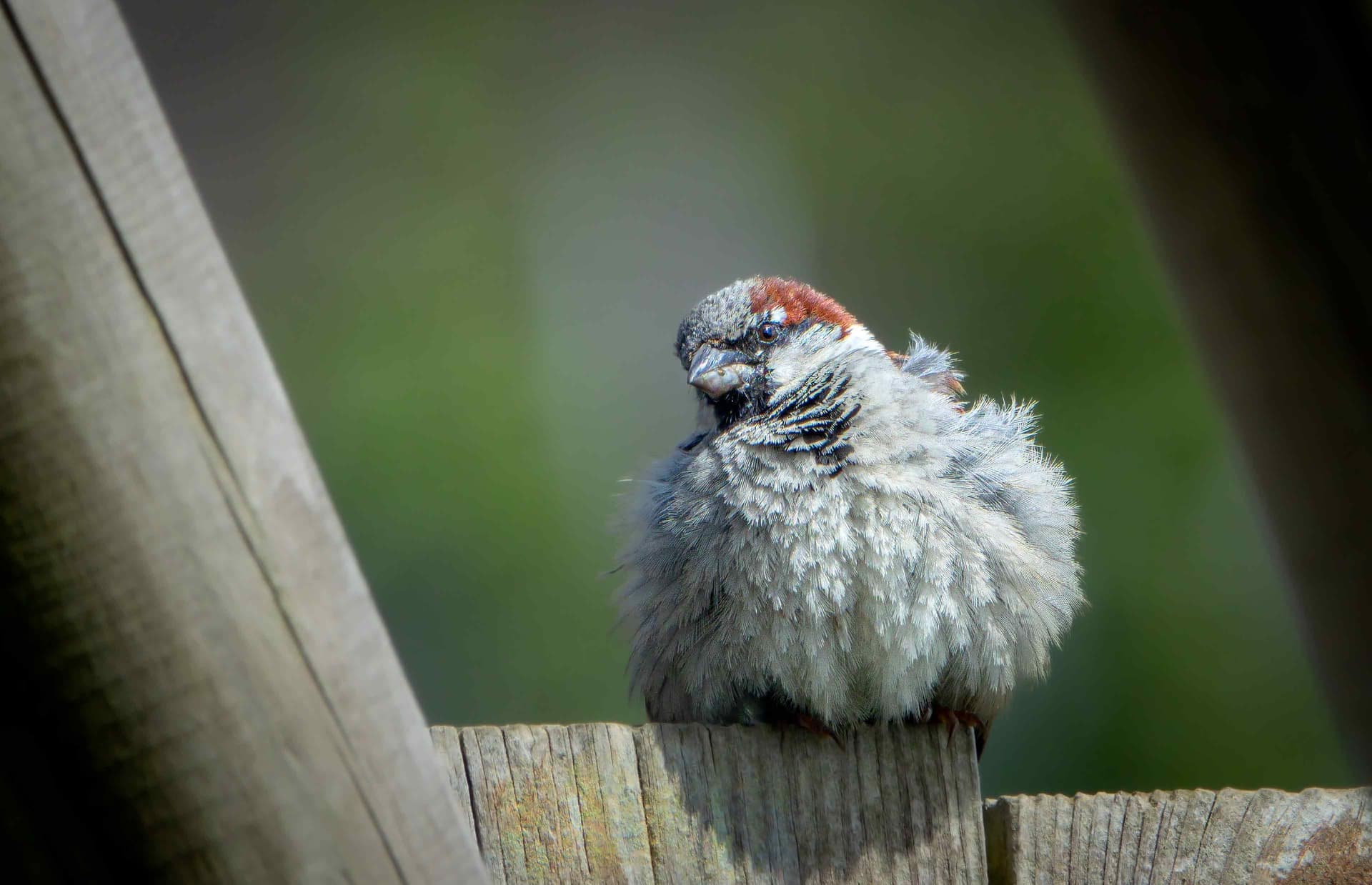
Small birds survive winter nights with four mechanisms: denser plumage, fluffing to trap air, shivering to generate heat, and in some species a controlled overnight drop in body temperature. All four run on fat banked during a few hours of daylight. Wind is what breaks them, because it strips the trapped air layer that does the insulating.
The four mechanisms
1. More feathers, and better ones
Birds molt into a denser winter plumage. Audubon's account describes the structure: an outer layer that repels water over a base layer of fine down whose job is to trap body heat close to the skin. The outer feathers are the raincoat; the down is the insulation.
This is why anything that fouls plumage is so dangerous. Cooking fat, oil, or glycerine smeared on feathers destroys the structure that holds the trapped air, and a bird with compromised insulation on a freezing night is in serious trouble. It is the specific reason some foods are genuinely harmful rather than merely unhelpful.
2. Fluffing — hundreds of small air pockets
The round, puffed-up silhouette of a bird on a cold day is not a posture of misery; it is active insulation management. Raising the feathers creates hundreds of pockets of trapped air between them, and trapped air is a far better insulator than feather material itself. Audubon puts it simply: fluffing maximizes natural insulation.
It also explains why wind is the enemy. Moving air displaces the trapped layer. A bird in a 20 mph wind at 20 F is losing heat far faster than the same bird in still air at 10 F, which is why shelter matters more than temperature.
3. Shivering — expensive, and the reason feeding works
When insulation is not enough, birds shiver: rapid involuntary muscle contraction generating heat. It works, and it burns fat fast.
That is the direct link between your feeder and a bird's survival. Shivering runs on fat banked during daylight, and in December there may be nine hours of usable light to bank fifteen hours of night. A high-fat food source shortens the foraging time needed and leaves margin. This is the whole reason suet outperforms everything else in cold weather.
4. Overnight torpor — the extreme option
Some species, chickadees among them, can drop their body temperature overnight in a controlled way. A smaller gap between body and air temperature means slower heat loss and less fat burned.
It is not free. A torpid bird is slower to respond to a predator and needs time and energy to warm back up in the morning. It is a last-resort strategy, deployed on the worst nights, and a bird that goes into a night with full reserves is less likely to need it.
The binding constraint
Everything above runs on one currency: fat banked during daylight. The winter problem is a budget problem.
| Factor | Effect | What helps |
|---|---|---|
| Night length | 15 hours of loss in midwinter | Nothing — this is fixed |
| Daylight for foraging | About 9 hours, in poor light | A reliable, dense food source |
| Air temperature | Sets the rate of loss | Shelter reduces the effective figure |
| Wind | Strips the insulating air layer | Dense cover, roost boxes, sheltered siting |
| Body size | Small birds lose heat fastest | Nothing — but it is why chickadees are the concern |
| Water | Melting snow costs body heat | Open water, which is nearly free to the bird |
What a yard can actually contribute
- Dense, high-fat food. Shortens the foraging time needed to bank a night's fuel. Suet first, then black oil sunflower.
- Liquid water. Eating snow costs body heat to melt it — the exact resource in short supply. A de-icer or heated bath is the cheapest way to remove that cost.
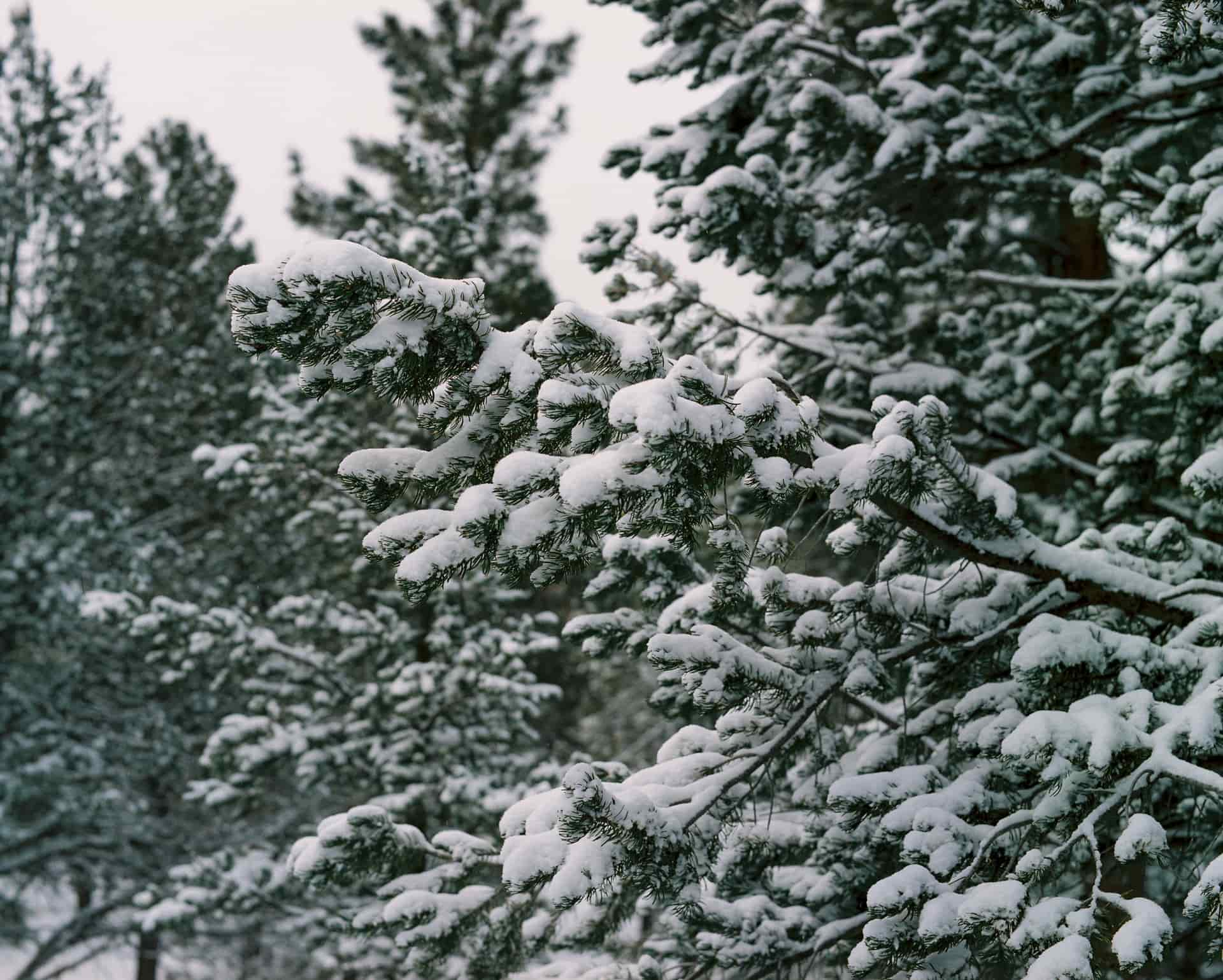
- Windproof shelter. A roost box, a brush pile, or dense evergreens. Wind is what breaks the insulation, so removing it is the highest-value shelter you can offer.
- Undisturbed cover near the feeders. About ten feet, so birds are not spending energy on long escape flights. Placement.
What does not help
- Heating a bird house. A fire risk that creates condensation, addressing a variable that was not the problem. The full argument.
- Warm water in the bath. A bird that bathes fully in freezing air ends up wet and badly insulated. Just-above-freezing is deliberate.
- Anything that coats feathers. Cooking fat, oil, glycerine. This destroys the trapped-air structure directly.
- Tidying the yard completely. Seedheads, leaf litter and brush are food and shelter. Leave some of it.
The three purchases that map to the mechanisms
Winter Perch is funded by affiliate commission. If you buy through a link on this page we may earn a commission at no extra cost to you, and it never decides a ranking. Full disclosure · how we pick.
Quick picks
Ranked, with the trade-off named. Tap a row for the full write-up; the price button goes straight to Amazon.
| # | Product | Best for | Price |
|---|---|---|---|
| 1 | 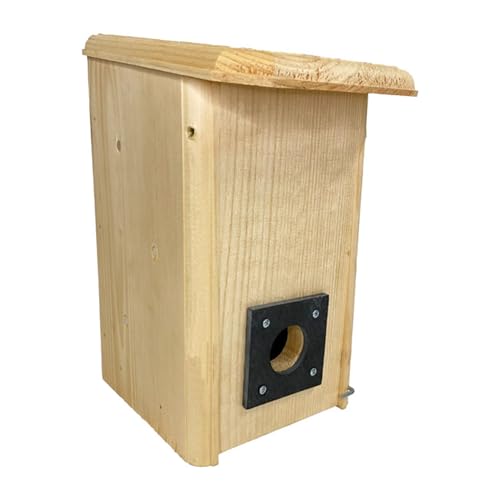 Coveside Small Winter RoostInch-thick Eastern white pine, internal perches and a slate predator guard. Insulation, not decoration — and 1" pine genuinely insulates where half-inch cedar does not. | The default winter roost box | $75.99 · See it on Amazon |
| 2 |  C&S High Energy Delight No-Melt Suet Dough, 8-packNo-melt dough at a price that lets you leave a cake out permanently, in the formulation woodpeckers, nuthatches and chickadees actually work at. | The default winter cake | $23.21 · See it on Amazon |
| 3 |  K&H Super Ice Eliminator Bird Bath De-Icer, 80 WThe 50 W unit with enough extra element to cope with a bigger basin and a colder night. If you are buying one de-icer without measuring anything, buy this one. | Most yards, most winters — the default de-icer | $28.91 · See it on Amazon |
#ad how we are funded · price as of October 15, 2026
The picks in full
Top pick The default winter roost box
Coveside Small Winter Roost
Inch-thick Eastern white pine, internal perches and a slate predator guard. Insulation, not decoration — and 1" pine genuinely insulates where half-inch cedar does not.
Specifications
- Wall thickness
- 1" Eastern white pine
- Entrance
- Low, with slate predator guard
- Interior
- Staggered internal perches
- Origin
- Made in Maine, USA
Trade-offs
- Inch-thick pine is the insulation spec that matters; most "roosting boxes" are half that
- The low entrance keeps rising warm air inside instead of venting it out the top
- Internal perches let several birds stack rather than pile on the floor
- The slate guard stops a raccoon reaching in
- Small — it is a chickadee-and-wren box, not a starling hotel
- Roost boxes are a slow sell to birds; occupancy can take a season or two
- Made-in-USA pine prices accordingly
Who it is forAnyone who has the feeders and the water sorted and wants to add shelter.
Skip it ifSkip it if you expect immediate results. Roost boxes are found by accident in a storm, and an empty box in year one is normal, not a fault.
#ad how we are funded · price as of October 15, 2026
No. 2 The default winter cake
C&S High Energy Delight No-Melt Suet Dough, 8-pack
No-melt dough at a price that lets you leave a cake out permanently, in the formulation woodpeckers, nuthatches and chickadees actually work at.
Specifications
- Format
- Standard 11.75 oz cake
- Pack
- 8
- Type
- No-melt dough
- Targets
- Woodpeckers, nuthatches, chickadees
Trade-offs
- No-melt dough holds shape above freezing, so an early thaw does not dump it on the ground
- Standard cake size fits every cage feeder on this site
- Eight cakes is roughly a winter for one feeder
- Plain high-fat formulation with nothing gimmicky in it
- No-melt dough is firmer than raw suet and slower going for small birds in deep cold
- Nothing in it deters squirrels or starlings
Who it is forThe first suet you buy, and the one you re-order without thinking about it.
Skip it ifSkip it if starlings have found your feeder. A plain cake in an open cage is a starling buffet — go to an upside-down feeder or a hot pepper cake.
#ad how we are funded · price as of October 15, 2026
No. 3 Most yards, most winters — the default de-icer
K&H Super Ice Eliminator Bird Bath De-Icer, 80 W
The 50 W unit with enough extra element to cope with a bigger basin and a colder night. If you are buying one de-icer without measuring anything, buy this one.
Specifications
- Rated watts
- 80 W
- Form
- Submersible, natural rock shape
- Control
- Automatic
- Finish
- Paintable enamel
- Safety
- Safety listed for outdoor submersible use
Trade-offs
- 80 W is the sweet spot: enough for a 20-inch basin, well under a 150 W bath
- Automatic, so there is no switch to forget
- Same drop-in convenience as the 50 W, same paintable finish
- Works in the bath you already own, at any mount height
- 60 percent more draw than the 50 W for buyers with a small basin who did not need it
- Still a cord in the water
- The rock shape takes up basin space small birds could be standing in
Wattage: 80 W
K&H states 80 watts, and the listing is explicit that the unit is safety listed and automatic. Eighty watts holds a typical 16 to 20 inch basin open through a normal northern winter night.
At full draw for a four-month winter (120 days), plugged in around the clock: 80 W x 2880 h = 230.40 kWh, x $0.1834/kWh = $42.26 — $42.26 at $0.1834/kWh. A thermostatic unit will land under that.
Who it is forThe default buyer: an existing 16 to 20 inch bath, a normal northern winter, no interest in replacing the bath itself.
Skip it ifSkip it if your basin is under about 14 inches. The 50 W version does that job and costs less to run every single day of the winter.
#ad how we are funded · price as of October 15, 2026
How we picked
- Physiology cited to named authorities — Audubon and the US Fish & Wildlife Service — rather than asserted.
- No invented figures. Where a specific metabolic number would be useful but we cannot cite one, we describe the mechanism instead.
- Product picks mapped to the mechanisms they actually support, rather than attached because a page needed something to sell.
We have not tested any of these. What we did instead: read the manufacturers’ own listings, compiled the published specifications, computed the running cost at a cited electricity rate, and refreshed the prices daily. The full method is published.
This is the page that justifies every purchase on the rest of the site. If you only read one other, make it the winter yard checklist — it turns all of this into an afternoon's work in October.
Questions people actually ask
- How do birds survive freezing nights?
- Denser winter plumage, fluffing to trap hundreds of pockets of air, shivering to generate heat from banked fat, and in some species a controlled overnight drop in body temperature.
- Why do birds look fat in winter?
- They are fluffing their feathers to trap air, which is what actually does the insulating. It is active heat management, not distress.
- Do birds freeze to death?
- They die of running out of fuel before they die of cold. A bird that cannot bank enough fat during short winter days has nothing left to shiver with overnight, which is why food supply matters more than temperature.
- Why is wind worse than cold?
- Wind displaces the layer of trapped air between a bird's feathers, which is the insulation. That is why shelter from wind is the highest-value thing a yard can offer.
- Do birds need help surviving winter?
- They manage without us, and a reliable food source, liquid water and windproof shelter measurably improve the odds during a sustained freeze, when natural food and water genuinely disappear.
Sources
Read next
- The Best Roosting Boxes for Winter
Four winter roost boxes ranked on wall thickness, entrance height and internal perches — with honest expectations about occupancy.
- Is Suet Good for Birds in Winter?
Why suet is the highest-value winter food, which birds it reaches, and the three caveats worth knowing.
- The Best Bird Bath De-Icers
Five drop-in de-icers from 50 W to 250 W, matched to basin size, with the running cost worked out for each.
- The Winter Bird Yard Checklist
The October changeover in order: feeders, water, shelter, what to leave standing, and the winter maintenance schedule.