Winter feeding / Guide
Peanut Butter for Birds: The Choking Myth, and What to Use
The warning you have read a hundred times has no evidence behind it. The real cautions are different, smaller, and worth knowing.
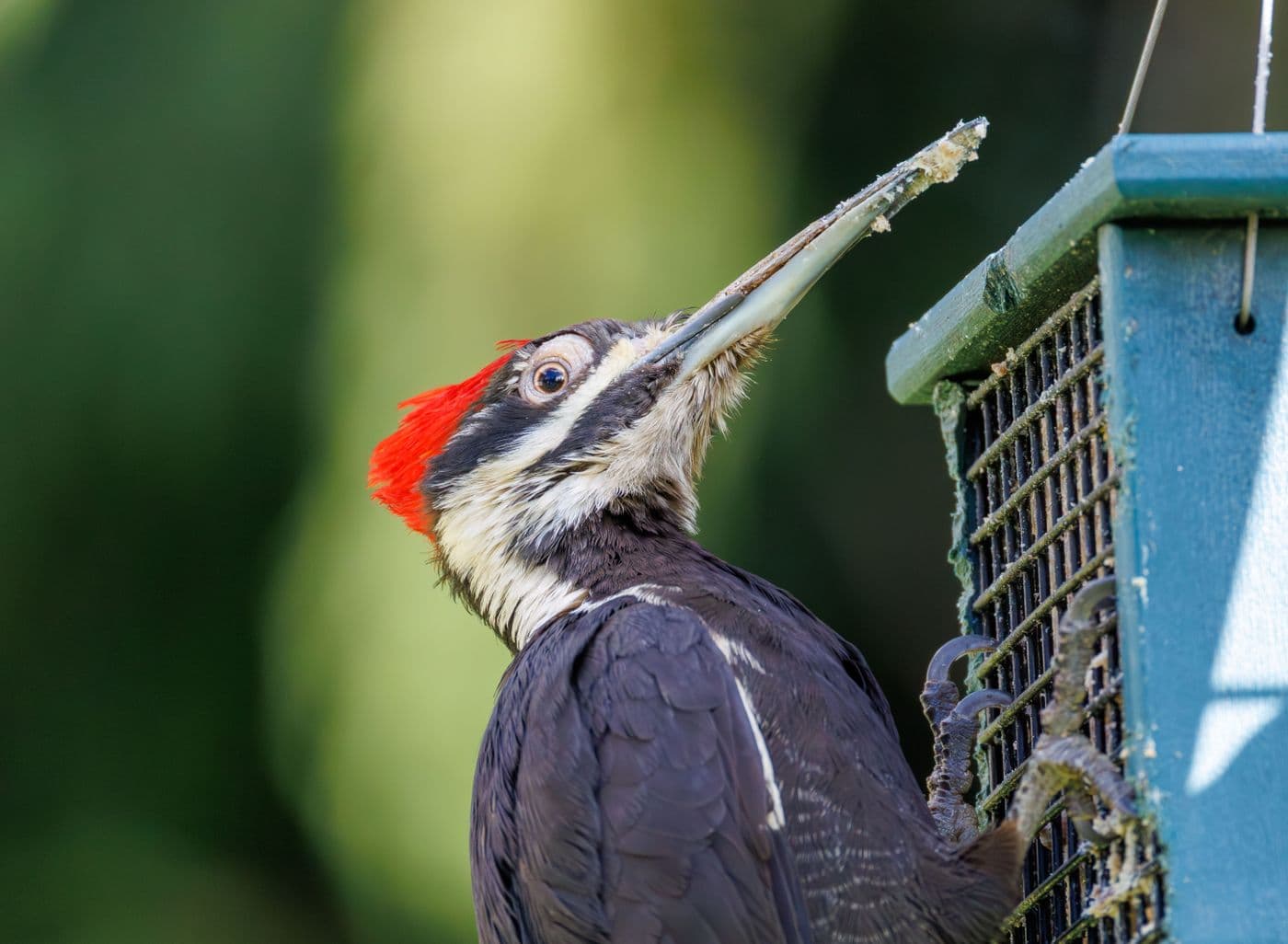
Peanut butter is safe for birds, and the choking warning is a myth. Cornell's Project FeederWatch states there is no documented evidence for it, and Audubon says peanut butter by itself is not harmful. The reason is anatomical: a bird's beak is smooth keratin, so peanut butter does not stick to it the way it sticks to the roof of a human mouth. Thinning it with cornmeal is optional, not necessary. The real cautions are mold, heat and hygiene — and for most people a bird-formulated peanut butter suet is simply a better product than a jar.
Winter Perch is funded by affiliate commission. If you buy through a link on this page we may earn a commission at no extra cost to you, and it never decides a ranking. Full disclosure · how we pick.
Quick picks
Ranked, with the trade-off named. Tap a row for the full write-up; the price button goes straight to Amazon.
| # | Product | Best for | Price |
|---|---|---|---|
| 1 | 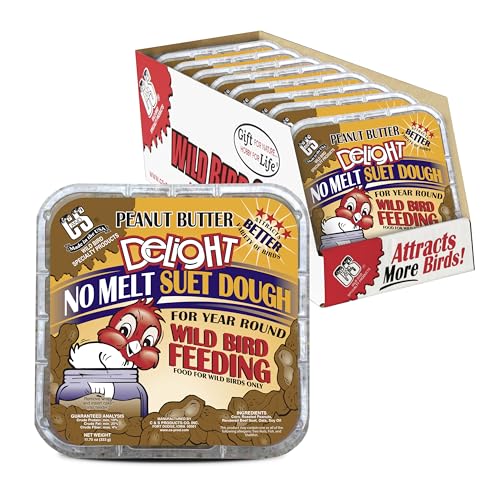 C&S Peanut Butter Delight No-Melt Suet DoughThis is the honest answer to the peanut butter question: a bird-formulated peanut butter suet dough, built to hold its shape above freezing, rather than a jar of human peanut butter smeared on a tree. Same delivery, none of the salt and sugar. | The correct way to give birds peanut butter | $16.59 · See it on Amazon |
| 2 |  Pine Tree Farms Peanut Butter Suet Cake, 6-packSix twelve-ounce cakes from a serious suet maker. Buying suet in multiples is simply how you stop running out in February, and Pine Tree Farms is a brand that leads with fat rather than with grain filler. | Buying peanut butter suet by the case | $22.20 · See it on Amazon |
| 3 |  Heath Outdoor Products Peanut Suet Cake, case of 12Twelve cakes in a case, at the lowest price per cake here. Heath is the volume brand in this category — the cakes are competent rather than premium, and twelve of them is a whole winter. | The lowest cost per cake | $18.99 · See it on Amazon |
| 4 |  C&S Peanut Suet Nuggets, 8 lbThe same format with peanut as the flavoring, which is the one most reliably accepted across species. If you are introducing nuggets to a yard that has never seen them, this is the version that gets found first. | The flavor most birds take fastest | $22.90 · See it on Amazon |
| 5 |  Brome Squirrel Buster Suet FeederA weight-activated shroud closes over the cake when a squirrel climbs on. It is the only mechanical answer here that works on a determined animal, and it holds two cakes. | Squirrels that have defeated everything else | $101.24 · See it on Amazon |
| 6 |  Wagner's 57055 Shelled Peanut Pieces, 10 lbShelled pieces rather than whole nuts, which is what lets a chickadee take part instead of only the big birds. | The most reliable draw for woodpeckers, jays and titmice | $18.99 · See it on Amazon |
#ad how we are funded · price as of October 3, 2026
The picks in full
Top pick The correct way to give birds peanut butter
C&S Peanut Butter Delight No-Melt Suet Dough
This is the honest answer to the peanut butter question: a bird-formulated peanut butter suet dough, built to hold its shape above freezing, rather than a jar of human peanut butter smeared on a tree. Same delivery, none of the salt and sugar.
Specifications
- Format
- No-melt suet dough cake
- Flavor
- Peanut butter
Trade-offs
- Formulated for birds — no added salt, no sweeteners, no hydrogenated oils you did not choose
- No-melt dough holds together where plain suet turns greasy, so it works into mild spells
- Fits a standard suet cage, so there is no new hardware
- Delivers the peanut appeal people want from peanut butter without the improvisation
- No-melt dough achieves its texture with added grain, so fat content is lower than straight suet
- Peanut flavor brings starlings as readily as woodpeckers
- Costs more than a plain suet cake for the same cage
- Still softens in genuine heat despite the name
Who it is forAnyone who was about to put a jar of peanut butter outside.
Skip it ifSkip it in deep cold if maximum fat is the goal — plain high-fat suet carries more energy per bite.
#ad how we are funded · price as of October 3, 2026
No. 2 Buying peanut butter suet by the case
Pine Tree Farms Peanut Butter Suet Cake, 6-pack
Six twelve-ounce cakes from a serious suet maker. Buying suet in multiples is simply how you stop running out in February, and Pine Tree Farms is a brand that leads with fat rather than with grain filler.
Specifications
- Weight
- 12 oz per cake
- Quantity
- 6
Trade-offs
- Six cakes covers a serious stretch of winter without a reorder
- Pine Tree Farms is a suet specialist rather than a general bird-food brand
- Standard cake size, so it fits every suet cage
- Better value per cake than buying singles
- Six cakes of fat need cool, sealed storage or they turn
- Peanut butter formulation draws starlings strongly
- A plain cake rather than a no-melt dough, so it gets greasy in mild weather
Who it is forA household already feeding suet through the winter.
Skip it ifSkip it if you have nowhere cool to store six cakes. Rancid suet is worse than no suet.
#ad how we are funded · price as of October 3, 2026
No. 3 The lowest cost per cake
Heath Outdoor Products Peanut Suet Cake, case of 12
Twelve cakes in a case, at the lowest price per cake here. Heath is the volume brand in this category — the cakes are competent rather than premium, and twelve of them is a whole winter.
Specifications
- Quantity
- 12
- Flavor
- Peanut
Trade-offs
- Cheapest per cake of the peanut options here by a clear margin
- A case of twelve genuinely covers a full winter for one or two feeders
- Standard size, fits any suet cage
- Volume-brand formulation — read the ingredients, because grain can sit high in the list
- Twelve cakes is a lot of fat to store correctly
- Peanut again means starlings arrive fast
- Not a no-melt formulation, so mild weather is unkind to it
Who it is forFeeding suet all winter at the lowest cost.
Skip it ifSkip it if ingredient quality matters more to you than price per cake — the suet roundup covers what to look for.
#ad how we are funded · price as of October 3, 2026
No. 4 The flavor most birds take fastest
C&S Peanut Suet Nuggets, 8 lb
The same format with peanut as the flavoring, which is the one most reliably accepted across species. If you are introducing nuggets to a yard that has never seen them, this is the version that gets found first.
Specifications
- Weight
- 8 lb
- Flavor
- Peanut
Trade-offs
- Peanut is the broadest-appeal flavoring in suet, so adoption is quicker
- Same per-pound economics as the other 8 lb boxes
- Works mixed into seed or served alone in a dish
- Peanut appeal extends to starlings and squirrels as readily as to woodpeckers
- Same softening and smearing in mild spells as any nugget
- Not suitable where a peanut allergy in the household makes handling a concern
Who it is forGetting a yard onto nuggets in the first place.
Skip it ifSkip it if starlings are the problem you are trying to solve. Peanut accelerates their arrival too.
#ad how we are funded · price as of October 3, 2026
Where these specs came from
No. 5 Squirrels that have defeated everything else
Brome Squirrel Buster Suet Feeder
A weight-activated shroud closes over the cake when a squirrel climbs on. It is the only mechanical answer here that works on a determined animal, and it holds two cakes.
Specifications
- Capacity
- Two 5" x 5" cakes
- Mechanism
- Weight-activated shroud
- Materials
- Chew-proof metal and RoxResin on exposed parts
- Loading
- Mess-free, detachable
- Extras
- Two crumb ports for smaller birds
Trade-offs
- Weight activation is the only approach that reliably beats a committed squirrel
- Every squirrel-accessible part is chew-proof by design, not by hope
- Two cakes, plus crumb ports so the fallout still feeds chickadees
- Comes apart for cleaning without tools
- The most expensive feeder on this site by a distance
- A mechanism is a thing that can freeze; it needs an occasional check in an ice storm
- Heavier and bulkier than a plain cage
Who it is forAnyone who has already bought a cheap cage, a baffle and a pepper cake and still lost.
Skip it ifSkip it if you have no squirrels. It costs several times a cedar cage to solve a problem you do not have, and a plain tail-prop feeder feeds birds just as well.
#ad how we are funded · price as of October 3, 2026
No. 6 The most reliable draw for woodpeckers, jays and titmice
Wagner's 57055 Shelled Peanut Pieces, 10 lb
Shelled pieces rather than whole nuts, which is what lets a chickadee take part instead of only the big birds.
Specifications
- Type
- Shelled peanut pieces and splits
- Bag
- 10 lb
- Shell
- None — no debris under the feeder
- Targets
- Woodpeckers, nuthatches, jays, chickadees, titmice
Trade-offs
- Pieces and splits are workable for small birds; whole nuts effectively are not
- High fat, which is the whole point in cold weather
- No shells, so nothing accumulates under the feeder
- The single most dependable way to bring woodpeckers to a seed feeder
- Squirrels can smell peanuts from a long way off, and they will commit
- Shelled nuts absorb moisture and go rancid faster than seed in the shell — buy for weeks, not months
- Costs more per pound than sunflower
- Needs a mesh peanut feeder; pieces pour straight through a standard tube
Who it is forA yard with woodpeckers, jays or titmice, running a dedicated peanut feeder.
Skip it ifSkip it if you have no way to keep it dry and no mesh feeder to put it in. Damp peanut goes rancid quickly, and rancid fat is worse than no fat at all.
#ad how we are funded · price as of October 3, 2026
Where the myth came from, and why it persists
It sounds plausible, which is most of the explanation. Peanut butter sticks to the roof of a human mouth, so the leap to a small bird choking on it is an easy one to make.
The anatomy does not support it. A beak is smooth keratin — closer to a fingernail than to a mouth — and peanut butter does not adhere to it in the way the warning imagines. Birds also do not swallow the way mammals do. Cornell's Project FeederWatch addresses this directly and concludes there is no documented evidence for the claim. Audubon is equally plain: peanut butter by itself is not harmful, and diluting it with seed or cornmeal is something people do for reassurance rather than necessity.
Cornell's own FeederWatch project leader has described peanut butter as an excellent fat source for birds in winter. It is energy-dense, birds take it readily, and in cold weather fat is what they actually need.
What the real cautions are
Smaller than the myth, and worth getting right.
- Mold. Peanut butter in a feeder goes off, and moldy food is a genuine health risk to birds. This is the actual reason to be careful with it, and it is a cleaning problem rather than a choking one. Cleaning feeders applies here more than almost anywhere.
- Heat. It softens and runs in mild weather, which makes a mess and can foul plumage. This is a cold-weather food. In a mild spell, a no-melt formulation is the sensible choice.
- Smearing it on bark. Widely suggested and worth a second thought — you cannot clean tree bark, so anything left there stays until weather removes it. A feeder you can wash is better.
- Sweeteners. Read the label on anything intended for humans. Xylitol is a sweetener that has no place in anything you put outside, and the bird-formulated products avoid this question entirely.
- Salmonella in peanuts. Cornell has published on peanut-related salmonella and backyard birds. Buy peanut products intended for wild birds, keep feeders clean, and do not put out anything that looks or smells wrong.
A jar, or a product made for birds
A plain jar from the supermarket is fine. A bird-formulated peanut butter suet is usually better, for reasons that have nothing to do with safety.
No-melt suet dough is built to hold its shape well above freezing, which solves the single most annoying property of peanut butter outdoors. It fits a standard suet cage, so there is no improvised feeder and nothing smeared on anything you cannot wash. It contains no added salt or sweeteners, because it was formulated for birds rather than for toast. And it delivers the same peanut appeal that made you consider peanut butter in the first place.
The honest trade: no-melt dough achieves its texture with added grain, so the fat content is lower than straight suet. In the deepest cold, a plain high-fat suet cake carries more energy per bite. No-melt is a mild-weather and shoulder-season product, which the no-melt suet page covers in detail.
How to offer it
- Use a feeder you can wash. A suet cage, a dedicated peanut butter feeder, or a drilled log. Anything that goes through a sink is better than anything that does not.
- Put out small amounts. It is a rich food and it spoils. A little, replaced often, beats a lot left to go rancid.
- Keep it for cold weather. Below freezing it behaves perfectly. Above about fifty degrees it runs, and that is when a no-melt formulation earns its place.
- Clean the feeder on a schedule, not when it looks bad. Fat residue is where mold starts, and by the time it is visible it has been there a while.
- Do not smear it on bark if you can avoid it. You cannot clean bark, and uneaten food stays there.
Which birds take it
Broadly the same list as suet, which makes sense, because peanut butter is being used here as a fat.
Woodpeckers, nuthatches, chickadees and titmice are the reliable takers — the clinging birds that work a vertical surface. Jays and starlings arrive quickly too, and peanut in any form brings starlings faster than most foods, which is worth knowing before you commit a feeder to it. Cardinals and finches are indifferent to it; they want seed.
What we would skip
What we would skip
Worrying about choking
Cornell's Project FeederWatch states there is no documented evidence for it, and Audubon says peanut butter by itself is not harmful. A beak is smooth keratin, so it does not stick the way it does in a human mouth. This warning has cost birds more meals than it has ever saved.
Any peanut butter containing xylitol or heavy sweeteners
Read the label on anything made for humans. Sweeteners have no business in a bird food, and the bird-formulated products sidestep the question entirely.
Smearing peanut butter on tree bark
It is the most-suggested method and the least cleanable. Uneaten food stays on the bark until weather removes it, and mold is the one genuine risk in this whole subject. Use a feeder that goes in a sink.
Plain peanut butter in mild weather
It softens, runs and can foul plumage above about fifty degrees. That is what no-melt suet dough was formulated to prevent, and it is the version to use outside deep winter.
A large jar committed to the feeder
It is rich and it spoils. Small amounts replaced often is the correct pattern; a big quantity sitting out is how you end up with rancid fat and a feeder that needs stripping.
No-melt dough as your deep-cold fat source
No-melt gets its texture from added grain, so fat content is lower than straight suet. When it is genuinely cold, a plain high-fat cake delivers more energy per bite to the birds that need it.
Where this fits
Peanut butter is a legitimate winter fat and a perfectly reasonable thing to offer. It is not better than suet — it is suet's less convenient cousin, with a myth attached. Suet cakes remain the efficient version, whole peanuts are a different food for different birds, and what not to feed birds in winter covers the things that genuinely are a problem, as opposed to this one.
Questions people actually ask
- Can birds choke on peanut butter?
- No. Cornell's Project FeederWatch states there is no documented evidence for this, and Audubon says peanut butter by itself is not harmful to birds. A bird's beak is smooth keratin, so peanut butter does not stick to it the way it sticks in a human mouth.
- Do I need to mix peanut butter with cornmeal?
- No. Some people dilute it with seed or cornmeal to reduce stickiness, and Cornell notes you can do so if it reassures you, but Audubon is explicit that it is not necessary.
- What kind of peanut butter is safe for birds?
- Plain peanut butter is fine. Read the label on anything made for humans and avoid sweeteners, xylitol in particular. A bird-formulated peanut butter suet avoids the question altogether and holds its shape better outdoors.
- What are the real risks of feeding peanut butter?
- Mold, heat and hygiene. It spoils in a feeder, it softens and runs above about fifty degrees, and moldy food is a genuine health risk. Use a washable feeder, put out small amounts, and clean on a schedule rather than when it looks bad.
- Should I smear peanut butter on a tree?
- Better not to. It is the most commonly suggested method and the least cleanable — uneaten food stays on the bark until weather removes it. A suet cage or a drilled log can go in a sink, which is what the mold risk calls for.
- Which birds eat peanut butter?
- Woodpeckers, nuthatches, chickadees and titmice take it reliably, as do jays. Starlings arrive quickly, since peanut in any form draws them faster than most foods. Cardinals and finches largely ignore it and would rather have seed.
Sources
Read next
- The Best Suet Cakes for Winter Birds
Seven suet cakes ranked on fat, no-melt behavior and who they actually attract, with pack-size advice.
- No-Melt Suet: What the Label Actually Promises
What no-melt actually means, where it beats raw suet, and the one place a firm cake is a disadvantage.
- Peanuts for Birds in Winter
Pieces vs whole vs in-shell, which birds each format reaches, and the two peanut rules that are actually about safety.
- What Not to Feed Birds in Winter
The genuinely harmful list — bread, salt, mold, desiccated coconut — with the reason for each and what to use instead.