Cold-weather care / Comparison
Heated Bird Houses: Do They Exist, and Do Birds Need One?
This is a search term rather than a product category. The honest answer is that a heated bird house is a fire risk solving a problem insulation already solves.
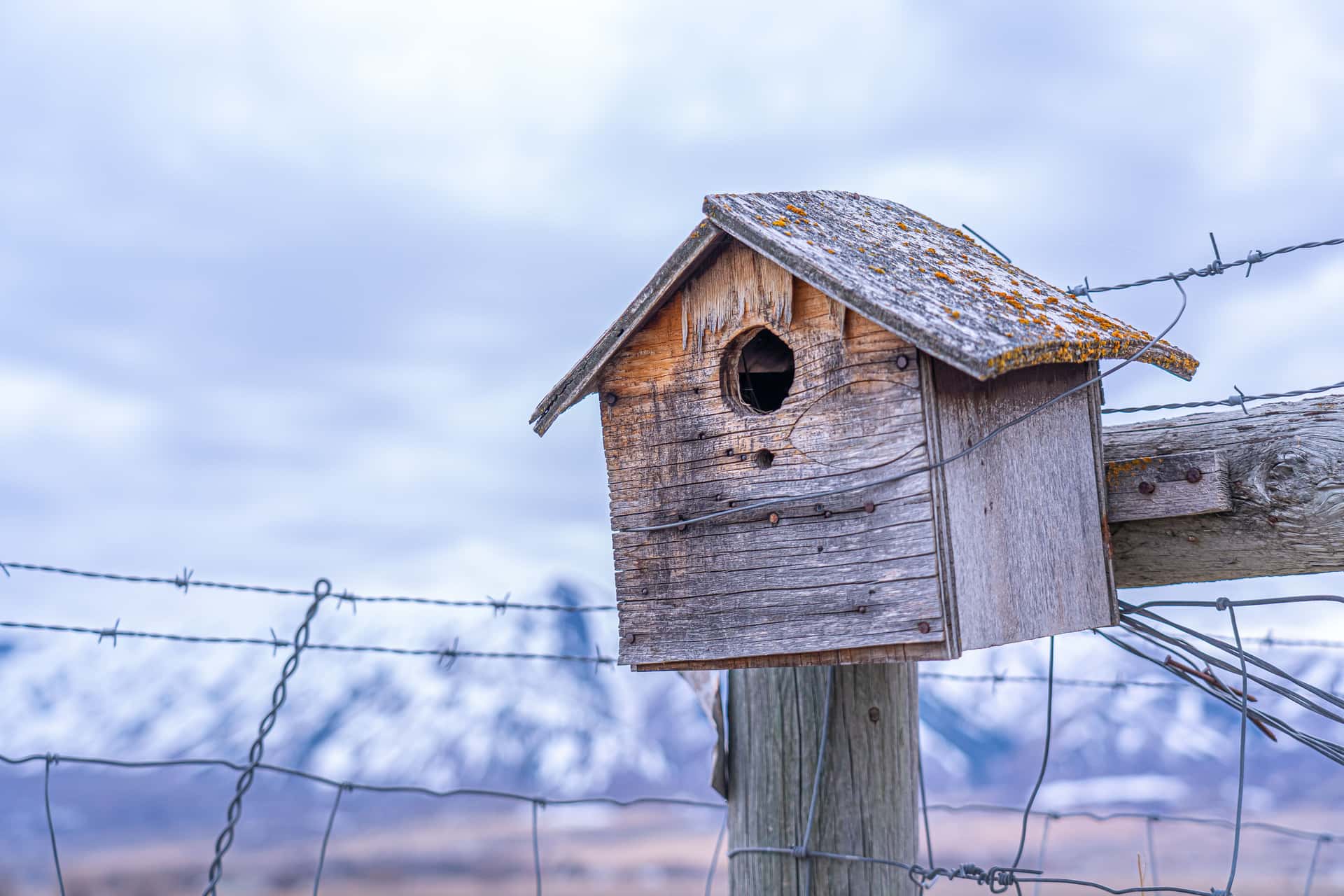
There is no meaningful consumer market for heated bird houses, and birds do not need one. A heat source inside a dry wooden box full of feathers and nesting debris is a genuine fire risk, and it solves a problem that inch-thick walls and a low entrance already solve. Buy an insulated roost box instead.
Why we did not just publish a product list
People search for this. It would be straightforward to assemble a page of loosely-related products, call three of them heated bird houses, and take the traffic. We are not going to, because the honest answer is a recommendation against the category, and a roundup of a category we would not buy from is the kind of page that makes affiliate sites worthless.
What follows is the reasoning, and then the products that actually solve the underlying problem.
Three reasons not to heat a bird box
1. Fire risk
A bird box is dry wood, and by midwinter it contains feathers, droppings and often old nesting material. That is a fuel load in an enclosed space that nobody inspects. Adding a heating element, in weather, on an outdoor circuit, mounted ten feet up a tree, is a bad configuration.
This is a genuinely different case from a heated bird bath, where the element is submerged in water that acts as a heat sink and there is nothing flammable within a foot of it.
2. Birds are equipped for this
Audubon's account of avian cold tolerance describes a set of mechanisms that are genuinely impressive: down layers trapping body heat, fluffing to create hundreds of insulating air pockets, shivering to generate heat, and in some species a controlled overnight drop in body temperature to reduce the gradient they are fighting.
What breaks those mechanisms is wind, which strips the trapped air layer. Shelter fixes that. Warmth is not the variable that needs adjusting.
3. A warm box is a wet box
Warm air holds more moisture. A heated cavity in freezing conditions produces condensation on the interior walls, and damp plumage in cold weather is far more dangerous to a bird than cold dry air. You would be creating exactly the failure mode you were trying to prevent.
What actually helps
| Feature | What it does |
|---|---|
| Thick walls | Insulation. 1" pine holds heat where 1/2" cedar does not |
| Low entrance | Warm air rises; a hole near the floor keeps it inside |
| Minimal ventilation | The opposite of a nest box, deliberately |
| Internal perches | Several birds stack and share body heat |
| Predator guard | A raccoon reaching in is a bigger risk than the cold |
| Sheltered siting | Free, and it removes the wind that breaks the bird's own insulation |
The one place heat genuinely helps
Water. Birds cannot make liquid water out of cold air, and eating snow costs them body heat to melt it. That is a real gap you can close with an element, and it is the reason heated baths and de-icers are a legitimate product category where heated bird houses are not.
If you were going to spend money on a heater in your yard this winter, spend it there. The running cost is published in full, and it is roughly what your suet costs over the same period.
What to buy instead
Winter Perch is funded by affiliate commission. If you buy through a link on this page we may earn a commission at no extra cost to you, and it never decides a ranking. Full disclosure · how we pick.
Quick picks
Ranked, with the trade-off named. Tap a row for the full write-up; the price button goes straight to Amazon.
| # | Product | Best for | Price |
|---|---|---|---|
| 1 | 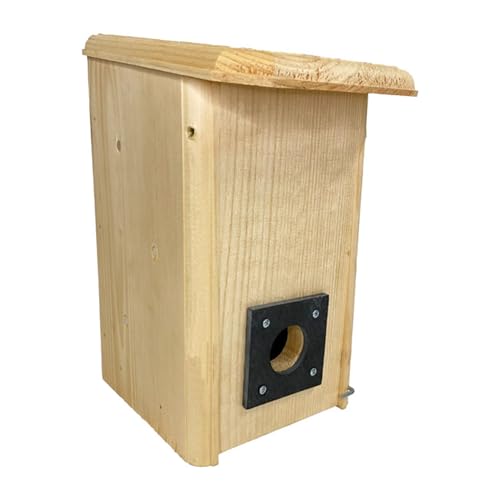 Coveside Small Winter RoostInch-thick Eastern white pine, internal perches and a slate predator guard. Insulation, not decoration — and 1" pine genuinely insulates where half-inch cedar does not. | The default winter roost box | $75.99 · See it on Amazon |
| 2 |  Coveside 10098 Horizontal Winter RoostThe same insulated pine construction laid on its side — for a wall, a shed end, or a trunk where a vertical box has nowhere to go. | Wall and trunk mounting where a tall box will not fit | Check price on Amazon |
| 3 | 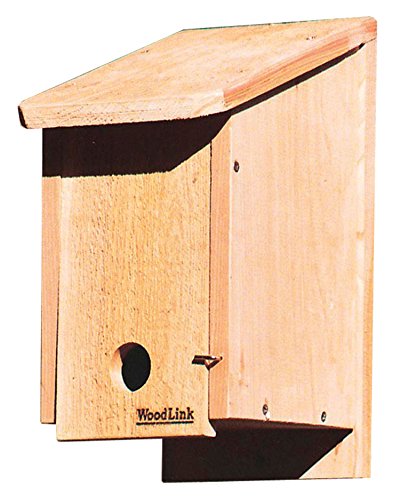 Woodlink Cedar Winter Roosting / Shelter BoxCedar rather than inch-thick pine, so less insulation for less money — the sensible experiment before committing to a Coveside. | A cheaper way to find out whether your yard will use a roost box | Check price on Amazon |
| 4 |  Coveside Convertible Winter RoostThe Small Winter Roost with a reversible front: low entrance and perches for winter, conventional nest-box opening for spring. | One box that works in both seasons | Check price on Amazon |
#ad how we are funded · price as of October 15, 2026
The picks in full
Top pick The default winter roost box
Coveside Small Winter Roost
Inch-thick Eastern white pine, internal perches and a slate predator guard. Insulation, not decoration — and 1" pine genuinely insulates where half-inch cedar does not.
Specifications
- Wall thickness
- 1" Eastern white pine
- Entrance
- Low, with slate predator guard
- Interior
- Staggered internal perches
- Origin
- Made in Maine, USA
Trade-offs
- Inch-thick pine is the insulation spec that matters; most "roosting boxes" are half that
- The low entrance keeps rising warm air inside instead of venting it out the top
- Internal perches let several birds stack rather than pile on the floor
- The slate guard stops a raccoon reaching in
- Small — it is a chickadee-and-wren box, not a starling hotel
- Roost boxes are a slow sell to birds; occupancy can take a season or two
- Made-in-USA pine prices accordingly
Who it is forAnyone who has the feeders and the water sorted and wants to add shelter.
Skip it ifSkip it if you expect immediate results. Roost boxes are found by accident in a storm, and an empty box in year one is normal, not a fault.
#ad how we are funded · price as of October 15, 2026
No. 2 Wall and trunk mounting where a tall box will not fit
Coveside 10098 Horizontal Winter Roost
The same insulated pine construction laid on its side — for a wall, a shed end, or a trunk where a vertical box has nowhere to go.
Specifications
- Wall thickness
- 1" pine
- Orientation
- Horizontal
- Entrance
- Slate predator guard
- Occupants
- Chickadees, wrens, nuthatches, titmice
Trade-offs
- Fits mounting spots a vertical box cannot use
- Same insulation and predator guard as the vertical roosts
- Lower profile catches less wind
- Horizontal geometry loses some of the warm-air-trapping benefit of a tall box
- Harder to clean out than a top-opening vertical box
Who it is forWalls, sheds and trunk faces with limited vertical clearance.
Skip it ifSkip it if you have a normal post or trunk to work with. The vertical roost holds heat better, and that is the entire reason the box exists.
#ad how we are funded · price as of October 15, 2026
No. 3 A cheaper way to find out whether your yard will use a roost box
Woodlink Cedar Winter Roosting / Shelter Box
Cedar rather than inch-thick pine, so less insulation for less money — the sensible experiment before committing to a Coveside.
Specifications
- Material
- Cedar
- Type
- Winter roosting / shelter box
- Entrance
- Low entry, roosting configuration
Trade-offs
- Real roosting geometry — low entrance, internal perches — at a lower price
- Cedar is rot-resistant and needs no treatment
- Cheap enough to hang two and see which site birds prefer
- Cedar boards are thinner than 1-inch pine, so it insulates less well
- Thin walls matter most on exactly the nights the box matters most
Who it is forA first roost box, or a second site to test placement.
Skip it ifSkip it if your winters are severe. In a deep-cold climate the wall thickness is the product, and that is where the Coveside earns its price.
#ad how we are funded · price as of October 15, 2026
Where these specs came from
No. 4 One box that works in both seasons
Coveside Convertible Winter Roost
The Small Winter Roost with a reversible front: low entrance and perches for winter, conventional nest-box opening for spring.
Specifications
- Wall thickness
- 1" Eastern White Pine
- Front
- Flips to convert roost to nest box
- Dimensions
- As Coveside Small Winter Roost
- Origin
- Hand-built in Maine, USA
Trade-offs
- Solves the roost-vs-nest problem with one purchase and a screwdriver
- Same insulating 1-inch pine as the fixed roost
- Stays useful in April instead of coming down
- You have to remember to flip it, twice a year
- A convertible front is one more joint for weather to get into
- Costs more than the fixed roost
Who it is forA yard with one good mounting spot and a use for it in both seasons.
Skip it ifSkip it if you already run nest boxes. Buy the fixed winter roost and leave the nest boxes alone; birds do not appreciate a box whose geometry changes.
#ad how we are funded · price as of October 15, 2026
What we would skip
What we would skip
Any DIY heated bird house using a bulb or heat mat
Dry wood, feathers and debris in an unmonitored enclosed space with an element in it. It is a fire risk, it creates condensation that wets plumage, and it addresses a variable that was not the problem.
Insulating a box with foam or fabric linings
Loose linings trap moisture and harbor parasites. Thick solid walls do the insulating job without either problem.
Products sold as heated bird houses
There is no established category here. Listings under that heading are generally roost boxes, decorative houses, or something adjacent — and none of them heats anything.
How we picked
- We recommend against the category rather than assembling a list, because a roundup of products we would not buy is worthless.
- Physiology cited to named authorities rather than asserted.
- The alternative is specified concretely — wall thickness, entrance position, ventilation — so the recommendation is actionable.
We have not tested any of these. What we did instead: read the manufacturers’ own listings, compiled the published specifications, computed the running cost at a cited electricity rate, and refreshed the prices daily. The full method is published.
The ranked roost boxes are on the roost box roundup, the physiology is on how birds survive winter, and the roost-versus-nest distinction is here.
Questions people actually ask
- Do heated bird houses exist?
- Not as a real consumer product category. Listings under that phrase are generally roost boxes or decorative houses, and none of them heats anything.
- Should I heat a bird house?
- No. It is a fire risk in a dry wooden box full of feathers and debris, it creates condensation that wets plumage, and birds are equipped for cold. Insulation and a low entrance solve the actual problem.
- How do birds stay warm in a roost box?
- By trapping their own body heat. Fluffed feathers create insulating air pockets, several birds may share the cavity, and thick walls with a low entrance keep the warmed air inside.
- Is a heated bird bath the same kind of bad idea?
- No, and the difference is important. A submerged element sits in water that acts as a heat sink with nothing flammable nearby, and liquid water is a genuine gap birds cannot close for themselves.
- Can I insulate a bird house myself?
- Add thickness rather than linings. Foam or fabric traps moisture and harbors parasites; a thicker solid wall insulates without either problem.
Sources
Read next
- The Best Roosting Boxes for Winter
Four winter roost boxes ranked on wall thickness, entrance height and internal perches — with honest expectations about occupancy.
- How Birds Survive Winter
The four mechanisms small birds use to survive a freezing night, what breaks them, and what a yard can actually contribute.
- The Best Heated Bird Baths for Winter
Nine complete heated baths ranked on published wattage, basin size and mount type, with running cost computed for each.
- Roost Box vs Nest Box: Four Differences That Matter
Four design differences between roost and nest boxes, why each one exists, and whether to buy one of each or a convertible.