Cold-weather care / Comparison
Roost Box vs Nest Box: Four Differences That Matter
They look almost identical from ten feet away and they are designed to do opposite jobs. One keeps heat in; the other lets it out on purpose.
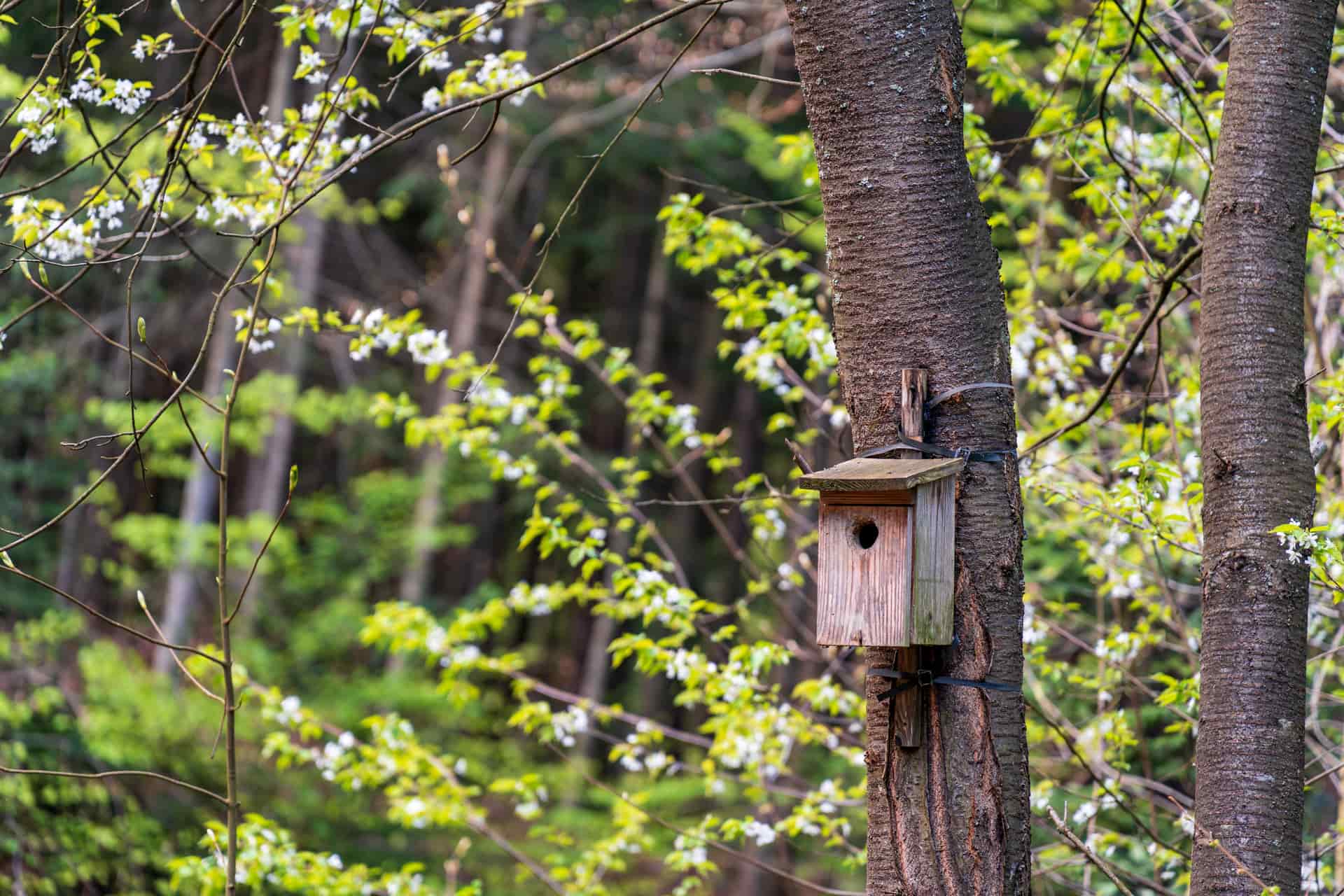
A nest box is built to keep a brood cool and dry in June: thin walls, a high entrance, deliberate ventilation and drainage, and a bare interior. A roost box is built to keep adult birds warm in January: thick walls, a low entrance, minimal ventilation, and internal perches. Same silhouette, opposite specifications.
Winter Perch is funded by affiliate commission. If you buy through a link on this page we may earn a commission at no extra cost to you, and it never decides a ranking. Full disclosure · how we pick.
Quick picks
Ranked, with the trade-off named. Tap a row for the full write-up; the price button goes straight to Amazon.
| # | Product | Best for | Price |
|---|---|---|---|
| 1 |  Coveside Convertible Winter RoostThe Small Winter Roost with a reversible front: low entrance and perches for winter, conventional nest-box opening for spring. | One box that works in both seasons | Check price on Amazon |
| 2 | 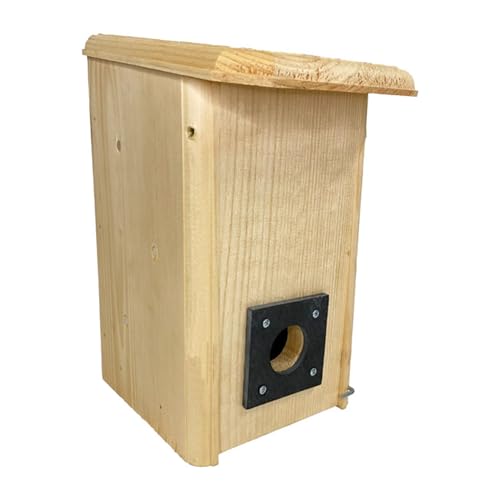 Coveside Small Winter RoostInch-thick Eastern white pine, internal perches and a slate predator guard. Insulation, not decoration — and 1" pine genuinely insulates where half-inch cedar does not. | The default winter roost box | $75.99 · See it on Amazon |
| 3 |  Coveside 10098 Horizontal Winter RoostThe same insulated pine construction laid on its side — for a wall, a shed end, or a trunk where a vertical box has nowhere to go. | Wall and trunk mounting where a tall box will not fit | Check price on Amazon |
| 4 | 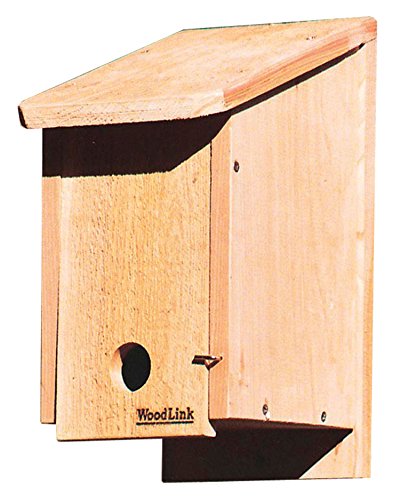 Woodlink Cedar Winter Roosting / Shelter BoxCedar rather than inch-thick pine, so less insulation for less money — the sensible experiment before committing to a Coveside. | A cheaper way to find out whether your yard will use a roost box | Check price on Amazon |
#ad how we are funded · price as of October 15, 2026
The picks in full
Top pick One box that works in both seasons
Coveside Convertible Winter Roost
The Small Winter Roost with a reversible front: low entrance and perches for winter, conventional nest-box opening for spring.
Specifications
- Wall thickness
- 1" Eastern White Pine
- Front
- Flips to convert roost to nest box
- Dimensions
- As Coveside Small Winter Roost
- Origin
- Hand-built in Maine, USA
Trade-offs
- Solves the roost-vs-nest problem with one purchase and a screwdriver
- Same insulating 1-inch pine as the fixed roost
- Stays useful in April instead of coming down
- You have to remember to flip it, twice a year
- A convertible front is one more joint for weather to get into
- Costs more than the fixed roost
Who it is forA yard with one good mounting spot and a use for it in both seasons.
Skip it ifSkip it if you already run nest boxes. Buy the fixed winter roost and leave the nest boxes alone; birds do not appreciate a box whose geometry changes.
#ad how we are funded · price as of October 15, 2026
No. 2 The default winter roost box
Coveside Small Winter Roost
Inch-thick Eastern white pine, internal perches and a slate predator guard. Insulation, not decoration — and 1" pine genuinely insulates where half-inch cedar does not.
Specifications
- Wall thickness
- 1" Eastern white pine
- Entrance
- Low, with slate predator guard
- Interior
- Staggered internal perches
- Origin
- Made in Maine, USA
Trade-offs
- Inch-thick pine is the insulation spec that matters; most "roosting boxes" are half that
- The low entrance keeps rising warm air inside instead of venting it out the top
- Internal perches let several birds stack rather than pile on the floor
- The slate guard stops a raccoon reaching in
- Small — it is a chickadee-and-wren box, not a starling hotel
- Roost boxes are a slow sell to birds; occupancy can take a season or two
- Made-in-USA pine prices accordingly
Who it is forAnyone who has the feeders and the water sorted and wants to add shelter.
Skip it ifSkip it if you expect immediate results. Roost boxes are found by accident in a storm, and an empty box in year one is normal, not a fault.
#ad how we are funded · price as of October 15, 2026
No. 3 Wall and trunk mounting where a tall box will not fit
Coveside 10098 Horizontal Winter Roost
The same insulated pine construction laid on its side — for a wall, a shed end, or a trunk where a vertical box has nowhere to go.
Specifications
- Wall thickness
- 1" pine
- Orientation
- Horizontal
- Entrance
- Slate predator guard
- Occupants
- Chickadees, wrens, nuthatches, titmice
Trade-offs
- Fits mounting spots a vertical box cannot use
- Same insulation and predator guard as the vertical roosts
- Lower profile catches less wind
- Horizontal geometry loses some of the warm-air-trapping benefit of a tall box
- Harder to clean out than a top-opening vertical box
Who it is forWalls, sheds and trunk faces with limited vertical clearance.
Skip it ifSkip it if you have a normal post or trunk to work with. The vertical roost holds heat better, and that is the entire reason the box exists.
#ad how we are funded · price as of October 15, 2026
No. 4 A cheaper way to find out whether your yard will use a roost box
Woodlink Cedar Winter Roosting / Shelter Box
Cedar rather than inch-thick pine, so less insulation for less money — the sensible experiment before committing to a Coveside.
Specifications
- Material
- Cedar
- Type
- Winter roosting / shelter box
- Entrance
- Low entry, roosting configuration
Trade-offs
- Real roosting geometry — low entrance, internal perches — at a lower price
- Cedar is rot-resistant and needs no treatment
- Cheap enough to hang two and see which site birds prefer
- Cedar boards are thinner than 1-inch pine, so it insulates less well
- Thin walls matter most on exactly the nights the box matters most
Who it is forA first roost box, or a second site to test placement.
Skip it ifSkip it if your winters are severe. In a deep-cold climate the wall thickness is the product, and that is where the Coveside earns its price.
#ad how we are funded · price as of October 15, 2026
Where these specs came from
The four differences
| Feature | Nest box | Roost box | Why |
|---|---|---|---|
| Wall thickness | Thin, often 1/2" | Thick, 1" or more | June wants heat out; January wants it in |
| Entrance position | High, near the roof | Low, near the floor | Warm air rises. A high hole vents it; a low hole traps it |
| Ventilation and drainage | Deliberate holes | Minimal, sealed | A ventilated box in a freeze is a wind tunnel |
| Interior | Bare, for nesting material | Staggered perches | Roosting birds stack; nesting birds do not |
Why the entrance height matters most
It is the least obvious difference and the one that does the most work. Warm air rises. A box with the hole near the roof loses its warmed air continuously through the entrance — which is exactly what you want in a June box full of growing chicks and exactly wrong in a January box.
Move the hole to near the floor and the box becomes a warm-air trap. The birds sit above the entrance, in air they have warmed themselves, and it stays there. This is the single design change that turns a birdhouse into a roost.
Will birds use a nest box as a roost?
Yes, and they do. In bad weather birds use whatever cavity is available, and a nest box left up over winter will occasionally hold a roosting bird.
It is a poor substitute rather than a free one. A ventilated, thin-walled box with a high entrance loses the bird's heat about as fast as it is generated. On a mild night, fine. At minus fifteen with a wind, the box is doing very little.
So do you need one of each?
That is the practical question, and there are three answers.
- One of each, in different places. The most effective option. Nest boxes stay up year-round for spring; a dedicated roost box goes up in autumn in a sheltered spot. Two purchases, two sites.
- A convertible box. One shell, a reversible front — low entrance and perches for winter, conventional opening for spring. Solves it with one purchase and a screwdriver, at the cost of remembering to flip it twice a year.
- Leave the nest boxes alone and add a roost. Our preference if you already run nest boxes. Birds do not appreciate a box whose geometry changes between seasons, and a fixed roost box is one less thing to remember.
Autumn housekeeping
- Clean out nest boxes in late summer, once broods have fledged. Old material harbors parasites that overwinter.
- Leave nest boxes up through the winter. Some birds will use them, and taking them down gains nothing.
- Put roost boxes up in autumn, facing away from prevailing wind, eight to twelve feet up.
- Do not put a roost box near a feeder. A roost is a place to be undisturbed.
The free version
A brush pile from autumn prunings gives dense, windproof, predator-resistant cover at zero cost, and in many yards it is used more than any box. Dense evergreens do the same. Boxes and brush piles are complementary — the box is a cavity for the species that want one, the pile is cover for everything else. The winter yard checklist.
What we would skip
What we would skip
Relying on nest boxes as your winter shelter
Thin walls, a high entrance and deliberate ventilation are correct in June and wrong in January. Birds will use one; it does much less than a roost box on the nights it matters.
Converting an existing nest box by moving the hole
You end up with a thin-walled box with a low hole, which fixes one of the four differences. If you are going to do carpentry, build the right thing.
How we picked
- Design differences described with the reason attached, so the choice is understandable rather than a list of specifications.
- Wall thickness and entrance position from makers' own listings.
- Honest about substitution: a nest box works a little, and we say how little.
- Live price and availability, refreshed daily.
We have not tested any of these. What we did instead: read the manufacturers’ own listings, compiled the published specifications, computed the running cost at a cited electricity rate, and refreshed the prices daily. The full method is published.
The ranked boxes are on the roost box roundup. The physiology behind all of it is on how birds survive winter. And heated bird houses explains why adding a heat source is the wrong fix.
Questions people actually ask
- What is the difference between a roost box and a nest box?
- Four things: roost boxes have thicker walls, a low entrance rather than a high one, minimal ventilation, and internal perches. Each difference exists because June and January have opposite requirements.
- Can birds use a nest box in winter?
- They will, and it helps less than a roost box. A thin-walled, ventilated box with a high entrance loses warm air about as fast as the bird generates it.
- Should I take nest boxes down in winter?
- No. Leave them up — some birds will shelter in them, and taking them down gains nothing. Clean them out in late summer instead.
- Are convertible boxes any good?
- Yes, if you will remember to flip them twice a year. If you already run nest boxes, our preference is to leave those alone and add a dedicated roost box.
- Why is the entrance hole lower on a roost box?
- Warm air rises. A high hole vents the air the birds have warmed; a low hole traps it above the entrance. It is the single change that turns a birdhouse into a roost.
Sources
Read next
- The Best Roosting Boxes for Winter
Four winter roost boxes ranked on wall thickness, entrance height and internal perches — with honest expectations about occupancy.
- Winter Roosting Box Plans
Build a roost box from one board — the dimensions, the four decisions that matter, and the mistakes that turn it into a nest box.
- How Birds Survive Winter
The four mechanisms small birds use to survive a freezing night, what breaks them, and what a yard can actually contribute.
- The Winter Bird Yard Checklist
The October changeover in order: feeders, water, shelter, what to leave standing, and the winter maintenance schedule.