Cold-weather care / Roundup
The Best Bird House Cameras
The only camera that shows you something you genuinely cannot otherwise see — and the one most likely to sit in an empty box all year. Fix occupancy first.
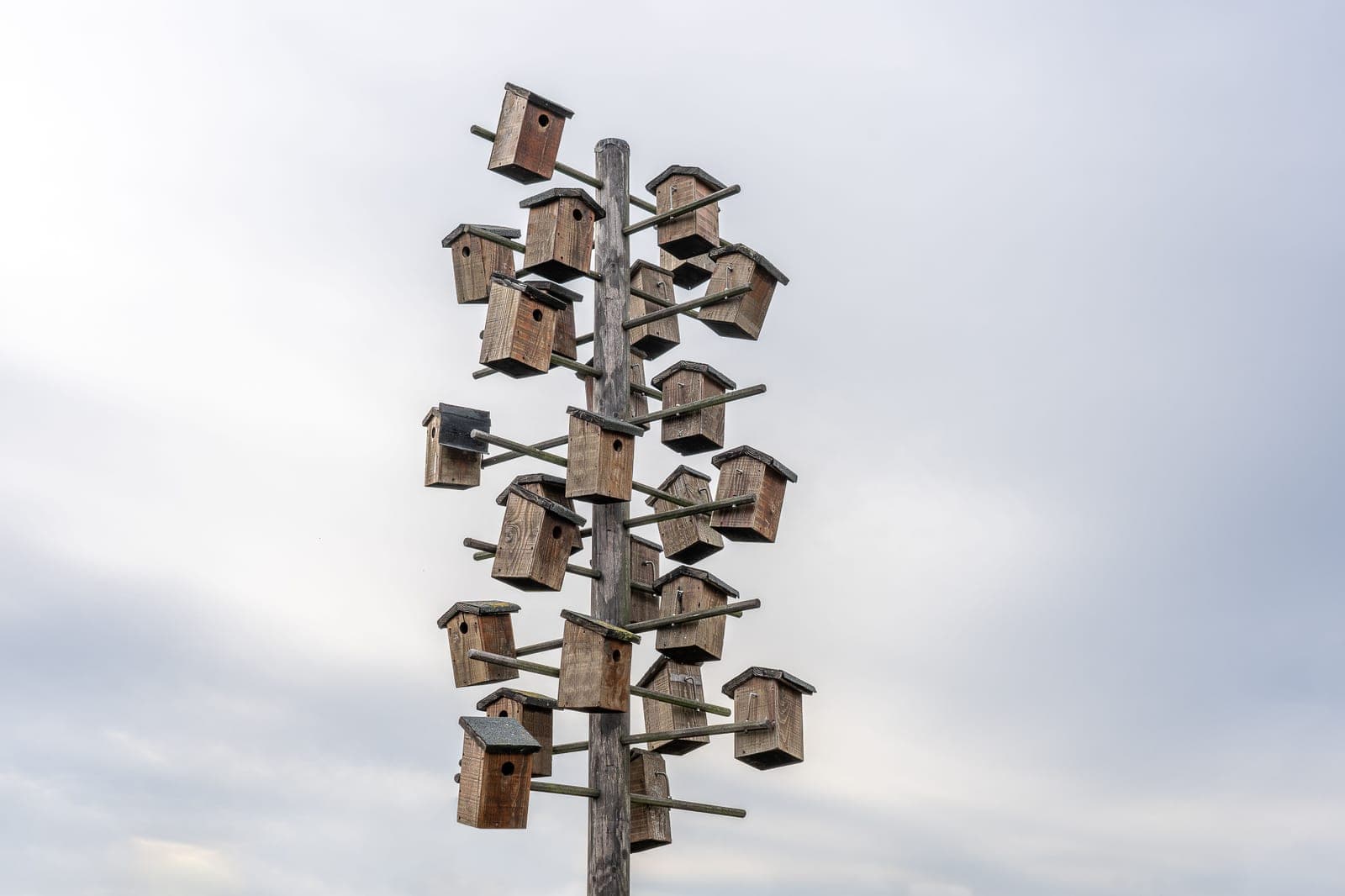
Settle occupancy before you buy anything. A camera does not make a box attractive, and an empty box with a camera in it is an expensive empty box. If your boxes already get used, the best value is a camera module fitted to the box you own. If you are starting fresh, buy one where the camera sits in an isolated bay rather than in the nest chamber.
Winter Perch is funded by affiliate commission. If you buy through a link on this page we may earn a commission at no extra cost to you, and it never decides a ranking. Full disclosure · how we pick.
Quick picks
Ranked, with the trade-off named. Tap a row for the full write-up; the price button goes straight to Amazon.
| # | Product | Best for | Price |
|---|---|---|---|
| 1 | 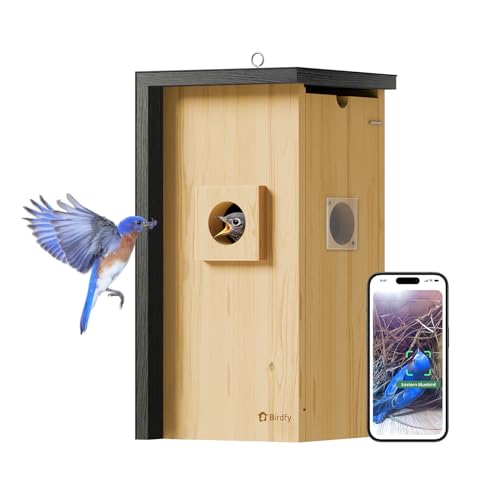 Birdfy Bird House with Camera, metal cladA camera inside the cavity, metal cladding on the entrance, and AI identification. The one category where a camera shows you something you genuinely cannot otherwise see. | Watching a nest without opening the box | $119.99 · See it on Amazon |
| 2 |  KinetCam Cedar Bird House with Camera, solarCedar rather than plastic, with the camera in an isolated bay so the electronics are not in the nest chamber. The design detail that matters most in this category. | A camera house that is still a proper wooden box | $119.99 · See it on Amazon |
| 3 |  WIWACAM WiFi Bird Box Camera, 4KA camera on its own, not a birdhouse with a camera in it. If you already have a box that gets used, this is the cheaper and better-targeted purchase. | Adding a camera to the box you already own | $59.90 · See it on Amazon |
| 4 | 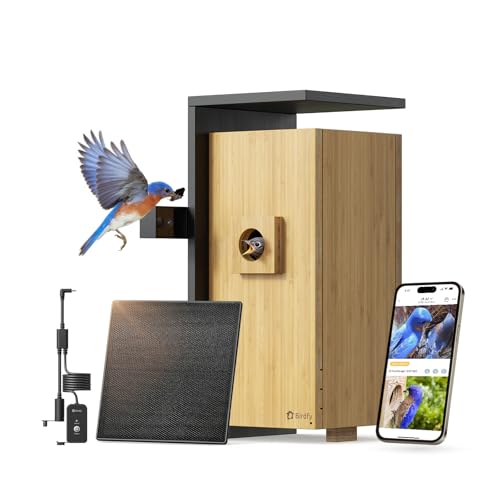 Birdfy Smart Bird House, dual 1080P camerasTwo cameras — one in the cavity, one on the approach — with the AI identification included rather than subscribed. The most complete version of the idea, at the highest price here. | Inside and outside at once | $279.99 · See it on Amazon |
#ad how we are funded · price as of September 13, 2026
The picks in full
Top pick Watching a nest without opening the box
Birdfy Bird House with Camera, metal clad
A camera inside the cavity, metal cladding on the entrance, and AI identification. The one category where a camera shows you something you genuinely cannot otherwise see.
Specifications
- Camera
- Internal, nest-facing
- Entrance
- Metal-clad against enlargement
- Software
- AI bird identification
Trade-offs
- Metal cladding at the entrance is a real nest-box feature, not a camera gimmick — it stops the hole being gnawed wider
- An internal camera shows nesting behavior that opening the box would disturb
- Established brand in this category with ongoing software support
- Doubles as a genuine roost box in winter, when cameras are otherwise idle
- A camera inside a nest box is an intrusion; the wiring and lens occupy space birds would use
- Occupancy is never guaranteed — an empty box is an expensive empty box
- Winter is the wrong season to buy: nesting is spring, so this sits unused for months
- Cold shortens battery life exactly when a solar panel collects least
Who it is forSomeone who already gets nest-box occupancy and wants to see inside without disturbing it.
Skip it ifSkip it if your boxes have never been occupied. Fix siting and predator guarding first; a camera does not make a box attractive.
#ad how we are funded · price as of September 13, 2026
No. 2 A camera house that is still a proper wooden box
KinetCam Cedar Bird House with Camera, solar
Cedar rather than plastic, with the camera in an isolated bay so the electronics are not in the nest chamber. The design detail that matters most in this category.
Specifications
- Material
- Cedar
- Camera bay
- Isolated from the nest chamber
- Power
- Solar
Trade-offs
- An isolated camera bay keeps hardware out of the cavity, which is the main objection to these
- Cedar insulates meaningfully better than the plastic camera housings
- A wooden box birds would use anyway, with a camera added rather than the reverse
- Solar reduces the battery-swapping that kills interest in these products
- Solar at northern latitudes in winter collects very little, so expect hand-charging
- Less software polish than Birdfy
- Cedar plus electronics means the box cannot simply be scrubbed out like a plain one
- Same fundamental occupancy gamble as every camera house
Who it is forSomeone who wants a real cedar nest box first and a camera second.
Skip it ifSkip it if you want the app experience to be the product. Birdfy's software is more developed; this is the better box.
#ad how we are funded · price as of September 13, 2026
No. 3 Adding a camera to the box you already own
WIWACAM WiFi Bird Box Camera, 4K
A camera on its own, not a birdhouse with a camera in it. If you already have a box that gets used, this is the cheaper and better-targeted purchase.
Specifications
- Resolution
- 4K HD
- Connection
- WiFi to phone
- Form
- Camera module, box not included
Trade-offs
- Retrofits to a box you already know birds use, which removes the occupancy gamble entirely
- Costs a fraction of the camera-equipped houses
- Keeps a well-sited, well-built wooden box rather than replacing it with a camera housing
- 4K gives you room to crop in a dim cavity
- You have to fit it yourself, and a badly fitted camera reduces the usable cavity
- Needs power and a WiFi signal at the box, which most yards do not have at eight feet up a pole
- No AI identification or polished app experience
- Drilling into an occupied box is not an option, so fitting is an autumn job
Who it is forAn existing, reliably used nest box within WiFi range.
Skip it ifSkip it if the box is far from the house. WiFi at the bottom of a garden is the failure this category is built on.
#ad how we are funded · price as of September 13, 2026
No. 4 Inside and outside at once
Birdfy Smart Bird House, dual 1080P cameras
Two cameras — one in the cavity, one on the approach — with the AI identification included rather than subscribed. The most complete version of the idea, at the highest price here.
Specifications
- Cameras
- 2 x 1080P (internal and external)
- AI identification
- Included, no subscription
Trade-offs
- The external camera catches arrivals and departures the internal one misses entirely
- AI identification included rather than charged monthly, which is rare in this category
- 1080P on both, which is enough resolution inside a dark cavity
- The most expensive item on this entire site
- Two cameras is two things to power in the cold, and winter solar collects very little
- Same occupancy gamble as any nest box, at nearly triple the price
- A lot of hardware bolted to something whose job is to be an unremarkable hole in a quiet place
Who it is forA reliably occupied box where watching it properly is worth real money.
Skip it ifSkip it unless your boxes fill every year. The gap between this and a plain roost box buys a great deal of other equipment.
#ad how we are funded · price as of September 13, 2026
The question to answer first
This is the only category on the site where the product can be perfect and the purchase still fail completely, and it fails for a reason that has nothing to do with the camera.
Birds have to use the box. Occupancy depends on siting, hole size, height, aspect, predator protection and what else is available nearby — none of which a camera influences. A box that has sat empty for two seasons will sit empty for a third with a camera in it, and you will have paid a large premium to watch nothing.
Where the camera sits is the spec
Every product here puts a camera near a nesting cavity. How they do it is what separates them.
| Placement | View | Cost to the box |
|---|---|---|
| Isolated bay above the chamber | Top-down on the nest | Least. Hardware stays out of the cavity |
| Mounted inside the chamber | Top-down, often wider | Occupies space and adds surfaces birds must work around |
| External, on the approach | Arrivals and departures | None — but it does not show the nest |
| Retrofit module in your own box | Depends how you fit it | Yours to control — fit it high and flush |
An isolated camera bay is the detail worth paying for. It is also the one least often mentioned in listings, which tells you something about who is designing these.
The box underneath matters more than the app
Several products in this category are essentially a camera housing with a hole in it. The thing birds are choosing, though, is a cavity — and the properties that make a cavity attractive are wall thickness, drainage, ventilation, a rough interior surface for fledglings to climb, and an entrance that has not been gnawed wider.
Cedar does that; thin plastic does not. A plastic camera box heats faster in sun, insulates worse, and sweats more. If two products are close, take the one that is a better nest box, because that is the part the birds are evaluating.
How we judged these
How we picked
- Whether the camera sits in an isolated bay rather than inside the nesting cavity.
- The quality of the box itself — material, insulation and entrance protection — since that is what decides occupancy.
- Whether a retrofit module would serve better, which it does for anyone with a box that already gets used.
- Power realism in winter, because solar at northern latitudes collects very little.
- Subscription terms, stated plainly, since ongoing fees are common in this category.
- Honest framing of the occupancy gamble, up front rather than in the small print.
- Live price and availability, refreshed daily.
We have not tested any of these. What we did instead: read the manufacturers’ own listings, compiled the published specifications, computed the running cost at a cited electricity rate, and refreshed the prices daily. The full method is published.
Power, and why winter is the wrong season
Two honest points about timing that most listings avoid.
Nesting is a spring event. Buy one of these in December and it sits unused for months. The useful winter function is different: cavity boxes get used as overnight roosts in cold weather, sometimes by several birds at once, and a camera does capture that. It is genuinely interesting, and it is not what these are sold for.
Solar collects very little in winter. Short days, low sun angle and snow on the panel mean a solar-powered camera at northern latitudes will need hand-charging in exactly the season you least want to be climbing to a box. Lithium batteries also lose usable capacity in the cold. Plan on carrying a battery indoors, or plan on the camera being a spring instrument.
Disturbance, honestly
Fitting a camera means drilling into a box, which means doing it outside the breeding season — autumn is the right time, alongside the annual clean-out. Never open or modify an occupied box.
A permanently installed camera is far less disturbing than repeatedly opening a box to look inside, which is the main argument in its favor. But it is not nothing: cabling, a lens housing and any light source occupy space and change surfaces in a cavity the bird chose for its dimensions.
What we would skip
What we would skip
A camera box if your boxes have never been occupied
A camera does not make a cavity attractive. Siting, hole size, height and predator protection do. Fix those first or you are buying a very expensive view of an empty box.
Thin plastic camera housings
The birds are choosing a cavity, and plastic insulates worse, heats faster in sun and sweats more than cedar. A good box with a camera beats a camera with a hole in it.
Cameras mounted inside the nest chamber
Hardware in the cavity takes space the birds would use and adds surfaces they must work around. An isolated camera bay solves this and is the detail worth paying for.
Relying on solar through a northern winter
Short days, low sun and snow on the panel mean very little collection, and cold reduces battery capacity at the same time. Expect to hand-charge, and site the box where you can reach it.
Buying one for winter viewing
Nesting is a spring event. Boxes do get used as overnight roosts in cold weather, which is worth watching, but if you want winter footage a feeder camera delivers far more of it.
Fitting a camera to an occupied box
Drilling and mounting is autumn work, done alongside the annual clean-out. Never open or modify a box that is in use.
Where this fits
This is the nest-box end of a category that starts at the feeder — feeder cameras for winter covers the other half, and it is the one that works all winter rather than one season. Predator guards and roosting box plans cover the box itself, which is the part that decides whether any of this is worth watching.
Questions people actually ask
- Are bird house cameras worth it?
- Only if your boxes are already occupied. A camera does not make a cavity attractive — siting, hole size, height and predator protection do. Fix occupancy first, then add the camera.
- Where should the camera be in a nest box?
- In an isolated bay above the nesting chamber, looking down. That keeps the hardware out of the cavity the birds are using, which is the main objection to these products.
- Can I add a camera to a nest box I already own?
- Yes, with a retrofit camera module, and it is usually the better buy — it removes the occupancy gamble because you already know birds use that box. Fit it in autumn, never during the breeding season.
- Do nest box cameras work in winter?
- They work, but there is usually nothing nesting. Cavity boxes are used as overnight roosts in cold weather, which is interesting to watch, and solar charging collects very little at northern latitudes in midwinter.
- Will a camera disturb nesting birds?
- A permanently fitted camera disturbs far less than repeatedly opening the box to look. It is not nothing, though — cabling and a lens housing take up cavity space, which is why an isolated bay is better.
- Do bird house cameras need a subscription?
- Some do and some do not, and it varies within a single brand's range. Check before buying, because a monthly fee can exceed the hardware cost over a few seasons.
Sources
Read next
- Predator Guards for Nest and Roost Boxes
Stovepipe pole baffles and entrance portal guards, ranked — plus the clearance rule that decides whether any of them work.
- Roost Box vs Nest Box: Four Differences That Matter
Four design differences between roost and nest boxes, why each one exists, and whether to buy one of each or a convertible.
- The Best Roosting Boxes for Winter
Four winter roost boxes ranked on wall thickness, entrance height and internal perches — with honest expectations about occupancy.
- The Best Bird Feeder Cameras for Winter
Three feeder cameras ranked on sensor size, winter power behavior and whether there is a subscription attached.