Cold-weather care / Guide
Winter Roosting Box Plans
A weekend project from a single board. The dimensions are forgiving; the four design decisions are not.
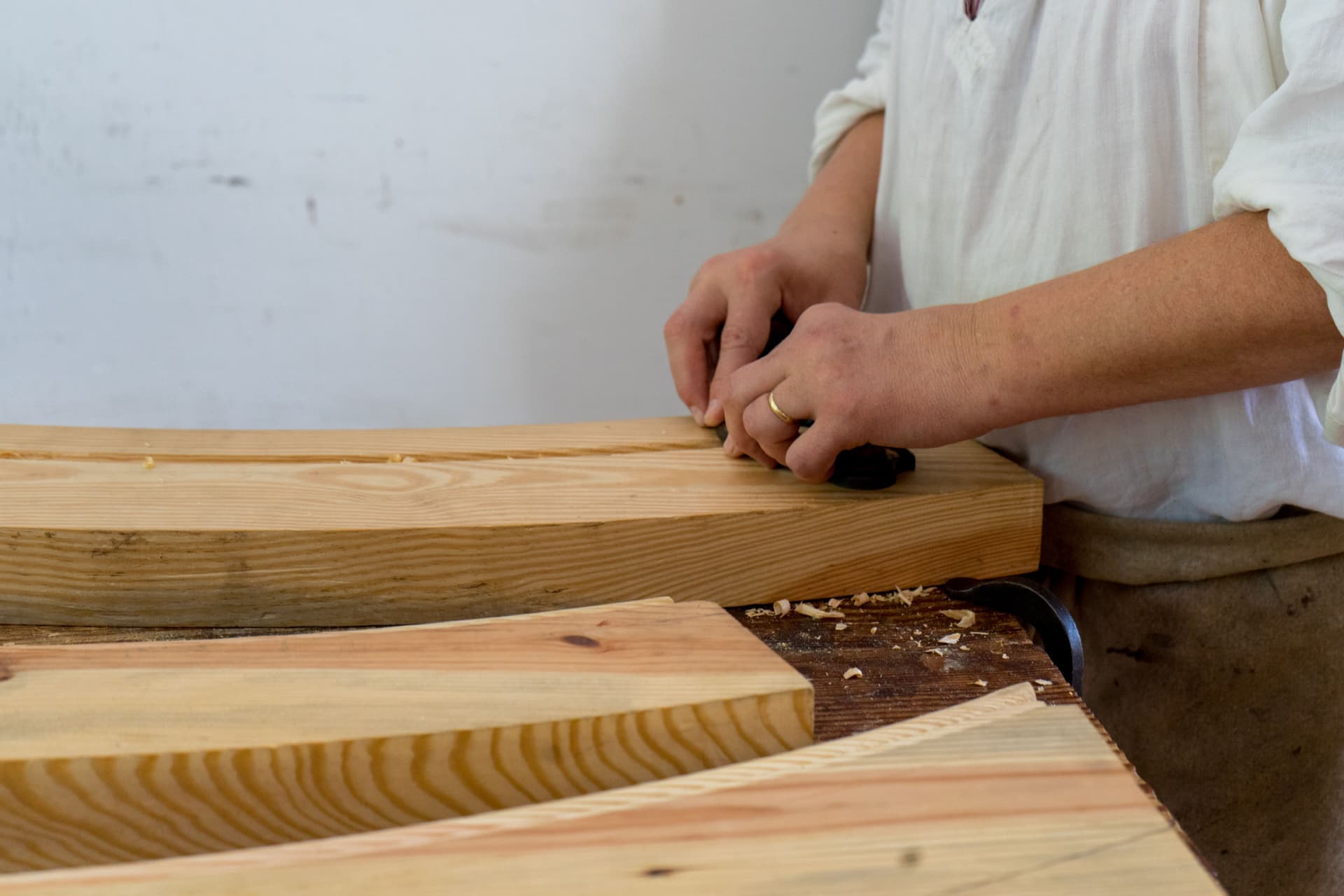
Build it from inch-thick untreated softwood, put the entrance near the bottom, add staggered internal perches, and leave out the ventilation and drainage holes a nest box would have. Roughly 8 by 8 inches internally and 12 to 18 inches tall. Get those four decisions right and the exact dimensions barely matter.
Why build rather than buy
Cost, mainly, and material choice. A good commercial roost box in inch-thick pine costs real money; a board and an afternoon costs less. And a box you built is one you will actually clean out, mount properly, and site thoughtfully — which matters more than the joinery.
If you would rather buy, the roundup is here and there is no shame in it. The Coveside boxes are the reference for what you are trying to build.
Materials
- One board of untreated softwood, at least 1 inch thick. Pine, cedar or fir. Thickness is the whole point — half-inch stock makes a decorative box, not a roost.
- Never pressure-treated or painted inside. The preservatives are not something to enclose birds with overnight.
- Galvanized or stainless screws, not nails. You will want to take it apart to clean it.
- A hinge or a removable panel, so the annual clean-out is possible.
- Optional: a scrap of slate or hardwood for a predator guard at the entrance.
Dimensions
| Dimension | Target | Why |
|---|---|---|
| Internal floor | About 8" x 8" | Room for several birds without being cavernous |
| Internal height | 12" to 18" | Vertical space for stacked perches and a warm-air pocket |
| Wall thickness | At least 1" | The insulation. This is the specification that matters |
| Entrance diameter | About 1 1/4" to 1 1/2" | Small enough to exclude starlings |
| Entrance position | About 2" above the floor | The single most important decision |
| Roof overhang | At least 2" at the front | Keeps weather off the entrance |
The four decisions that matter
1. Entrance at the BOTTOM
This is the one people get wrong, because every birdhouse they have ever seen has the hole near the top. Warm air rises: a high hole vents the air the birds have warmed, a low hole traps it above the entrance. Move the hole and you have converted a birdhouse into a roost.
2. No ventilation, no drainage
Nest boxes have deliberate ventilation and drainage holes, and they are correct to. A roost box in a freeze does not want either — every hole is a route for warmed air to leave and for wind to enter. Seal the joints properly.
3. Staggered internal perches
Fit three or four short dowels or wooden strips across the interior at different heights, offset so birds are not directly above one another. This lets several birds use the box at once, stacked in the warm air above the entrance, rather than crowding the floor.
Do not run them directly above the entrance, and do not have them all at one height.
4. Access for cleaning
A hinged side or a screwed-on panel. Roost boxes accumulate droppings and parasites overwinter in the debris, so an annual clean-out in late summer is part of owning one, and nesting material is a separate late-winter job rather than something to leave inside — and autumn is also the only sensible time to fit a nest box camera, since drilling into an occupied box is never an option. A box you cannot open is a box you will not clean.
Assembly, in order
- Cut the panels. Two sides, a front, a back, a floor and a roof. The back should extend above and below for mounting.
- Cut the entrance about two inches above where the floor will sit, roughly 1 1/4 to 1 1/2 inches across.
- Roughen the inside of the front panel below the entrance, or fix a strip of rough wood, so birds can grip on the way out.
- Fit the perches before you close the box up. Much easier now than later.
- Assemble with screws, leaving one side hinged or removable.
- Fit the roof with a front overhang of at least two inches.
- Optional predator guard: a slate or hardwood plate around the entrance thickens the wall and stops a raccoon reaching in. The guards and pole baffles worth fitting.
Mounting and siting
- Eight to twelve feet up, on a trunk, post or wall.
- Facing away from the prevailing wind — usually south or east in the northern US.
- Somewhere sheltered, not on an exposed face.
- Away from feeders. A roost is a place to be undisturbed.
- Up in autumn, so it has weathered in before the first hard night.
Set expectations
An empty box through the first winter is normal. Roost boxes are found by accident, usually during weather bad enough to make a bird investigate anything unfamiliar. Do not conclude your carpentry is at fault.
Or buy one
Winter Perch is funded by affiliate commission. If you buy through a link on this page we may earn a commission at no extra cost to you, and it never decides a ranking. Full disclosure · how we pick.
Quick picks
Ranked, with the trade-off named. Tap a row for the full write-up; the price button goes straight to Amazon.
| # | Product | Best for | Price |
|---|---|---|---|
| 1 | 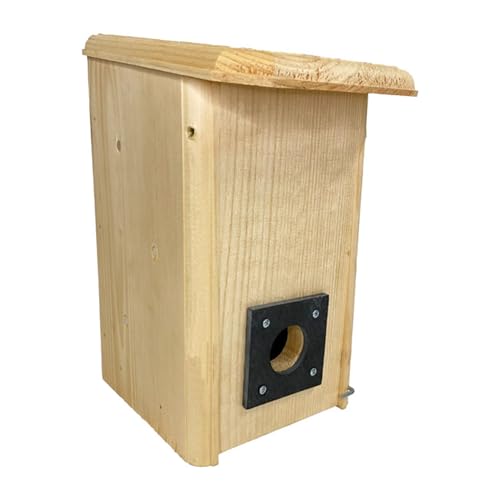 Coveside Small Winter RoostInch-thick Eastern white pine, internal perches and a slate predator guard. Insulation, not decoration — and 1" pine genuinely insulates where half-inch cedar does not. | The default winter roost box | $75.99 · See it on Amazon |
| 2 | 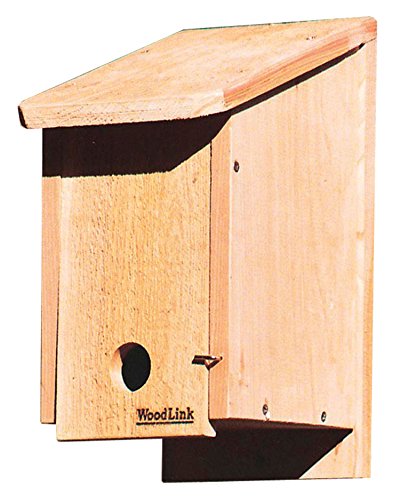 Woodlink Cedar Winter Roosting / Shelter BoxCedar rather than inch-thick pine, so less insulation for less money — the sensible experiment before committing to a Coveside. | A cheaper way to find out whether your yard will use a roost box | Check price on Amazon |
#ad how we are funded · price as of October 15, 2026
The picks in full
Top pick The default winter roost box
Coveside Small Winter Roost
Inch-thick Eastern white pine, internal perches and a slate predator guard. Insulation, not decoration — and 1" pine genuinely insulates where half-inch cedar does not.
Specifications
- Wall thickness
- 1" Eastern white pine
- Entrance
- Low, with slate predator guard
- Interior
- Staggered internal perches
- Origin
- Made in Maine, USA
Trade-offs
- Inch-thick pine is the insulation spec that matters; most "roosting boxes" are half that
- The low entrance keeps rising warm air inside instead of venting it out the top
- Internal perches let several birds stack rather than pile on the floor
- The slate guard stops a raccoon reaching in
- Small — it is a chickadee-and-wren box, not a starling hotel
- Roost boxes are a slow sell to birds; occupancy can take a season or two
- Made-in-USA pine prices accordingly
Who it is forAnyone who has the feeders and the water sorted and wants to add shelter.
Skip it ifSkip it if you expect immediate results. Roost boxes are found by accident in a storm, and an empty box in year one is normal, not a fault.
#ad how we are funded · price as of October 15, 2026
No. 2 A cheaper way to find out whether your yard will use a roost box
Woodlink Cedar Winter Roosting / Shelter Box
Cedar rather than inch-thick pine, so less insulation for less money — the sensible experiment before committing to a Coveside.
Specifications
- Material
- Cedar
- Type
- Winter roosting / shelter box
- Entrance
- Low entry, roosting configuration
Trade-offs
- Real roosting geometry — low entrance, internal perches — at a lower price
- Cedar is rot-resistant and needs no treatment
- Cheap enough to hang two and see which site birds prefer
- Cedar boards are thinner than 1-inch pine, so it insulates less well
- Thin walls matter most on exactly the nights the box matters most
Who it is forA first roost box, or a second site to test placement.
Skip it ifSkip it if your winters are severe. In a deep-cold climate the wall thickness is the product, and that is where the Coveside earns its price.
#ad how we are funded · price as of October 15, 2026
Where these specs came from
How we picked
- Design derived from the published specifications of commercial roost boxes — wall thickness, entrance position, internal perches, minimal ventilation — rather than invented.
- Dimensions given as ranges, because they are genuinely forgiving and false precision would be misleading.
- Safety and material notes included: no pressure-treated timber, no interior paint.
We have not tested any of these. What we did instead: read the manufacturers’ own listings, compiled the published specifications, computed the running cost at a cited electricity rate, and refreshed the prices daily. The full method is published.
Why the design is what it is, and the physiology behind it. Shelter is one leg of three, alongside food and water.
Questions people actually ask
- How do you build a winter roosting box?
- From inch-thick untreated softwood, with the entrance near the floor, staggered internal perches, no ventilation holes, and an openable side for cleaning. Around 8 by 8 inches internally and 12 to 18 inches tall.
- Why is the entrance hole at the bottom of a roost box?
- Warm air rises. A hole near the roof vents the air the birds have warmed; a hole near the floor traps it above the entrance. It is the single most important design decision.
- What wood should I use?
- Untreated softwood at least an inch thick — pine, cedar or fir. Never pressure-treated timber, and do not paint the interior.
- Should a roost box have ventilation holes?
- No. That is a nest box feature and it is correct there. In a roost, every hole is a route for warmed air out and wind in.
- How many perches should a roost box have?
- Three or four, at different heights, offset so birds are not directly above one another. That lets several share the box in the warm air above the entrance.
Sources
Read next
- The Best Roosting Boxes for Winter
Four winter roost boxes ranked on wall thickness, entrance height and internal perches — with honest expectations about occupancy.
- Roost Box vs Nest Box: Four Differences That Matter
Four design differences between roost and nest boxes, why each one exists, and whether to buy one of each or a convertible.
- How Birds Survive Winter
The four mechanisms small birds use to survive a freezing night, what breaks them, and what a yard can actually contribute.
- The Winter Bird Yard Checklist
The October changeover in order: feeders, water, shelter, what to leave standing, and the winter maintenance schedule.