Winter feeders / Roundup
The Best Cheap Bird Feeders
Cheap feeders are fine, with two exceptions that will cost you more than you saved. Here is where the money does and does not matter.
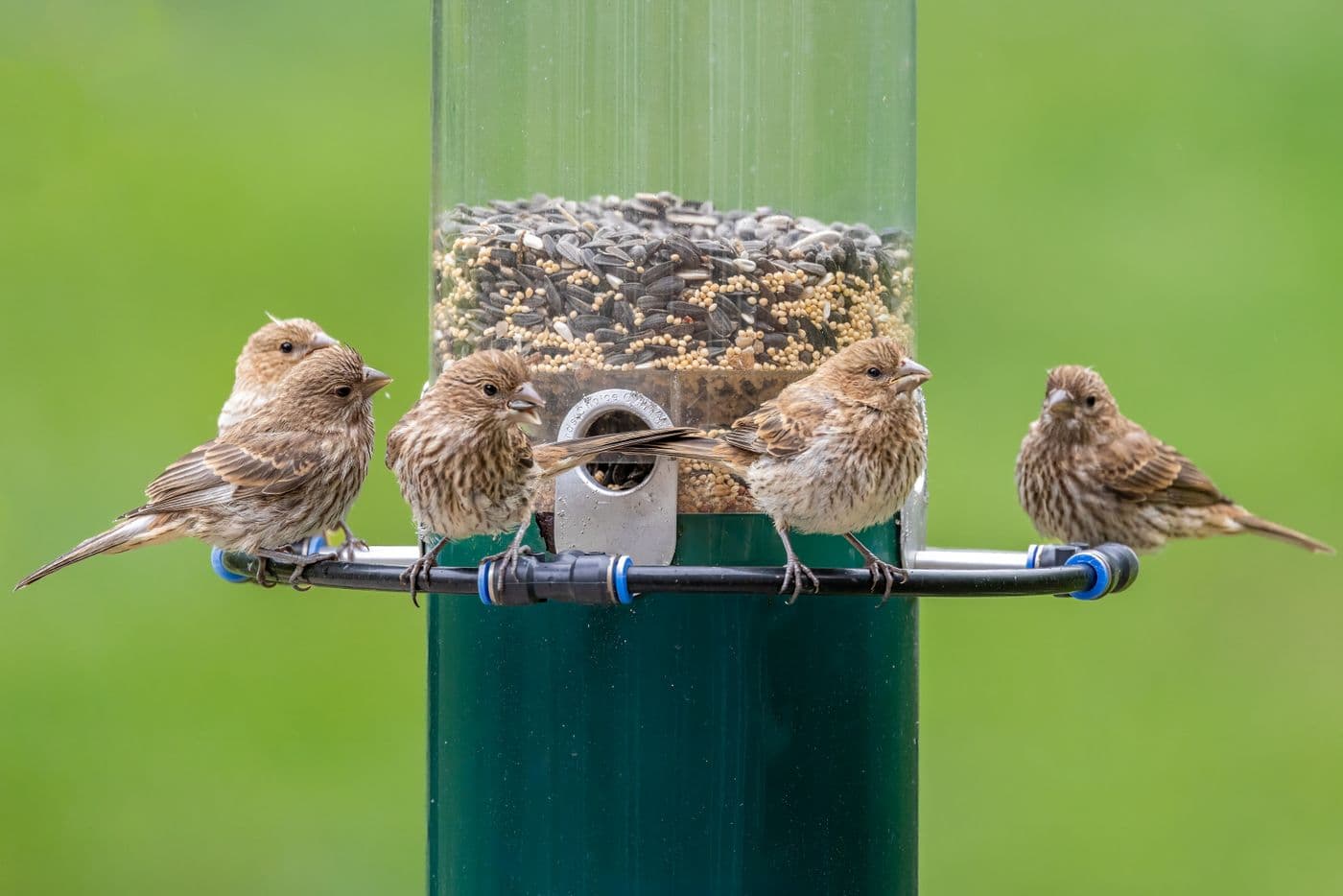
A cheap feeder is the right purchase more often than this hobby admits — and there are exactly two situations where it is not. If you have squirrels, cheap plastic is food, and you will buy three. If you need capacity in a cold snap, a small cheap feeder empties in a day and you are outside refilling it in the weather you bought it to avoid. Everywhere else, buy cheap, and consider buying two instead of one good one: spreading birds across two feeders cuts crowding and disease transmission more than any single feeder upgrade does.
Winter Perch is funded by affiliate commission. If you buy through a link on this page we may earn a commission at no extra cost to you, and it never decides a ranking. Full disclosure · how we pick.
Quick picks
Ranked, with the trade-off named. Tap a row for the full write-up; the price button goes straight to Amazon.
| # | Product | Best for | Price |
|---|---|---|---|
| 1 |  ERYTLLY 6-Port Tube Bird Feeders, 2-packSix ports and a thicker tube than the very cheapest options, in a two-pack. If the goal is maximum feeding capacity for minimum money, this is the arithmetic that wins. | The most capacity per dollar here | $17.09 · See it on Amazon |
| 2 |  Kaytee Songbird Wild Bird Diffuser Tube Feeders, 2-packKaytee is a mainstream bird-food brand and these are their inexpensive tubes, sold in a pair. Buying a brand at this price mostly buys you a company that will still exist if something is wrong in the box. | A known brand in the budget bracket | $17.99 · See it on Amazon |
| 3 | 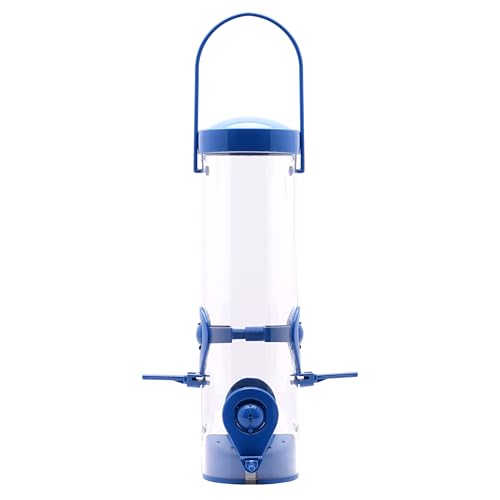 Perky-Pet Navy 2-in-1 Tube Bird FeederPerky-Pet is a long-standing brand and this is about as little as you can spend on one of their feeders. Four ports, basic plastic, and no pretension — which at this price is the correct set of expectations. | The cheapest feeder here that is not a gamble | $5.94 · See it on Amazon |
| 4 |  FEED GARDEN Small Tube Bird Feeder, 2-packTwo small tubes in a pack. The genuine argument for cheap feeders in pairs is that spreading birds across two feeders reduces crowding and disease transmission more than one better feeder does. | Two feeders for the price of one cheap one | $14.99 · See it on Amazon |
| 5 |  Kaytee Ultimate No Mess Wild Bird Seed, 9.75 lbEvery seed pre-hulled, so nothing accumulates underneath. The right answer over a deck or a path, and the wrong one if you are buying on price per pound. | Decks, patios and balconies where hulls are not welcome | $21.99 · See it on Amazon |
| 6 |  Wagner's 52023 Black Oil Sunflower Seed, 5 lbThe small bag. Costs the most per pound and is the right purchase for a single small feeder, because seed that goes stale is not cheap at any price. | Balconies, small tubes, and finding out whether you will keep this up | $10.98 · See it on Amazon |
#ad how we are funded · price as of October 3, 2026
The picks in full
Top pick The most capacity per dollar here
ERYTLLY 6-Port Tube Bird Feeders, 2-pack
Six ports and a thicker tube than the very cheapest options, in a two-pack. If the goal is maximum feeding capacity for minimum money, this is the arithmetic that wins.
Specifications
- Ports
- 6 per feeder
- Quantity
- 2
Trade-offs
- Twelve ports across two feeders for less than one mid-range feeder costs
- Thicker tube wall than the bargain-basement listings, which helps in frost
- Six ports genuinely reduces queuing at a busy feeder
- Still plastic, and still no match for a squirrel with time on its hands
- Anonymous brand, so spare parts and perches are not replaceable
- Port design is basic and traps damp seed at the base
- No seed tray included, so spill accumulates underneath
Who it is forFeeding a lot of birds on a small budget.
Skip it ifSkip it if you want something that lasts a decade. These are a season or three, honestly.
#ad how we are funded · price as of October 3, 2026
No. 2 A known brand in the budget bracket
Kaytee Songbird Wild Bird Diffuser Tube Feeders, 2-pack
Kaytee is a mainstream bird-food brand and these are their inexpensive tubes, sold in a pair. Buying a brand at this price mostly buys you a company that will still exist if something is wrong in the box.
Specifications
- Quantity
- 2
- Type
- Tube
Trade-offs
- A real brand behind it at an unbranded price
- Two feeders, which is the sensible way to spend money at this level
- Widely stocked, so replacements are easy to find
- Same plastic-and-squirrels problem as every feeder in this bracket
- Modest capacity, so cold snaps mean frequent refilling
- Nothing about the design is weather-oriented — no dome, no drainage tray
Who it is forSomeone who would rather buy a name than a listing.
Skip it ifSkip it if a single better feeder suits your yard. Two cheap feeders is a strategy, not a default.
#ad how we are funded · price as of October 3, 2026
No. 3 The cheapest feeder here that is not a gamble
Perky-Pet Navy 2-in-1 Tube Bird Feeder
Perky-Pet is a long-standing brand and this is about as little as you can spend on one of their feeders. Four ports, basic plastic, and no pretension — which at this price is the correct set of expectations.
Specifications
- Ports
- 4
- Type
- Tube
Trade-offs
- A recognized brand at a genuinely low price, rather than an anonymous listing
- Four ports is enough for a small yard
- Simple tube construction means almost nothing to break
- Small capacity, so in a cold snap you are refilling every day or two
- Thin plastic that squirrels chew through quickly
- No seed tray, so spill goes straight to the ground
- Basic ports clog with damp seed and are awkward to clean thoroughly
Who it is forA first feeder, or a spare to run alongside a better one.
Skip it ifSkip it where squirrels are active. Cheap plastic is squirrel food, and you will be buying twice.
#ad how we are funded · price as of October 3, 2026
No. 4 Two feeders for the price of one cheap one
FEED GARDEN Small Tube Bird Feeder, 2-pack
Two small tubes in a pack. The genuine argument for cheap feeders in pairs is that spreading birds across two feeders reduces crowding and disease transmission more than one better feeder does.
Specifications
- Length
- 8.5 in
- Quantity
- 2
Trade-offs
- Two feeding stations for very little, which spreads birds out and cuts crowding
- Small enough to hang where a full-size feeder will not fit
- Cheap enough to replace rather than repair
- Very small capacity — these need refilling constantly in cold weather
- Lightweight plastic that swings badly in wind and cracks in hard frost
- No brand support of any substance
- Small tubes are fiddly to clean properly, and cleaning is not optional
Who it is forSpreading birds across two points in a small yard.
Skip it ifSkip them if you only want one feeder. One decent feeder beats two poor ones for a single position.
#ad how we are funded · price as of October 3, 2026
No. 5 Decks, patios and balconies where hulls are not welcome
Kaytee Ultimate No Mess Wild Bird Seed, 9.75 lb
Every seed pre-hulled, so nothing accumulates underneath. The right answer over a deck or a path, and the wrong one if you are buying on price per pound.
Specifications
- Type
- Hull-free blend
- Bag
- 9.75 lb
- Hulls
- None — 100% edible
- Waste
- No shell debris under the feeder
- Targets
- Cardinals, finches, chickadees, nuthatches, woodpeckers, juncos
Trade-offs
- Nothing to sweep up, which is the entire point over a deck, a patio or a path
- 100% edible means you are not paying to ship and then dispose of shells
- No hulls also means no seed hull mat killing the grass under the feeder
- Broad species appeal, unlike the single-seed options here
- Considerably more expensive per pound than sunflower in the shell
- Hulled seed absorbs moisture faster and spoils sooner once it is damp — a real issue in a wet winter
- Because nothing is discarded, squirrels and starlings get full value from every beakful too
- 9.75 lb goes faster than the weight suggests, since none of it is shell
Who it is forFeeders over a deck, patio, balcony or path, where the mess under the feeder is the deciding factor.
Skip it ifSkip it if your feeder hangs over lawn or a border and you do not mind the hulls. You are paying a real premium purely for tidiness, and a wet week will spoil it faster than shelled seed.
#ad how we are funded · price as of October 3, 2026
No. 6 Balconies, small tubes, and finding out whether you will keep this up
Wagner's 52023 Black Oil Sunflower Seed, 5 lb
The small bag. Costs the most per pound and is the right purchase for a single small feeder, because seed that goes stale is not cheap at any price.
Specifications
- Type
- 100% black oil sunflower
- Bag
- 5 lb
- Shell
- Thin
- Origin
- Made in USA
Trade-offs
- Gets used before it stales in a low-traffic yard or a balcony feeder
- No storage problem — it fits in a cupboard
- The sensible way to test whether feeding birds is something you will actually keep doing
- By far the most expensive per pound of the Wagner's sizes
- A busy yard will empty it in under two weeks
Who it is forA single small feeder, a balcony, or a first bag.
Skip it ifSkip it once you know you are committed and have dry storage. You are paying a large premium per pound for a bag size you have outgrown.
#ad how we are funded · price as of October 3, 2026
What you give up, honestly
Worth stating plainly, because the budget bracket is where reviews are least candid.
- Capacity. Cheap feeders are small. In a cold snap, when birds feed from first light to last, small means daily refilling.
- Squirrel resistance. Thin plastic is chewable, and a squirrel with time will open a port into a hole. Nothing in this bracket has a weight-activated mechanism.
- Cold tolerance. Thin plastic goes brittle in hard frost. Expect cracks, usually at the port or the hanger, usually in February.
- Cleanability. Narrow tubes that do not come apart are hard to clean properly, and cleaning is not optional — it is the single most important maintenance task a feeder has.
- Spare parts. An anonymous brand has no replacement perches, ports or lids. One broken part is a whole new feeder.
What you do not give up is birds. Birds do not care what a feeder cost. A clean, full, well-placed cheap feeder outperforms a dirty, empty, badly-placed expensive one every time, and that is the real variable.
The case for two cheap feeders
This is the argument that changes the arithmetic, and it is not a consolation prize.
Birds crowded onto one feeder transmit disease more readily than birds spread across two, and winter already concentrates them. Dispersing the flock is the standard advice when something goes wrong at a feeder — it is why the recommendation in a disease outbreak is to take feeders down and spread the birds out. Two feeders in different parts of the yard also reduce the bullying that lets a few aggressive birds monopolize a single station.
So for the price of one mid-range feeder you can buy a pair of cheap ones and get a measurably better setup — provided you actually clean both. Two neglected feeders are worse than one maintained one.
How we judged these
How we picked
- Does it come apart for cleaning, which is the non-negotiable requirement at any price.
- Drainage, because a sealed base is the commonest defect in this bracket and it grows mold.
- Plastic thickness and cold behavior, since the budget failure mode is cracking at the first hard frost.
- Capacity stated honestly against what a cold snap actually demands.
- Two-packs weighted favorably, because spreading birds across two stations beats one better feeder at this price.
- A real brand where the price allows it, for the simple reason that spare parts and recourse exist.
- No pretense of squirrel resistance, because nothing here has any and claiming otherwise would be dishonest.
- Live price and availability, refreshed daily.
We have not tested any of these. What we did instead: read the manufacturers’ own listings, compiled the published specifications, computed the running cost at a cited electricity rate, and refreshed the prices daily. The full method is published.
Where cheap is a false economy
Two situations, and in both of them buying cheap costs more within a season.
Squirrels. If squirrels reach your feeders, a budget tube is a consumable. The honest answer is not a more expensive feeder either — it is a baffled pole, under which a cheap feeder survives perfectly well. Spend the money on the baffle and keep the cheap feeder. If the feeder must hang somewhere a baffle cannot go, that is when a weight-activated feeder is worth its price.
Serious cold. During a hard freeze a small feeder is empty by mid-afternoon, which means a second trip outside in the conditions that made you want the feeder in the first place. If your winters are genuinely severe, capacity is the specification to pay for — the winter feeder roundup covers the ones built for it.
What to check before buying anything cheap
- Does it come apart to clean? If the tube does not separate from the base, you cannot clean it properly and it will eventually be a health hazard rather than a feeder.
- Are there drain holes? A sealed base holds water and turns seed to mold. This is the single most common defect in the bracket.
- How thick is the plastic? Listings that say thick or reinforced are usually telling the truth about the one thing that decides whether it survives a frost.
- Is there any metal at the ports? Metal port rims are the difference between a squirrel chewing in and a squirrel giving up, and some budget feeders do have them.
- Is it a two-pack? At this price, two feeders is usually the better buy than one, for the reasons above.
What we would skip
What we would skip
Any cheap feeder in a yard squirrels can reach
Thin plastic is a consumable, not a feeder, once squirrels find it. Buy a baffled pole and keep the cheap feeder underneath it — that fixes the problem for less than a squirrel-proof feeder costs.
A small cheap feeder as your only feeder in a severe winter
It empties by mid-afternoon in a hard freeze, which puts you outside refilling in the conditions you bought the feeder to watch from indoors. Capacity is the one specification worth paying for in a cold climate.
Tubes that do not come apart
Feeders must be cleaned, and a tube that does not separate from its base cannot be cleaned properly. A feeder you cannot clean eventually becomes a disease risk rather than a bargain.
Any feeder with a sealed base and no drain holes
Water gets in regardless, and with nowhere to go it sits in the seed and grows mold. This is the commonest defect in the budget bracket and it is worth checking the photographs for.
Cheap mixed seed to go with the cheap feeder
This is where saving money actually costs you birds. Bargain mixes are padded with milo, wheat and red millet that northern feeder birds kick to the ground. Straight sunflower in a cheap feeder beats filler in an expensive one.
Decorative novelty feeders at any price
Small capacity, awkward to clean, poor drainage and usually no perches where birds want them. They are ornaments that happen to hold seed, and they are not cheap for what they do.
Where this fits
Spend the money you saved on seed instead. Straight black oil sunflower in a cheap feeder brings more birds than a cheap mix in an expensive one, and that trade is the single best value decision in this hobby. The winter feeder roundup covers what paying more actually buys, and the feeding station guide covers arranging two feeders so they do not compete.
Questions people actually ask
- Are cheap bird feeders worth it?
- Usually yes. Birds do not care what a feeder cost, and a clean full cheap feeder beats a neglected expensive one. The two exceptions are squirrels, which eat budget plastic, and severe cold, where small capacity means daily refilling.
- Is it better to buy one good feeder or two cheap ones?
- Two cheap ones, in most yards. Spreading birds across two stations reduces crowding and disease transmission more than any single feeder upgrade does, and it cuts the bullying that lets a few birds monopolize one feeder. The condition is that you clean both.
- Will squirrels destroy a cheap bird feeder?
- Yes, given access and time — thin plastic is chewable and nothing in this bracket has a weight-activated mechanism. The fix is not a pricier feeder but a baffled pole, under which a cheap feeder survives perfectly well.
- What should I check before buying a budget feeder?
- Whether it comes apart for cleaning, whether the base has drain holes, how thick the plastic is, and whether the ports have any metal at the rim. Drainage and cleanability are the two that matter most and the two most often missing.
- Do cheap feeders break in winter?
- Thin plastic goes brittle in hard frost and tends to crack at the port or the hanger, usually mid-winter. Listings that specify thicker or reinforced plastic are generally being honest about the one property that decides this.
- Where is the best place to save money on bird feeding?
- On the feeder, not the seed. Straight black oil sunflower in a cheap feeder brings more birds than a bargain mix in an expensive one, because cheap mixes are padded with grains northern feeder birds reject.
Sources
Read next
- The Best Bird Feeders for Winter
Seed feeders ranked on capacity, roofing and drainage — the specs that decide how often you go out in bad weather.
- The Best Squirrel Baffles for Feeder Poles
Stovepipe, wrap-around, post and hanging-dome baffles ranked by what they mount to, plus the height and clearance numbers that decide whether one works.
- Black Oil Sunflower Seed: Why It Is the Default
Black oil against striped and hulled sunflower, why the thin shell decides it, and which bag size is genuinely cheapest.
- How to Set Up a Winter Bird Feeding Station
The complete winter station: feeders, water and cover, with the distances and the order to build it in.