Winter bird food / Guide
Grit for Birds in Winter
A bird has no teeth. It swallows small stones and grinds seed in its gizzard — and in deep winter the roadside grit it normally picks up is under the snow. Whether that is your problem to solve is a more honest question than most of this category admits.
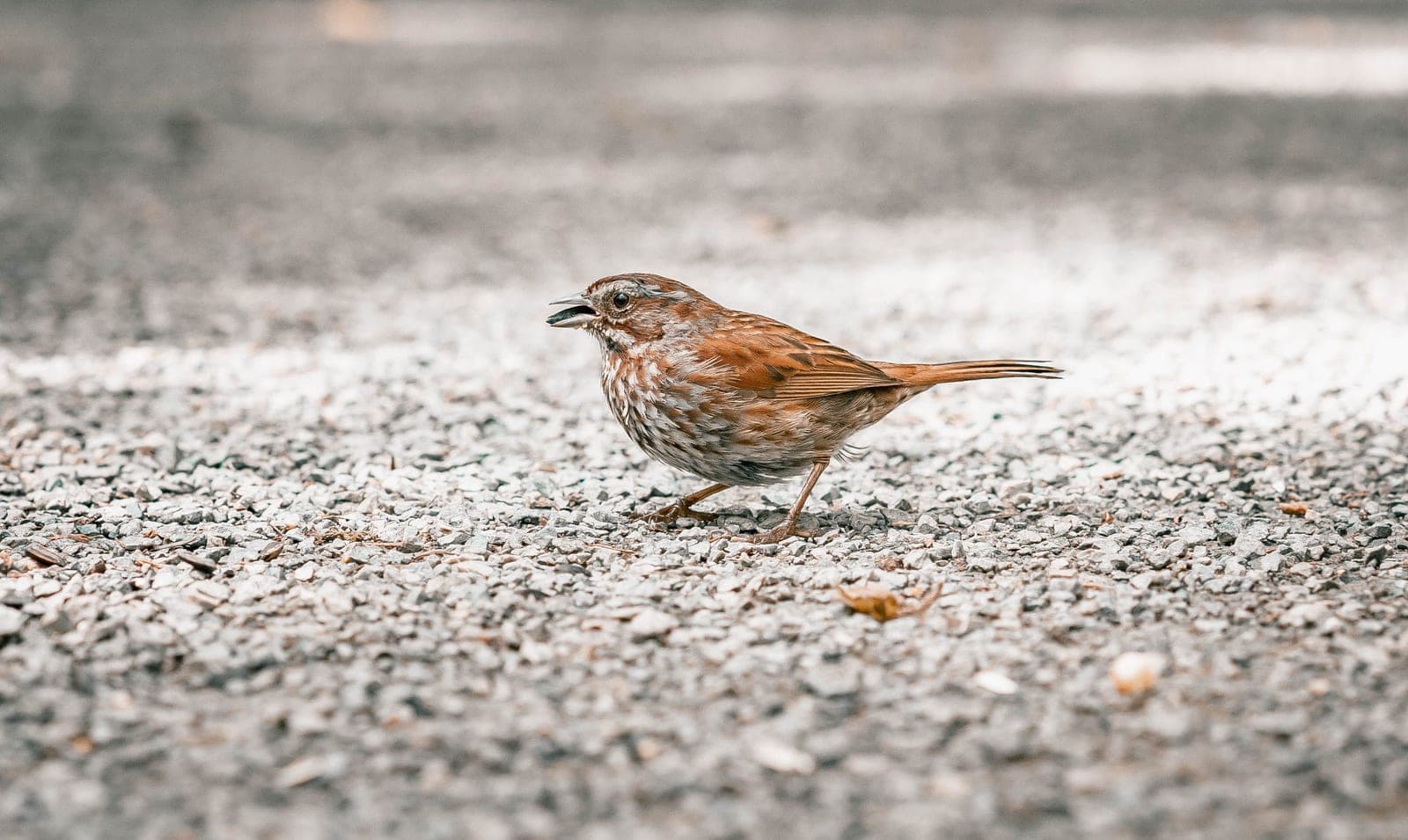
Birds have no teeth: they grind food in the gizzard using hard particles they swallow — sand, pebbles, ground shell. In deep snow that supply is buried, which is the honest case for putting some out. Buy insoluble crushed granite, offered in a clean dish of its own, and expect birds to take almost none of it. Oyster shell is a different product — soluble, for calcium, and the published reason for it is egg laying, which is a spring argument.
Winter Perch is funded by affiliate commission. If you buy through a link on this page we may earn a commission at no extra cost to you, and it never decides a ranking. Full disclosure · how we pick.
Quick picks
Ranked, with the trade-off named. Tap a row for the full write-up; the price button goes straight to Amazon.
| # | Product | Best for | Price |
|---|---|---|---|
| 1 |  Country Heritage Insoluble Chick Grit, 5 lbChick grit rather than poultry grit — crushed finer because it is meant for small birds, which is the closest thing on the shelf to a songbird product. | Smaller particles, which is what songbirds need | Check price on Amazon |
| 2 |  Fowl Provisions Crushed Granite Grit, 6 lbStated as 100 percent insoluble crushed granite with no additives — the only bag here that is just the thing you came for. | Granite and nothing else | Check price on Amazon |
| 3 |  Manna Pro Chicken Grit with Probiotics, 5 lbInsoluble crushed granite from a name you can look up, for less than a bag of sunflower — the sensible way to find out whether anything touches it. | The cheapest way to try it | Check price on Amazon |
| 4 |  Morning Bird Oyster Shell for Birds, 1.5 lbCrushed oyster shell sold as a calcium supplement — useful, but the published reason to offer it is egg laying, so this is the bag to buy in March rather than January. | Calcium, which is a spring argument rather than a winter one | Check price on Amazon |
| 5 |  MIXXIDEA Ground Bird Feeder TrayThe same metal-mesh idea at a lower price — drains properly, and that is most of what a ground tray has to do. | The cheapest way to add ground feeding | Check price on Amazon |
#ad how we are funded · no live price right now
The picks in full
Top pick Smaller particles, which is what songbirds need
Country Heritage Insoluble Chick Grit, 5 lb
Chick grit rather than poultry grit — crushed finer because it is meant for small birds, which is the closest thing on the shelf to a songbird product.
Specifications
- Weight
- 5 lb
- Type
- Insoluble crushed granite
- Grade
- Chick grit — crushed finer than grower or poultry grades
- Intended for
- Chicks, chickens and ducks
- Particle size
- Not published as a measurement
Trade-offs
- Chick grade is the finer crush, and a chickadee is far smaller than a chicken
- Insoluble granite with no probiotic additive in the name
- Five pounds at a sensible price
- The grade distinction is on the bag, which is more than most grit sellers tell you
- Still only a grade name — "chick" is not a measurement, and no figure is published
- Costs more than the Manna Pro bag for the same weight
- Country Heritage publishes little product documentation of any kind
- Sold for poultry, like everything in this category
Who it is forSomeone who has decided to offer grit and wants the finest crush they can buy off a normal shelf.
Skip it ifSkip it if your ground feeders are mostly jays and doves. Those are big enough that the ordinary poultry grade suits them and costs less.
#ad how we are funded · no live price right now
No. 2 Granite and nothing else
Fowl Provisions Crushed Granite Grit, 6 lb
Stated as 100 percent insoluble crushed granite with no additives — the only bag here that is just the thing you came for.
Specifications
- Weight
- 6 lb
- Type
- Stated 100% insoluble crushed granite
- Additives
- None stated; listed as non-GMO
- Intended for
- Chickens, ducks, quail, turkey, geese and similar
- Feeding rate
- 1 to 2 tablespoons per bird per day (the seller's figure, for poultry)
- Particle size
- Not published as a measurement
Trade-offs
- No probiotics, no mineral blend — granite is the whole ingredient list
- The cleanest match to what the guidance actually describes: a hard, insoluble particle
- Six pounds is more than a backyard will get through in several winters
- The seller states the insoluble point explicitly rather than leaving you to infer it
- The most expensive of the three granite bags here
- The feeding rate on the listing is for poultry and tells you nothing useful about wild birds, which help themselves
- The claim that granite will not dissolve in crop acids is the seller's own wording, not an independent test
- No particle size published, same as every other grit on this page
Who it is forThe reader who wants the material and none of the poultry-keeping extras bundled around it.
Skip it ifSkip it if you are only trying the idea. Buy the cheap Manna Pro bag first and upgrade if your birds actually use it.
#ad how we are funded · no live price right now
No. 3 The cheapest way to try it
Manna Pro Chicken Grit with Probiotics, 5 lb
Insoluble crushed granite from a name you can look up, for less than a bag of sunflower — the sensible way to find out whether anything touches it.
Specifications
- Weight
- 5 lb
- Type
- Insoluble crushed granite
- Other ingredients
- Dried lactobacillus, enterococcus and pediococcus plus fermentation products (the probiotics)
- Particle size
- Not published by Manna Pro
- Intended for
- Poultry — there is no wild-bird version of this product
Trade-offs
- Insoluble granite, which is the material that actually does the grinding
- Cheap enough that a bag you barely use is not a loss
- A real brand with retail distribution rather than an anonymous bag
- Five pounds will outlast several winters at the rate wild birds take it
- The probiotics are there for chickens — a wild bird gets no documented benefit and you are paying for the additive
- Manna Pro publishes no particle size, which is the one spec that would tell you whether it suits a chickadee or a jay
- Manna Pro sells more than one grit under similar names, so check the bag you are actually ordering
- Marketed and sized for poultry throughout
Who it is forSomeone testing whether their birds take grit at all, who does not want to spend much to find out.
Skip it ifSkip it if you want granite and nothing else. The Fowl Provisions bag is 100 percent crushed granite with no additives, which is the cleaner purchase for a wild bird.
#ad how we are funded · no live price right now
No. 4 Calcium, which is a spring argument rather than a winter one
Morning Bird Oyster Shell for Birds, 1.5 lb
Crushed oyster shell sold as a calcium supplement — useful, but the published reason to offer it is egg laying, so this is the bag to buy in March rather than January.
Specifications
- Weight
- 1.5 lb
- Material
- Crushed oyster shell
- Function
- Calcium supplement — soluble, so it dissolves rather than grinding
- Sourcing
- Stated sustainably harvested
- Particle size
- Not published as a measurement
Trade-offs
- Actually marketed for birds rather than poultry, which is rare in this category
- A 1.5 lb bag is the right size for something wild birds take in tiny amounts
- Project FeederWatch names ground oyster shell among the materials birds swallow
- Doubles as the calcium source that matters once laying starts
- Soluble, so it is a poor substitute for granite if grinding is what you are trying to provide
- The published calcium case is about egg laying — that is a breeding-season need, not a midwinter one
- No particle size published
- Morning Bird also sells a poultry grit that is a mineral blend, which is a different product under a similar name
Who it is forSomeone setting up for the whole year who wants the calcium source on hand before the breeding season.
Skip it ifSkip it if your question is purely about winter digestion. That is a job for insoluble granite, and oyster shell dissolves.
#ad how we are funded · no live price right now
Where these specs came from
- Morning Bird oyster shell for birds, 1.5 lb, natural calcium supplement — manufacturer listing, Amazon.com (retrieved 2026-10-31)
- Project FeederWatch (Cornell Lab of Ornithology) — Food types: birds swallow sand, pebbles, ground eggshells and ground oyster shells to help the gizzard grind food; oyster and egg shells are a good source of calcium needed during egg laying
No. 5 The cheapest way to add ground feeding
MIXXIDEA Ground Bird Feeder Tray
The same metal-mesh idea at a lower price — drains properly, and that is most of what a ground tray has to do.
Specifications
- Base
- Mesh wire — drains, keeps seed dry
- Material
- Metal
- Targets
- Juncos, doves, sparrows, squirrels
Trade-offs
- Drains, which is the one non-negotiable feature of a ground tray
- Cheap enough to buy two and try both ends of the yard
- Nothing to break — it is a tray
- Lighter than the Gray Bunny, so more prone to shifting in wind
- No stated dimensions in the listing detail, so match it to your space carefully
- Same cat and snow caveats as any ground feeder
Who it is forAdding ground feeding cheaply, or running a second tray in a big yard.
Skip it ifSkip it in an exposed windy yard. A light tray with no anti-tip bars ends up upside down, and you will be picking seed out of the grass.
#ad how we are funded · no live price right now
What grit actually does
Project FeederWatch puts the mechanism plainly: birds lack teeth, so food is ground in the gizzard, and they swallow small hard particles — sand, pebbles, ground eggshells, ground oyster shells — to do the grinding. The stone is the mill.
That matters most for the birds eating hard, dry seed, which in winter is most of the ones at your feeder. A chickadee hammering a sunflower kernel open is doing mechanical work outside its body; what goes down still has to be broken up inside it.
The winter case, stated honestly
Birds normally pick up grit from bare ground: gravel paths, roadside shoulders, stream edges, anywhere small stone is exposed. Snow cover and frozen ground take that away, and that is the entire winter argument for offering some.
Here is where we are going to be careful, because this category is not. The explicit "provide grit through the winter" guidance we could find is written for chickens, not wild birds — the University of Minnesota Extension recommends free access to poultry grit through the winter months because snow limits foraging. The reasoning transfers cleanly enough to be worth acting on. It is not the same as a study of wild birds, and we are not going to present it as one.
What we can say without stretching: the mechanism is real and published, the seasonal loss of supply is obvious, the cost of offering grit is trivial, and there is no plausible harm in a clean dish of granite. That is a reasonable basis for doing it. It is not a basis for claiming your birds need rescuing.
Grit and calcium are two different products
This is the distinction the shelf blurs, and getting it wrong is the most common way to buy the wrong bag.
| Insoluble grit | Oyster shell | |
|---|---|---|
| Material | Crushed granite (or quartz) | Crushed oyster shell |
| What it does | Grinds food in the gizzard | Dissolves and supplies calcium |
| Stays in the gizzard | Yes — that is the point | No, it breaks down |
| Published reason to offer it | Digestion | Calcium for egg laying |
| Season that argues for it | Winter, when stone is under snow | Spring, when birds are laying |
Project FeederWatch names both among the particles birds swallow, and notes that oyster and egg shells are a good source of the calcium birds need during egg laying. That is a breeding-season need. If your question is winter digestion, the answer is granite — the bags label it insoluble precisely because it must not dissolve.
Eggshells, and the step people skip
Saved eggshell is the free version, and All About Birds describes it as an excellent source of both grit and calcium. There is a real safety step attached to it: chicken eggs may carry salmonella, so the shells have to be heat-treated before they go outside.
The two published methods differ slightly and we are printing both rather than averaging them. All About Birds: bake unboiled shells for 20 minutes at 250 degrees F, let them cool, then crush to pieces smaller than a dime. Audubon: about 10 minutes at roughly 250 degrees F, enough to dry the shells without browning them. Either way the sequence is bake, cool, crush.
Audubon notes crushed shell can be mixed into seed in a tray or scattered on open ground. We would keep it in its own dish for the same reason we would keep bought grit separate, which is the next section.
How to offer it
- In a dish of its own, not mixed into the seed you refill. All About Birds warns that loose scraps spoil and draw starlings, house sparrows and rodents — a dedicated clean dispenser avoids that.
- A small amount. Birds take grit in quantities that look like nothing. A handful lasts.
- Somewhere that drains and stays visible. Grit under snow is the problem you are solving, so a dish that fills with snow has solved nothing. A low tray that you can brush off works.
- Keep it clean, on the same schedule as everything else — cleaning feeders and baths covers the routine.
- Near the ground feeders. Sparrows, juncos and doves are the birds most obviously working stone surfaces already.
The specification nobody publishes
Every bag on this page is sold for poultry, and not one of them publishes a particle size. That is the spec that would actually matter here, because the gap between a chicken and a chickadee is the whole question — a particle sized for a hen is not obviously right for a bird that weighs half an ounce.
The closest thing to a useful signal is the grade name: chick grit is crushed finer than grower or poultry grit, because it is intended for smaller birds. That is a relative statement rather than a measurement, and we have recorded it as one in the spec tables rather than converting it into a number nobody published.
It is also worth saying plainly that there is no wild-bird grit product in any normal sense. You are buying poultry supplies and using them sensibly, which is fine, but it means the packaging is answering somebody else's question.
What we would skip
What we would skip
Oyster shell, if what you want is winter digestion
It is soluble — it dissolves rather than grinding, which is the opposite of what a gizzard stone is for. The published case for oyster shell is calcium for egg laying, which is a spring argument. Buy granite for the winter question.
Untreated eggshells
All About Birds warns that chicken eggs may harbor salmonella. Bake the shells first — 20 minutes at 250 degrees F per All About Birds, or about 10 minutes per Audubon — then cool and crush. The baking step is not optional.
Mixing grit into the seed you put out
It ends up scattered, spoiled or pushed aside, and All About Birds notes that loose material draws starlings, house sparrows and rodents. A separate clean dish is the whole technique.
Buying a big sack
Birds take grit in tiny amounts. Five or six pounds is already several winters' worth for a backyard, and a 50 lb bag is a storage problem you bought for no reason.
Expecting it to change what you see at the feeder
This is not a food and it will not bring birds in. If the dish looks untouched, that is the normal outcome. Judge it on reasoning rather than on results you cannot observe.
Where it fits
Grit is a footnote to winter feeding, not a pillar of it. Fat and calories are what decide whether a small bird survives a long night — suet and black oil sunflower do far more than a dish of stone ever will, and what to feed birds in winter sets the priorities.
Offer grit because it costs almost nothing and the reasoning holds, not because you have been told the birds are in trouble without it. That is the honest size of this one.
Questions people actually ask
- Do backyard birds need grit in winter?
- They need grit year-round — birds have no teeth and grind food in the gizzard with swallowed particles. Winter is when the supply is harder to find, because snow and frozen ground cover the gravel and sand they normally pick up. Offering some is cheap and reasonable; it is not a rescue.
- What kind of grit should I put out for birds?
- Insoluble crushed granite, sold as poultry or chick grit. Chick grade is crushed finer, which suits smaller birds. No maker publishes an actual particle size, so the grade name is the best signal available.
- Is oyster shell the same as grit?
- No. Oyster shell is soluble — it dissolves and supplies calcium rather than staying in the gizzard to grind. Project FeederWatch ties the calcium benefit to egg laying, so oyster shell is a breeding-season offering rather than a winter one.
- Can I give birds eggshells?
- Yes, but bake them first. All About Birds warns chicken eggs may carry salmonella and suggests 20 minutes at 250 degrees F; Audubon suggests about 10 minutes at the same temperature. Cool them, then crush to pieces smaller than a dime.
- How much grit should I put out?
- Very little. Birds take it in tiny quantities and infrequently, so a handful in a small dish lasts a long time. A 5 lb bag is several winters' worth for one backyard.
- Where should I put grit out?
- In a clean dish of its own, near where ground feeders work, somewhere you can brush snow off. Do not mix it into seed — loose material spoils and attracts starlings, house sparrows and rodents.
Sources
- Project FeederWatch (Cornell Lab of Ornithology) — Food types: birds lack teeth and grind food in the gizzard using swallowed sand, pebbles, ground eggshells and ground oyster shells; oyster and egg shells supply calcium needed during egg laying
- All About Birds (Cornell Lab of Ornithology) — About suet, mealworms and other bird foods: eggshells as grit and calcium, the salmonella caution, baking 20 minutes at 250 F, and the warning that loose scraps attract starlings, house sparrows and rodents
- Audubon — Give nesting birds a calcium boost by saving your leftover eggshells: baking at about 250 F for roughly 10 minutes, and offering crushed shell in a tray or on open ground
- University of Minnesota Extension — Caring for chickens in cold weather: snow cover limits foraging for natural grit, so free access to poultry grit is recommended through the winter months (guidance written for chickens)
Read next
- What to Feed Birds in Winter
The winter list ordered by fat content, what each food reaches, and the two purchases that cover almost everything.
- Black Oil Sunflower Seed: Why It Is the Default
Black oil against striped and hulled sunflower, why the thin shell decides it, and which bag size is genuinely cheapest.
- The Best Platform and Ground Feeders
Ground trays and platform feeders ranked on drainage, stability and how they behave after a snowfall.
- Cleaning Bird Feeders and Baths in Winter
The winter cleaning schedule, the bleach-versus-enzyme question answered plainly, and the brushes and cleaners that make the job quick enough to actually do.
- What Not to Feed Birds in Winter
The genuinely harmful list — bread, salt, mold, desiccated coconut — with the reason for each and what to use instead.