Winter feeding / Guide
Millet for Birds: The White and Red Distinction
This site calls millet filler in a dozen places, and that is only true of one of them. White proso is a real food for the third of a winter yard that feeds on the ground.
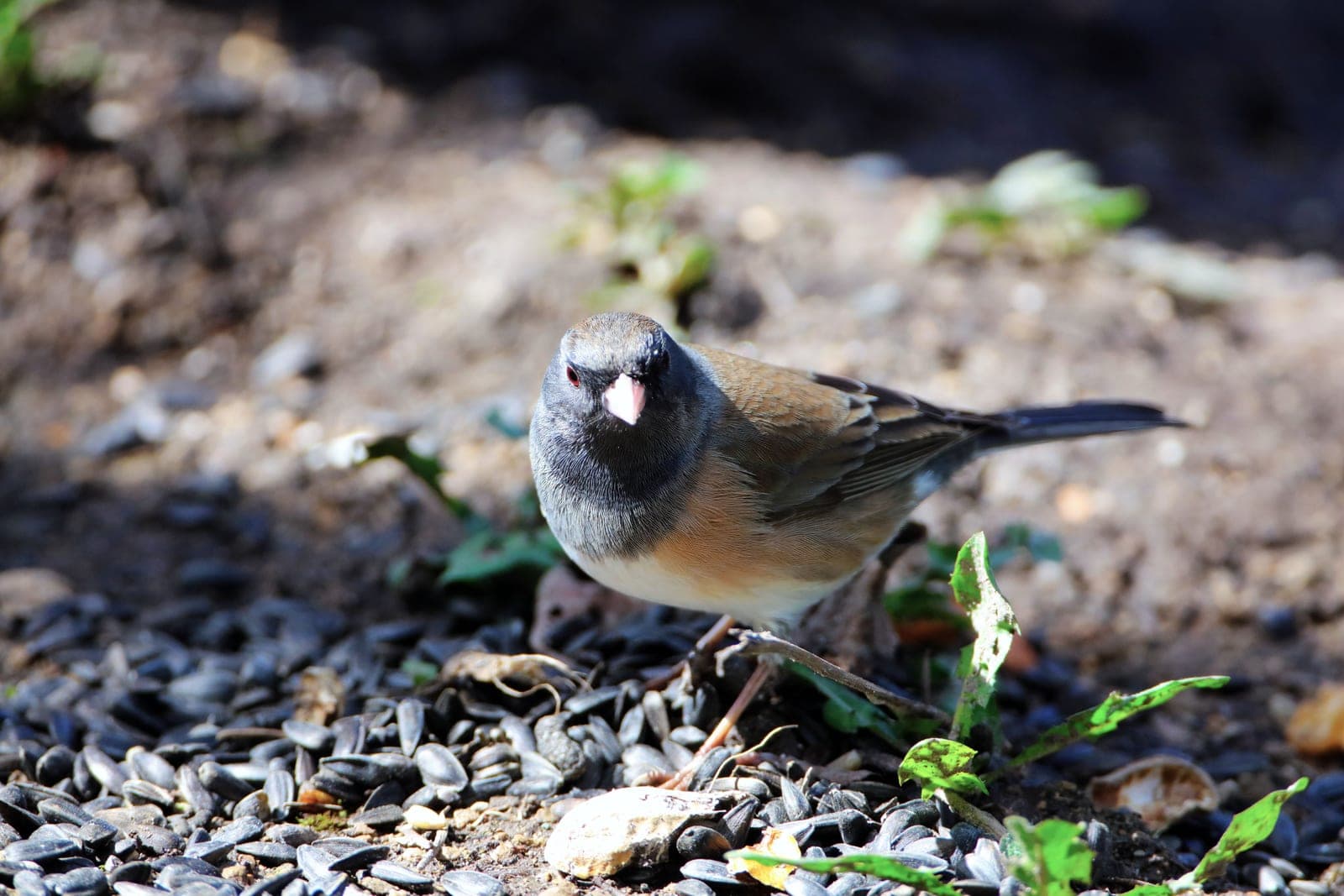
White proso millet and red millet are different seeds sold under the same word. White proso is genuinely eaten by juncos, native sparrows, doves and towhees. Red millet is the cheap padding in bargain mixes that birds kick aside. Buy straight white millet, offer it in a low tray, not a tube feeder, and stop if house sparrows take over.
Winter Perch is funded by affiliate commission. If you buy through a link on this page we may earn a commission at no extra cost to you, and it never decides a ranking. Full disclosure · how we pick.
Quick picks
Ranked, with the trade-off named. Tap a row for the full write-up; the price button goes straight to Amazon.
| # | Product | Best for | Price |
|---|---|---|---|
| 1 |  CountryMax White Proso Millet, 10 lbStraight white proso millet at the size most yards actually get through in a season. Nothing clever about it, which is the point — you are buying one seed rather than a blend built around it. | The sensible default bag | $19.99 · See it on Amazon |
| 2 |  Desert Valley White Millet, 3 lb resealableThree pounds, resealable. The right first purchase in a category where the honest answer is that it either suits your yard or brings you a sparrow problem. | Finding out whether millet works in your yard | $19.95 · See it on Amazon |
| 3 |  Desert Valley White Millet, 10 lb resealableThe same seed in a resealable bag, described as triple cleaned. Cleaning matters more with millet than with sunflower, because the dust and chaff in a cheap sack is what ends up on the ground uneaten. | A resealable bag and a cleaning claim | $27.95 · See it on Amazon |
| 4 |  Shafer Seed 84075 White Proso Millet, 50 lbFifty pounds from an established seed house. Only worth buying if you genuinely have the birds and the storage, and it is the cheapest millet per pound by a distance if you do. | A dove or junco flock that empties a tray daily | $64.99 · See it on Amazon |
| 5 |  MIXXIDEA Ground Bird Feeder TrayThe same metal-mesh idea at a lower price — drains properly, and that is most of what a ground tray has to do. | The cheapest way to add ground feeding | $12.34 · See it on Amazon |
| 6 |  Wagner's 52023 Black Oil Sunflower Seed, 5 lbThe small bag. Costs the most per pound and is the right purchase for a single small feeder, because seed that goes stale is not cheap at any price. | Balconies, small tubes, and finding out whether you will keep this up | $10.98 · See it on Amazon |
#ad how we are funded · price as of September 26, 2026
The picks in full
Top pick The sensible default bag
CountryMax White Proso Millet, 10 lb
Straight white proso millet at the size most yards actually get through in a season. Nothing clever about it, which is the point — you are buying one seed rather than a blend built around it.
Specifications
- Size
- 10 lb
- Contents
- Straight white proso millet
Trade-offs
- Straight millet, so you control where it goes instead of paying sunflower prices for a bag padded with it
- Ten pounds is a realistic season for a yard with a junco and sparrow flock
- Cheap per pound, which is the whole argument for feeding the ground layer at all
- Small, hard seed that stays usable longer than oily seed does
- Useless in a tube feeder — millet in a hanging feeder gets flicked out by birds looking for sunflower
- Draws house sparrows, which is the reason many people stop offering it
- Plain paper sack rather than a resealable bag, so it needs decanting into a sealed bin
- Low in fat compared with sunflower, so it is a supplement rather than the main winter food
Who it is forA yard with ground-feeding birds and a low tray to put it in.
Skip it ifSkip it if house sparrows already dominate your feeders. Millet on the ground is what keeps a sparrow flock in a yard.
#ad how we are funded · price as of September 26, 2026
No. 2 Finding out whether millet works in your yard
Desert Valley White Millet, 3 lb resealable
Three pounds, resealable. The right first purchase in a category where the honest answer is that it either suits your yard or brings you a sparrow problem.
Specifications
- Size
- 3 lb
- Packaging
- Resealable bag
- Contents
- White proso millet
Trade-offs
- Small enough that a failed experiment costs very little
- Enough to fill a ground tray several times, which is all the test needs
- Resealable, so the remainder does not need decanting
- Much the worst value per pound on this page — you are paying for the trial, not the seed
- Empties in days once doves find it
- Same sparrow risk as any millet, just at a smaller scale
Who it is forA first trial of millet before committing to a sack.
Skip it ifSkip it if juncos and sparrows already feed on spilled seed under your feeders. You have your answer; buy the 10 lb bag.
#ad how we are funded · price as of September 26, 2026
No. 3 A resealable bag and a cleaning claim
Desert Valley White Millet, 10 lb resealable
The same seed in a resealable bag, described as triple cleaned. Cleaning matters more with millet than with sunflower, because the dust and chaff in a cheap sack is what ends up on the ground uneaten.
Specifications
- Size
- 10 lb
- Packaging
- Resealable bag
- Processing
- Triple cleaned, per the listing
- Contents
- White proso millet
Trade-offs
- Resealable packaging is genuinely useful for a seed that is fed in small amounts over months
- A stated cleaning process, which most millet listings do not bother to claim
- Less chaff means less of what you buy ending up as debris under the feeder
- Same ground-feeder appeal as any white proso millet
- Costs noticeably more per pound than the plain 10 lb sack for packaging and a claim you cannot verify yourself
- A resealable bag is still not an airtight bin — decant it anyway if it is going in a garage
- Same sparrow problem as all millet
- Same poor fat content as all millet
Who it is forSomeone feeding millet in small amounts who would rather not decant a paper sack.
Skip it ifSkip it if you already own a sealed storage bin. You are paying a premium for packaging that the bin replaces.
#ad how we are funded · price as of September 26, 2026
No. 4 A dove or junco flock that empties a tray daily
Shafer Seed 84075 White Proso Millet, 50 lb
Fifty pounds from an established seed house. Only worth buying if you genuinely have the birds and the storage, and it is the cheapest millet per pound by a distance if you do.
Specifications
- Size
- 50 lb
- Contents
- White proso millet
- Model
- 84075
Trade-offs
- By far the lowest cost per pound here, which matters when a dove flock is the thing eating it
- Shafer is a seed company rather than a repackager
- One purchase covers a whole winter for most yards running a ground tray
- Fifty pounds is a lot of seed to store, and millet stored badly goes musty like anything else
- A sack this size is a commitment to a food that only feeds the ground layer
- Heavy and awkward to handle and decant
- If sparrows take over, you are left with most of a 50 lb sack you do not want to use
Who it is forAn established ground-feeding flock, with a sealed bin to store it in.
Skip it ifSkip it unless you have already run millet for a season and know it works in your yard. Start with a small bag and find out.
#ad how we are funded · price as of September 26, 2026
No. 5 The cheapest way to add ground feeding
MIXXIDEA Ground Bird Feeder Tray
The same metal-mesh idea at a lower price — drains properly, and that is most of what a ground tray has to do.
Specifications
- Base
- Mesh wire — drains, keeps seed dry
- Material
- Metal
- Targets
- Juncos, doves, sparrows, squirrels
Trade-offs
- Drains, which is the one non-negotiable feature of a ground tray
- Cheap enough to buy two and try both ends of the yard
- Nothing to break — it is a tray
- Lighter than the Gray Bunny, so more prone to shifting in wind
- No stated dimensions in the listing detail, so match it to your space carefully
- Same cat and snow caveats as any ground feeder
Who it is forAdding ground feeding cheaply, or running a second tray in a big yard.
Skip it ifSkip it in an exposed windy yard. A light tray with no anti-tip bars ends up upside down, and you will be picking seed out of the grass.
#ad how we are funded · price as of September 26, 2026
No. 6 Balconies, small tubes, and finding out whether you will keep this up
Wagner's 52023 Black Oil Sunflower Seed, 5 lb
The small bag. Costs the most per pound and is the right purchase for a single small feeder, because seed that goes stale is not cheap at any price.
Specifications
- Type
- 100% black oil sunflower
- Bag
- 5 lb
- Shell
- Thin
- Origin
- Made in USA
Trade-offs
- Gets used before it stales in a low-traffic yard or a balcony feeder
- No storage problem — it fits in a cupboard
- The sensible way to test whether feeding birds is something you will actually keep doing
- By far the most expensive per pound of the Wagner's sizes
- A busy yard will empty it in under two weeks
Who it is forA single small feeder, a balcony, or a first bag.
Skip it ifSkip it once you know you are committed and have dry storage. You are paying a large premium per pound for a bag size you have outgrown.
#ad how we are funded · price as of September 26, 2026
Why this site has been calling millet filler
Fair question, because it has — on the seed roundup, the cracked corn page, the balcony page and several others. The shorthand is accurate about the thing those pages are describing, and it is worth being precise now.
When a bargain mix is padded out, the padding is usually milo, wheat, oats and red millet. Those are the ingredients that get flicked out of a hanging feeder and left to rot on the ground, and they are why the seed roundup tells you to turn the bag over and read the first few ingredients. White proso millet is not in that group. It is in most of the same cheap bags, which is why it gets tarred with them, but a ground-feeding bird will clear it.
| White proso millet | Red millet | |
|---|---|---|
| Appearance | Small, round, pale cream | Small, round, reddish-brown |
| Eaten by ground feeders | Readily | Reluctantly, if at all |
| Typical use | A real ingredient, or sold straight | Filler in bargain mixes |
| In a tube feeder | Flicked out | Flicked out |
| Worth buying straight | Yes, for ground feeders | No |
Cornell's own seed guide lists white proso millet as a favorite of ground-feeding birds, and red millet as the less palatable one that turns up in lower-quality mixes. If a bag just says 'millet', assume red until the label says proso.
Which birds actually want it
This is a narrow list and it matters, because it decides whether the seed is worth buying at all.
- Dark-eyed juncos — the classic winter ground feeder across most of the northern US.
- Native sparrows — white-throated, white-crowned, tree, song, fox.
- Mourning doves, which will clear a tray of it faster than anything else on the list.
- Towhees, where you have them.
- Cardinals, which take it alongside sunflower and safflower.
- House sparrows, unfortunately, which is the whole problem with the category and is covered below.
What is not on that list is most of what a hanging feeder serves: chickadees, titmice, nuthatches, woodpeckers and finches largely ignore millet. If your yard is all tube-feeder birds, millet will sit untouched — and that is the commonest reason people conclude it is filler.
How we judged these
How we picked
- White proso specified on the label, since a bag that just says millet is usually the red filler.
- Straight seed over blends, because the whole point is controlling where the millet goes.
- Bag size matched to a realistic trial, given that whether millet works depends on which birds a yard already holds.
- Cleaning and chaff, which matter more here than with sunflower — dust is what ends up uneaten on the ground.
- Paired with a tray rather than a tube, since format is what decides whether millet is eaten or flicked out.
- Weighed honestly against sunflower and suet, which are above it in the winter order.
- Live price and availability, refreshed daily.
We have not tested any of these. What we did instead: read the manufacturers’ own listings, compiled the published specifications, computed the running cost at a cited electricity rate, and refreshed the prices daily. The full method is published.
The house sparrow problem
The honest reason many experienced feeders refuse to put millet out.
House sparrows are an introduced species, they are aggressive at feeders, and millet is among their favorite foods. Put a tray of white millet out in a suburban yard and there is a real chance you are running a house sparrow feeding station within two weeks, with the native sparrows and juncos you wanted pushed to the edges.
- Test small. Three pounds tells you within two weeks which birds turn up.
- Watch what arrives in the first week, not the first day. Sparrows find new food fast; juncos are slower.
- Stop if sparrows dominate. There is no clever fix — millet is what they want, and removing it is the fix.
- Straight black oil sunflower helps, because sparrows take it less enthusiastically than they take millet. The sunflower page covers why it is the correct default anyway.
How to offer it
Millet fails in a hanging feeder and works in a tray, and that single fact explains most of its bad reputation.
- Use a low tray or platform, not a tube. Birds at a tube feeder are hunting for sunflower and will flick millet out to get at it, which is exactly the waste the filler complaint describes. Platform and ground feeders covers the drainage that matters.
- Keep it separate from the sunflower. A tray of millet at a distance from the hanging feeders spreads the birds out and reduces crowding, which is worth something on its own.
- Put out a day's worth. Millet on wet ground overnight is the same rodent invitation cracked corn is, at a slightly lower intensity.
- Clear and refill rather than topping up, because old millet under fresh millet is where damp and mold start.
- Store it sealed. Millet is hard and small and keeps better than oily seed, but a paper sack in a garage is still a mouse problem — sealed storage applies here too.
Where millet sits against everything else
Honestly: low, and it is a supplement rather than a staple.
Millet is a starchy seed. Fat carries roughly twice the energy per gram of carbohydrate, which is why suet and black oil sunflower are what a bird facing a sub-freezing night actually needs. Millet is cheap calories for birds that are already on the ground — genuinely useful for that, and not a substitute for the two foods above it in the winter feeding order.
One more practical note: millet sprouts. Uneaten seed under a feeder will germinate in spring, and millet is one of the more visible offenders in a lawn. A tray rather than bare ground largely solves it, and so does putting out less.
What we would skip
What we would skip
Any bag that just says millet
If the label does not say white proso, assume it is red millet — the less palatable one used as padding. The word alone tells you almost nothing about whether birds will eat it.
Millet in a tube or hanging feeder
Birds at a tube feeder are looking for sunflower and will flick millet out to reach it. That waste is exactly the behavior that earned millet its filler reputation, and it is a format problem rather than a seed problem.
Cheap mixes bought for their millet content
You are paying a blended price for a bag that is mostly milo, wheat and red millet. Buy straight white millet and straight sunflower and put them in different places.
Millet in a yard already overrun by house sparrows
It is among their favorite foods, and there is no feeder trick that admits juncos and excludes sparrows on the ground. If sparrows dominate, removing the millet is the fix.
A 50 lb sack as a first purchase
Whether millet works depends entirely on which birds your yard holds. Three pounds answers that in two weeks; fifty pounds answers it expensively and leaves you storing the evidence.
Millet as your main winter food
It is starch. Fat carries roughly twice the energy per gram, so suet and black oil sunflower are what a bird needs to get through a freezing night. Millet is a supplement for the ground layer.
Where this fits
Millet is the last seed on this site to get its own page, which is about right for its place in the order. Black oil sunflower is the default, the winter seed roundup covers the blends and what is in them, and cracked corn is the other ground-feeder option with the same rodent caveat.
Questions people actually ask
- Is millet good for birds?
- White proso millet is — it is a favorite of ground-feeding birds such as juncos, native sparrows, doves and towhees. Red millet is a cheap filler that birds largely reject. The two are sold under the same word.
- What is the difference between white and red millet?
- White proso is pale cream and readily eaten by ground feeders; red millet is reddish-brown, less palatable, and used mainly to pad out bargain mixes. If a bag does not say proso, assume red.
- Which birds eat white millet?
- Dark-eyed juncos, native sparrows, mourning doves, towhees and cardinals. Chickadees, titmice, nuthatches, woodpeckers and finches largely ignore it, which is why it sits untouched in a tube feeder.
- Why is millet called filler?
- Because of red millet, and because millet of any kind is wasted in a hanging feeder — birds hunting sunflower flick it out. Offered as straight white proso in a ground tray, it is eaten rather than scattered.
- Does millet attract house sparrows?
- Yes, it is among their favorite foods, and that is the main argument against offering it. Test with a small bag, watch what arrives in the first week, and stop if sparrows dominate — there is no feeder trick that fixes it.
- Will bird seed millet sprout in my lawn?
- Uneaten millet will germinate in spring and is one of the more visible offenders. Using a tray rather than scattering on bare ground, and putting out only what is eaten in a day, largely prevents it.
Sources
Read next
- The Best Bird Seed for Winter
Five winter seeds ranked on usable fat, shell thickness and species reach — plus the cheap mix that is worth avoiding.
- Black Oil Sunflower Seed: Why It Is the Default
Black oil against striped and hulled sunflower, why the thin shell decides it, and which bag size is genuinely cheapest.
- Cracked Corn for Birds: Cheap Calories, Real Problems
Which birds take cracked corn, why it draws rodents faster than anything else, and the ground-feeding rules that make it workable.
- The Best Platform and Ground Feeders
Ground trays and platform feeders ranked on drainage, stability and how they behave after a snowfall.