Winter birding / Roundup
The Best Bird Feeder Cameras for Winter
Ranked on the two things that decide a winter camera: how it handles flat gray light, and how often you will be carrying its battery indoors.
The Bird Buddy Pro Solar is the pick, on sensor (our full review of it goes deeper on capacity and the subscription): a larger sensor with HDR is what separates a usable winter image from a gray smear, and winter light is flat, dim and brief. If you object to subscriptions, the NETVUE Birdfy offers free cloud storage and color night vision at a lower price.
Winter Perch is funded by affiliate commission. If you buy through a link on this page we may earn a commission at no extra cost to you, and it never decides a ranking. Full disclosure · how we pick.
Quick picks
Ranked, with the trade-off named. Tap a row for the full write-up; the price button goes straight to Amazon.
| # | Product | Best for | Price |
|---|---|---|---|
| 1 |  Bird Buddy Pro Solar Smart Feeder with Camera2K video off a larger sensor with HDR, which is the specification that matters in December: winter light is flat, gray and brief. | Watching the feeder from inside on the days you will not go out | $239.99 · See it on Amazon |
| 2 |  NETVUE Birdfy Smart Feeder, 2K AI Camera, SolarThe Birdfy's advantage is what it does not charge you for: free cloud storage on this model, plus color night vision. | Color night vision and free cloud storage | $129.98 · See it on Amazon |
| 3 |  NETVUE Birdfy Smart Feeder, 2K AI Camera (entry model)The entry Birdfy: the same 2K camera and free cloud storage, mains or battery rather than solar, at the lowest price in this group. | The cheapest honest way into feeder cameras | $109.99 · See it on Amazon |
#ad how we are funded · price as of October 15, 2026
The picks in full
Top pick Watching the feeder from inside on the days you will not go out
Bird Buddy Pro Solar Smart Feeder with Camera
2K video off a larger sensor with HDR, which is the specification that matters in December: winter light is flat, gray and brief.
Specifications
- Video
- 2K
- Stills
- 5 MP
- Sensor
- 1/2.7", HDR
- Power
- Solar roof
- Software
- AI species identification
Trade-offs
- The larger sensor and HDR are the difference between a usable and a useless winter image
- The solar roof reduces the number of times you carry a battery indoors at minus five
- Species ID is genuinely good on the common feeder birds
- It gets people watching birds on days nobody goes outside
- Solar charging in a northern December is thin — expect to charge it by hand anyway
- Lithium batteries lose capacity in the cold, and this lives outdoors
- It is a seed feeder first, so it does nothing for suet or water
- Costs several times a good pair of binoculars
Who it is forHouseholds where the feeder is a shared thing, and anyone who cannot get out much.
Skip it ifSkip it if you want to see birds well. A camera shows you one perch; binoculars show you the whole yard, and cost far less.
#ad how we are funded · price as of October 15, 2026
No. 2 Color night vision and free cloud storage
NETVUE Birdfy Smart Feeder, 2K AI Camera, Solar
The Birdfy's advantage is what it does not charge you for: free cloud storage on this model, plus color night vision.
Specifications
- Video
- 2K
- Night vision
- Color
- Power
- Solar
- Storage
- Free cloud storage
- Integration
- Works with Alexa
Trade-offs
- Free cloud storage, where the category standard is a monthly fee
- Color night vision catches the flying squirrels and the occasional owl
- Solar panel, with the same winter caveats as any solar
- Auto-record plus notification means you do not have to watch a stream
- AI identification quality trails Bird Buddy on unusual species
- Winter solar charging is optimistic at northern latitudes
- Another Wi-Fi device at the far end of your yard, where signal is worst
Who it is forAnyone who wants a feeder camera without an ongoing subscription.
Skip it ifSkip it if your Wi-Fi does not reach the feeder. Every feeder camera fails the same way, and it is never the camera's fault.
#ad how we are funded · price as of October 15, 2026
No. 3 The cheapest honest way into feeder cameras
NETVUE Birdfy Smart Feeder, 2K AI Camera (entry model)
The entry Birdfy: the same 2K camera and free cloud storage, mains or battery rather than solar, at the lowest price in this group.
Specifications
- Video
- 2K
- Storage
- Free cloud storage
- Setup
- App-based, works with Alexa
- Power
- Battery or adapter, no solar roof
Trade-offs
- Lowest entry cost of the three cameras here
- The same free cloud storage as the solar model
- Fewer parts to fail than a solar roof in a hard winter
- No solar means carrying the battery indoors to charge, in winter, repeatedly
- Entry model, so the image processing is the weakest of the three
Who it is forTesting whether a feeder camera is something your household will actually use.
Skip it ifSkip it if the feeder is a long walk from the house. Without solar you will be making that walk to swap a battery more often than you think.
#ad how we are funded · price as of October 15, 2026
Why winter is the hard case for these
A feeder camera is a small sensor behind a small lens, sitting outdoors. Both of the things it depends on get worse in winter.
Light. Overcast winter days are flat and dim, and there are fewer hours of them. A small sensor in poor light produces noise, and noise is what makes AI species identification fail as well as making the photo unpleasant. Sensor size and HDR are therefore the specifications that matter most, and they are the ones marketing copy talks about least.
Power. Lithium batteries lose usable capacity in the cold, and a solar roof at northern latitudes in December collects very little — the same limitation applies to nest box cameras, which is one reason they are a spring purchase rather than a winter one. Expect to charge by hand more often than the listing implies — which means walking to the feeder, in winter, to fetch a battery.
What to compare
| Spec | Why it matters in winter | What to look for |
|---|---|---|
| Sensor size and HDR | Flat gray light is the hardest case | The larger sensor, and HDR stated explicitly |
| Power source | Cold kills battery capacity; December sun is thin | Solar helps and does not eliminate hand-charging |
| Subscription | Compounds into more than the hardware cost | Free cloud storage, stated on the listing |
| Wi-Fi range | The feeder is at the far end of the yard | 2.4 GHz, and a realistic look at your own signal |
| Night vision | Catches the animals you never see | Color night vision where available |
The honest limitation
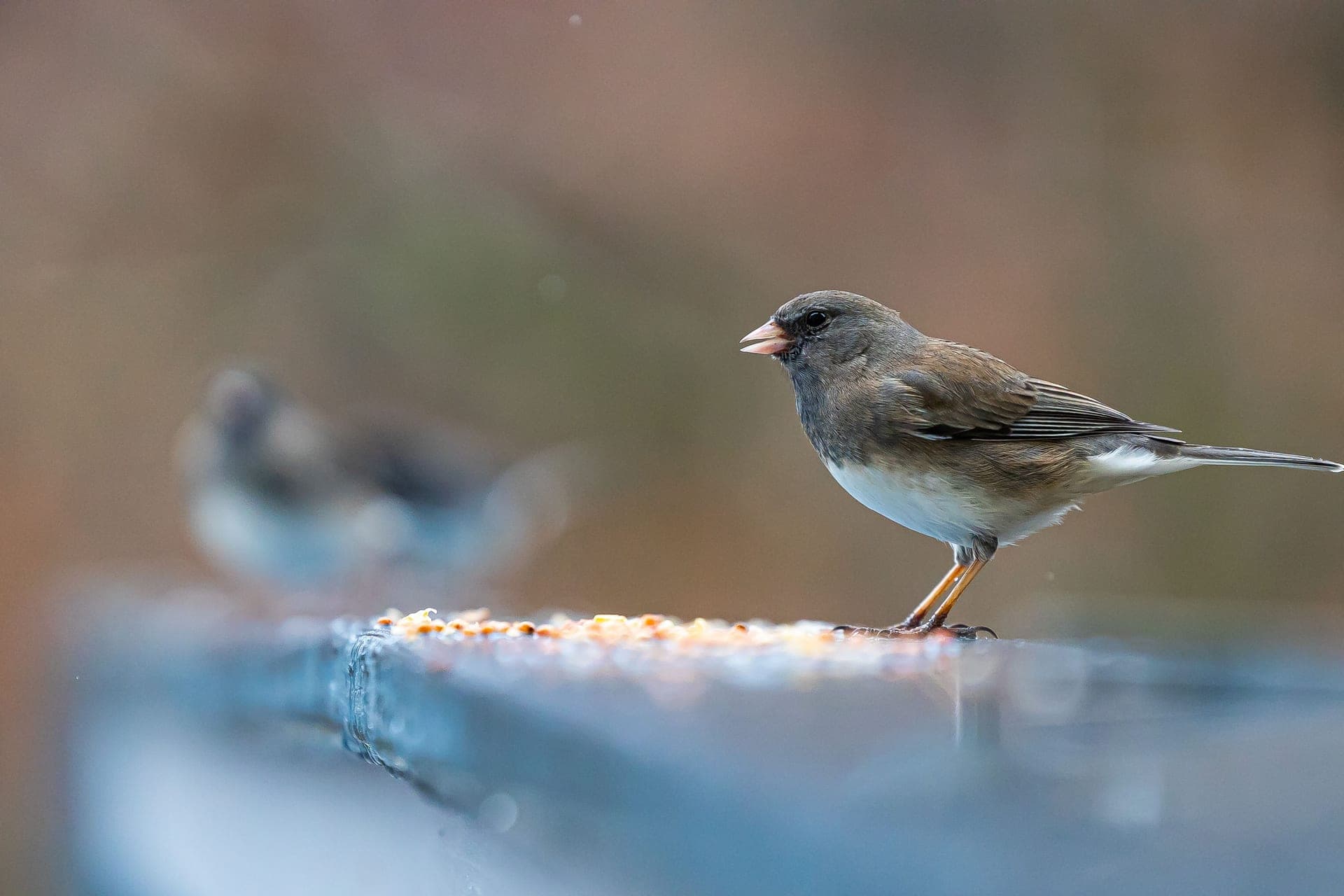
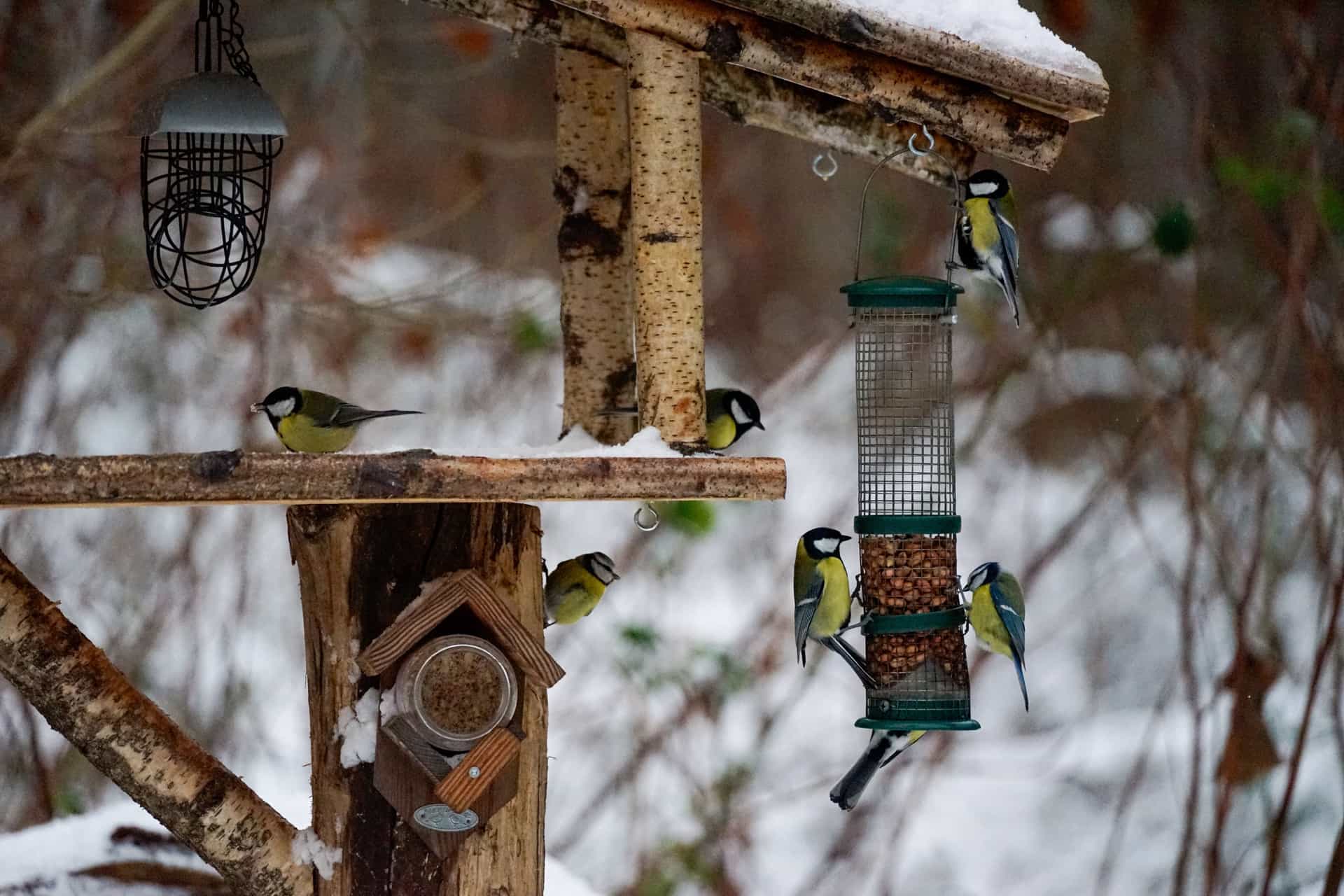
A feeder camera shows you one perch. It is a superb view of that perch and it tells you nothing about the rest of your yard — not the woodpecker on the suet cage, not the juncos on the ground, not the hawk that just cleared the whole feeder.
A pair of binoculars costs less and shows you everything. If your goal is to watch birds well, buy the binoculars first. If your goal is a shared household thing that runs all day whether or not anyone is watching, or you cannot easily get outside, the camera is genuinely the right purchase. The comparison in full.
Where the Wi-Fi fails
Every feeder camera fails the same way, and it is never the camera's fault: the feeder is at the end of the yard, which is where household Wi-Fi is weakest. Before buying, stand at the feeder with your phone and check the signal. If it is marginal in summer with leaves on the trees, it will not improve.
These are 2.4 GHz devices, which helps — 2.4 GHz travels further than 5 GHz. A mesh node or an outdoor access point closer to the yard is the fix, and it is worth budgeting for alongside the camera rather than discovering it afterwards.
Siting a camera feeder
- Face it away from the sun, particularly low winter sun, which will blow out the frame for the best-lit hours of the day.
- Under an overhang if possible, to keep snow off the lens.
- Within Wi-Fi range, checked rather than assumed.
- Reachable in snow, because you will be fetching the battery.
- Not your only feeder. It is a seed feeder with a camera in it, and it does nothing for suet, water or ground feeders.
What we would skip
What we would skip
Any feeder camera with a mandatory AI subscription
The fee compounds into more than the hardware cost within a couple of years, for a feature that is pleasant rather than essential. Free cloud storage exists in this category; buy that instead.
A camera feeder at the edge of your Wi-Fi
This is how every one of these products fails, and it is not a hardware fault. Check the signal at the feeder before you buy, and budget for a mesh node if it is marginal.
A camera feeder as your only feeder
It is a seed feeder with a camera in it. It reaches nothing that clings to suet, nothing that feeds on the ground, and it does not provide water.
How we picked
- Sensor size and HDR first, because winter light is the hardest case these products face.
- Power behavior in cold, including honest treatment of what a solar roof does at northern latitudes in December.
- Subscription cost treated as part of the price.
- Wi-Fi realism, since that is the actual failure mode in the field.
- Live price and availability, refreshed daily.
We have not tested any of these. What we did instead: read the manufacturers’ own listings, compiled the published specifications, computed the running cost at a cited electricity rate, and refreshed the prices daily. The full method is published.
A camera feeder is still a feeder, and the rest of the setup matters: suet for the clinging birds it will not reach, and open water, which draws more winter traffic than any single feeder. What you will actually see.
Questions people actually ask
- Are bird feeder cameras worth it in winter?
- For a household, or for anyone who cannot easily get outside, yes — they run all day and put birds on a screen indoors. As a first purchase for watching birds properly, binoculars cost less and show you the whole yard.
- Do feeder camera solar panels work in winter?
- Partly. Northern December sun is thin and lithium batteries lose capacity in cold, so expect to hand-charge more often than the listing suggests. Solar reduces the number of trips rather than eliminating them.
- Do I need a subscription for a bird feeder camera?
- Not necessarily. Some models include free cloud storage, and a mandatory fee compounds into more than the hardware cost within a couple of years.
- Why does my feeder camera keep disconnecting?
- Almost always Wi-Fi. The feeder is at the far end of the yard, which is where household signal is weakest. Check the signal at the feeder before buying, and consider a mesh node.
- Can a feeder camera identify birds?
- The AI identification is good on common feeder species and less reliable on unusual ones, and it gets worse in the noisy images that flat winter light produces.
Sources
Read next
- Feeder Cameras vs Binoculars: Which to Buy First
One perch all day from indoors versus the whole yard from outside — which to buy first, and the household case that flips it.
- The Best Binoculars for Winter Birding
Why 8x42 and nitrogen purging are the winter answer, and two pairs worth the money — plus the honest note about our keyword data.
- The Best Bird Feeders for Winter
Seed feeders ranked on capacity, roofing and drainage — the specs that decide how often you go out in bad weather.
- Winter Backyard Birds: Who Shows Up, and What Brings Them
The regular winter feeder cast, what each species eats, and the specific feeder or food that brings each one in.