Cold-weather care / Roundup
Stopping Birds Hitting Windows
Nearly everyone who buys decals applies them the two ways that do not work. The fix is free and it is in how you apply them, not in what you buy.
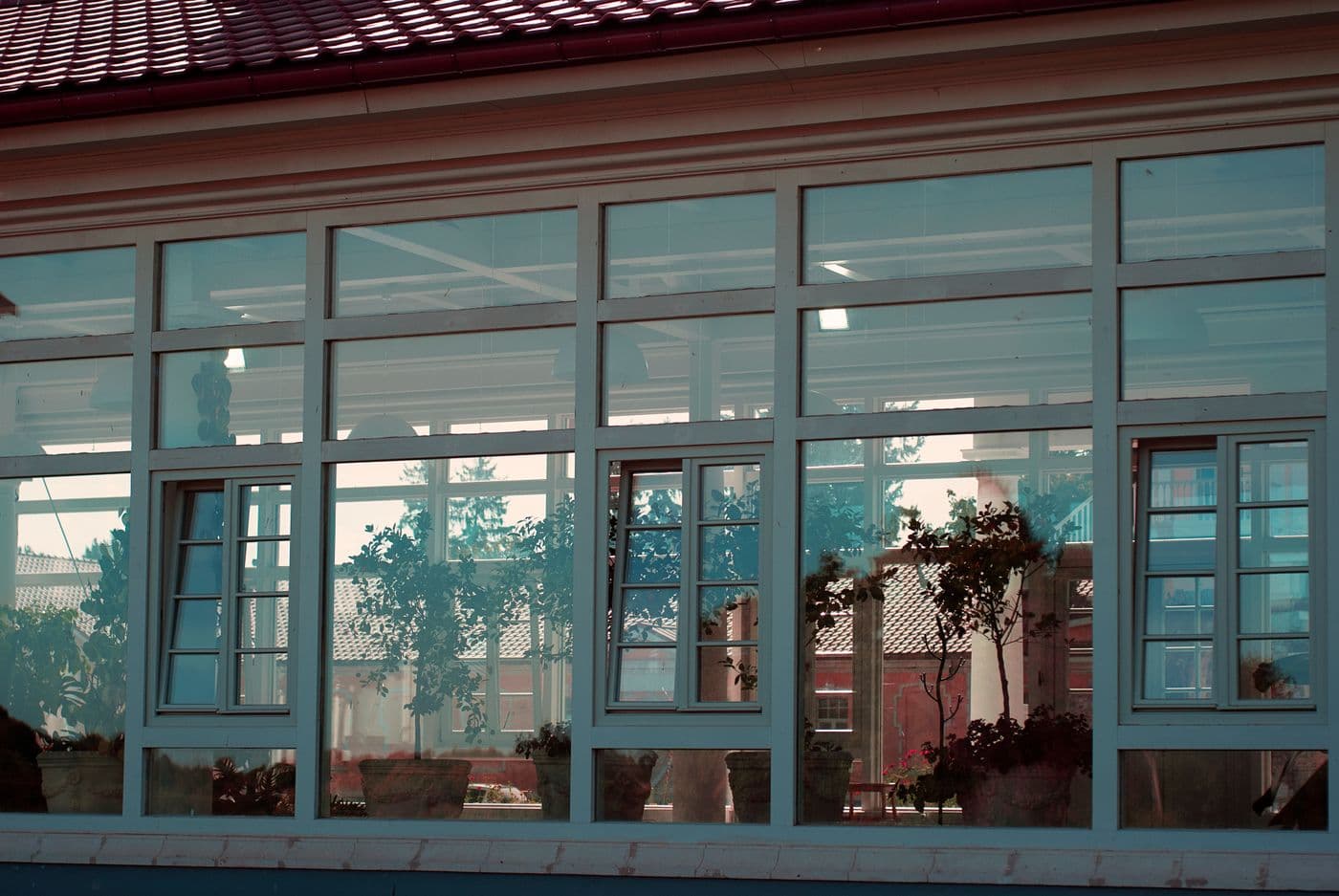
Two rules decide whether anything you buy works, and almost everyone breaks both. First, markers go on the outside of the glass — the American Bird Conservancy says internal placement should be avoided wherever possible, because a strong outside reflection hides anything behind it. Second, patterns need gaps of two inches or less (the "2x2 rule"); wider spacing lets small songbirds fly straight through. A single hawk silhouette on a large pane does close to nothing. Treat the problem windows first — ABC notes that fixing only those often stops almost all collisions.
Winter Perch is funded by affiliate commission. If you buy through a link on this page we may earn a commission at no extra cost to you, and it never decides a ranking. Full disclosure · how we pick.
Quick picks
Ranked, with the trade-off named. Tap a row for the full write-up; the price button goes straight to Amazon.
| # | Product | Best for | Price |
|---|---|---|---|
| 1 |  WindowAlert Modern Dots UV Decals, 30 packThirty dots is enough to actually achieve the spacing the research calls for on a normal window, which is the single thing most people get wrong. Dots also read as a design choice rather than as bird-strike equipment, which is why they stay up. | Getting the spacing right without it looking terrible | $9.95 · See it on Amazon |
| 2 |  Window Clings for Birds, 26 pieceTwenty-six visible clings for the price of a sandwich. Visible is not a drawback here — the evidence for dense visible patterns is better than the evidence for UV-only markers, and these are cheap enough to space properly. | Visible pattern at a low price | $7.99 · See it on Amazon |
| 3 |  WindowAlert Leaf Medley UV DecalsWindowAlert's decals reflect ultraviolet light, which birds see and people largely do not, so the glass stays clear-looking to you. That is the selling point and it is also the catch: the UV coating degrades and the maker says to replace them periodically. | The decal that is least visible to you | $7.95 · See it on Amazon |
| 4 |  Flock of Bird Window Clings, 16 pieceA flock of bird silhouettes reads as decoration rather than as a safety measure, which is the practical reason patterns like this survive on a window that guests see. Sixteen pieces is fewer than you want for a large pane. | A deliberate-looking pattern on a feature window | $14.99 · See it on Amazon |
| 5 |  WindowAlert Hawk Anti-Collision DecalThe hawk silhouette is the most recognizable product in this category and the most misunderstood. It does not work because it looks like a predator — birds do not read it that way. It works, when it works at all, because it is an opaque shape interrupting the reflection. One shape on a large pane is not enough of an interruption. | Nothing, and it is here to explain why | $7.95 · See it on Amazon |
| 6 | 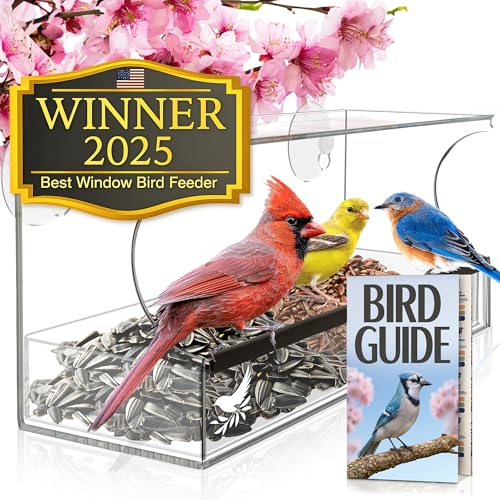 Nature's Hangout Window Bird FeederArrives assembled with a removable, draining tray. The practical choice, and close enough to the category leader that price should decide between them. | No assembly, and a drainable tray | $29.95 · See it on Amazon |
#ad how we are funded · price as of October 3, 2026
The picks in full
Top pick Getting the spacing right without it looking terrible
WindowAlert Modern Dots UV Decals, 30 pack
Thirty dots is enough to actually achieve the spacing the research calls for on a normal window, which is the single thing most people get wrong. Dots also read as a design choice rather than as bird-strike equipment, which is why they stay up.
Specifications
- Type
- UV-reflective static cling
- Count
- 30
Trade-offs
- Enough pieces in one pack to cover a real window at a useful density
- Dots look deliberate, so households tolerate them where a hawk silhouette gets peeled off
- Same no-residue static cling as the rest of the range
- Thirty will cover roughly one large pane at correct spacing, so a glass-heavy house needs several packs
- UV coating still fades on the same replacement cycle
- Applying thirty individually spaced dots is a tedious afternoon
Who it is forOne or two problem windows, done properly.
Skip it ifSkip it for a whole wall of glass. At that scale external tape or cord systems cost less and last longer.
#ad how we are funded · price as of October 3, 2026
No. 2 Visible pattern at a low price
Window Clings for Birds, 26 piece
Twenty-six visible clings for the price of a sandwich. Visible is not a drawback here — the evidence for dense visible patterns is better than the evidence for UV-only markers, and these are cheap enough to space properly.
Specifications
- Type
- Static cling
- Count
- 26
Trade-offs
- Cheap enough that correct spacing does not feel expensive, which is the usual barrier
- Visible to birds without relying on a UV coating that degrades
- Enough pieces to do a real window properly
- Visible to you too, permanently, which is the trade
- Unbranded listing with no stated longevity
- Static cling fails on cold, damp or dirty glass
- Decorative shapes may not hold their spacing once someone rearranges them
Who it is forSomeone who cares more about the birds than about the view.
Skip it ifSkip it if an invisible solution is the requirement — that is what the UV range is for, with its own trade-offs.
#ad how we are funded · price as of October 3, 2026
No. 3 The decal that is least visible to you
WindowAlert Leaf Medley UV Decals
WindowAlert's decals reflect ultraviolet light, which birds see and people largely do not, so the glass stays clear-looking to you. That is the selling point and it is also the catch: the UV coating degrades and the maker says to replace them periodically.
Specifications
- Type
- UV-reflective static cling
- Pattern
- Leaf medley
Trade-offs
- Nearly invisible to human eyes, which is why people actually leave them up
- Static cling, so no adhesive residue on the glass
- The established name in this category rather than an anonymous listing
- Cheap enough to re-buy on the replacement schedule the maker recommends
- UV reflectivity fades, so these are a consumable rather than a fix you do once
- You must space them densely — a couple of decals on a large pane does almost nothing
- Relies on the bird seeing UV, and the evidence for UV markers is weaker than for simple dense visible patterns
- Static cling lets go on cold or dirty glass, which is exactly when you need it
Who it is forSomeone who wants the window to still look like a window.
Skip it ifSkip it if you have a known killer window and want the most reliable answer. Dense visible patterns outperform sparse UV ones.
#ad how we are funded · price as of October 3, 2026
No. 4 A deliberate-looking pattern on a feature window
Flock of Bird Window Clings, 16 piece
A flock of bird silhouettes reads as decoration rather than as a safety measure, which is the practical reason patterns like this survive on a window that guests see. Sixteen pieces is fewer than you want for a large pane.
Specifications
- Type
- Static cling
- Count
- 16
Trade-offs
- Looks intentional, so it does not get removed
- Visible pattern rather than a UV coating that fades
- Enough for a normal-sized window if you resist spreading them too thin
- Sixteen pieces will not reach correct spacing on a large or floor-to-ceiling pane
- Bird silhouettes invite the same predator-shape misunderstanding as the hawk decal
- Unbranded, with no stated durability
- Same cold-glass cling failure as every static product here
Who it is forOne feature window where appearance matters.
Skip it ifSkip it for a large expanse of glass; you will run out of clings before you reach useful density.
#ad how we are funded · price as of October 3, 2026
No. 5 Nothing, and it is here to explain why
WindowAlert Hawk Anti-Collision Decal
The hawk silhouette is the most recognizable product in this category and the most misunderstood. It does not work because it looks like a predator — birds do not read it that way. It works, when it works at all, because it is an opaque shape interrupting the reflection. One shape on a large pane is not enough of an interruption.
Specifications
- Type
- UV-reflective static cling
- Pattern
- Hawk silhouette
Trade-offs
- Genuinely does break up a reflection in the small area it covers
- Same UV coating as the rest of the WindowAlert range
- Inexpensive, and fine as one element of a dense pattern
- The predator-silhouette theory it is sold on is not how this works
- Sold singly, which encourages exactly the one-decal-per-window approach that fails
- Covers a tiny fraction of a typical pane
- Same UV fade and replacement cycle as the rest of the range
Who it is forSomeone adding to a dense pattern, not someone buying one.
Skip it ifSkip it as a standalone solution, which is how it is almost always bought. Spacing is what works, not the shape.
#ad how we are funded · price as of October 3, 2026
No. 6 No assembly, and a drainable tray
Nature's Hangout Window Bird Feeder
Arrives assembled with a removable, draining tray. The practical choice, and close enough to the category leader that price should decide between them.
Specifications
- Mount
- Suction cups
- Assembly
- None required
- Tray
- Removable, drains
Trade-offs
- Drainage holes matter more than anything else on a window feeder — wet seed in a sealed tray is mold
- No assembly, which sounds trivial and is not when the alternative is acrylic panels and screws
- Removable tray makes the every-two-week clean quick enough to actually happen
- Same suction-cup cold-weather limitation as every feeder in this category
- Acrylic scratches, and a scratched panel holds residue and clouds the view
- Modest capacity
Who it is forA first window feeder where you would rather not assemble anything.
Skip it ifSkip it if you want the largest possible viewing panel — this is a compact design.
#ad how we are funded · price as of October 3, 2026
The scale of it
Worth stating, because it is the reason this is on a bird-care site at all rather than filed as a minor nuisance.
Published estimates put North American window collision deaths at up to a billion birds a year, with the research range commonly cited as roughly 100 million to 1 billion annually across all buildings. Most of that is not skyscrapers. It is houses — researchers estimate on the order of one to ten birds per building per year, which sounds trivial until it is multiplied by the number of buildings in the country. Your windows are part of that arithmetic, and so is the fix.
There is a direct connection to the rest of this site: a feeder changes your window risk. ABC names windows near feeders as a priority category. That is not a reason to stop feeding — it is a reason to treat the glass near the feeder, and to think about feeder distance, which is covered below.
Rule one: outside, not inside
This is the single most common mistake, and it quietly wastes most of the money spent in this category.
Static-cling decals are easy to apply indoors. It is warm, the glass is clean, and nothing falls off. But American Bird Conservancy's guidance is explicit: it may be tempting to place bird-friendly window products on the inside, but this should be avoided wherever possible, because when the outside reflection is strong, anything behind the glass is effectively invisible to the bird. The bird is not looking through your window. It is looking at a mirror showing sky and trees.
So: apply outside. Accept the consequences — cling products are less reliable on cold, damp or dirty outdoor glass, they need the surface genuinely clean, and they will need replacing more often. That is the trade, and inside application is not a cheaper version of it, it is a non-working version.
Rule two: the two-inch rule
The spacing guidance has tightened, and a lot of advice online is still repeating the old version.
What was once described as a 2x4 rule is now the 2x2 rule: patterns with vertical, horizontal or diagonal gaps of two inches or less prevent most collisions. The reason for the tightening is specific — larger gaps pose a risk to small songbirds and hummingbirds, which will readily fly through a four-inch space. A pattern is only as good as its widest gap.
This is why pack size matters more than design. Thirty dots will cover roughly one large pane at correct spacing. Sixteen clings spread across a patio door is decoration, not prevention. Work out the area, then buy enough — and buy several packs for a glass-heavy wall rather than thinning one pack across it.
How we judged these
How we picked
- Pack count against the two-inch rule, because a product that cannot achieve correct spacing on a real window does not work regardless of its design.
- Suitability for external application, since the American Bird Conservancy's guidance is that markers belong outside the glass.
- Visible patterns weighted over UV-only ones, because the evidence for dense visible markers is stronger and UV coatings degrade.
- Honest about the hawk silhouette, which is sold on a mechanism that is not how this works.
- Whether a household will actually leave it up, since the most effective pattern is the one that does not get peeled off.
- Replacement cycle, because UV products are consumables and that belongs in the cost.
- Claims checked against conservation sources rather than against listing copy.
- Live price and availability, refreshed daily.
We have not tested any of these. What we did instead: read the manufacturers’ own listings, compiled the published specifications, computed the running cost at a cited electricity rate, and refreshed the prices daily. The full method is published.
What about the hawk silhouette?
It is the most recognizable product in this category and the most misunderstood, so it is worth being direct.
It does not work because birds see a predator and avoid it — they do not read a sticker that way. Whatever effect it has comes from being an opaque shape interrupting a reflection, which is the same mechanism as any other marker. One shape on a large window interrupts a tiny fraction of that reflection, which is why single-decal installations disappoint.
Density is what the evidence supports. In one study cited by conservation groups, placing six to twelve raptor decals on glass was associated with an overall decrease in fatal strikes of around 64 percent. Note the number: six to twelve, not one. If you own hawk decals, use them — just use enough of them, at the right spacing, on the outside.
Which windows to treat
You almost certainly do not need to do the whole house, and ABC is encouraging on this point: fixing only the problem windows often stops almost all collisions.
- Windows where strikes have already happened. If you have found a bird, or heard the sound, or seen a dust smudge on the glass, that window is the priority. Collisions cluster.
- Large windows that reflect habitat or sky. Go outside and look at your own glass from where a bird would approach. If you see trees and sky rather than a room, so does the bird.
- Windows near feeders or fruiting plants, because that is where bird traffic is concentrated.
- Facing pairs of windows, where a bird sees straight through the house to vegetation on the other side and reads it as a flight path.
Feeder distance, and the counterintuitive part
The relationship between feeders and window strikes is not linear, and it catches people out.
The dangerous zone is the middle distance — roughly three to thirty feet — where a bird has room to build up speed and the reflection still reads as open sky. Very close is safer, because a bird leaving a feeder mounted on or within a few feet of the glass has not accelerated. Far away is safer because the window is not in the flight path. This is one of the better arguments for window feeders, and feeder placement in snow and wind covers the siting question more broadly.
If a feeder currently sits in that middle zone and the window behind it has a strike history, moving the feeder is free and may be more effective than anything you can buy.
What we would skip
What we would skip
Applying decals to the inside of the glass
American Bird Conservancy says internal placement should be avoided wherever possible, because a strong outside reflection hides anything behind the glass. This is the single most common mistake in this category and it wastes the whole purchase.
One decal on a large window
A marker works by interrupting a reflection, so one shape interrupts almost none of it. The study evidence points to six to twelve decals, not one. Single-decal installations are the reason people conclude this does not work.
Spacing markers more than two inches apart
The guidance tightened from a 2x4 rule to a 2x2 rule precisely because small songbirds and hummingbirds fly through four-inch gaps. A pattern is only as good as its widest gap, so thinning a pack to cover more glass defeats the purpose.
Buying one small pack for a wall of glass
Thirty dots covers roughly one large pane at correct spacing. For a patio door or a glass wall you need several packs, or an external tape or cord system designed for the area.
Treating every window in the house
Usually unnecessary. Collisions cluster at specific windows, and ABC notes that fixing only the problem ones often stops almost all of them. Start with the glass that has a strike history or a strong reflection of habitat.
Relying on a hawk silhouette because it looks like a predator
Birds do not read a sticker as a hawk. Any effect comes from the opaque shape breaking up the reflection, which is the same mechanism as a dot. Use them if you have them, but use enough of them.
Leaving faded UV decals up indefinitely
UV-reflective products lose their reflectivity over time, and a faded decal is a decoration rather than a deterrent. These are a consumable on a replacement cycle, not a one-time fix.
Where this fits
This is the cheapest high-impact thing on this hub. A heated bath, a roost box and a good feeder all help birds through a winter; treating a killer window stops a bird dying outright, usually for under ten dollars and an afternoon. The winter yard checklist covers the rest of the setup, and how birds survive winter explains why the birds are concentrated around your house in the first place.
Questions people actually ask
- Do window decals actually stop birds hitting windows?
- Yes, when applied correctly, and correctly is where most people fail. Markers must go on the outside of the glass and be spaced two inches or less apart. One study found six to twelve raptor decals on glass was associated with around a 64 percent decrease in fatal strikes.
- Should decals go on the inside or outside of the window?
- Outside. American Bird Conservancy states that placing bird-friendly window products on the inside should be avoided wherever possible, because when the external reflection is strong anything behind the glass is effectively invisible to the bird.
- How far apart should window markers be?
- Two inches or less, in any direction — the 2x2 rule. The old 2x4 guidance was tightened because small songbirds and hummingbirds will fly through a four-inch gap. A pattern is only as good as its widest gap.
- Does a hawk silhouette sticker work?
- Not for the reason it is sold on. Birds do not interpret the sticker as a predator; any benefit comes from an opaque shape interrupting the reflection, exactly as a dot would. One silhouette on a large pane covers too little of the glass to help much.
- Do I need to treat every window?
- Usually not. Collisions cluster, and ABC notes that fixing only the problem windows often stops almost all of them. Prioritize glass with a strike history, large windows reflecting trees or sky, and windows near feeders.
- Does a bird feeder make window strikes more likely?
- It depends on distance. The risky zone is roughly three to thirty feet, where a bird has room to accelerate and the reflection still reads as open sky. Feeders mounted on or very near the glass are safer, as are feeders well beyond that range.
Sources
Read next
- The Winter Bird Yard Checklist
The October changeover in order: feeders, water, shelter, what to leave standing, and the winter maintenance schedule.
- The Best Window Bird Feeders
Five window feeders ranked on suction-cup load and tray drainage, with the cold-weather mounting method that decides whether they stay up.
- Feeder Placement in Snow and Wind
Wind shelter, drift lines, roof drip and height above snow — where to hang a feeder so the weather does not close it.
- How Birds Survive Winter
The four mechanisms small birds use to survive a freezing night, what breaks them, and what a yard can actually contribute.