Winter feeders / Roundup
Bird Feeder Rain Covers and Weather Guards
A dome is a roof, not a solution. It helps with vertical rain and snow, it is useless against the wind-driven kind, and the only specification that matters is how far it overhangs.
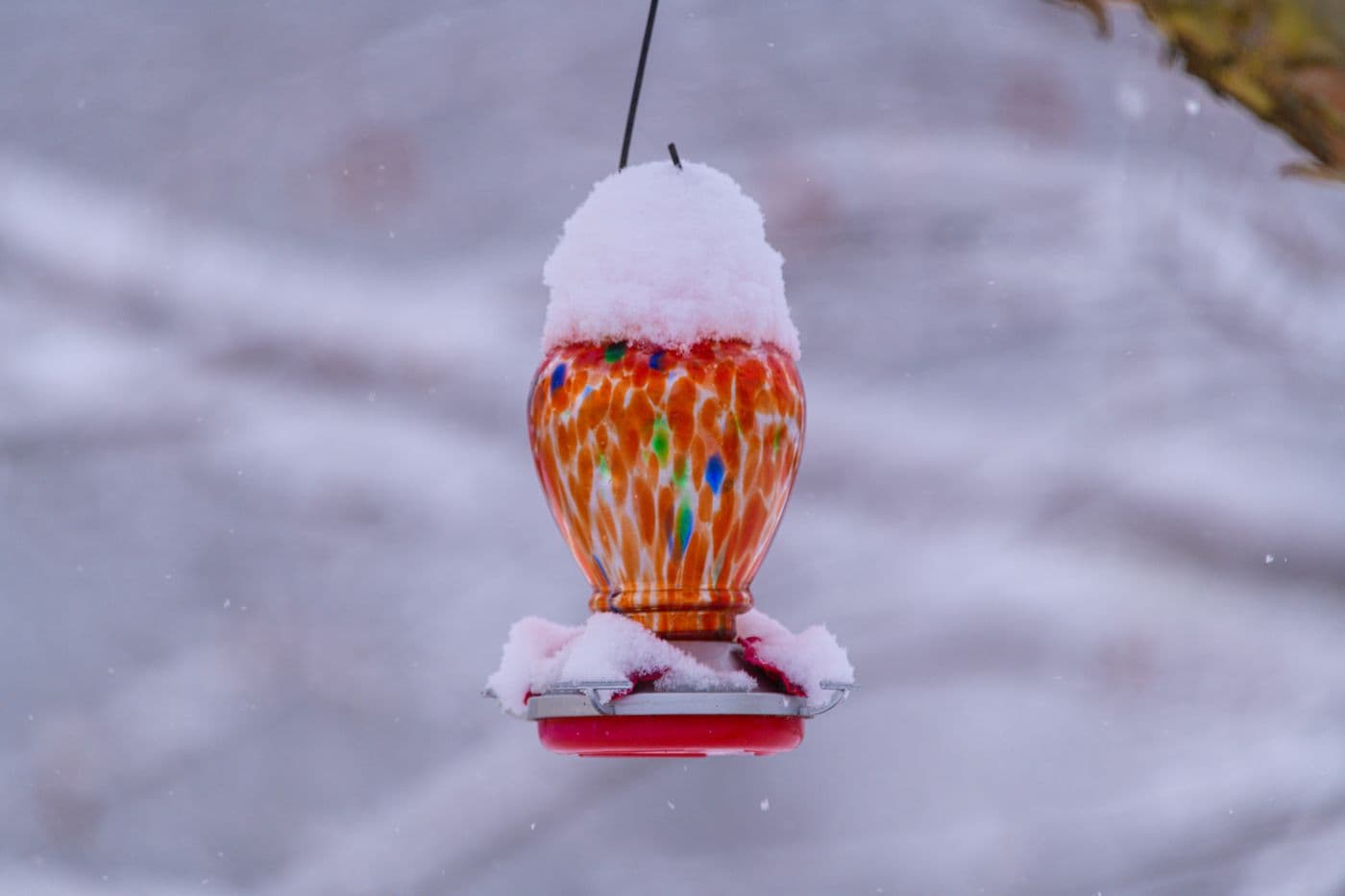
Buy on diameter, and buy clear. A dome has to overhang the feeding ports to do anything, which means roughly 16 inches for a standard tube and nearly 20 for a hopper or platform. The 10 to 12 inch domes that dominate search results shelter the cap and leave the ports exposed. Clear beats colored because winter light is scarce. And understand the limit: a dome stops rain and snow falling straight down, and does nothing about rain blowing sideways, which is most winter rain.
Winter Perch is funded by affiliate commission. If you buy through a link on this page we may earn a commission at no extra cost to you, and it never decides a ranking. Full disclosure · how we pick.
Quick picks
Ranked, with the trade-off named. Tap a row for the full write-up; the price button goes straight to Amazon.
| # | Product | Best for | Price |
|---|---|---|---|
| 1 |  iBorn Bird Feeder Rain Guard, 16 inchSixteen inches of clear polycarbonate is the size that actually overhangs a standard tube feeder's ports, which is the whole job. Smaller domes look tidier and leave the ports exposed to driving rain. | The default size for a hanging tube feeder | $24.99 · See it on Amazon |
| 2 |  iBorn Oversized Bird Feeder Cover, 19.6 inchAlmost twenty inches across, which is what a hopper or a wide platform actually needs. Sold as a baffle as well as a cover, and it is better at the cover half of that job. | Wide hoppers and platform feeders | $23.99 · See it on Amazon |
| 3 |  Birds Choice Bird Feeder Dome with Hanger, 10.5 inchA small dome with its own hanger from an established feeder brand rather than an anonymous listing. Ten and a half inches is genuinely small, so match it to a small feeder and do not expect it to shelter a hopper. | Small feeders, and a maker that stands behind it | $19.99 · See it on Amazon |
| 4 |  Clear Plastic Bird Feeder Rain Cover, 12 inchTwelve inches and clear, at a price that makes it a reasonable way to find out whether a dome helps in your particular spot before buying a good one. That is the honest case for it. | A cheap first try before committing | $15.99 · See it on Amazon |
| 5 |  Metal Bird Feeder Rain Guard, 11.5 inchMetal rather than plastic, which matters in exactly one situation: where squirrels have already destroyed a plastic dome. It is opaque, so it costs you light, and it is small. | Somewhere squirrels chew the plastic ones | $9.99 · See it on Amazon |
| 6 |  Kingsyard Hanging Dome Baffle and Rain GuardA dome that hangs above the feeder rather than sitting below it. The only baffle geometry that works when the threat comes from above, and it keeps snow off as a bonus. | Feeders hung from a branch or a hook | $20.99 · See it on Amazon |
#ad how we are funded · price as of October 3, 2026
The picks in full
Top pick The default size for a hanging tube feeder
iBorn Bird Feeder Rain Guard, 16 inch
Sixteen inches of clear polycarbonate is the size that actually overhangs a standard tube feeder's ports, which is the whole job. Smaller domes look tidier and leave the ports exposed to driving rain.
Specifications
- Diameter
- 16 in
- Material
- Polycarbonate, clear
Trade-offs
- Wide enough to actually shelter the ports on a normal tube feeder rather than just the cap
- Clear, so it does not black out the feeder in the one season with the least daylight
- Doubles as a squirrel baffle on a hanging line, which is a genuine second use
- Polycarbonate survives cold better than the brittle acrylic used on cheaper domes
- Wind turns a 16-inch dome into a sail, and on an exposed line it will swing into the feeder
- Does nothing for rain blowing sideways, which is most winter rain
- Clear plastic scratches and hazes over a few seasons
- One more thing to take off every time you clean or refill
Who it is forA hanging tube or seed feeder in a spot that gets vertical rain and snow.
Skip it ifSkip it if your feeder is pole-mounted — a dome on a pole is a worse baffle than a proper stovepipe and a worse roof than a hopper lid.
#ad how we are funded · price as of October 3, 2026
No. 2 Wide hoppers and platform feeders
iBorn Oversized Bird Feeder Cover, 19.6 inch
Almost twenty inches across, which is what a hopper or a wide platform actually needs. Sold as a baffle as well as a cover, and it is better at the cover half of that job.
Specifications
- Diameter
- 19.6 in
- Use
- Cover and hanging baffle
Trade-offs
- Large enough to shelter a hopper or platform, which the 10 to 12 inch domes simply are not
- Real squirrel deterrence on a hanging line because of the diameter
- Keeps snow off a tray feeder, which is the format that fills with snow fastest
- Catches a lot of wind, and that is the main complaint about every dome this size
- Visually dominant — it is a large plastic disc hanging in the yard
- Needs real clearance below the branch or hook, so it does not suit a short hang
- No help against sideways rain, same as every dome
Who it is forA hanging hopper or platform feeder in a sheltered spot.
Skip it ifSkip it anywhere exposed. At this diameter wind is the deciding factor, not rain.
#ad how we are funded · price as of October 3, 2026
No. 3 Small feeders, and a maker that stands behind it
Birds Choice Bird Feeder Dome with Hanger, 10.5 inch
A small dome with its own hanger from an established feeder brand rather than an anonymous listing. Ten and a half inches is genuinely small, so match it to a small feeder and do not expect it to shelter a hopper.
Specifications
- Diameter
- 10.5 in
- Included
- Hanger
Trade-offs
- Comes with its own hanger, which several of the cheap domes do not
- Established brand with a real product line behind it
- Small enough not to become a sail in wind, which is the common failure of the big domes
- At 10.5 inches it will not overhang the ports on a full-size tube feeder
- Too small to work as a squirrel baffle, despite what dome listings usually imply
- Colored rather than clear, so it cuts more light than a clear dome
Who it is forA small tube, a nyjer feeder or a hummingbird feeder.
Skip it ifSkip it for anything full size. The diameter is the specification that matters and this one is deliberately modest.
#ad how we are funded · price as of October 3, 2026
No. 4 A cheap first try before committing
Clear Plastic Bird Feeder Rain Cover, 12 inch
Twelve inches and clear, at a price that makes it a reasonable way to find out whether a dome helps in your particular spot before buying a good one. That is the honest case for it.
Specifications
- Diameter
- 12 in
- Material
- Clear plastic
Trade-offs
- Cheap enough to treat as an experiment
- Clear, so it does not darken the feeder
- Twelve inches covers a small to mid-size tube adequately
- Thin plastic, and thin plastic in hard frost is the stuff that cracks
- Unbranded, so there is no recourse when it does
- Still too small to baffle a squirrel
- Sideways rain goes straight past it, same as every dome
Who it is forTesting whether a cover changes anything in your spot.
Skip it ifSkip it if you already know you need one. Buy the polycarbonate and skip the cracked-dome stage.
#ad how we are funded · price as of October 3, 2026
No. 5 Somewhere squirrels chew the plastic ones
Metal Bird Feeder Rain Guard, 11.5 inch
Metal rather than plastic, which matters in exactly one situation: where squirrels have already destroyed a plastic dome. It is opaque, so it costs you light, and it is small.
Specifications
- Diameter
- 11.5 in
- Material
- Metal
Trade-offs
- Squirrels cannot chew through it, which is the one thing plastic domes reliably fail at
- Cheapest option here by a clear margin
- Will not haze, craze or go brittle in cold the way acrylic does
- Opaque, so it shades the feeder in the darkest season of the year
- 11.5 inches is too small to shelter a full-size feeder's ports properly
- Unbranded listing with no maker to go back to
- Metal in freezing rain accumulates ice, and the extra weight pulls on the hanger
Who it is forA yard where squirrels have already eaten a plastic dome.
Skip it ifSkip it if you have not had that problem. Clear plastic is the better default because winter light is scarce.
#ad how we are funded · price as of October 3, 2026
Where these specs came from
No. 6 Feeders hung from a branch or a hook
Kingsyard Hanging Dome Baffle and Rain Guard
A dome that hangs above the feeder rather than sitting below it. The only baffle geometry that works when the threat comes from above, and it keeps snow off as a bonus.
Specifications
- Type
- Hanging dome
- Material
- Metal
- Second use
- Rain and snow guard
Trade-offs
- Solves the case a pole baffle cannot — a squirrel coming down a branch or a hook
- Doubles as a weather guard, which keeps seed dry and is worth having on its own
- Cheap relative to the pole baffles, and no installation beyond threading the hanger
- A dome is easier to defeat than a stovepipe; an athletic squirrel can swing past one
- Only works if the feeder hangs well below it, which shortens your usable height
- Unbranded manufacture, and the metal is thinner than the Woodlink and Erva baffles
- Does nothing about a squirrel climbing up from the ground
Who it is forA feeder hanging from a tree limb, a bracket or a shepherd's hook.
Skip it ifSkip it if your feeder is pole-mounted. A baffle below the feeder blocks the route squirrels actually use there, and does it better.
#ad how we are funded · price as of October 3, 2026
What a weather guard actually fixes
Wet seed. That is the problem, and it is a bigger one than it sounds.
Seed that gets wet in a feeder does not simply dry out again. It swells, clumps, and blocks the ports from the inside where you cannot see it, and then it molds. Mold in a feeder is not a tidiness issue — it is a genuine health risk to the birds using it, which is why cleaning feeders and baths is on this site at all. A dome that keeps the column dry means fewer full strip-downs in weather you would rather not be out in.
The secondary benefit is snow. A tray or platform fills with snow faster than anything else in the yard, and keeping feeders clear of snow and ice is mostly a story about going outside with a brush. A wide dome over a platform removes much of that chore.
The diameter rule
Almost every disappointed review of a feeder dome is a diameter problem wearing a different hat.
Rain does not fall perfectly vertically, and a feeder swings. A dome needs to extend well past the ports — not just past the cap — or rain reaches the seed anyway and you conclude the product does not work. Measure the widest part of your feeder and add several inches on each side. For a typical tube that lands around 16 inches. For a hopper or a wide tray it is closer to 20.
The catch is that diameter and wind are in direct opposition. A 20-inch disc on an exposed line becomes a sail: it swings, it clatters into the feeder, and in a real gale it can unseat the whole thing. The honest rule is big dome in a sheltered spot, small dome or none in an exposed one — and in a genuinely exposed yard, the better answer is to move the feeder, which feeder placement in snow and wind covers properly.
| Feeder | Dome diameter | Notes |
|---|---|---|
| Nyjer tube or hummingbird feeder | 10 to 12 in | Small feeder, small dome — anything bigger is all sail and no benefit |
| Standard seed tube | 16 in | The common case, and the size most people under-buy |
| Hopper | 18 to 20 in | Hoppers have their own roof; a dome mainly protects the tray and perches |
| Platform or tray | 20 in | The format that fills with snow fastest and benefits most |
| Pole-mounted anything | Use a baffle instead | A dome on a pole is a worse baffle and a worse roof than the right tool |
These are overhang figures based on sheltering the ports rather than the cap. Check the diameter stated on the listing against the widest point of your own feeder before ordering — this is the one specification that decides whether the product does anything.
How we judged these
How we picked
- Stated diameter against the ports it has to shelter, which is the specification that decides whether the product works at all.
- Clear over opaque, because the darkest season is the one the dome is for.
- Material named on the listing, since polycarbonate survives hard frost and thin acrylic does not.
- Honest about wind, because every dome is a sail and the large ones are worst.
- Whether it genuinely doubles as a hanging baffle, which only the wide ones do, rather than repeating the listing's claim.
- Hanging hardware included or not, a small thing that turns into a second order.
- Live price and availability, refreshed daily.
We have not tested any of these. What we did instead: read the manufacturers’ own listings, compiled the published specifications, computed the running cost at a cited electricity rate, and refreshed the prices daily. The full method is published.
Dome or baffle — they are not the same product
Listings in this category cheerfully describe the same disc as both, and that causes more wasted money than any other confusion here.
A weather dome sits above the feeder to keep rain off. A squirrel baffle sits above a hanging feeder, or below a pole-mounted one, to stop an animal reaching it. A large dome genuinely does both on a hanging line — that is real, and it is the best argument for buying the 16 to 20 inch sizes. But a small dome baffles nothing, and on a pole a dome above the feeder is useless because squirrels climb from below. There you need a stovepipe, which squirrel baffles for feeder poles covers in full.
What a dome will not do
- Sideways rain. Wind-driven rain goes straight under a dome. In a wet, windy winter this is most of the rain you get, and no dome on the market addresses it.
- Seed already damp in the bag. If seed is going in damp it will clump regardless — sealed storage is the fix for that, not a roof.
- A feeder with no drainage. Water that gets in still has to get out. A feeder with blocked or absent drain holes stays wet under any dome.
- Snow blowing up from beneath, which happens in drifting conditions and is one reason a tray with a mesh floor beats a solid one.
Clear, colored or metal
Clear, in almost every case. December afternoons are short and gray, and an opaque disc directly above the feeder takes light from the one place the birds need to see what they are eating.
Metal earns its place in exactly one situation: a yard where squirrels have already chewed through a plastic dome. That happens, and metal ends it. You pay for it in light and in ice accumulation — a metal disc in freezing rain gains real weight and hangs on the same hook as everything else.
On material, prefer polycarbonate over acrylic where the listing says. Acrylic goes brittle in deep cold and the failure mode is a dome in pieces on the snow one January morning.
What we would skip
What we would skip
A 10 to 12 inch dome on a full-size tube feeder
It shelters the cap and leaves the ports exposed, so the seed still gets wet and you conclude domes do not work. Diameter is the only specification that matters here, and this is the mistake almost everyone makes.
Any dome on an exposed, windy site
A wide disc is a sail. It swings into the feeder, clatters, and in a real gale can unseat the whole hanger. In an exposed yard, move the feeder into shelter instead — it works better and costs nothing.
A dome bought as a squirrel baffle for a pole-mounted feeder
Squirrels climb a pole from below, so a disc above the feeder is irrelevant. You need a stovepipe baffle on the pole. A dome only baffles on a hanging line, and only at the larger diameters.
Opaque or heavily colored domes, by default
Winter light is scarce and short, and an opaque disc sits directly above the feeding ports. Clear is the sensible default; colored and metal are for specific problems like squirrel damage.
Thin acrylic domes in a hard-frost climate
Acrylic goes brittle in deep cold and cracks. Polycarbonate costs a little more and survives the season, which is the only measure that counts for an outdoor plastic part.
A dome as the fix for a feeder with no drainage
Water that gets in still has to get out. If the feeder has blocked or missing drain holes, it stays wet under any roof. Fix the drainage or replace the feeder.
Where this fits
A dome is a small accessory that solves a specific, annoying problem. If seed is getting wet, start with feeder placement — moving a feeder under an eave or into the lee of the house outperforms any dome and costs nothing. If the issue is squirrels rather than weather, the baffle roundup is the right page. And if the feeder is already full of clumped seed, cleaning comes before any accessory.
Questions people actually ask
- What size bird feeder dome do I need?
- Roughly 16 inches for a standard seed tube and close to 20 for a hopper or platform. The dome has to overhang the feeding ports, not just the cap. The 10 to 12 inch domes that dominate listings suit only small feeders like nyjer tubes and hummingbird feeders.
- Do bird feeder rain covers actually work?
- Against rain and snow falling straight down, yes, provided the diameter is right. Against wind-driven rain, no — it goes under the dome, and no product on the market fixes that. Moving the feeder into shelter is the better answer in a wet, windy spot.
- Can a weather dome double as a squirrel baffle?
- On a hanging feeder, yes, if it is wide enough — 16 inches and up. On a pole-mounted feeder, no: squirrels climb from below, so you need a stovepipe baffle on the pole. A disc above the feeder does nothing there.
- Clear or colored dome?
- Clear, in almost every case. Winter days are short and overcast, and an opaque disc sits directly above the feeding ports. Choose metal or colored only to solve a specific problem such as squirrels chewing through plastic.
- Why is my seed still getting wet with a dome fitted?
- Three usual causes: the dome is too small to overhang the ports, the rain is wind-driven and going underneath it, or the feeder's drain holes are blocked so water that gets in cannot leave. Check the diameter first, because it is the commonest.
- Will a dome stop seed clumping?
- Only the part caused by rain. Seed that goes into the feeder already damp will clump anyway, which is a storage problem rather than a weather one. Keeping the bag sealed and dry matters as much as the roof does.
Sources
Read next
- Keeping Feeders Clear of Snow and Ice
Iced ports, caked seed and feeder mold — the winter maintenance routine, and the hardware that reduces it.
- Feeder Placement in Snow and Wind
Wind shelter, drift lines, roof drip and height above snow — where to hang a feeder so the weather does not close it.
- The Best Squirrel Baffles for Feeder Poles
Stovepipe, wrap-around, post and hanging-dome baffles ranked by what they mount to, plus the height and clearance numbers that decide whether one works.
- Cleaning Bird Feeders and Baths in Winter
The winter cleaning schedule, the bleach-versus-enzyme question answered plainly, and the brushes and cleaners that make the job quick enough to actually do.