Cold-weather care / Roundup
The Best Bluebird Houses
The box is the easy part. Hole size, where you put it and what you do about house sparrows are what decide whether bluebirds ever use it.
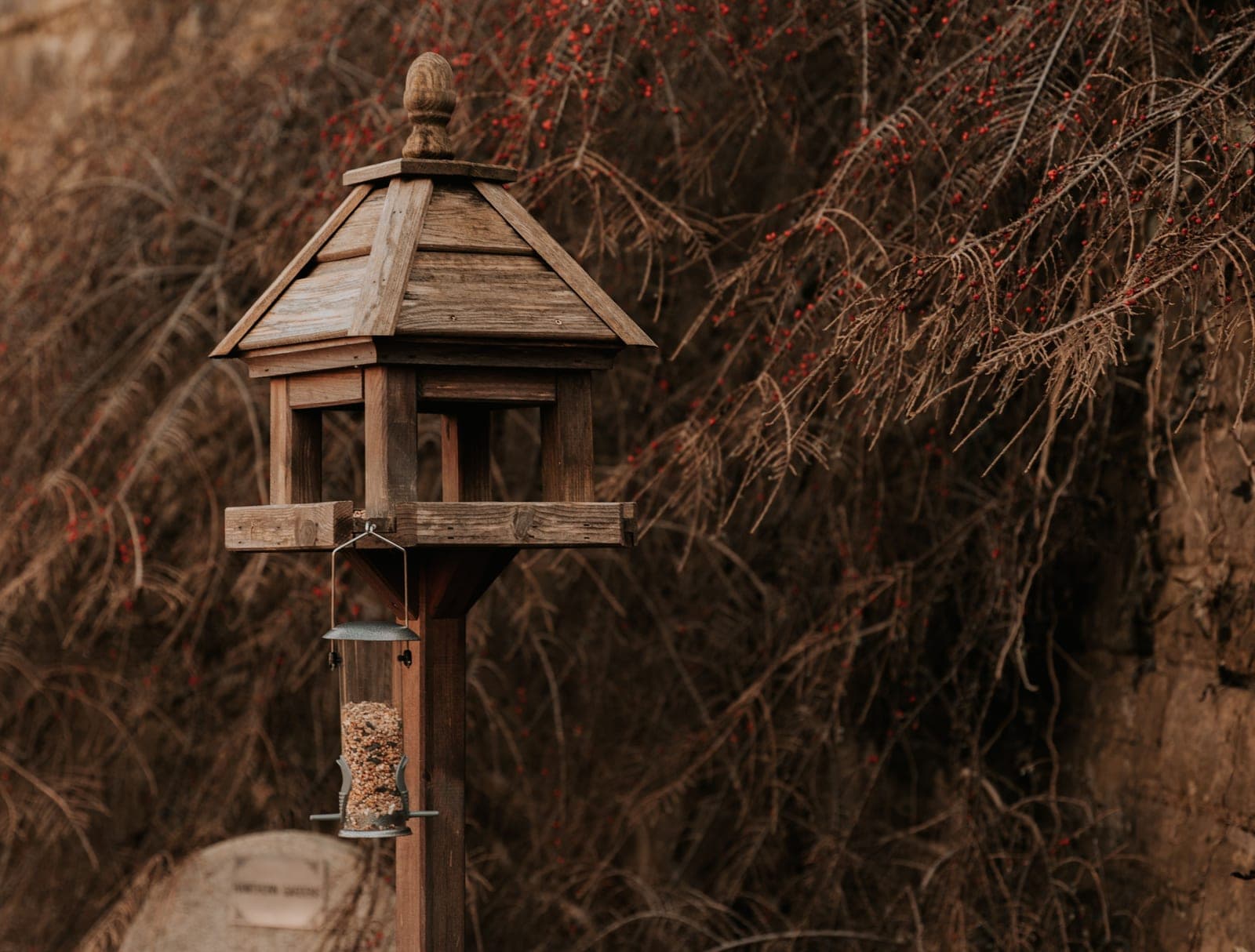
Get a box with a 1-1/2 inch entrance, mount it on a baffled pole in open ground, facing away from prevailing wind — and be ready to deal with house sparrows, which fit through that hole and will take the box if you let them. A sparrow-resistant pattern like the Gilbertson is the answer where sparrows dominate.
Winter Perch is funded by affiliate commission. If you buy through a link on this page we may earn a commission at no extra cost to you, and it never decides a ranking. Full disclosure · how we pick.
Quick picks
Ranked, with the trade-off named. Tap a row for the full write-up; the price button goes straight to Amazon.
| # | Product | Best for | Price |
|---|---|---|---|
| 1 |  Nature's Way Cedar Bluebird House with Predator GuardCedar, ventilated, with a predator guard at the entrance as standard. The specification list reads like someone who has actually run a bluebird trail wrote it. | A proper cedar box at a sensible price | $21.99 · See it on Amazon |
| 2 |  DutchCrafters Pole-Mount Gilbertson Bluebird HouseThe Gilbertson pattern — a narrow tube-style box on a pole with a removable base. Bluebird trail monitors favor it specifically because house sparrows tend to leave it alone. | The design with a genuine sparrow record | $51.00 · See it on Amazon |
| 3 |  BestNest Amish-Made Sparrow-Resistant Bluebird HouseA sparrow-resistant pattern built in recycled poly lumber. The combination of an anti-sparrow design and a material that never rots is the premium answer here. | Sparrow resistance in recycled poly | $68.99 · See it on Amazon |
| 4 |  Kingsyard Bluebird House with Predator Guard, PolyRecycled poly with a predator guard fitted, at well under what the Amish-built boxes cost. The value option if the material matters more to you than the pedigree. | Poly lumber without the specialist price | $31.99 · See it on Amazon |
| 5 | 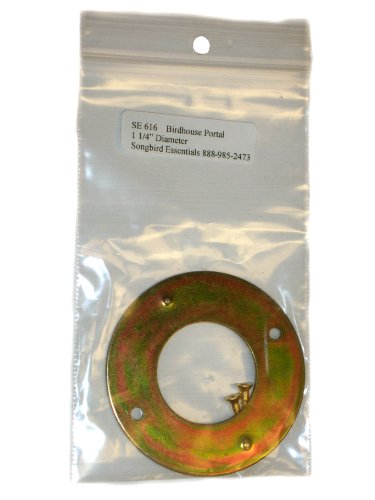 Songbird Essentials SE616 Birdhouse Portal ProtectorA metal plate over the entrance so squirrels and woodpeckers cannot enlarge it. The cheapest meaningful upgrade you can make to a box you already own. | Stopping a hole being chewed wider | $7.99 · See it on Amazon |
#ad how we are funded · price as of September 21, 2026
The picks in full
Top pick A proper cedar box at a sensible price
Nature's Way Cedar Bluebird House with Predator Guard
Cedar, ventilated, with a predator guard at the entrance as standard. The specification list reads like someone who has actually run a bluebird trail wrote it.
Specifications
- Material
- Cedar
- Entrance
- Predator guard fitted
- Ventilation
- Yes
Trade-offs
- Cedar insulates properly, which matters in a box used for overnight roosting in winter as well as nesting
- A fitted entrance guard stops the hole being gnawed wider, which ruins a box permanently
- Ventilation is a real spec — an unventilated box overheats in spring sun
- Nature's Way is a known quantity and the price is reasonable for cedar
- Cedar weathers gray and needs no treatment, which some people mistake for failure
- A predator guard at the hole does nothing about a raccoon reaching in from a pole — that needs a baffle
- No stated sparrow resistance; house sparrows use bluebird boxes readily
- Nesting is spring work, so a winter purchase sits idle unless birds roost in it
Who it is forA first bluebird box, in a yard with the open ground bluebirds need.
Skip it ifSkip it if house sparrows dominate your yard. A standard box will simply become a sparrow box; buy a sparrow-resistant design.
#ad how we are funded · price as of September 21, 2026
No. 2 The design with a genuine sparrow record
DutchCrafters Pole-Mount Gilbertson Bluebird House
The Gilbertson pattern — a narrow tube-style box on a pole with a removable base. Bluebird trail monitors favor it specifically because house sparrows tend to leave it alone.
Specifications
- Pattern
- Gilbertson
- Mount
- Pole mount
- Base
- Removable, for cleaning
Trade-offs
- The Gilbertson pattern is the design people running bluebird trails reach for when sparrows are the problem
- A removable base makes the annual clean-out genuinely quick
- Pole-mounted by design, which is the correct siting for a bluebird box
- Amish-built, and DutchCrafters build to last
- Sparrow resistance is a tendency, not a guarantee — determined sparrows still take boxes
- The narrow profile insulates less well than a thick cedar box in cold weather
- More expensive than a conventional cedar box
- Needs a pole, which is a separate purchase if you do not have one
Who it is forA yard where house sparrows have taken over conventional boxes.
Skip it ifSkip it if sparrows are not an issue. A well-built cedar box insulates better and costs less.
#ad how we are funded · price as of September 21, 2026
No. 3 Sparrow resistance in recycled poly
BestNest Amish-Made Sparrow-Resistant Bluebird House
A sparrow-resistant pattern built in recycled poly lumber. The combination of an anti-sparrow design and a material that never rots is the premium answer here.
Specifications
- Design
- Sparrow-resistant
- Material
- Recycled poly lumber
- Build
- Amish made
Trade-offs
- Sparrow-resistant geometry plus a material that will outlast several wooden boxes
- Poly does not rot at the floor, which is where wooden boxes fail first
- Wipes out cleanly at the annual clean-out
- Amish-built in the USA
- The most expensive box on this page
- Poly insulates worse than thick cedar, which matters on a cold night
- Sparrow resistance is never absolute — monitoring the box still matters more than the design
- Heavier than cedar, so the mount has to be solid
Who it is forA permanent box in a sparrow-heavy yard, bought once.
Skip it ifSkip it if you are not going to monitor the box. No design substitutes for checking what is nesting in it.
#ad how we are funded · price as of September 21, 2026
No. 4 Poly lumber without the specialist price
Kingsyard Bluebird House with Predator Guard, Poly
Recycled poly with a predator guard fitted, at well under what the Amish-built boxes cost. The value option if the material matters more to you than the pedigree.
Specifications
- Material
- Recycled poly lumber
- Entrance
- Predator guard fitted
Trade-offs
- Poly lumber at a fraction of the specialist makers' prices
- Entrance guard included rather than sold separately
- Does not rot, split or need treating
- No stated sparrow resistance — this is a conventional box in a durable material
- Poly insulates less than cedar on cold nights
- Unbranded manufacture compared with Nature's Way, DutchCrafters or BestNest
- Check the entrance size against 1-1/2 in before buying, since the listing leads with the material
Who it is forA durable box on a budget, in a yard without a sparrow problem.
Skip it ifSkip it if sparrows have taken your boxes before. Buy a design built to resist them.
#ad how we are funded · price as of September 21, 2026
No. 5 Stopping a hole being chewed wider
Songbird Essentials SE616 Birdhouse Portal Protector
A metal plate over the entrance so squirrels and woodpeckers cannot enlarge it. The cheapest meaningful upgrade you can make to a box you already own.
Specifications
- Hole size
- 1-1/4 in
- Material
- Metal
- Fitting
- Mounting screws included
- Fits
- Any flat-fronted box with a matching hole
Trade-offs
- Solves the specific failure that ruins a box: the hole being gnawed until anything can get in
- Costs a fraction of the box it protects
- Metal on the entrance also thickens the wall, which makes a reach-in harder
- Fits boxes you already own — no need to replace anything
- Sized to one hole diameter; the wrong size is useless, so measure first
- Does nothing about climbing predators — that is a pole baffle's job
- Metal against a cold entrance is a small thermal bridge on a roost box
Who it is forAny wooden nest or roost box on a post or trunk, especially with squirrels around.
Skip it ifSkip it if your box hole is a different diameter than the guard. An oversized guard changes the effective hole size and can admit species you were excluding.
#ad how we are funded · price as of September 21, 2026
The specifications that matter
Nest boxes are a category where a handful of numbers do all the work and everything else is decoration.
| Spec | What to look for | Why |
|---|---|---|
| Entrance diameter | 1-1/2 in | Admits bluebirds, excludes starlings |
| Floor size | About 5 x 5 in | Room for a brood without wasting heat |
| Entrance height above floor | About 6 in | Too shallow and predators reach the nest |
| Ventilation | Gaps or holes near the top | An unventilated box overheats in spring sun |
| Drainage | Holes or gaps in the floor | Rain gets in; standing water kills broods |
| Opening side | Hinged side or top | The annual clean-out has to be possible |
| Interior below the hole | Rough or grooved | Fledglings climb out on it |
| No perch | None | A perch helps sparrows and predators, not bluebirds |
A perch under the entrance is the clearest sign a box was designed to look like a birdhouse rather than to be one. Bluebirds do not need one; sparrows and predators appreciate it.
The house sparrow problem
This is the defining issue in bluebird housing and it deserves a straight answer.
A 1-1/2 inch hole keeps starlings out because starlings are too big. House sparrows are smaller than bluebirds, so the hole does nothing to them. They are an introduced, unprotected species, they are aggressive at cavities, and in many suburban yards they will take a bluebird box.
Three approaches, in increasing order of effort:
- Site away from buildings. House sparrows are strongly associated with human structures. A box in genuinely open ground, well away from houses and barns, is far less likely to be taken.
- Use a sparrow-resistant design. The Gilbertson pattern — a narrow tube-style box — has a real reputation among people who run bluebird trails, because sparrows tend to reject it. It is a tendency rather than a guarantee.
- Monitor the box. The people who succeed with bluebirds check their boxes. That is the honest answer, and no product substitutes for it.
How we judged these
How we picked
- Entrance diameter, since 1-1/2 in is the number that excludes starlings and defines the category.
- Sparrow-resistant design, called out where a pattern has a genuine reputation for it.
- Whether the box opens for the annual clean-out and for monitoring.
- Ventilation, drainage and a rough interior, which are the three details cheap boxes omit.
- Absence of a perch, which is a reliable signal of whether the maker understood the job.
- Material, weighted for winter roosting as well as spring nesting.
- Live price and availability, refreshed daily.
We have not tested any of these. What we did instead: read the manufacturers’ own listings, compiled the published specifications, computed the running cost at a cited electricity rate, and refreshed the prices daily. The full method is published.
Siting beats the box
You can buy the best box on this page and get nothing if it is in the wrong place. Bluebirds are open-country birds and their requirements are specific.
- Open ground. Short grass, pasture, a large lawn, an orchard edge. Not woodland, not a dense suburban garden.
- A perch nearby. A fence line, a wire or a scattered tree they can hunt from — bluebirds drop onto insects from a perch.
- Four to six feet up, which is lower than most people mount a birdhouse.
- Facing away from prevailing wind, and ideally toward a tree or shrub a hundred feet off, which gives fledglings somewhere to aim for.
- On a baffled metal pole, never on a tree or a fence post. A stovepipe baffle below the box stops more losses than anything you can add to the box itself.
The winter connection
This site is about winter, and nest boxes are a spring product — so here is the genuine overlap rather than a stretched one.
Bluebirds roost communally in cavities on cold nights, sometimes with several birds packed into one box sharing body heat. A box put up in autumn is available for that all winter, and then available for nesting in spring. That is the argument for buying now rather than in March, and it is also the argument for cedar or thick timber over thin plastic — insulation matters on a February night in a way it does not in May.
It is also why the box should be clean and empty going into winter. Roost box vs nest box covers the design differences properly, and a dedicated roost box is better for winter than any nest box is.
What we would skip
What we would skip
Any box with a perch under the entrance
Bluebirds do not need one and never use one. What a perch does is give house sparrows a place to sit and harass, and give predators something to grip. Its presence tells you the box was designed as an ornament.
A box that does not open
Nest boxes must be cleaned out annually, and monitoring is the single biggest factor in bluebird success. A sealed decorative box is an ornament, not a nest box.
Mounting on a tree or a wooden fence post
Both give climbing predators a route straight to the box. A smooth metal pole with a baffle below is the standard, and it is the difference between a brood fledging and a brood being eaten.
A conventional box in a sparrow-dominated yard
House sparrows pass through a 1-1/2 inch hole easily and will take a standard box. Either site well away from buildings, use a sparrow-resistant pattern, or accept that you will be monitoring it closely.
Decorative birdhouses with the wrong hole size
A hole larger than 1-1/2 inches admits starlings, which will take the box and are very hard to remove. Hole diameter is the one specification that cannot be compromised.
Thin plastic boxes for a winter yard
Bluebirds roost in cavities on cold nights, and thin plastic insulates poorly and sweats. Cedar or thick timber is the better choice where the box will be used through winter.
Where this fits
A box establishes bluebirds; a mealworm feeder keeps them visible once they are around. Predator guards covers the pole hardware that decides whether a nest survives, and nesting material covers what to offer — and what not to — in late winter.
Questions people actually ask
- What size hole does a bluebird house need?
- 1-1/2 inches. That admits bluebirds and physically excludes starlings. A larger hole lets starlings take the box, and hole diameter is the one specification that cannot be compromised.
- How do I keep house sparrows out of a bluebird house?
- The hole size does not help — sparrows are smaller than bluebirds. Site the box well away from buildings, use a sparrow-resistant pattern such as the Gilbertson, and monitor the box.
- How high should a bluebird house be mounted?
- About four to six feet, which is lower than most people expect, on a smooth metal pole with a baffle below it. Never on a tree or a wooden fence post, both of which give predators a route up.
- Which way should a bluebird house face?
- Away from prevailing wind, and ideally toward a tree or shrub roughly a hundred feet away, which gives fledglings a target for their first flight.
- Do bluebirds use nest boxes in winter?
- Yes, for roosting. Bluebirds shelter communally in cavities on cold nights, sometimes several birds to a box. That is a good argument for putting a box up in autumn rather than waiting for spring.
- Should a bluebird house have a perch?
- No. Bluebirds never use one, and a perch gives house sparrows somewhere to sit and harass the box while giving predators something to grip. Its presence is a sign of a decorative design.
Sources
Read next
- Predator Guards for Nest and Roost Boxes
Stovepipe pole baffles and entrance portal guards, ranked — plus the clearance rule that decides whether any of them work.
- Roost Box vs Nest Box: Four Differences That Matter
Four design differences between roost and nest boxes, why each one exists, and whether to buy one of each or a convertible.
- The Best Bluebird Feeders
Enclosed mealworm feeders ranked on entrance size and mount, plus the training method that gets bluebirds using one at all.
- Nesting Material for Birds: What Helps and What Harms
The materials that are genuinely safe, the three popular ones that are not, and the late-winter timing that makes any of it useful.