Winter feeders / Roundup
The Best Bluebird Feeders
The feeder is the easy part. Getting bluebirds to find it before a starling flock does is the whole problem, and one number on the listing decides it.
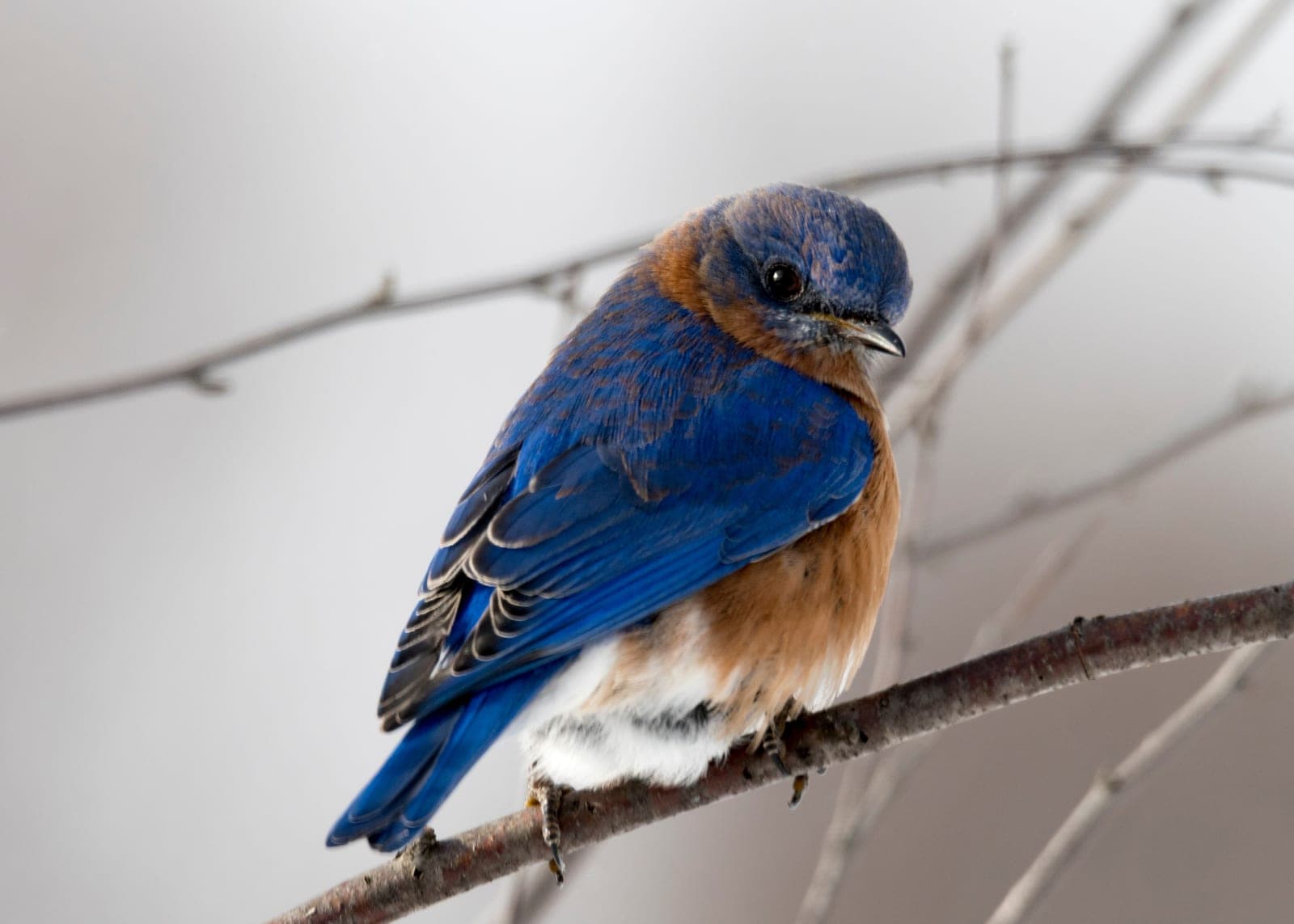
Buy a feeder with a stated 1-1/2 inch entrance. That single number admits bluebirds and physically excludes starlings, which is the whole game — starlings find mealworms faster than bluebirds do and will clear a dish in minutes. Then train the birds to it: start with worms visible in an open dish and move them inside over a week or two.
Winter Perch is funded by affiliate commission. If you buy through a link on this page we may earn a commission at no extra cost to you, and it never decides a ranking. Full disclosure · how we pick.
Quick picks
Ranked, with the trade-off named. Tap a row for the full write-up; the price button goes straight to Amazon.
| # | Product | Best for | Price |
|---|---|---|---|
| 1 | 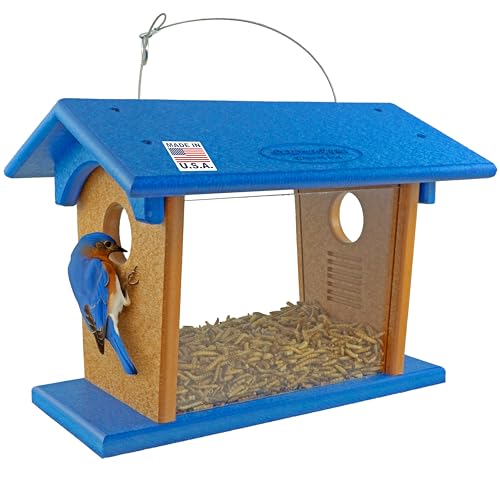 DutchCrafters Hanging Bluebird Feeder, 1-1/2 in entranceA 1-1/2 inch entrance, printed on the listing. That single number is what keeps starlings out, and almost no other bluebird feeder states it. | A stated entrance size, which is the exclusion spec | $84.00 · See it on Amazon |
| 2 |  Erva Starling-Proof Barrier Guard Bluebird FeederA barrier guard that forces birds to enter through a restricted opening, with a glass mealworm cup inside. Starlings will not negotiate the entry; bluebirds will. | Mealworms, and keeping starlings out of them | $83.99 · See it on Amazon |
| 3 |  Kettle Moraine Recycled Bluebird Mealworm FeederThe same design in recycled poly lumber, which hangs or post-mounts. Poly is the material that survives a decade outdoors, and the mount option lets you fix it steady. | Recycled poly, and a choice of mount | $52.00 · See it on Amazon |
| 4 | 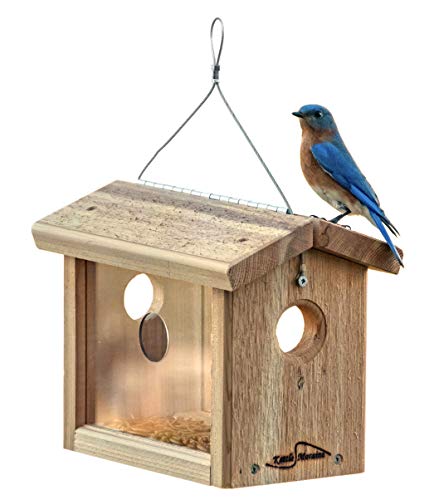 Kettle Moraine Cedar Hanging Bluebird Mealworm FeederA cedar box with an entrance, hung rather than mounted. Simple, well made, and the sensible first bluebird feeder if starlings are not already a problem in your yard. | The straightforward cedar mealworm house | $41.50 · See it on Amazon |
| 5 |  Songbird Essentials Dried Mealworms, 10 ozDried rather than live, which is the only practical format in winter — and the maker states dried mealworms carry more protein by weight than live ones. | Bluebirds and wrens, which a seed feeder never reaches | $25.00 · See it on Amazon |
#ad how we are funded · price as of September 21, 2026
The picks in full
Top pick A stated entrance size, which is the exclusion spec
DutchCrafters Hanging Bluebird Feeder, 1-1/2 in entrance
A 1-1/2 inch entrance, printed on the listing. That single number is what keeps starlings out, and almost no other bluebird feeder states it.
Specifications
- Entrance
- 1-1/2 in, as stated by the maker
- Mount
- Hanging
- Food
- Mealworms
Trade-offs
- A 1-1/2 inch hole admits bluebirds and physically excludes starlings, which are too large
- Amish-built poly, so it will outlast the birds using it
- Stated specification rather than an implied one — rare in this category
- The exclusion is geometric, so there is no mechanism to jam or freeze
- The most expensive bluebird feeder on this page by a wide margin
- A small entrance also slows bluebirds down; they take longer to learn an enclosed feeder
- House sparrows fit through a 1-1/2 inch hole perfectly well, so it excludes starlings and not sparrows
- Enclosed feeders are more work to clean than an open dish
Who it is forA yard with bluebirds and a starling flock competing for the same mealworms.
Skip it ifSkip it if house sparrows rather than starlings are your problem. A 1-1/2 inch hole does nothing to stop them.
#ad how we are funded · price as of September 21, 2026
No. 2 Mealworms, and keeping starlings out of them
Erva Starling-Proof Barrier Guard Bluebird Feeder
A barrier guard that forces birds to enter through a restricted opening, with a glass mealworm cup inside. Starlings will not negotiate the entry; bluebirds will.
Specifications
- Mechanism
- Barrier guard over a restricted entry
- Food
- Glass mealworm cup
- Target
- Bluebirds, and other small cavity-nesters
- Origin
- Erva, made in USA
Trade-offs
- Solves the specific problem mealworm feeders have — starlings find mealworms faster than bluebirds do and clear them in minutes
- A physical barrier works on birds where no weight mechanism can
- Glass cup is easy to clean and does not hold residue the way plastic does
- Erva builds properly, and the site's baffles from them have held up
- Among the most expensive feeders on the site, for a narrow job
- Bluebirds take time to learn the entry, and some individuals never commit to it
- Only relevant if bluebirds are in your area and already interested
- Mealworms are a supplement rather than a winter staple, so this feeds a small part of the yard
Who it is forA yard with bluebirds and a starling flock competing for the same dish.
Skip it ifSkip it if you have never seen a bluebird at your feeders. This solves a competition problem, not an attraction problem.
#ad how we are funded · price as of September 21, 2026
No. 3 Recycled poly, and a choice of mount
Kettle Moraine Recycled Bluebird Mealworm Feeder
The same design in recycled poly lumber, which hangs or post-mounts. Poly is the material that survives a decade outdoors, and the mount option lets you fix it steady.
Specifications
- Material
- Recycled poly lumber
- Mount
- Hang or post mount
- Food
- Mealworms
Trade-offs
- Recycled poly does not rot, split, fade or absorb the grease mealworms leave behind
- Post-mounting gives a fixed, non-swinging perch, which bluebirds accept faster
- Wipes clean, which matters on a feeder holding dried insects
- The last bluebird feeder you will buy, on materials alone
- Costs noticeably more than the cedar version for the same function
- Poly holds cold and offers no insulation, though that matters less on a feeder than a nest box
- Same narrow purpose — mealworms, for one species
- Heavier than cedar, so hanging it needs a solid hook
Who it is forA committed bluebird yard, buying once.
Skip it ifSkip it if you have never confirmed bluebirds visit. Test with the cheaper cedar box or a plain dish first.
#ad how we are funded · price as of September 21, 2026
No. 4 The straightforward cedar mealworm house
Kettle Moraine Cedar Hanging Bluebird Mealworm Feeder
A cedar box with an entrance, hung rather than mounted. Simple, well made, and the sensible first bluebird feeder if starlings are not already a problem in your yard.
Specifications
- Material
- Cedar
- Mount
- Hanging
- Food
- Mealworms
Trade-offs
- Cedar insulates and weathers better than the plastic bluebird feeders
- An enclosed box keeps mealworms out of rain and out of sight of passing starlings
- Kettle Moraine build quality, and they specialize in this narrow category
- Hanging means no post to set, so it can move while you work out where bluebirds prefer it
- A hanging feeder swings, and bluebirds are slower to commit to a moving perch than a fixed one
- No stated restriction on entry size in the listing, so it is less starling-resistant than the barrier designs
- Mealworms are a supplement rather than a staple, so this feeds a narrow slice of the yard
- Bluebirds can take weeks to find a new feeder, and some yards never get them at all
Who it is forA yard that already has bluebirds around, without a heavy starling presence.
Skip it ifSkip it if starlings dominate your feeders. They will find mealworms faster than bluebirds do, and you need a barrier design instead.
#ad how we are funded · price as of September 21, 2026
No. 5 Bluebirds and wrens, which a seed feeder never reaches
Songbird Essentials Dried Mealworms, 10 oz
Dried rather than live, which is the only practical format in winter — and the maker states dried mealworms carry more protein by weight than live ones.
Specifications
- Type
- 100% natural dried mealworms
- Size
- 10 oz tub (3.5 oz packet also listed)
- Targets
- Bluebirds, wrens, chickadees, titmice, nuthatches
- Use
- Alone in a dish, or mixed into seed
Trade-offs
- Reaches overwintering bluebirds and wrens, which ignore seed entirely
- Dried keeps at room temperature — live mealworms are a refrigerator problem
- A resealable tub, which matters for something you put out in small handfuls
- Can be mixed into seed to lift a whole feeder rather than needing its own
- Expensive per pound compared with any seed on this site
- Dried mealworms are dry — birds take them more readily near a water source
- Attracts attention from mammals and, in mild spells, from ants
- 10 oz is not much if you scatter it generously
Who it is forYards holding wrens or overwintering bluebirds, fed in small amounts from a dish.
Skip it ifSkip it if your winter list is finches, jays and sparrows. They will pick at mealworms and prefer the seed, and you will have paid a large premium for the privilege.
#ad how we are funded · price as of September 21, 2026
Why bluebirds need a different feeder
Bluebirds are insect eaters. They do not crack seed, so a sunflower feeder is irrelevant to them, and in winter — when insects are gone, frozen or buried — a dish of mealworms is one of the few things that will actually hold them in a yard.
The problem is that mealworms are equally interesting to starlings, jays, mockingbirds and house sparrows, and all of those are faster and bolder than a bluebird. An open dish of mealworms in a yard with starlings is a dish of mealworms for starlings. So the entire category is built around exclusion by geometry: an enclosed box with a hole small enough that a starling cannot pass through it.
What a 1-1/2 inch hole does not stop
Being honest about the limit: house sparrows go through a 1-1/2 inch hole without difficulty. They are smaller than bluebirds. So an enclosed feeder solves starlings and does nothing about sparrows, and if sparrows are your dominant pest this category will disappoint you.
The other partial answer is a caged or barrier design, where a wire cage surrounds the dish. That excludes larger birds by body size rather than by hole diameter, and it also keeps squirrels off the worms — which matters, because dried mealworms are expensive and squirrels like them.
How we judged these
How we picked
- Stated entrance size, since 1-1/2 inches is what excludes starlings and almost no listing publishes it.
- Whether exclusion is by hole size or by cage, because the two solve different competitors.
- Mount type, with post-mounting preferred since bluebirds accept a fixed perch faster than a swinging one.
- Material and cleanability, given that dried mealworm residue goes rancid.
- Honest limits stated up front — sparrows are not excluded, and no feeder attracts bluebirds to a yard they do not already use.
- Live price and availability, refreshed daily.
We have not tested any of these. What we did instead: read the manufacturers’ own listings, compiled the published specifications, computed the running cost at a cited electricity rate, and refreshed the prices daily. The full method is published.
Getting bluebirds to actually use it
This is where most people give up, and the fix is a process rather than a product. A bluebird does not know that an enclosed wooden box contains food.
- Start in the open. Put mealworms in a shallow open dish on a post or a rail, in clear sight, near where you already see bluebirds perching.
- Be consistent about timing. Same place, same time each morning. Bluebirds learn a schedule quickly and will start waiting.
- Use movement to get noticed. Live worms move and get found faster; if you are using dried worms, rehydrating them in warm water makes them softer, more visible and more palatable.
- Move the dish to the feeder. Once birds are coming, put the open dish directly beside the enclosed feeder for a few days, then inside it with the worms visible through the entrance.
- Then close the loop. Remove the outside dish. Expect a few days of confusion and do not panic if they vanish for a week.
The whole process can take two or three weeks. It is genuinely the hard part, and no feeder on this page shortens it.
Mount, material and cleaning
- Post-mounted beats hanging. Bluebirds accept a fixed perch faster than a swinging one, and a pole can be baffled against squirrels and raccoons.
- Recycled poly outlasts cedar and wipes clean, which matters on a feeder holding greasy dried insects. Cedar looks better and insulates better.
- It has to open. Dried mealworms leave residue and pick up damp; a feeder you cannot get a hand into is one you will stop cleaning.
- Site it in the open. Bluebirds are open-country birds and will not use a feeder tucked into dense cover the way a chickadee will.
Winter realities
Two honest points. Bluebirds do overwinter across much of their range rather than migrating entirely, and in hard weather they switch almost completely to fruit and whatever invertebrates they can find — which is exactly when a reliable mealworm supply matters most.
But this only works if bluebirds are already around. A feeder does not summon them. If you have never seen one in your yard, the money is better spent on a bluebird nest box sited in open ground, which is what actually establishes them.
What we would skip
What we would skip
An open mealworm dish in a starling yard
Starlings find mealworms faster than bluebirds and will clear a dish in minutes. Without an enclosure or a cage you are buying expensive dried insects for the wrong birds.
An enclosed feeder if house sparrows are the problem
Sparrows are smaller than bluebirds and pass through a 1-1/2 inch hole without difficulty. This category solves starlings; it does nothing about sparrows.
Any bluebird feeder if you have never seen a bluebird
A feeder does not attract bluebirds to an area they do not use. A properly sited nest box in open ground is what establishes them; the feeder comes after.
Expecting birds to find an enclosed feeder unaided
A bluebird has no reason to think a wooden box contains food. Without the open-dish training period most enclosed feeders sit untouched and get returned as faulty.
A feeder that does not open properly
Dried mealworms leave residue and absorb damp. A feeder you cannot reach into is a feeder you will stop cleaning, and mealworm residue goes rancid.
Siting it in cover
Bluebirds are open-country birds. A feeder tucked against a hedge suits chickadees and will be ignored by the species you bought it for.
Where this fits
The food side is on mealworms for winter birds, which covers dried against live and why they are a supplement rather than a staple. Bluebird houses covers the nest box, and starling-proof feeders covers the same exclusion problem across the rest of the yard.
Questions people actually ask
- What is the best bluebird feeder?
- One with a stated 1-1/2 inch entrance, which admits bluebirds and physically excludes starlings. A caged or barrier design is the alternative, excluding larger birds by body size and keeping squirrels off the worms.
- How do I get bluebirds to use a mealworm feeder?
- Train them. Start with worms in an open dish in clear sight at the same time each morning, then move the dish beside the feeder, then inside it with worms visible through the entrance. Allow two to three weeks.
- Will a bluebird feeder keep house sparrows out?
- No. Sparrows are smaller than bluebirds and pass through a 1-1/2 inch hole easily. An enclosed feeder solves starlings and does nothing about sparrows.
- Do bluebirds stay through winter?
- Across much of their range, yes — they do not all migrate. In hard weather they switch to fruit and whatever invertebrates they can find, which is when a reliable mealworm supply matters most.
- Live or dried mealworms for bluebirds?
- Live are taken faster because they move, but they are impractical to keep in cold weather. Dried are the realistic winter choice, and rehydrating them in warm water makes them softer and far more visible.
- Where should I put a bluebird feeder?
- In the open, post-mounted rather than hanging, near where you already see bluebirds perching. They are open-country birds and will ignore a feeder tucked into dense cover.
Sources
Read next
- Mealworms for Winter Birds
Dried mealworms for bluebirds and wrens — how to offer them in winter, how much, and why water matters more than usual.
- The Best Bluebird Houses
Bluebird boxes ranked on entrance size, sparrow-resistant design and cleanability — plus the siting rules that matter more than the box does.
- The Best Starling- and Grackle-Proof Bird Feeders
Why squirrel hardware fails on starlings, the three approaches that work, and six picks ranked on which birds each one lets through.
- Winter Backyard Birds: Who Shows Up, and What Brings Them
The regular winter feeder cast, what each species eats, and the specific feeder or food that brings each one in.