Winter birding / Model guide
The Best Binoculars for Winter Birding
8x42, O-ring sealed and nitrogen purged. That last part is the winter specification, and it is the one that stops your glass fogging every time you come indoors.
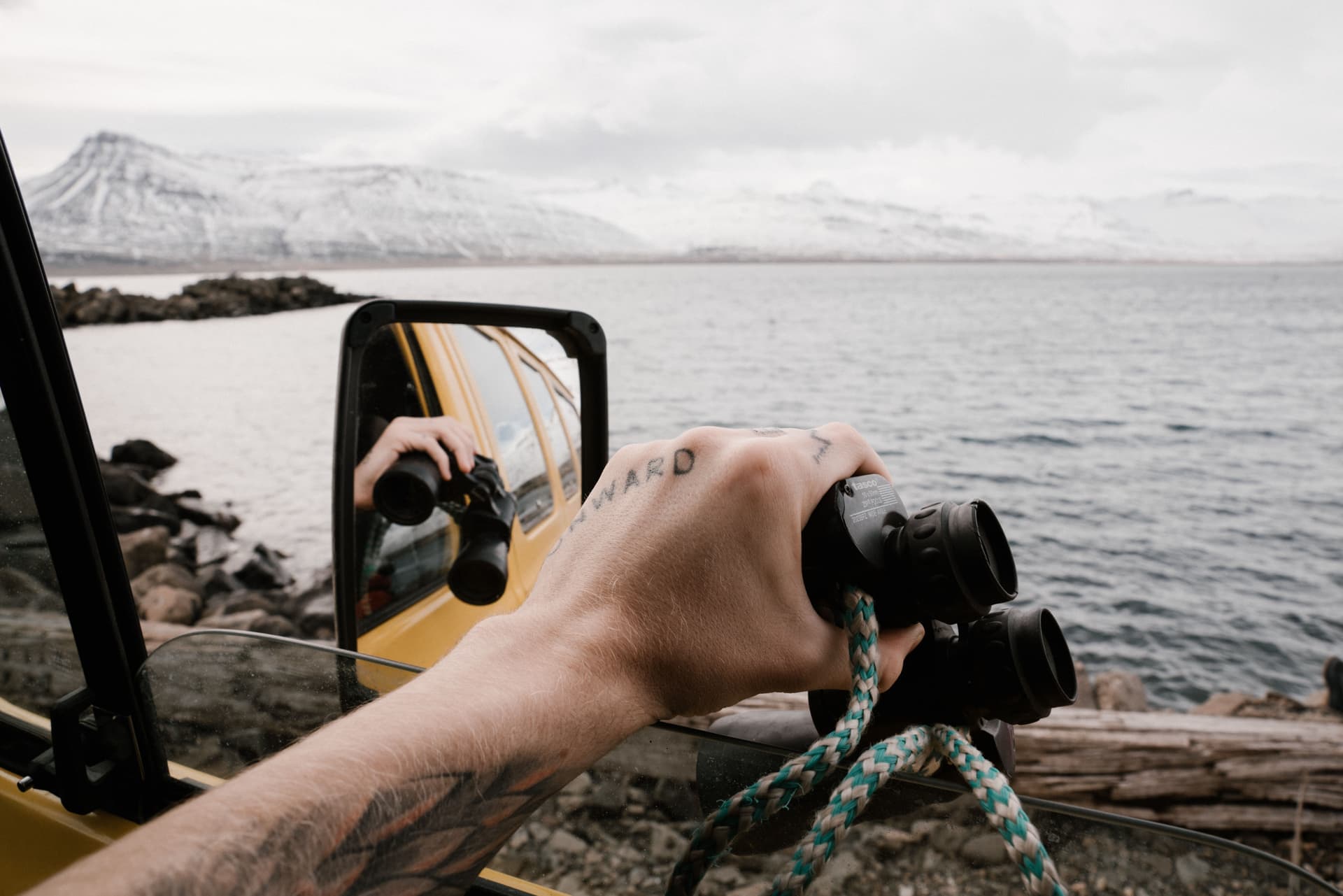
Buy an 8x42 pair that is O-ring sealed and nitrogen purged. 8x stays steady in cold, gloved hands where 10x wobbles; 42 mm objectives gather enough light for a flat gray afternoon; and nitrogen purging is what stops the glass fogging internally every time you carry it from a cold yard into a warm kitchen.
Winter Perch is funded by affiliate commission. If you buy through a link on this page we may earn a commission at no extra cost to you, and it never decides a ranking. Full disclosure · how we pick.
Quick picks
Ranked, with the trade-off named. Tap a row for the full write-up; the price button goes straight to Amazon.
| # | Product | Best for | Price |
|---|---|---|---|
| 1 |  Nikon PROSTAFF P3 8x42 BinocularsO-ring sealed and nitrogen purged, which is the spec that matters when you carry glass from a cold yard into a warm kitchen twice a day. | Winter birding, because of the nitrogen purge | $156.95 · See it on Amazon |
| 2 |  Celestron Nature DX 8x42 BinocularsA 7.4-degree field on fully multi-coated BaK-4 glass, waterproof and fogproof — the widest view in this group, and width is what finds a chickadee in a thicket. | The widest field of view at this price | $129.00 · See it on Amazon |
#ad how we are funded · price as of October 15, 2026
The picks in full
Top pick Winter birding, because of the nitrogen purge
Nikon PROSTAFF P3 8x42 Binoculars
O-ring sealed and nitrogen purged, which is the spec that matters when you carry glass from a cold yard into a warm kitchen twice a day.
Specifications
- Configuration
- 8x42
- Field of view
- 377 ft at 1,000 yd
- Sealing
- O-ring sealed, nitrogen purged
- Body
- Rubber armored
- Eye relief
- Long — works over glasses
Trade-offs
- Nitrogen purging stops internal fogging on the cold-to-warm transition that defines winter birding
- 377 ft of field makes finding a moving bird in bare branches far easier
- 8x is steady in gloved, cold hands where 10x is not
- Long eye relief means it works with spectacles on
- 42 mm objectives are bulky for a coat pocket
- 8x is not enough reach for distant waterfowl
- The rubber armor stiffens noticeably in deep cold
Who it is forThe main pair for backyard and local winter birding.
Skip it ifSkip it if you mostly scan a frozen lake for ducks at range. You want 10x and a tripod, not 8x42.
#ad how we are funded · price as of October 15, 2026
No. 2 The widest field of view at this price
Celestron Nature DX 8x42 Binoculars
A 7.4-degree field on fully multi-coated BaK-4 glass, waterproof and fogproof — the widest view in this group, and width is what finds a chickadee in a thicket.
Specifications
- Configuration
- 8x42
- Field of view
- 7.4 degrees
- Prisms
- BaK-4
- Coatings
- Fully multi-coated
- Sealing
- Waterproof and fogproof
Trade-offs
- 7.4 degrees is a wide field, and width beats magnification for feeder birding
- BaK-4 prisms with full multi-coating at an entry price
- Waterproof and fogproof, so winter condensation is handled
- Rubber armored body survives being set down on a frozen deck rail
- Edge sharpness falls off before the Nikon's does
- Celestron lists several near-identical Nature DX variants, which makes buying confusing
- The focus wheel is stiffer in cold than the Nikon's
Who it is forA first serious pair, where field of view matters more than last-ten-percent sharpness.
Skip it ifSkip it if you already own decent glass. The upgrade from a competent entry pair to this one is small; the upgrade to genuinely good optics is a different budget entirely.
#ad how we are funded · price as of October 15, 2026
Why 8x and not 10x
More magnification sounds like more capability and in winter it is usually less. Three reasons, all of which get worse in cold.
- Shake. Every tremor is magnified along with the image, and cold, gloved hands shake more. An 8x image is steady where a 10x image is not.
- Field of view. Higher magnification narrows the view. Finding a moving chickadee in a bare thicket is the actual difficulty in winter birding, and a wide field is what solves it.
- Brightness. At the same objective diameter, higher magnification gives a smaller exit pupil and a dimmer image. Winter light is already flat.
10x has a real place — scanning a frozen lake for distant waterfowl, ideally on a tripod (which needs an adapter, and a socket on the binocular). For feeders, hedgerows and woodland edge, 8x is the better tool.
The winter-specific specifications
| Spec | Why it matters in winter |
|---|---|
| Nitrogen purging | Stops internal fogging on the cold-to-warm transition you make several times a day. The single most winter-relevant spec there is |
| O-ring sealing | Keeps meltwater and driven snow out of the body |
| Wide field of view | Finding a moving bird in bare branches, which is the real difficulty |
| Long eye relief | Works with spectacles, and with a hat pulled down |
| Rubber armor | Survives being set down on a frozen deck rail; stiffens in deep cold |
| Fully multi-coated optics, BaK-4 prisms | The floor worth buying at. Below it, flat winter light produces a flat, low-contrast image |
The fogging problem, properly
It is the thing that ruins winter birding with cheap glass, and it is not the fogging you can wipe off. Air trapped inside the barrels carries moisture; when cold glass meets warm indoor air, that moisture condenses on the internal surfaces where you cannot reach it. Then it takes twenty minutes to clear, by which time the bird is gone.
Nitrogen purging replaces that internal air with dry nitrogen. There is no moisture to condense, so the problem does not occur. Both pairs recommended here are purged, and it is the specification we would refuse to compromise on for winter use.
Practical winter handling
- Warm them slowly. Even purged glass benefits from being left in a bag for a few minutes when you come indoors, so exterior condensation forms on the bag rather than the lenses.
- Use a harness, not the neck strap. A neck strap over a heavy coat swings the binoculars into everything. A harness holds them against your chest.
- Keep them inside your coat between uses. Warmer glass means less exterior condensation when you raise them.
- Gloves that let you work the focus wheel. Focus wheels stiffen in cold, and thick gloves plus a stiff wheel means you miss things.
- Do not breathe on cold lenses. It freezes.
How much to spend
The floor worth buying at is fully multi-coated optics with BaK-4 prisms, sealed and purged. Below that, in winter light, you are looking at a dim, low-contrast image and you will not enjoy using them.
If the barrier is bulk rather than money, a monocular is the one optic that fits a coat pocket, with the compromises spelled out. Above that floor the returns flatten quickly. The step from a competent entry pair to a very good one buys edge sharpness and color fidelity — real improvements, and small compared with the step from nothing to the entry pair. Buy at the floor, use them for a season, and upgrade only if you find yourself wanting more.
What we would skip
What we would skip
Compact 8x25 or 10x25 binoculars for winter
Small objectives gather little light, and winter light is already flat and gray. They pack well and they are the wrong tool for the season.
Any pair that is not nitrogen purged
Internal fogging on the cold-to-warm transition is the specific thing that ruins winter birding, and no amount of wiping reaches it. This is the one spec we would not compromise on.
10x or 12x as a first pair
Harder to hold steady in cold hands, narrower field of view, dimmer image. It sounds like more capability and delivers less for feeder and woodland birding.
How we picked
- Winter-specific specifications first — sealing and nitrogen purging — rather than generic optics ranking.
- Field of view weighted above magnification, because finding the bird is the binding difficulty.
- Manufacturer-published figures for field of view, sealing and coatings, cited to the listing.
- Honest disclosure that this page has no measured keyword backing.
- Live price and availability, refreshed daily.
We have not tested any of these. What we did instead: read the manufacturers’ own listings, compiled the published specifications, computed the running cost at a cited electricity rate, and refreshed the prices daily. The full method is published.
A feeder camera solves a different problem: the comparison, and the camera roundup. For a coat-pocket second optic, a monocular is worth knowing about — though not as your only glass. At the other end, a spotting scope is what distant waterfowl need, and it is a third purchase rather than a second. For what to point them at, winter backyard birds and where to go. To work out what you are looking at, a field guide that shows winter plumages.
Questions people actually ask
- What binoculars are best for winter birding?
- An 8x42 pair that is O-ring sealed and nitrogen purged. The magnification stays steady in cold hands, the objectives gather enough light for gray days, and the purging prevents internal fogging.
- Is 8x42 or 10x42 better?
- 8x42 for feeders, hedgerows and woodland. 10x42 for open water and distant waterfowl, ideally on a tripod. In cold hands 10x wobbles and its narrower field makes birds harder to find.
- Why do my binoculars fog up in winter?
- Moisture in the air trapped inside the barrels condenses on internal surfaces when cold glass meets warm air. Nitrogen-purged binoculars have that air replaced with dry nitrogen, so it does not happen.
- How much should I spend on binoculars?
- Enough for fully multi-coated optics with BaK-4 prisms, sealed and purged. Below that, winter light produces a flat, low-contrast image. Above it, returns flatten quickly.
- Can I use binoculars with glasses?
- Yes, with long eye relief and twist-down eyecups. Both pairs here work over spectacles, which matters more in winter when you are also wearing a hat.
Sources
Read next
- Feeder Cameras vs Binoculars: Which to Buy First
One perch all day from indoors versus the whole yard from outside — which to buy first, and the household case that flips it.
- The Best Bird Feeder Cameras for Winter
Three feeder cameras ranked on sensor size, winter power behavior and whether there is a subscription attached.
- Winter Birding Tips
Why winter birding is easier than it looks, how to stay out long enough to enjoy it, and where the birds concentrate.
- Where to Go Winter Birding
The habitat types that hold birds in January, and state-by-state notes for Massachusetts, Minnesota, Arizona, Texas and New York City.