Winter birding / Roundup
The Best Spotting Scopes for Birding
Winter is the season a scope finally earns its keep: open water, bare trees and birds that will not come closer. It is also the season that punishes a cheap tripod.
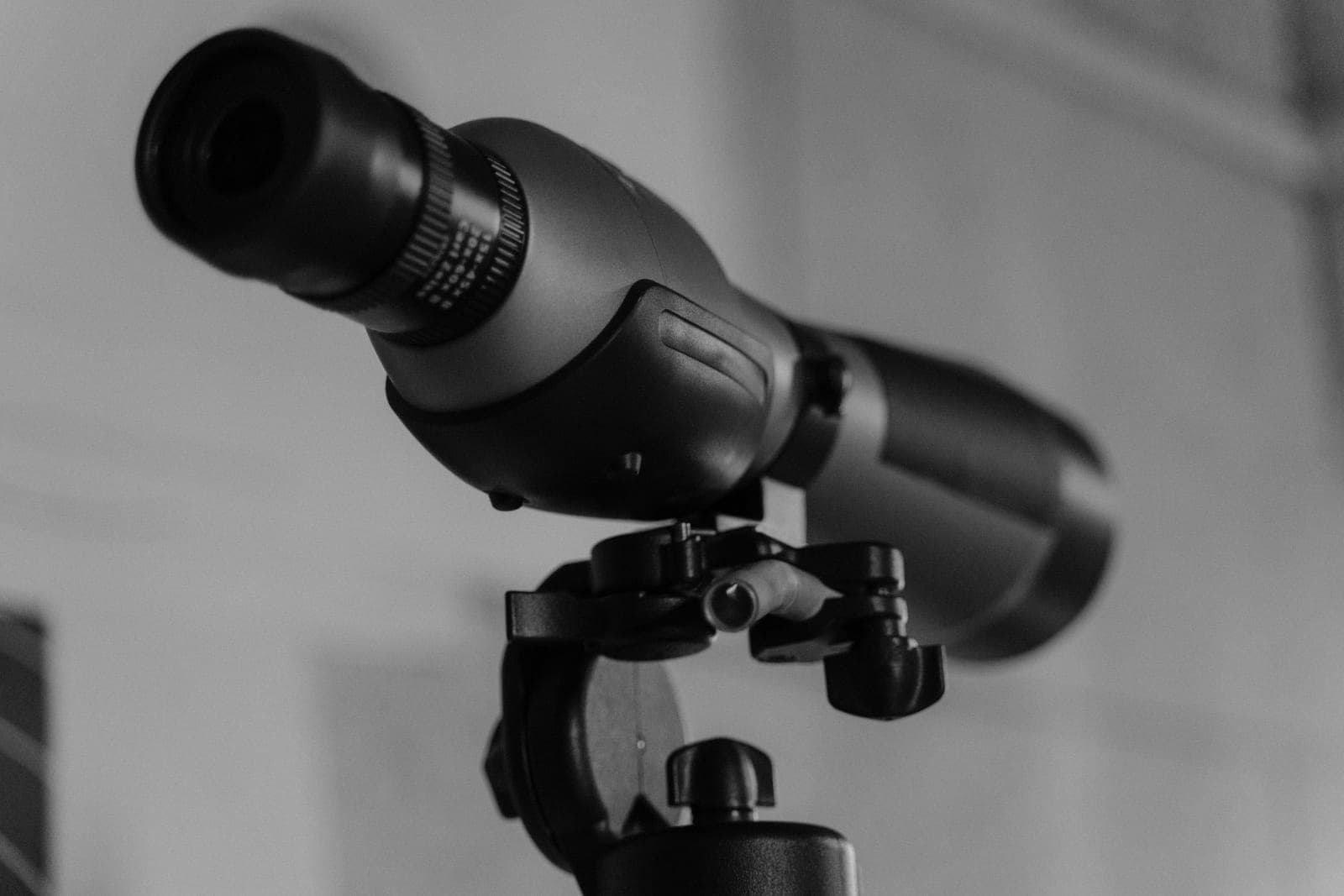
Most birders do not need one, and this page says so first. A scope earns its place on open water, shorelines and fields — not at a feeder. If you do buy, get an 80 mm angled scope and spend real money on the tripod, which does more for what you see than upgrading the glass. The Celestron Ultima 20-60x80 is the pick.
Winter Perch is funded by affiliate commission. If you buy through a link on this page we may earn a commission at no extra cost to you, and it never decides a ranking. Full disclosure · how we pick.
Quick picks
Ranked, with the trade-off named. Tap a row for the full write-up; the price button goes straight to Amazon.
| # | Product | Best for | Price |
|---|---|---|---|
| 1 |  Celestron Ultima 20-60x80 Angled Spotting ScopeAn 80 mm objective and a 20-60x zoom from a company that makes glass for a living. The long-standing default in this price bracket, and the one to measure the others against. | The scope most birders should buy | $269.95 · See it on Amazon |
| 2 |  Vortex Crossfire HD 20-60x80 Angled Spotting ScopeThe same 80 mm and 20-60x format with HD glass, backed by Vortex's VIP warranty — unlimited, lifetime and transferable, with no receipt and no registration. | Better glass, and a warranty that does not expire | $299.00 · See it on Amazon |
| 3 |  Vortex Diamondback 20-60x60 Angled Spotting ScopeA 60 mm objective instead of 80. Noticeably lighter and smaller, at a real cost in light — which is the trade worth making if the alternative is leaving the scope at home. | A scope you will actually carry | $221.58 · See it on Amazon |
| 4 |  Gosky Flagship 20-60x80 Spotting Scope with TripodAn 80 mm scope with a tripod in the box, at a fraction of what the branded scopes cost before you have even bought legs. The honest way to test whether a scope suits your birding. | Finding out whether you want a scope at all | $130.30 · See it on Amazon |
| 5 |  Celestron Regal Premium Tripod for Spotting ScopesA tripod built for the weight and the leverage of a spotting scope. Not glamorous, and it does more for what you actually see than upgrading the scope would. | The half of the purchase people forget | $199.95 · See it on Amazon |
| 6 |  K&F Concept 73 in Tripod with Fluid HeadSeventy-three inches and a fluid head, which is the feature that matters — a fluid head pans smoothly enough to follow a bird instead of jerking past it. | A fluid head without a specialist price | $69.99 · See it on Amazon |
#ad how we are funded · price as of September 19, 2026
The picks in full
Top pick The scope most birders should buy
Celestron Ultima 20-60x80 Angled Spotting Scope
An 80 mm objective and a 20-60x zoom from a company that makes glass for a living. The long-standing default in this price bracket, and the one to measure the others against.
Specifications
- Objective
- 80 mm
- Magnification
- 20-60x zoom
- Body
- Angled
- Series
- Ultima
Trade-offs
- Eighty millimeters is the objective size that makes a scope worth carrying — it gathers far more light than a 60 mm in the flat light winter supplies
- Angled eyepiece is easier on the neck at high elevation and lets short and tall people share one tripod setting
- Celestron has made this line for years, so accessories and cases are easy to find
- Twenty to sixty times covers everything from scanning a shoreline to picking apart a distant duck
- No tripod included, and it is useless without one — budget for that separately
- Non-ED glass, so there is visible color fringing on high-contrast edges at the top of the zoom
- Heavy enough that it lives in the car or on a deck rather than in a coat
- Above about 40x on a cold, shimmering day the image degrades regardless of the optics
Who it is forA birder who already owns binoculars and keeps running out of reach on open water or stubble.
Skip it ifSkip it if your birding is at a feeder or in woodland. At those ranges a scope is slower and more awkward than the 8x42 you already own.
#ad how we are funded · price as of September 19, 2026
No. 2 Better glass, and a warranty that does not expire
Vortex Crossfire HD 20-60x80 Angled Spotting Scope
The same 80 mm and 20-60x format with HD glass, backed by Vortex's VIP warranty — unlimited, lifetime and transferable, with no receipt and no registration.
Specifications
- Objective
- 80 mm
- Magnification
- 20-60x zoom
- Glass
- HD
- Body
- Angled
- Warranty
- Vortex VIP — unlimited lifetime, transferable
Trade-offs
- HD glass visibly reduces the color fringing that makes a distant bird's edge look smeared
- The VIP warranty is unlimited, lifetime and fully transferable, with no receipt or registration required — genuinely unusual in optics
- Same 80 mm light gathering as the Celestron, with a cleaner image at the top of the zoom
- Holds resale value better than almost anything else in this bracket, partly because the warranty transfers
- Costs more than the Celestron for a difference most people notice only above 40x
- Still no tripod, and still useless without one
- Heavy, like every 80 mm scope
- HD is Vortex's own designation rather than a standard, so it is not directly comparable to another maker's ED
Who it is forSomeone buying one scope for a long time who values the warranty as much as the glass.
Skip it ifSkip it if the budget is tight and the tripod is not bought yet. A Celestron plus a proper tripod beats this scope on a bad tripod, every time.
#ad how we are funded · price as of September 19, 2026
No. 3 A scope you will actually carry
Vortex Diamondback 20-60x60 Angled Spotting Scope
A 60 mm objective instead of 80. Noticeably lighter and smaller, at a real cost in light — which is the trade worth making if the alternative is leaving the scope at home.
Specifications
- Objective
- 60 mm
- Magnification
- 20-60x zoom
- Body
- Angled
- Warranty
- Vortex VIP — unlimited lifetime, transferable
Trade-offs
- Small and light enough to carry on a walk, where an 80 mm stays in the car
- Takes a lighter tripod, which compounds the weight saving and lowers the total cost
- Same VIP warranty as the rest of the Vortex line
- Easier to hold steady at the top of the zoom simply because there is less mass to settle
- A 60 mm objective gathers substantially less light than an 80 mm, and winter birding happens in poor light
- At 60x the exit pupil is tiny and the image dims sharply — the top of the zoom range is close to unusable
- Costs more than some 80 mm scopes for less light-gathering, which only makes sense if you value the portability
- Still needs a tripod
Who it is forSomeone who walks to their birding rather than driving to it.
Skip it ifSkip it if the scope will live on a deck or in a car. There is no reason to give up 20 mm of objective if you are not carrying it.
#ad how we are funded · price as of September 19, 2026
No. 4 Finding out whether you want a scope at all
Gosky Flagship 20-60x80 Spotting Scope with Tripod
An 80 mm scope with a tripod in the box, at a fraction of what the branded scopes cost before you have even bought legs. The honest way to test whether a scope suits your birding.
Specifications
- Objective
- 80 mm
- Magnification
- 20-60x zoom
- Included
- Tripod
Trade-offs
- A complete setup in one box, where the branded scopes are the scope alone
- Eighty millimeters of objective at an entry price
- Cheap enough that discovering you do not want a scope is not an expensive mistake
- Gosky is the established name at this end of the market rather than an anonymous listing
- The included tripod is the weak part — light, and it will shake at high magnification in any wind
- Glass and coatings are a clear step below Celestron and Vortex, and it shows most in poor light
- No meaningful warranty compared to the Vortex VIP
- You will likely replace the tripod first and the scope second, which costs more than buying once
Who it is forA first scope, bought to find out whether the format suits how you bird.
Skip it ifSkip it if you already know you want a scope. Buying this and then replacing both parts costs more than a Celestron and a decent tripod bought once.
#ad how we are funded · price as of September 19, 2026
No. 5 The half of the purchase people forget
Celestron Regal Premium Tripod for Spotting Scopes
A tripod built for the weight and the leverage of a spotting scope. Not glamorous, and it does more for what you actually see than upgrading the scope would.
Specifications
- Type
- Tripod for spotting scopes, binoculars and cameras
- Series
- Regal Premium
Trade-offs
- Built for the load a scope puts on a head, which a light camera tripod is not
- A steady platform is worth more at 40x than any glass upgrade — shake magnifies exactly as much as the bird does
- Height that lets you stand rather than stoop, which decides how long you last in the cold
- From the same maker as the scope, so the fit and the expectations match
- Costs as much as a budget scope, which is why people skip it and then wonder why the view wobbles
- Heavy — a steady tripod is heavy by definition, and there is no way around that
- Aimed at scopes, so it is more tripod than a pair of binoculars needs
Who it is forAnyone buying an 80 mm scope, as part of the same purchase rather than later.
Skip it ifSkip it if you are buying a 60 mm scope for walking. A lighter tripod suits that combination and is the point of going smaller.
#ad how we are funded · price as of September 19, 2026
No. 6 A fluid head without a specialist price
K&F Concept 73 in Tripod with Fluid Head
Seventy-three inches and a fluid head, which is the feature that matters — a fluid head pans smoothly enough to follow a bird instead of jerking past it.
Specifications
- Height
- 73 in
- Head
- Fluid
- Material
- Aluminum
Trade-offs
- A fluid head is the single feature that separates a usable scope tripod from a frustrating one
- Seventy-three inches is tall enough to use standing, which matters on a cold morning
- Far cheaper than the specialist optics tripods for the same core function
- Doubles as a camera tripod, so it is not single-purpose
- Aluminum and budget-priced, so it is heavier and less rigid than a specialist tripod at the same height
- Extended to full height it will shake in wind — the top section is always the weakest
- Made for cameras, so the load rating is worth checking against a heavy 80 mm scope
- Leg locks at this price wear faster, and a slipping leg on frozen ground is genuinely annoying
Who it is forPairing with a budget or mid-range scope where a specialist tripod would cost more than the optic.
Skip it ifSkip it if you bought an 80 mm scope and plan to use it in wind. The extra rigidity of a scope-rated tripod is what you are paying for there.
#ad how we are funded · price as of September 19, 2026
Where these specs came from
Do you actually need a scope?
This is an expensive category and the honest answer for a lot of readers is no. Work through it before spending anything.
| Where you bird | Better tool | Why |
|---|---|---|
| At a feeder, from a window | 8x42 binoculars | Close range; a scope cannot focus that near and is far too slow |
| Woodland and hedgerows | 8x42 binoculars | Birds move constantly; a tripod cannot follow them |
| Open water, lakes, estuaries | A scope | Ducks sit still at distances binoculars cannot resolve |
| Shorelines and mudflats | A scope | Distant, stationary, and often the whole point of the trip |
| Stubble fields, distant raptors | A scope | A perched hawk half a mile off is a scope subject |
| You do not own binoculars yet | Binoculars, definitely | A scope is a second optic, never a first |
If the honest answer is binoculars, binoculars for beginners is the page you want, and 8x42 vs 10x42 settles the configuration.
The test that settles it: do you regularly look at a bird and wish it were bigger, while it is sitting still? Sitting still is the operative part. A scope on a tripod is slow to aim and has a narrow field of view, so it is superb on a raft of ducks and nearly useless on a warbler in a hedge.
Why winter is when a scope pays
Three things change in winter and all three favor the scope.
- Water concentrates birds. When most inland water freezes, waterfowl pack onto whatever stays open. That is a large number of birds, sitting still, a long way off — the exact subject a scope exists for.
- The leaves are gone. A perched raptor that would be invisible in July is visible in January at a distance binoculars cannot resolve.
- The light is poor, which is why objective size matters more here than the magnification does.
One thing works against you, and no optic solves it: heat shimmer. Even in winter, air moving over warmer ground or open water distorts the image, and magnification amplifies the distortion along with the bird. On a bad day a 20x view is sharp and a 60x view is mush, and the scope is not at fault.
The tripod is half the purchase
This is the part that catches people out, and it is worth stating bluntly: a good scope on a bad tripod is worse than a cheap scope on a good one.
Magnification multiplies movement exactly as much as it multiplies the bird. At 40x, a tremor you would never notice becomes a view that will not settle. No amount of glass quality fixes that, and the scope makers do not include a tripod precisely because the good ones cost as much as the scope.
- A fluid head is the feature to insist on. It pans smoothly so you can follow a bird; a friction head jerks past it.
- Height matters for endurance. A tripod you have to stoop over is one you stop using after twenty minutes in the cold.
- Weight is stability. A light tripod is a shaky tripod, and that is physics rather than a manufacturing shortcut.
- Do not extend the thin bottom section unless you have to. It is the weakest part and the first to shake.
How we judged these
How we picked
- Objective diameter weighted above magnification, because winter light is the binding constraint and the top of the zoom is rarely usable.
- The tripod treated as part of the purchase, not an accessory — two are included in the picks for that reason.
- Whether the head is fluid, since panning smoothly is what makes a scope usable on a moving bird.
- Angled over straight for birding, because it allows a lower and therefore steadier tripod.
- Warranty terms quoted from the maker, not characterized from memory.
- An honest gate at the top of the page, since most readers are better served by binoculars.
- Live price and availability, refreshed daily.
We have not tested any of these. What we did instead: read the manufacturers’ own listings, compiled the published specifications, computed the running cost at a cited electricity rate, and refreshed the prices daily. The full method is published.
Reading the numbers: 20-60x80
Every scope is sold as one string of numbers, and the second half is the one that matters.
20-60x is the zoom range. 80 is the objective diameter in millimeters. As with binoculars, dividing the objective by the magnification gives the exit pupil — the width of light leaving the eyepiece. An 80 mm scope at 20x gives a generous 4 mm; the same scope at 60x gives 1.33 mm, which is a dim, fussy view in which the eye has to be positioned precisely.
Angled or straight?
A genuine decision rather than a preference, and it goes the opposite way from what most people assume.
| Angled | Straight | |
|---|---|---|
| Sharing with others | Easier — one tripod height suits everyone | The tripod must be reset per person |
| Neck strain, long sessions | Less | More, especially looking up |
| Tripod height needed | Lower, so the tripod is steadier | Taller, so less steady |
| Finding the bird initially | Harder — you look down, not at it | Easier — you point it like a gun |
| Using it from a car window | Awkward | Better |
| Digiscoping | Easier — the phone sits level | Awkward angles |
Angled is the usual recommendation for birding, and the reason is the tripod: a lower tripod is a steadier tripod, and steadiness is what you are buying.
What a scope adds beyond reach
Two things, both underrated.
Digiscoping. A phone held or clamped to the eyepiece turns a scope into a long lens for very little extra money. It is the cheapest route to a usable photograph of a distant bird, and it is the same argument monoculars make at a much smaller scale.
Shared viewing. A scope locked onto a bird can be handed around. That is how most people see their first distant rarity, and it is not something binoculars can do.
Cold-weather handling
- Let it acclimate. A scope carried from a warm car into cold air fogs internally and externally. Give it time outside before expecting a clean view.
- Never wipe a cold lens dry. Grit plus a cold coated surface is how scratches happen. Blow it off, or let it warm.
- Zoom eyepieces stiffen in cold. That is normal; do not force a stiff ring.
- Bring it indoors in a closed case, so condensation forms on the case rather than on the glass.
- Gloves and a fluid head go together — fine friction adjustments are impossible in thick gloves, which is another argument for a proper head.
What we would skip
What we would skip
A scope before binoculars
A scope is a second optic. It cannot focus close, it is slow to aim, and its field of view is narrow. If you do not own a decent 8x42 yet, that is the purchase that will change your birding.
A scope for feeder and woodland birding
At those ranges a scope is slower and more awkward than binoculars, and most scopes cannot focus near enough anyway. Buying one for the backyard is the commonest expensive mistake in this category.
Spending the whole budget on the scope
Magnification multiplies shake as much as it multiplies the bird. A mid-range scope on a steady tripod beats a premium scope on a wobbly one, every time. Split the budget before you shop.
A tripod without a fluid head
A friction head jerks past the bird you are trying to follow. The fluid head is the feature that makes a scope pleasant rather than frustrating, and it is worth more than any glass upgrade at this price.
Buying on the top magnification number
At 60x the exit pupil is tiny, the field of view is narrow, shake is magnified and heat shimmer dominates. Most useful viewing happens between 20x and 40x. Objective size is the number to buy on.
A 60 mm scope that will never leave the house
The only reason to accept less light is portability. If the scope lives on a deck or in a car, an 80 mm costs no more to own and shows you considerably more in winter light.
Where this fits
A scope is the third optic, after binoculars and well after a feeder setup. Where to go winter birding covers the open water and coastline where one earns its keep, and winter birding tips covers staying out long enough to use it. For identifying what the scope finds, a field guide that shows winter plumages.
Questions people actually ask
- Do I need a spotting scope for birding?
- Only if you regularly watch distant, stationary birds — waterfowl on open water, shorebirds, or perched raptors in open country. For feeder and woodland birding, 8x42 binoculars are faster, lighter and better.
- What size spotting scope is best for birding?
- An 80 mm objective for general use, because it gathers the most light and winter birding happens in poor light. A 60 mm is worth the compromise only if the weight saving means you will actually carry it.
- Angled or straight spotting scope for birding?
- Angled, for most people. It allows a lower and steadier tripod, causes less neck strain over a long session, and lets people of different heights share one setup without adjusting anything.
- How much should I spend on a tripod for a spotting scope?
- Enough that it is not the weak link — often as much as the scope. Magnification multiplies shake as much as it multiplies the bird, so a steady tripod with a fluid head does more for the view than better glass.
- Why does my spotting scope look blurry at high magnification?
- Usually heat shimmer, shake, or both. Air moving over warmer ground or open water distorts the image and magnification amplifies it. Most useful viewing happens between 20x and 40x, even on a good scope.
- Can you take photos through a spotting scope?
- Yes — digiscoping with a phone adapter is the cheapest way to photograph a distant bird. An angled scope makes it easier, because the phone sits level on the eyepiece rather than at an awkward angle.
- Will a spotting scope work at a bird feeder?
- Poorly. Most scopes cannot focus close enough, the field of view is too narrow to find a moving bird, and a tripod cannot follow one. Binoculars are the right tool at feeder range.
Sources
Read next
- The Best Binoculars for Beginner Bird Watching
Four binoculars across three price tiers, ranked on the specs that matter for a first pair — with the honest floor below which they are not worth buying.
- 8x42 vs 10x42 Binoculars for Birding
Exit pupil, field of view and hand shake decide this, not preference. The arithmetic laid out, plus two same-model pairs so the comparison is honest.
- The Best Monoculars for Birding
Four monoculars ranked on objective size and honest magnification, with a straight answer on when binoculars are the better buy.
- Where to Go Winter Birding
The habitat types that hold birds in January, and state-by-state notes for Massachusetts, Minnesota, Arizona, Texas and New York City.