Winter birding / Roundup
The Best Binoculars for Beginner Bird Watching
Every spec on the box except two is noise. Here is what to look at, what to ignore, and the price below which a pair of binoculars will put you off birding entirely.
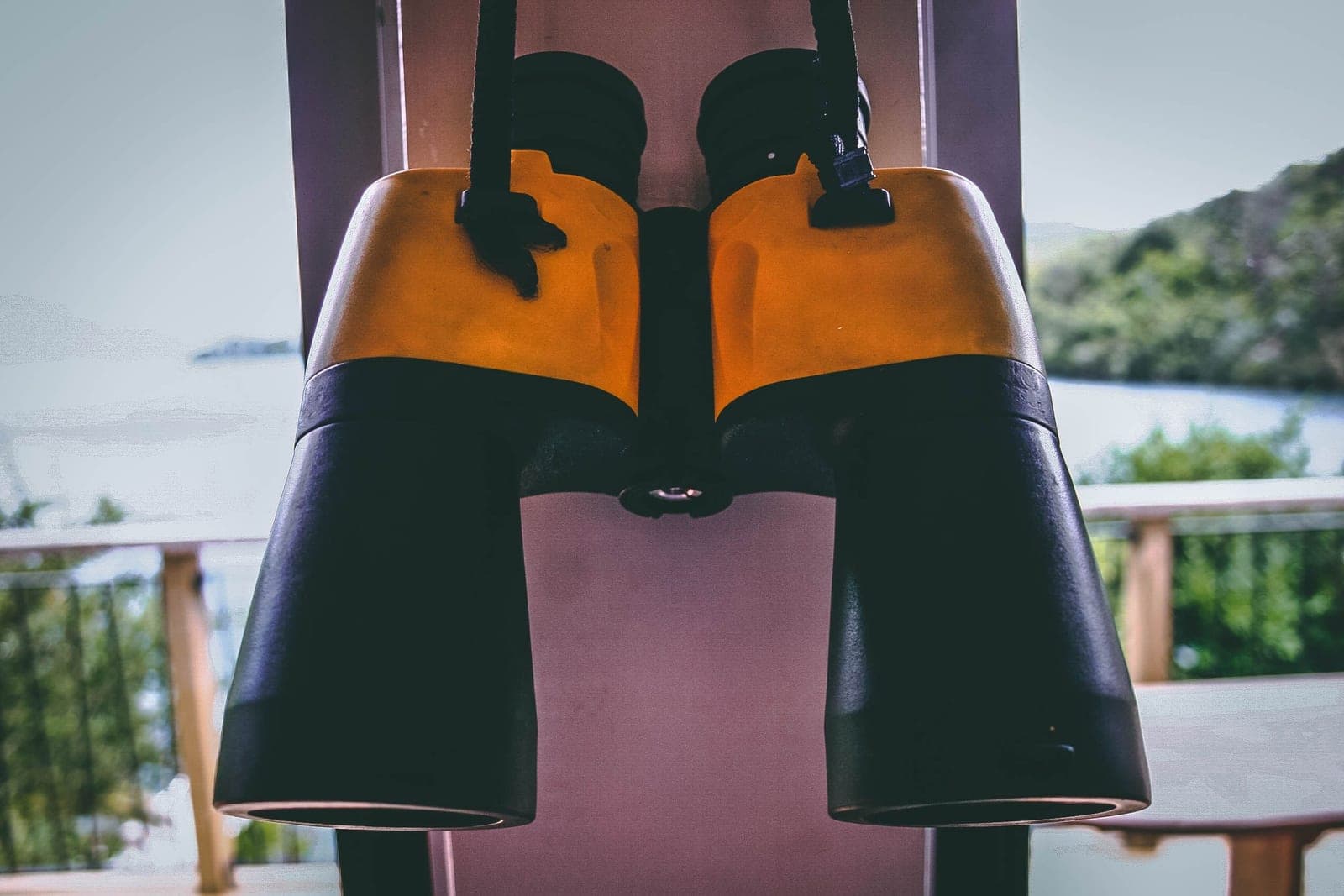
Buy 8x42. Almost every experienced birder uses that configuration, and for a first pair the reasons are not close. The Celestron Nature DX 8x42 is the pick. Below roughly a hundred dollars, binoculars get dim and hard to focus in the exact conditions winter birding happens in — that is the floor, and going under it is false economy.
Winter Perch is funded by affiliate commission. If you buy through a link on this page we may earn a commission at no extra cost to you, and it never decides a ranking. Full disclosure · how we pick.
Quick picks
Ranked, with the trade-off named. Tap a row for the full write-up; the price button goes straight to Amazon.
| # | Product | Best for | Price |
|---|---|---|---|
| 1 |  Celestron Outland X 8x42 BinocularsA waterproof 8x42 from a real optics maker at the bottom of the sensible range. Below this price the format stops being worth buying at all. | The cheapest 8x42 worth owning | $99.99 · See it on Amazon |
| 2 |  Nikon PROSTAFF P3 8x42 BinocularsO-ring sealed and nitrogen purged, which is the spec that matters when you carry glass from a cold yard into a warm kitchen twice a day. | Winter birding, because of the nitrogen purge | $129.95 · See it on Amazon |
| 3 |  Celestron Nature DX 8x42 BinocularsA 7.4-degree field on fully multi-coated BaK-4 glass, waterproof and fogproof — the widest view in this group, and width is what finds a chickadee in a thicket. | The widest field of view at this price | $129.00 · See it on Amazon |
| 4 |  Celestron Nature DX ED 10x42 BinocularsED glass in the 10x42 format. The upgrade that actually changes what you see, rather than the one that changes the badge. | Buying once, at 10x | $219.99 · See it on Amazon |
#ad how we are funded · price as of September 13, 2026
The picks in full
Top pick The cheapest 8x42 worth owning
Celestron Outland X 8x42 Binoculars
A waterproof 8x42 from a real optics maker at the bottom of the sensible range. Below this price the format stops being worth buying at all.
Specifications
- Configuration
- 8x42
- Waterproof
- Yes
- Prism
- Roof, BaK-4
Trade-offs
- 8x42 is the correct birding configuration, and this is the cheapest honest version of it
- Waterproof at a price where many competitors are not
- Celestron support and warranty behind it, unlike the no-name optics at this price
- Twist-up eyecups, which matters if you wear glasses
- Noticeably dimmer at dusk than the Nature DX, which is exactly when winter birding happens
- More edge softness and color fringing than the step-up models
- Heavier than its price-peers, and that tells after an hour
- Focus wheel is coarser than the better models, which costs you on quick small-bird work
Who it is forA genuine budget where the alternative is no binoculars at all.
Skip it ifSkip it if you can stretch to the Nature DX. The gap in low-light performance is the single biggest step up in the range.
#ad how we are funded · price as of September 13, 2026
No. 2 Winter birding, because of the nitrogen purge
Nikon PROSTAFF P3 8x42 Binoculars
O-ring sealed and nitrogen purged, which is the spec that matters when you carry glass from a cold yard into a warm kitchen twice a day.
Specifications
- Configuration
- 8x42
- Field of view
- 377 ft at 1,000 yd
- Sealing
- O-ring sealed, nitrogen purged
- Body
- Rubber armored
- Eye relief
- Long — works over glasses
Trade-offs
- Nitrogen purging stops internal fogging on the cold-to-warm transition that defines winter birding
- 377 ft of field makes finding a moving bird in bare branches far easier
- 8x is steady in gloved, cold hands where 10x is not
- Long eye relief means it works with spectacles on
- 42 mm objectives are bulky for a coat pocket
- 8x is not enough reach for distant waterfowl
- The rubber armor stiffens noticeably in deep cold
Who it is forThe main pair for backyard and local winter birding.
Skip it ifSkip it if you mostly scan a frozen lake for ducks at range. You want 10x and a tripod, not 8x42.
#ad how we are funded · price as of September 13, 2026
No. 3 The widest field of view at this price
Celestron Nature DX 8x42 Binoculars
A 7.4-degree field on fully multi-coated BaK-4 glass, waterproof and fogproof — the widest view in this group, and width is what finds a chickadee in a thicket.
Specifications
- Configuration
- 8x42
- Field of view
- 7.4 degrees
- Prisms
- BaK-4
- Coatings
- Fully multi-coated
- Sealing
- Waterproof and fogproof
Trade-offs
- 7.4 degrees is a wide field, and width beats magnification for feeder birding
- BaK-4 prisms with full multi-coating at an entry price
- Waterproof and fogproof, so winter condensation is handled
- Rubber armored body survives being set down on a frozen deck rail
- Edge sharpness falls off before the Nikon's does
- Celestron lists several near-identical Nature DX variants, which makes buying confusing
- The focus wheel is stiffer in cold than the Nikon's
Who it is forA first serious pair, where field of view matters more than last-ten-percent sharpness.
Skip it ifSkip it if you already own decent glass. The upgrade from a competent entry pair to this one is small; the upgrade to genuinely good optics is a different budget entirely.
#ad how we are funded · price as of September 13, 2026
No. 4 Buying once, at 10x
Celestron Nature DX ED 10x42 Binoculars
ED glass in the 10x42 format. The upgrade that actually changes what you see, rather than the one that changes the badge.
Specifications
- Configuration
- 10x42
- Glass
- ED (extra-low dispersion)
- Series
- Nature DX ED
Trade-offs
- ED glass genuinely reduces the color fringing that makes a bird's edge look smeared
- 10x42 reaches across open water and stubble where 8x leaves birds small
- The most optically capable binocular on this site
- Same waterproof Nature DX chassis, which is proven
- Costs substantially more than the standard Nature DX
- 10x magnifies hand shake as well as the bird — some people simply cannot hold it steady
- Narrower field of view makes following a small bird in a hedge harder
- Dimmer than an 8x42 at the same objective size, which works against you at dusk
Who it is forAn experienced birder in open country who already knows 10x suits their hands.
Skip it ifSkip it if you have never used 10x for a long session. Try 8x42 first — most people are happier there, and it costs less.
#ad how we are funded · price as of September 13, 2026
What the two numbers mean
Every binocular is sold as two numbers, and they are the only two you have to understand.
- The first is magnification. 8x means the bird appears eight times closer. More is not better — it magnifies your hand shake at exactly the same rate.
- The second is the objective diameter in millimeters. 42 mm is how much light the binocular gathers. In flat winter light this is the number doing the real work.
Divide the second by the first and you get the exit pupil — the width of the beam of light leaving the eyepiece. An 8x42 gives 5.25 mm; a 10x42 gives 4.2 mm. A human pupil opens to roughly 5 mm in dim light, which is why the 8x42 looks noticeably brighter at dusk and on overcast winter days. That single piece of arithmetic is most of the case for 8x42.
Why 8x42 and not something else
| Config | Good for | Why not for a first pair |
|---|---|---|
| 8x42 | Everything. The default for good reason | — |
| 10x42 | Open water, fields, distant raptors | Shakier, dimmer, narrower field |
| 8x32 | Weight — genuinely lighter | Gathers less light, and winter is dim |
| 10x50 | Maximum reach and brightness | Heavy enough that you stop carrying it |
| Compact 8x25 | A pocket | Too dim for winter; frustrating to use |
| Zoom binoculars | Nothing, in practice | Optically compromised at every setting |
8x42 is the default because it is the best balance of brightness, steadiness and field of view — the three things a beginner notices most. The full 8x-versus-10x argument has the detail.
The specs that matter after those
- Field of view. Stated in feet at 1,000 yards. A wider field makes finding a small moving bird dramatically easier, and this is where beginners struggle most. Anything above roughly 390 ft is comfortable.
- Eye relief, if you wear glasses. You need roughly 16 mm or more, with twist-down eyecups. Too little and you see a black ring instead of the full image — the commonest reason a new pair feels wrong.
- Close focus. How near something can be and still be sharp. For feeder watching from a window, under about 8 ft is genuinely useful.
- Waterproof and nitrogen-purged. Not a luxury in winter: moving between cold air and a warm house fogs an unsealed binocular internally, and it can stay fogged for hours.
- Weight. You will hold these up for minutes at a time. Anything much over 25 oz starts to tell.
How we judged these
How we picked
- 8x42 as the baseline configuration, since exit pupil and field of view both favor it for a first pair.
- A stated price floor, because recommending bad optics to a beginner is how people give up.
- Eye relief called out explicitly, as roughly half of readers wear glasses.
- Waterproof and nitrogen-purged sealing, which matters most moving between cold and warm.
- Field of view, because finding the bird is the beginner's actual problem.
- Weight, since an optic you stop carrying has failed regardless of its glass.
- Live price and availability, refreshed daily.
We have not tested any of these. What we did instead: read the manufacturers’ own listings, compiled the published specifications, computed the running cost at a cited electricity rate, and refreshed the prices daily. The full method is published.
The price floor, honestly
There is a real threshold in this category, and pretending otherwise does a beginner no favors.
Below roughly a hundred dollars, binoculars are typically dim, soft at the edges, slow and coarse to focus, and often not properly sealed. Every one of those failings bites hardest in winter — low light, gloved hands, small fast birds, and a walk from a cold yard into a warm room. A beginner with genuinely bad optics usually concludes that birding is frustrating, when what is actually frustrating is the equipment.
The other end is easy to overstate. The step from around a hundred dollars to around two hundred is large and worth paying for; the step from two hundred to a thousand is real but diminishing, and no beginner needs to make it. One good pair in the middle of the range is the correct purchase, and it will last many years.
Using them, which nobody explains
- Set the barrel width first. Fold them until you see one circle rather than two. Most people never do this and wonder why the view feels wrong.
- Then the diopter. Cover the right lens, focus on something with the center wheel using your left eye only. Then cover the left and adjust the small diopter ring until the right eye is sharp too. Do it once; it corrects for the difference between your eyes.
- Eyecups down if you wear glasses, up if you do not.
- Find the bird with your eyes, then lift the binoculars to your eyes without moving your head. This is the skill beginners lack, and it is the whole game. Do not search through the binoculars.
- Practice at the feeder. Winter backyard birds is a short, learnable list, and a feeder gives you stationary birds at a known distance.
What we would skip
What we would skip
Anything under about a hundred dollars
Dim, edge-soft, coarse to focus and often unsealed — and every one of those problems is worst in winter light. Bad optics convince beginners that birding is frustrating when the equipment is what is frustrating.
Zoom binoculars
A zoom mechanism compromises the optics at every setting and adds a point of failure. A fixed 8x42 outperforms a 10-30x zoom at every magnification it offers.
Ruby-coated or tinted lenses
A red or gold sheen on the front lens removes light rather than adding it. It is a cosmetic treatment sold as a feature, and in winter light you need every photon.
Compact 8x25 as a first pair
A 25 mm objective gathers roughly a third the light of a 42 mm. Fine as a pocket second pair, frustrating as the pair you learn on.
10x for a first pair
Narrower field, dimmer image and visible hand shake — the three things a beginner finds hardest. Learn on 8x42 and move to 10x later if open country turns out to be your habitat.
Short eye relief if you wear glasses
Under roughly 16 mm you get a black ring instead of a full image. It is the single commonest reason a new binocular feels wrong, and it is entirely avoidable by checking one number.
Where this fits
Winter is the best season to start, because bare trees and concentrated flocks make birds far easier to see — winter birding tips covers staying out long enough to enjoy it. Pair a first binocular with a field guide, and point it at a properly stocked feeding station.
Questions people actually ask
- What binoculars should a beginner buy for bird watching?
- An 8x42 pair. Eight times magnification is steady enough to hold and a 42 mm objective gathers enough light for dim winter days. The Celestron Nature DX 8x42 is the pick for a first pair.
- What do the numbers on binoculars mean?
- The first is magnification and the second is the objective lens diameter in millimeters. Dividing the second by the first gives the exit pupil, which is why 8x42 looks brighter at dusk than 10x42 does.
- How much should I spend on my first binoculars?
- Around a hundred dollars is the floor and roughly two hundred is the sweet spot. Below the floor the optics are dim and hard to focus; above the sweet spot the improvements are real but diminishing.
- Are 10x42 binoculars better than 8x42?
- Not for a beginner. 10x gives more reach but a narrower field, a dimmer image and visible hand shake. Start with 8x42 and add 10x later if you mostly watch open water or fields.
- Do I need waterproof binoculars?
- In winter, effectively yes — but the reason is fogging rather than rain. An unsealed binocular carried from cold air into a warm room fogs internally and can stay that way for hours.
- Can I use binoculars with glasses on?
- Yes, if eye relief is roughly 16 mm or more and the eyecups twist down. Short eye relief gives you a black ring around the image and is the commonest reason a new pair feels wrong.
Sources
Read next
- 8x42 vs 10x42 Binoculars for Birding
Exit pupil, field of view and hand shake decide this, not preference. The arithmetic laid out, plus two same-model pairs so the comparison is honest.
- The Best Binoculars for Winter Birding
Why 8x42 and nitrogen purging are the winter answer, and two pairs worth the money — plus the honest note about our keyword data.
- The Best Field Guides for Winter Bird ID
Four field guides ranked on plumage coverage — the thing that decides whether a drab January bird is identifiable — and when Merlin beats all of them.
- Winter Birding Tips
Why winter birding is easier than it looks, how to stay out long enough to enjoy it, and where the birds concentrate.