Winter birding / Comparison
Feeder Cameras vs Binoculars: Which to Buy First
Not competitors, and people buy them as if they were. One shows you one perch beautifully; the other shows you everything else.
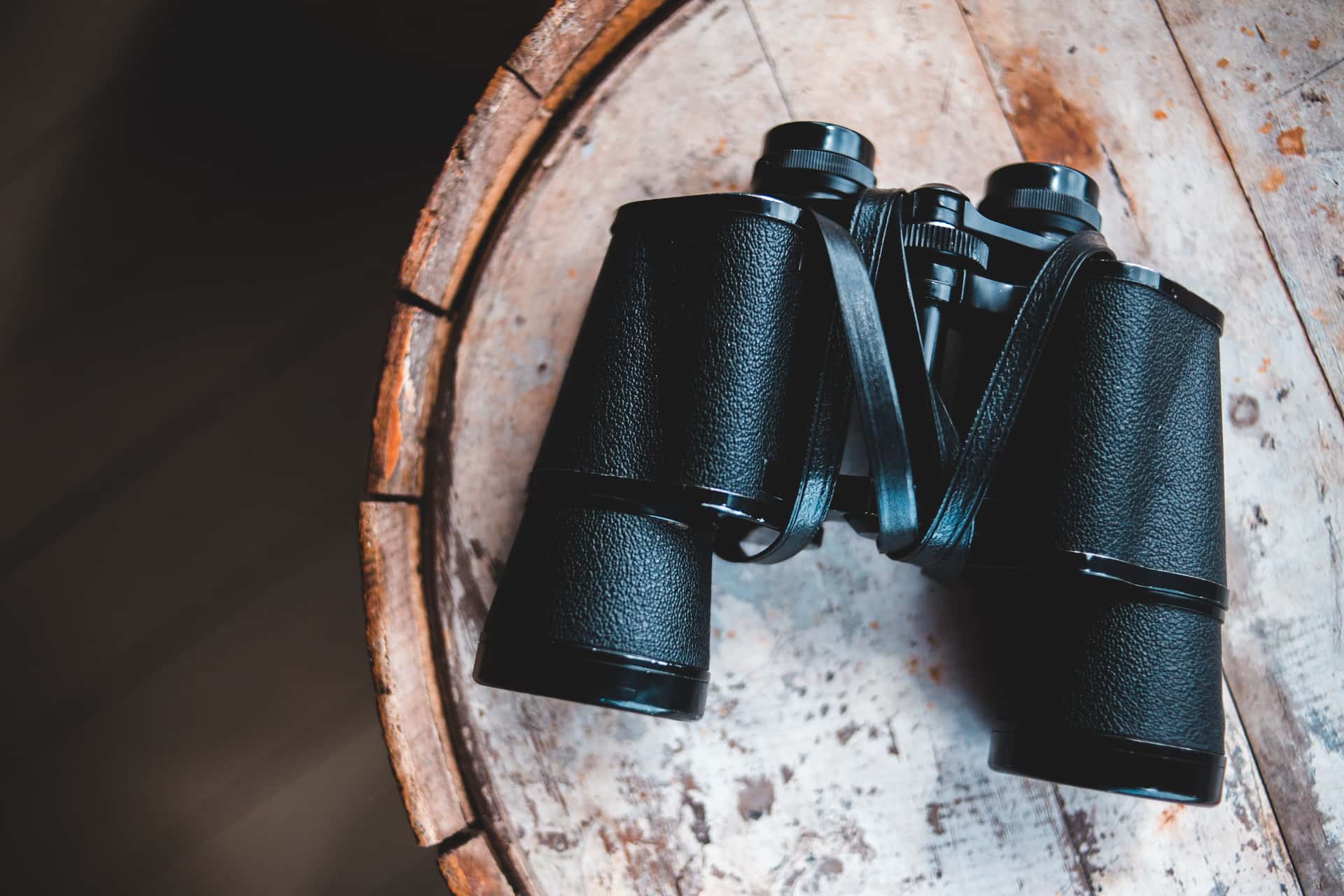
Buy the binoculars first, in almost every case. They cost less, they show you the whole yard rather than one perch, and they work everywhere you go. The camera is the right first purchase in two situations: a household where several people want to share the birds, and anyone who cannot easily get outside.
Winter Perch is funded by affiliate commission. If you buy through a link on this page we may earn a commission at no extra cost to you, and it never decides a ranking. Full disclosure · how we pick.
Quick picks
Ranked, with the trade-off named. Tap a row for the full write-up; the price button goes straight to Amazon.
| # | Product | Best for | Price |
|---|---|---|---|
| 1 |  Nikon PROSTAFF P3 8x42 BinocularsO-ring sealed and nitrogen purged, which is the spec that matters when you carry glass from a cold yard into a warm kitchen twice a day. | Winter birding, because of the nitrogen purge | $156.95 · See it on Amazon |
| 2 |  Bird Buddy Pro Solar Smart Feeder with Camera2K video off a larger sensor with HDR, which is the specification that matters in December: winter light is flat, gray and brief. | Watching the feeder from inside on the days you will not go out | $239.99 · See it on Amazon |
| 3 |  Celestron Nature DX 8x42 BinocularsA 7.4-degree field on fully multi-coated BaK-4 glass, waterproof and fogproof — the widest view in this group, and width is what finds a chickadee in a thicket. | The widest field of view at this price | $129.00 · See it on Amazon |
| 4 |  NETVUE Birdfy Smart Feeder, 2K AI Camera, SolarThe Birdfy's advantage is what it does not charge you for: free cloud storage on this model, plus color night vision. | Color night vision and free cloud storage | $129.98 · See it on Amazon |
#ad how we are funded · price as of October 15, 2026
The picks in full
Top pick Winter birding, because of the nitrogen purge
Nikon PROSTAFF P3 8x42 Binoculars
O-ring sealed and nitrogen purged, which is the spec that matters when you carry glass from a cold yard into a warm kitchen twice a day.
Specifications
- Configuration
- 8x42
- Field of view
- 377 ft at 1,000 yd
- Sealing
- O-ring sealed, nitrogen purged
- Body
- Rubber armored
- Eye relief
- Long — works over glasses
Trade-offs
- Nitrogen purging stops internal fogging on the cold-to-warm transition that defines winter birding
- 377 ft of field makes finding a moving bird in bare branches far easier
- 8x is steady in gloved, cold hands where 10x is not
- Long eye relief means it works with spectacles on
- 42 mm objectives are bulky for a coat pocket
- 8x is not enough reach for distant waterfowl
- The rubber armor stiffens noticeably in deep cold
Who it is forThe main pair for backyard and local winter birding.
Skip it ifSkip it if you mostly scan a frozen lake for ducks at range. You want 10x and a tripod, not 8x42.
#ad how we are funded · price as of October 15, 2026
No. 2 Watching the feeder from inside on the days you will not go out
Bird Buddy Pro Solar Smart Feeder with Camera
2K video off a larger sensor with HDR, which is the specification that matters in December: winter light is flat, gray and brief.
Specifications
- Video
- 2K
- Stills
- 5 MP
- Sensor
- 1/2.7", HDR
- Power
- Solar roof
- Software
- AI species identification
Trade-offs
- The larger sensor and HDR are the difference between a usable and a useless winter image
- The solar roof reduces the number of times you carry a battery indoors at minus five
- Species ID is genuinely good on the common feeder birds
- It gets people watching birds on days nobody goes outside
- Solar charging in a northern December is thin — expect to charge it by hand anyway
- Lithium batteries lose capacity in the cold, and this lives outdoors
- It is a seed feeder first, so it does nothing for suet or water
- Costs several times a good pair of binoculars
Who it is forHouseholds where the feeder is a shared thing, and anyone who cannot get out much.
Skip it ifSkip it if you want to see birds well. A camera shows you one perch; binoculars show you the whole yard, and cost far less.
#ad how we are funded · price as of October 15, 2026
No. 3 The widest field of view at this price
Celestron Nature DX 8x42 Binoculars
A 7.4-degree field on fully multi-coated BaK-4 glass, waterproof and fogproof — the widest view in this group, and width is what finds a chickadee in a thicket.
Specifications
- Configuration
- 8x42
- Field of view
- 7.4 degrees
- Prisms
- BaK-4
- Coatings
- Fully multi-coated
- Sealing
- Waterproof and fogproof
Trade-offs
- 7.4 degrees is a wide field, and width beats magnification for feeder birding
- BaK-4 prisms with full multi-coating at an entry price
- Waterproof and fogproof, so winter condensation is handled
- Rubber armored body survives being set down on a frozen deck rail
- Edge sharpness falls off before the Nikon's does
- Celestron lists several near-identical Nature DX variants, which makes buying confusing
- The focus wheel is stiffer in cold than the Nikon's
Who it is forA first serious pair, where field of view matters more than last-ten-percent sharpness.
Skip it ifSkip it if you already own decent glass. The upgrade from a competent entry pair to this one is small; the upgrade to genuinely good optics is a different budget entirely.
#ad how we are funded · price as of October 15, 2026
No. 4 Color night vision and free cloud storage
NETVUE Birdfy Smart Feeder, 2K AI Camera, Solar
The Birdfy's advantage is what it does not charge you for: free cloud storage on this model, plus color night vision.
Specifications
- Video
- 2K
- Night vision
- Color
- Power
- Solar
- Storage
- Free cloud storage
- Integration
- Works with Alexa
Trade-offs
- Free cloud storage, where the category standard is a monthly fee
- Color night vision catches the flying squirrels and the occasional owl
- Solar panel, with the same winter caveats as any solar
- Auto-record plus notification means you do not have to watch a stream
- AI identification quality trails Bird Buddy on unusual species
- Winter solar charging is optimistic at northern latitudes
- Another Wi-Fi device at the far end of your yard, where signal is worst
Who it is forAnyone who wants a feeder camera without an ongoing subscription.
Skip it ifSkip it if your Wi-Fi does not reach the feeder. Every feeder camera fails the same way, and it is never the camera's fault.
#ad how we are funded · price as of October 15, 2026
They are not the same product
| Feeder camera | Binoculars | |
|---|---|---|
| What you see | One perch, very close | The whole yard, and everywhere else |
| When | All day, including when you are out | Only when you are holding them |
| Where | That feeder | Anywhere you take them |
| Cost | Several times a good entry pair | Lower |
| Reaches suet, ground feeders, water | No | Yes |
| Needs | Wi-Fi, power, an app, sometimes a subscription | Nothing |
| Shared with others | Yes, easily — it is a screen | One person at a time |
| Winter weak point | Cold batteries, flat light, thin solar | Fogging, unless nitrogen purged |
The case for binoculars first
A camera shows you a single perch. That is a genuinely lovely view of that perch — closer than you will ever get with glass — and it tells you nothing about the woodpecker on the suet cage six feet away, the juncos working the ground beneath, or the sharp-shinned hawk that just cleared your entire feeder in two seconds.
Binoculars cost less and show you all of it, plus every park, lake and woodland edge you visit for the next twenty years. If the goal is to become someone who watches birds, they are the purchase.
The case for the camera first
Two situations, and both are real.
A shared household. A camera puts birds on a screen everyone can see, all day, with notifications. Children engage with it in a way they do not with a pair of binoculars they have to learn to focus. As a way of getting a household interested in birds, it works better than any optic.
Limited mobility. For anyone who cannot easily get outside in winter — and winter is exactly when that is hardest — a camera brings the yard indoors. That is not a compromise, it is the product working as intended, and it is the strongest single argument in the category.
The order most people should follow
- A feeder and a suet cage. No optic helps if there are no birds. Feeders.
- Open water. It draws more winter traffic than a third feeder does. De-icers.
- Binoculars. 8x42, sealed and purged. The pairs worth buying.
- A feeder camera, if the household case or the mobility case applies. The roundup.
The first two matter more than either optic. A camera pointed at an empty feeder is an expensive way to watch snow.
Winter changes both of them
The camera gets harder: lithium batteries lose capacity in the cold, northern December sun barely charges a solar roof, and flat gray light is the hardest case for a small sensor. Budget for hand-charging.
The binoculars get harder in exactly one way: fogging. Cold glass carried into a warm room condenses moisture on internal surfaces you cannot reach. Nitrogen purging solves it completely, which is why it is the specification we would not compromise on.
What we would skip
What we would skip
Buying either one before you have a working feeding station
An optic pointed at an empty yard is a waste. A feeder, a suet cage and open water come first; they are what produces something to look at.
A camera as a replacement for binoculars
It shows you one perch. The rest of your yard — the suet cage, the ground feeders, the hawk — is invisible to it.
Compact binoculars because they are cheaper than the camera
Small objectives gather little light and winter light is already flat. A competent 8x42 costs more than compacts and is a completely different experience.
How we picked
- Compared on what each product actually shows you, rather than on specifications that do not translate between them.
- Purchase order given explicitly, including the two products that should come before either optic.
- Honest disclosure that this comparison has no measured keyword backing.
- Live price and availability, refreshed daily.
We have not tested any of these. What we did instead: read the manufacturers’ own listings, compiled the published specifications, computed the running cost at a cited electricity rate, and refreshed the prices daily. The full method is published.
Full pages: binoculars and feeder cameras. Before either, get the feeders and the water right — that is what produces something worth watching.
Questions people actually ask
- Should I buy a feeder camera or binoculars?
- Binoculars first in most cases — they cost less and show you the whole yard rather than one perch. A camera is the better first purchase for a shared household, or for anyone who cannot easily get outside.
- Can a feeder camera replace binoculars?
- No. It shows one perch very well and nothing else. The suet cage, the ground feeders and anything flying past are all invisible to it.
- Which is better value?
- Binoculars, comfortably. They cost less than a camera, need no Wi-Fi, power or subscription, and work anywhere you take them for decades. If you have already decided on a camera, the Bird Buddy review and Bird Buddy against Birdfy cover the two brands that matter.
- What should I buy before either of them?
- A high-capacity feeder, a suet cage and open water. An optic pointed at an empty yard is a waste of money.
Sources
Read next
- The Best Binoculars for Winter Birding
Why 8x42 and nitrogen purging are the winter answer, and two pairs worth the money — plus the honest note about our keyword data.
- The Best Bird Feeder Cameras for Winter
Three feeder cameras ranked on sensor size, winter power behavior and whether there is a subscription attached.
- The Best Bird Feeders for Winter
Seed feeders ranked on capacity, roofing and drainage — the specs that decide how often you go out in bad weather.
- The Best Bird Bath De-Icers
Five drop-in de-icers from 50 W to 250 W, matched to basin size, with the running cost worked out for each.