Winter birding / Guide
Winter Backyard Birds: Who Shows Up, and What Brings Them
The regular cast at a northern feeder, and — more usefully — which food and which feeder brings each one in.
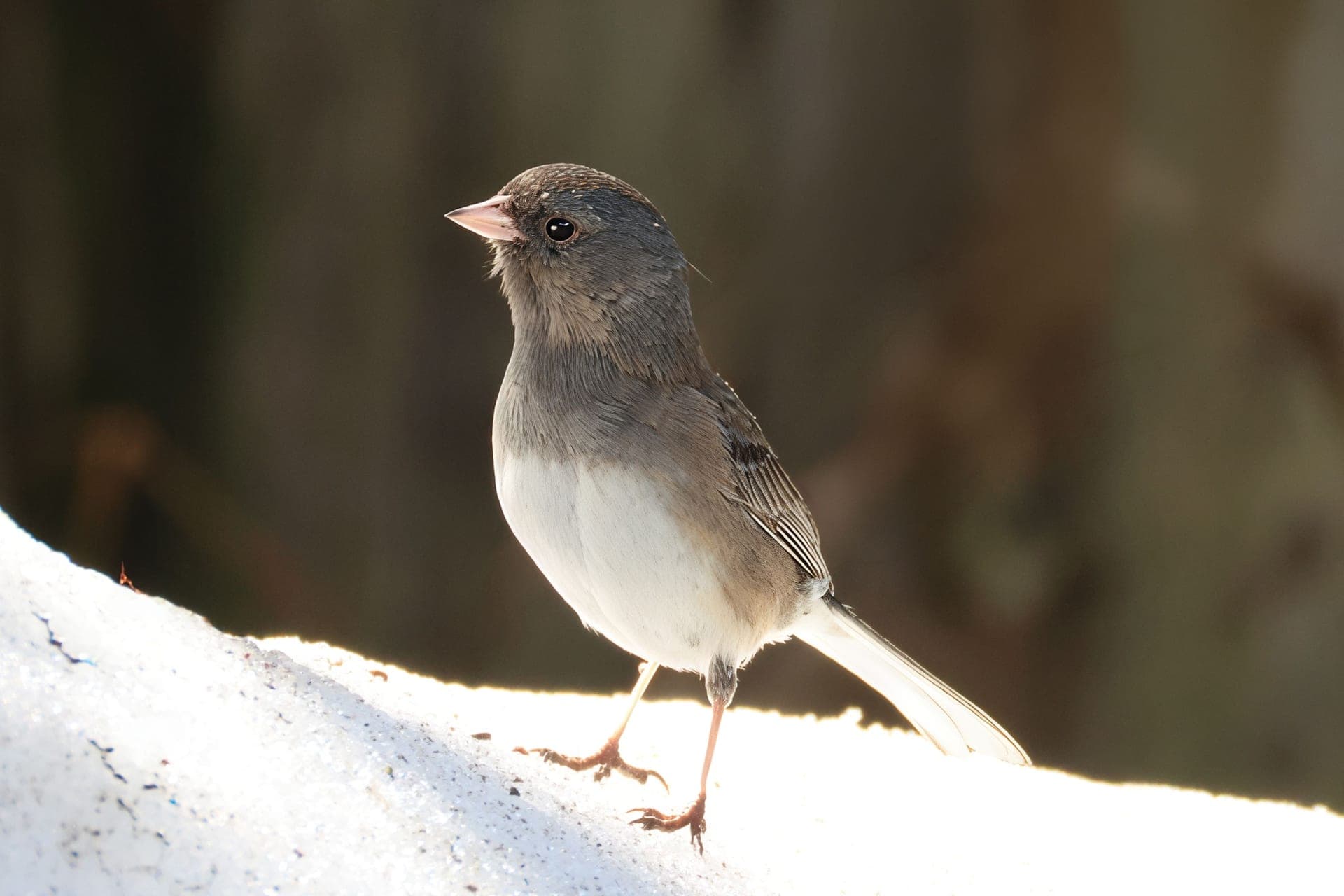
The regular northern winter cast is chickadees, titmice, nuthatches, downy and hairy woodpeckers, juncos, house and gold finches, cardinals, jays and sparrows — with starlings and house sparrows arriving uninvited. Which of them you get depends less on luck than on which feeder and which food you are running — and if you want them close enough to see detail, a window feeder puts them at arm's length.
The regulars, and what brings each one in
| Bird | Eats | Feeder that reaches it |
|---|---|---|
| Black-capped / Carolina chickadee | Sunflower, suet, peanuts | Tube, suet cage — takes one seed at a time and leaves |
| Tufted titmouse | Sunflower, peanuts, suet | Tube, suet cage, platform |
| White-breasted nuthatch | Suet, sunflower, peanuts | Suet cage, including upside-down — it feeds head-down anyway |
| Downy woodpecker | Suet, peanuts | Tail-prop or upside-down suet cage |
| Hairy woodpecker | Suet, peanuts | Tail-prop cage, sturdy |
| Red-bellied woodpecker | Suet, peanuts, sunflower | Large suet cage, platform |
| Dark-eyed junco | Small seed, millet, sunflower chips | Ground or low platform tray — will not use a tube |
| Northern cardinal | Sunflower, safflower | Platform, hopper, or a tube with a cardinal ring |
| House finch / goldfinch | Sunflower, nyjer | Tube feeder; nyjer needs a fine-port feeder |
| Blue jay | Peanuts, sunflower, suet | Platform, hopper — needs room to land |
| American tree / song / white-throated sparrow | Small seed on the ground | Ground or low tray |
| Carolina wren | Suet, insect blends, mealworms | Suet cage, sheltered |
| Mourning dove | Seed on the ground | Ground or low tray |
Roughly a third of this list will not use a tube feeder at all. That is the argument for a low platform tray — and the feeder roundup covers the hanging side.
The three feeder types you need to cover the list
- A suet cage reaches woodpeckers, nuthatches, creepers and wrens — birds a seed feeder never touches. Suet feeders.
- A tube or hopper with sunflower reaches chickadees, titmice, finches and nuthatches.
- A low platform tray reaches juncos, doves, sparrows and cardinals, which is the third of the list that ignores everything hanging. Cardinals in particular need somewhere to stand, which most tube feeders refuse to give them.
Winter visitors that are not year-round residents
Some of the best winter birds are ones that are not there in summer. Juncos come down from the north and are strongly associated with the season. In irruption years — when the northern seed crop fails — pine siskins, common redpolls and evening grosbeaks can appear far south of their usual range, sometimes in numbers.
Irruptions are unpredictable and vary year to year, so we are not going to pretend to forecast one. Keep a nyjer or sunflower feeder stocked and you are ready if it happens.
The uninvited
- European starlings. Arrive as a flock and strip a suet cake in an afternoon. Fixed by geometry, not by food: an upside-down feeder.
- House sparrows. Persistent, and difficult to exclude. Straight black oil sunflower rather than millet-heavy mixes helps somewhat.
- Common grackles. Bully at ports. An adjustable weight-activated feeder set low enough will exclude them.
- Squirrels. Not a bird, and the most common complaint. Hot pepper suet, then a weight-activated feeder.
The one addition that changes the list most
Water. It brings in birds that never visit a feeder at all — robins, thrushes, waxwings — because they eat fruit and insects rather than seed but still have to drink. In a frozen landscape, an open bath is a signal visible from a long way off.
It is also the cheapest way to add species to your winter list. A de-icer in the bath you already own runs for roughly $26 to $42 across a whole winter.
Watching them properly
A pair of 8x42 binoculars turns a small gray bird into a white-breasted nuthatch. The pairs worth buying, and tips for actually staying out there.
What to put out
Winter Perch is funded by affiliate commission. If you buy through a link on this page we may earn a commission at no extra cost to you, and it never decides a ranking. Full disclosure · how we pick.
Quick picks
Ranked, with the trade-off named. Tap a row for the full write-up; the price button goes straight to Amazon.
| # | Product | Best for | Price |
|---|---|---|---|
| 1 |  C&S High Energy Delight No-Melt Suet Dough, 8-packNo-melt dough at a price that lets you leave a cake out permanently, in the formulation woodpeckers, nuthatches and chickadees actually work at. | The default winter cake | $23.21 · See it on Amazon |
| 2 |  Wagner's 76027 Black Oil Sunflower Seed, 25 lbThin-shelled, high-fat, and eaten by nearly everything that comes to a winter feeder. Black oil sunflower is the correct default and this is the honest bulk bag. | The one seed to run if you only run one | $41.98 · See it on Amazon |
| 3 | 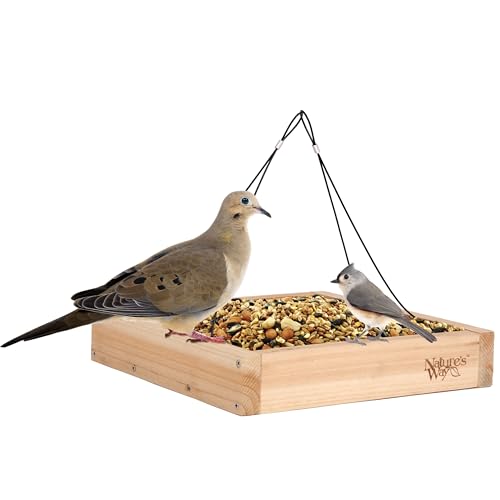 Nature's Way CWF3 Cedar Platform Tray Feeder, 12 x 12 inA flat cedar tray with a screen bottom. Juncos, doves and cardinals feed from flat surfaces and largely ignore tubes. | Ground feeders that will not use a tube | Check price on Amazon |
| 4 |  Nature's Way CWF2 Cedar Upside-Down Suet FeederThe cake faces down, so a bird has to hang underneath to eat. Woodpeckers, nuthatches and chickadees do that happily. Starlings largely will not. | Starling exclusion without a mechanism | Check price on Amazon |
#ad how we are funded · price as of October 15, 2026
The picks in full
Top pick The default winter cake
C&S High Energy Delight No-Melt Suet Dough, 8-pack
No-melt dough at a price that lets you leave a cake out permanently, in the formulation woodpeckers, nuthatches and chickadees actually work at.
Specifications
- Format
- Standard 11.75 oz cake
- Pack
- 8
- Type
- No-melt dough
- Targets
- Woodpeckers, nuthatches, chickadees
Trade-offs
- No-melt dough holds shape above freezing, so an early thaw does not dump it on the ground
- Standard cake size fits every cage feeder on this site
- Eight cakes is roughly a winter for one feeder
- Plain high-fat formulation with nothing gimmicky in it
- No-melt dough is firmer than raw suet and slower going for small birds in deep cold
- Nothing in it deters squirrels or starlings
Who it is forThe first suet you buy, and the one you re-order without thinking about it.
Skip it ifSkip it if starlings have found your feeder. A plain cake in an open cage is a starling buffet — go to an upside-down feeder or a hot pepper cake.
#ad how we are funded · price as of October 15, 2026
No. 2 The one seed to run if you only run one
Wagner's 76027 Black Oil Sunflower Seed, 25 lb
Thin-shelled, high-fat, and eaten by nearly everything that comes to a winter feeder. Black oil sunflower is the correct default and this is the honest bulk bag.
Specifications
- Type
- 100% black oil sunflower
- Bag
- 25 lb
- Shell
- Thin — accessible to small bills
- Origin
- Made in USA
Trade-offs
- Thin shells mean chickadees and finches can open it, not just cardinals
- The highest usable fat of the common feeder seeds
- 25 lb is a real winter's supply for one or two feeders
- No filler — no milo, no wheat, no red millet nobody eats
- Shells pile up under the feeder and kill the grass beneath it
- 25 lb needs a sealed bin or you are feeding mice
- Sunflower is squirrel candy
Who it is forEvery winter feeder yard, as the base seed.
Skip it ifSkip the 25 lb bag if you feed one small tube on a balcony. Seed goes stale and moldy long before you finish twenty-five pounds.
#ad how we are funded · price as of October 15, 2026
No. 3 Ground feeders that will not use a tube
Nature's Way CWF3 Cedar Platform Tray Feeder, 12 x 12 in
A flat cedar tray with a screen bottom. Juncos, doves and cardinals feed from flat surfaces and largely ignore tubes.
Specifications
- Size
- 12" x 12"
- Material
- Cedar with mesh base
- Drainage
- Screen bottom
- Mount
- Hang or set low
Trade-offs
- Reaches the third of your winter list that will not use a tube feeder
- The screen base drains meltwater instead of pooling it
- Takes seed, cracked corn, fruit and suet nuggets equally
- The easiest feeder on this site to clean properly
- An open tray, so snow lands directly in it
- No exclusion of anything — squirrels, starlings and deer all welcome
- Needs clearing after every snowfall
Who it is forYards with ground-feeding regulars, and anyone who has noticed the juncos never land on the tube.
Skip it ifSkip it if you cannot get out to clear it. A tray under six inches of snow is not a feeder, it is a bird-shaped disappointment.
#ad how we are funded · price as of October 15, 2026
No. 4 Starling exclusion without a mechanism
Nature's Way CWF2 Cedar Upside-Down Suet Feeder
The cake faces down, so a bird has to hang underneath to eat. Woodpeckers, nuthatches and chickadees do that happily. Starlings largely will not.
Specifications
- Capacity
- 1 standard cake
- Orientation
- Downward-facing cake
- Material
- Cedar with roof
- Mechanism
- None — geometry only
Trade-offs
- Excludes most starlings through geometry, with nothing to break or freeze
- The roof keeps snow and rain off the cake
- Cedar body, weathers well
- Clinging birds are the ones you wanted anyway
- It is not perfect — determined starlings learn to hang
- Loading a cake face-down is fiddlier than a front-opening cage
- One cake
Who it is forAnyone whose plain cage feeder has been taken over by starlings or grackles.
Skip it ifSkip it if your main visitors are cardinals and jays, which will not hang upside down. You will have excluded the birds you were feeding.
#ad how we are funded · price as of October 15, 2026
Where these specs came from
How we picked
- Organized by what brings each species in, since that is the actionable part rather than a bare list.
- Regional variation stated rather than glossed over.
- No irruption forecasting, because irruptions are unpredictable and a confident prediction would be invented.
- Live price and availability on every pick, refreshed daily.
We have not tested any of these. What we did instead: read the manufacturers’ own listings, compiled the published specifications, computed the running cost at a cited electricity rate, and refreshed the prices daily. The full method is published.
Species lists are regional. Yours will differ in detail and the feeder-to-species mapping holds broadly across the northern US. For a definitive identification resource, the Cornell Lab's All About Birds guide is the standard and it is free — and a printed field guide earns its place once you hit the drab winter plumages an app struggles with.
Questions people actually ask
- What birds come to feeders in winter?
- Across most of the northern US: chickadees, titmice, nuthatches, downy and hairy woodpeckers, juncos, house and gold finches, cardinals, jays and various sparrows, plus starlings and house sparrows uninvited.
- Why do juncos never use my tube feeder?
- They are ground feeders. Juncos, doves and most sparrows feed off flat surfaces and will largely ignore a hanging tube. A low platform tray reaches them.
- How do I attract woodpeckers in winter?
- Suet, in a cage with a tail prop. Woodpeckers brace on their tail feathers, and a feeder that gives them nothing to brace on is one they abandon quickly.
- What brings in birds that do not eat seed?
- Water and fruit. Robins, thrushes and waxwings eat fruit and insects rather than seed, so a heated bath or a fruiting shrub reaches them where a feeder never will.
- Do the same birds come back every day?
- Largely, yes. Winter feeder birds are territorial or move in stable flocks, so the visitors are often the same individuals through the season.
Sources
Read next
- The Best Suet Feeders for Winter
Four suet cages ranked on exclusion — tail-prop, upside-down and weight-activated — and who each one lets eat.
- What to Feed Birds in Winter
The winter list ordered by fat content, what each food reaches, and the two purchases that cover almost everything.
- The Best Bird Bath De-Icers
Five drop-in de-icers from 50 W to 250 W, matched to basin size, with the running cost worked out for each.
- Winter Birding Tips
Why winter birding is easier than it looks, how to stay out long enough to enjoy it, and where the birds concentrate.