Winter birding / Roundup
The Best Monoculars for Birding
One tube, one eye, one pocket. Genuinely useful in two situations and the wrong tool in every other — we say which before we rank anything.
For birding as your main optic, buy 8x42 binoculars instead — two eyes, a wider field and a steadier image beat any monocular. A monocular earns its place in exactly two cases: a coat-pocket optic you will actually carry, and digiscoping through a phone adapter. The Celestron is the pick for the first, the Gosky Titan for the second.
Winter Perch is funded by affiliate commission. If you buy through a link on this page we may earn a commission at no extra cost to you, and it never decides a ranking. Full disclosure · how we pick.
Quick picks
Ranked, with the trade-off named. Tap a row for the full write-up; the price button goes straight to Amazon.
| # | Product | Best for | Price |
|---|---|---|---|
| 1 |  Celestron Nature 10x25 MonocularThe only monocular here from a company that makes binoculars for a living. Small, honest 10x25, and it does not pretend to be a telescope. | A pocket optic from a real optics brand | $32.20 · See it on Amazon |
| 2 | 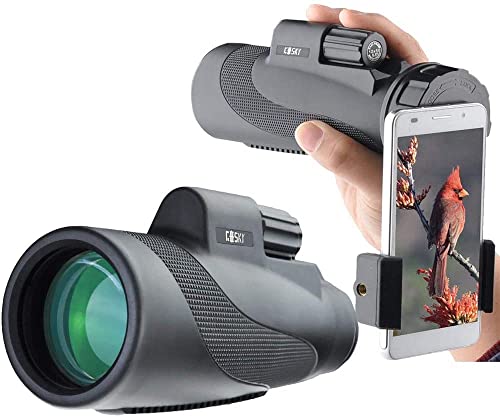 Gosky Titan 12x50 Monocular with Phone AdapterA 50 mm objective and a phone adapter. The reason to buy a monocular rather than binoculars is digiscoping, and this is the one built around that. | Reach, and phone photography | $89.99 · See it on Amazon |
| 3 | 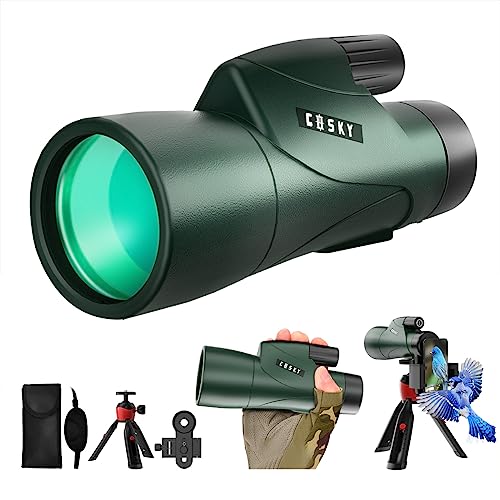 Gosky 12x55 HD Monocular, BAK4 prism55 mm and BAK4 glass, which is the specification worth checking in this market. Brighter than the 50 mm, and correspondingly less pocketable. | The largest objective that stays hand-holdable | $89.48 · See it on Amazon |
| 4 |  OXK Optics 12x56 Monocular with Phone Adapter56 mm, a phone adapter, and a price under the Gosky pair. The trade is a brand with no optics pedigree behind it. | The most objective per dollar | $69.99 · See it on Amazon |
#ad how we are funded · price as of September 13, 2026
The picks in full
Top pick A pocket optic from a real optics brand
Celestron Nature 10x25 Monocular
The only monocular here from a company that makes binoculars for a living. Small, honest 10x25, and it does not pretend to be a telescope.
Specifications
- Magnification
- 10x
- Objective
- 25 mm
- Maker
- Celestron
Trade-offs
- A real optics brand, which in the monocular market is unusual and worth paying for
- 25 mm objective is honest about what a pocket optic can gather
- Fits a coat pocket, which is the entire point of a monocular in winter
- No inflated magnification claim on the box
- A 25 mm objective gathers little light, and winter birding happens in poor light
- 10x in one hand shakes visibly; there is no second hand to steady it
- One eye means no depth perception and more eye strain over a long session
- A cheap 8x42 binocular outperforms it for birding in every way except pocketability
Who it is forA coat-pocket optic for walks where carrying binoculars is not worth it.
Skip it ifSkip it if this is your only optic for birding. Buy 8x42 binoculars — a monocular is a supplement, not a substitute.
#ad how we are funded · price as of September 13, 2026
No. 2 Reach, and phone photography
Gosky Titan 12x50 Monocular with Phone Adapter
A 50 mm objective and a phone adapter. The reason to buy a monocular rather than binoculars is digiscoping, and this is the one built around that.
Specifications
- Magnification
- 12x
- Objective
- 50 mm
- Included
- Smartphone adapter
Trade-offs
- 50 mm gathers far more light than the pocket monoculars, which matters in winter
- The phone adapter is the genuine use case — you cannot digiscope through binoculars easily
- 12x reaches distant waterfowl and raptors that 8x binoculars leave small
- Gosky is the established name in this specific niche
- 12x handheld is not steady — this needs a tripod to deliver what it promises
- Too big for a coat pocket, which removes the main advantage of a monocular
- Single eye at high magnification is tiring over a long session
- Setting up a phone adapter takes long enough that the bird is often gone
Who it is forPhotographing distant birds through a scope-like optic without buying a spotting scope.
Skip it ifSkip it if you want a quick-draw optic. At 12x on a tripod, this is closer to a small spotting scope than to binoculars.
#ad how we are funded · price as of September 13, 2026
No. 3 The largest objective that stays hand-holdable
Gosky 12x55 HD Monocular, BAK4 prism
55 mm and BAK4 glass, which is the specification worth checking in this market. Brighter than the 50 mm, and correspondingly less pocketable.
Specifications
- Magnification
- 12x
- Objective
- 55 mm
- Prism
- BAK4
- Coating
- Fully multi-coated
Trade-offs
- BAK4 prism and full multi-coating are the two specs that separate usable from useless here
- 55 mm is the brightest objective in this roundup, which is what winter light demands
- Still light enough to hold, unlike a spotting scope
- Same 12x shake problem as every high-power monocular
- Larger again than the Titan, and further from pocketable
- Marketed as a telescope, which oversells what a 55 mm monocular does
- No tripod included, and it genuinely needs one
Who it is forMaximum brightness and reach from a one-handed optic.
Skip it ifSkip it if you will not carry a tripod. Without one, the extra magnification is shake rather than detail.
#ad how we are funded · price as of September 13, 2026
No. 4 The most objective per dollar
OXK Optics 12x56 Monocular with Phone Adapter
56 mm, a phone adapter, and a price under the Gosky pair. The trade is a brand with no optics pedigree behind it.
Specifications
- Magnification
- 12x
- Objective
- 56 mm
- Included
- Smartphone adapter
Trade-offs
- Largest objective here at the lowest price of the big monoculars
- Phone adapter included, so the digiscoping use case is covered out of the box
- Useful for the buyer who wants reach and will not spend Gosky money
- No optics heritage behind the brand, and glass quality is where that usually shows
- 12x handheld shakes exactly as much as it does on any other monocular
- Large, heavy, and not a pocket optic in any sense
- Specification claims in this corner of the market deserve skepticism generally
Who it is forWanting the largest objective and a phone adapter for the least money.
Skip it ifSkip it if optical quality is what you are buying. The Celestron is a smaller optic from a company that makes glass properly.
#ad how we are funded · price as of September 13, 2026
The honest comparison first
This page recommends products, so it should lead with the case against them.
| Monocular | 8x42 binocular | |
|---|---|---|
| Finding a bird | Harder — narrow field, no depth cue | Much easier |
| Holding steady | One hand, and it shows | Two hands and a face brace |
| Eye strain | One eye working; tiring over an hour | Both eyes, relaxed |
| Low winter light | Small objectives gather little | 42 mm gathers far more |
| Pocketability | Fits a coat pocket | Needs a strap or a bag |
| Phone photography | Adapters are simple and work | Awkward at best |
| Price for the quality | Cheaper for the same glass | Costs more |
Nothing here is close except the last three rows — and those three rows are the entire reason to buy a monocular.
If you are choosing your first birding optic, go to binoculars for beginners. Come back here when you want something to put in a coat pocket alongside them.
The two cases where a monocular wins
The optic you actually carry. A binocular left at home because it was bulky has resolved nothing. A small monocular in a coat pocket on a dog walk, a commute or a winter errand is there when a bird is, and that is a real advantage rather than a marketing one.
Digiscoping. Holding a phone to a binocular eyepiece is fiddly and rarely works. A monocular with a proper phone adapter clamps rigidly and turns into a long lens for very little money. If photographing distant birds is the point — and in winter, with bare trees and concentrated waterfowl, it often is — this is the cheapest route to it short of a spotting scope.
Reading the specifications honestly
This corner of the optics market makes claims the glass does not support. Three things are worth knowing.
- The second number is the one that matters. In 12x50, the 50 is the objective diameter in millimeters, and it decides how much light reaches your eye. Winter birding happens in flat, dim light, so a 50 or 55 mm objective does far more for you than raising the magnification.
- Above about 10x, handheld means shaky. Every 12x monocular here needs a tripod to deliver what the box implies. Without one you are magnifying your own pulse along with the bird.
- BAK4 prisms and full multi-coating are the two specifications that separate a usable optic from a toy at this price. If a listing does not state them, assume the cheaper alternatives.
How we judged these
How we picked
- Objective diameter weighted over magnification, because winter light is the binding constraint.
- Whether the magnification claim is honest, since inflated numbers are the defining problem of this category.
- BAK4 prism and full multi-coating stated on the listing, not assumed.
- Whether a phone adapter is included, since digiscoping is one of the two real reasons to buy one.
- Size against the stated purpose, because a large monocular has given up its main advantage.
- Honest comparison against binoculars, stated up front rather than buried.
- Live price and availability, refreshed daily.
We have not tested any of these. What we did instead: read the manufacturers’ own listings, compiled the published specifications, computed the running cost at a cited electricity rate, and refreshed the prices daily. The full method is published.
Winter specifics
- One-handed means gloved. A monocular can be used in a gloved hand while the other stays in a pocket, which is a genuine winter advantage over binoculars.
- Fogging is worse on one tube. Moving from cold air to a warm room fogs any optic. Check for nitrogen purging or waterproof sealing, and let it warm up in a bag rather than bare.
- Eye relief matters if you wear glasses. A single eyecup pressed against a lens in cold weather is uncomfortable and smears easily.
- Bare trees are the season's gift. Winter is when distant perched raptors and waterfowl are actually visible, which is exactly when reach pays off.
What we would skip
What we would skip
A monocular as your only birding optic
One eye, a narrow field and no depth perception make finding and following birds materially harder. Buy 8x42 binoculars first; a monocular is a supplement to them, not a substitute.
Anything advertising 40x or higher
High magnification on a small objective gives a dim, shaky, narrow image. A good 10x25 outperforms a claimed 40x tube in every way that matters for birds.
A 12x model if you will not carry a tripod
Above roughly 10x, handheld shake exceeds the extra detail you gained. Without a tripod, a 12x monocular gives you a bigger, blurrier bird.
A large monocular for pocketability
A 12x56 is not a pocket optic. If you are buying for portability, buy small; if you are buying for reach, accept you are carrying a bag and a tripod.
No-name optics with no stated prism or coating
BAK4 and full multi-coating are cheap to state and expensive to deliver. A listing that omits them usually omits them for a reason.
A monocular for feeder watching
At feeder range you want field of view and comfort over a long sit, which is exactly what binoculars give and a monocular does not.
Where this fits
Optics are the other half of a winter yard from the feeders. Binoculars for beginners is the page for a first pair, 8x42 versus 10x42 settles the magnification question, and feeder cameras versus binoculars covers the other way of getting close to a bird.
Questions people actually ask
- Is a monocular good for bird watching?
- As a supplement, yes; as your only optic, no. Binoculars give two eyes, a wider field and a steadier image, which matter more for finding and following birds. A monocular wins on pocketability and on phone photography.
- What magnification monocular is best for birding?
- 8x to 10x for handheld use. Above roughly 10x, hand shake costs you more detail than the magnification adds, so a 12x model only pays off on a tripod.
- Monocular or binocular for birding?
- Binocular, for almost every birding situation. Buy a monocular as a coat-pocket second optic, or specifically for digiscoping through a phone adapter, where it is genuinely the better tool.
- What does 12x50 mean on a monocular?
- Twelve times magnification and a 50 mm objective lens. The second number decides how much light reaches your eye, and in flat winter light that matters more than the magnification does.
- Can you take photos through a monocular?
- Yes, with a phone adapter that clamps the phone rigidly to the eyepiece. This is one of the two genuine advantages monoculars have over binoculars, and several here include the adapter.
- Are high-magnification monoculars any good?
- Monoculars advertising 40x or 80x on a small objective produce dim, shaky, narrow images. Treat a very large magnification claim as a warning sign rather than a specification.
Sources
Read next
- The Best Binoculars for Beginner Bird Watching
Four binoculars across three price tiers, ranked on the specs that matter for a first pair — with the honest floor below which they are not worth buying.
- 8x42 vs 10x42 Binoculars for Birding
Exit pupil, field of view and hand shake decide this, not preference. The arithmetic laid out, plus two same-model pairs so the comparison is honest.
- The Best Binoculars for Winter Birding
Why 8x42 and nitrogen purging are the winter answer, and two pairs worth the money — plus the honest note about our keyword data.
- Feeder Cameras vs Binoculars: Which to Buy First
One perch all day from indoors versus the whole yard from outside — which to buy first, and the household case that flips it.