Winter birding / Review
Bird Buddy Review: What You Are Actually Buying
The product that invented this category, judged on the thing that decides whether a smart feeder stays up after February: how often you have to go outside and touch it.
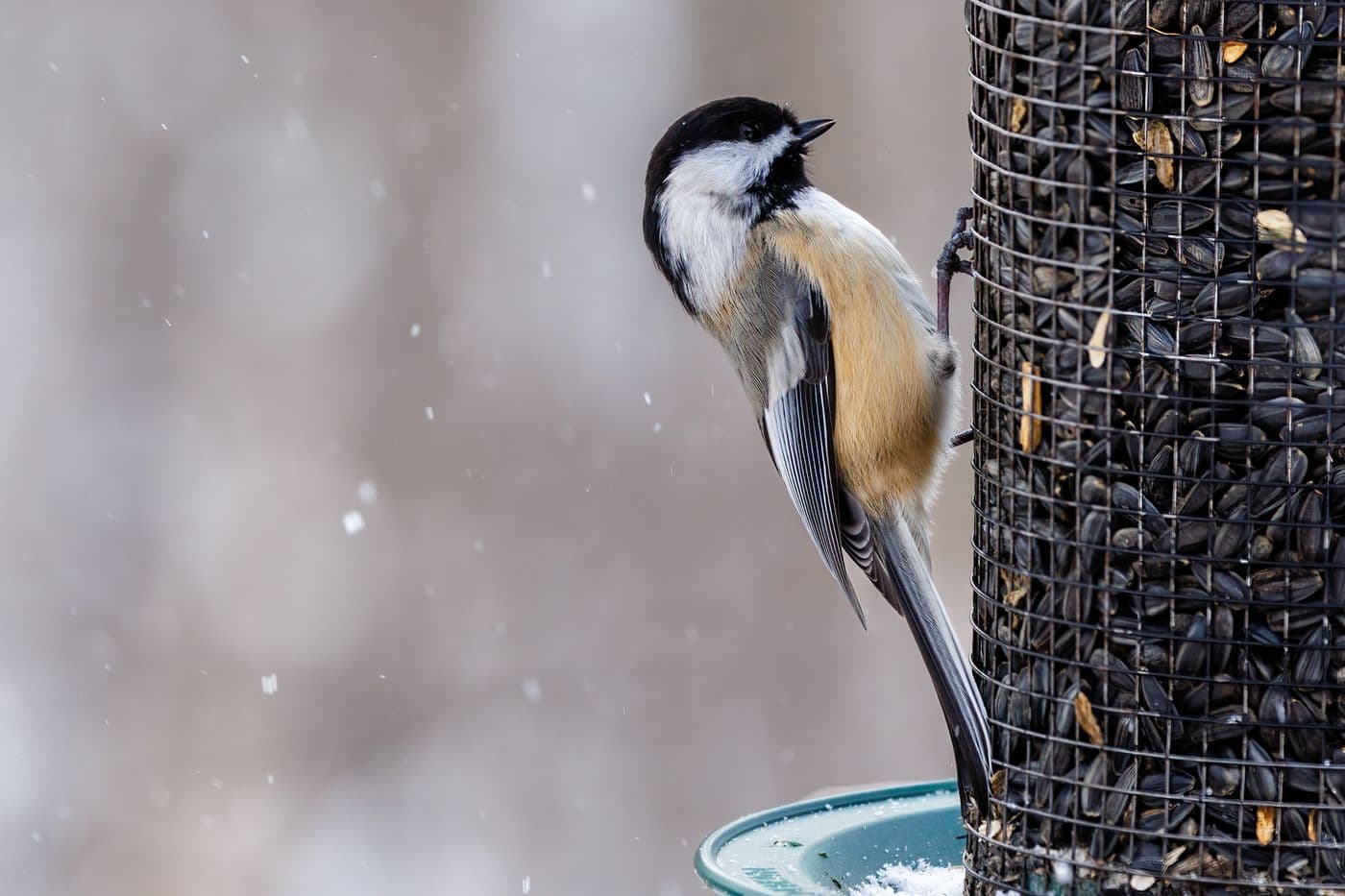
Bird Buddy makes the best-finished smart feeder and the best species identification, and it is the most expensive mainstream option by a wide margin. Buy the solar version or do not buy one — hand-charging a feeder in January is the chore that ends this hobby. The real limitation is not the camera, it is capacity: every smart feeder in this class holds a token amount of seed, so treat it as a camera that feeds birds rather than as your main feeder. If the identification app is not the point for you, a Birdfy does most of this for noticeably less.
Winter Perch is funded by affiliate commission. If you buy through a link on this page we may earn a commission at no extra cost to you, and it never decides a ranking. Full disclosure · how we pick.
Quick picks
Ranked, with the trade-off named. Tap a row for the full write-up; the price button goes straight to Amazon.
| # | Product | Best for | Price |
|---|---|---|---|
| 1 |  Bird Buddy Pro Solar Smart Feeder with Camera2K video off a larger sensor with HDR, which is the specification that matters in December: winter light is flat, gray and brief. | Watching the feeder from inside on the days you will not go out | $239.99 · See it on Amazon |
| 2 |  Bird Buddy Home Smart Bird FeederThe cheaper Bird Buddy, with the dual solar panel included. You give up some of the Pro's camera specification and keep the identification app, which for most people is the part that matters. | Bird Buddy without the Pro price | $189.99 · See it on Amazon |
| 3 |  NETVUE Birdfy Smart Feeder, 2K AI Camera, SolarThe Birdfy's advantage is what it does not charge you for: free cloud storage on this model, plus color night vision. | Color night vision and free cloud storage | $129.99 · See it on Amazon |
| 4 |  NETVUE Birdfy Smart Feeder, 2K AI Camera (entry model)The entry Birdfy: the same 2K camera and free cloud storage, mains or battery rather than solar, at the lowest price in this group. | The cheapest honest way into feeder cameras | $109.98 · See it on Amazon |
| 5 |  Birdfy Metal 2 4K Smart Bird FeederBirdfy's metal-bodied flagship, and the model to put against the Bird Buddy Pro rather than the cheap plastic Birdfys that usually get compared to it. Higher stated video resolution, a metal housing, and dual-band wi-fi, which matters more than it sounds when the feeder is at the end of the garden. | The Birdfy that actually competes with a Bird Buddy Pro | $249.99 · See it on Amazon |
#ad how we are funded · price as of October 3, 2026
The picks in full
Top pick Watching the feeder from inside on the days you will not go out
Bird Buddy Pro Solar Smart Feeder with Camera
2K video off a larger sensor with HDR, which is the specification that matters in December: winter light is flat, gray and brief.
Specifications
- Video
- 2K
- Stills
- 5 MP
- Sensor
- 1/2.7", HDR
- Power
- Solar roof
- Software
- AI species identification
Trade-offs
- The larger sensor and HDR are the difference between a usable and a useless winter image
- The solar roof reduces the number of times you carry a battery indoors at minus five
- Species ID is genuinely good on the common feeder birds
- It gets people watching birds on days nobody goes outside
- Solar charging in a northern December is thin — expect to charge it by hand anyway
- Lithium batteries lose capacity in the cold, and this lives outdoors
- It is a seed feeder first, so it does nothing for suet or water
- Costs several times a good pair of binoculars
Who it is forHouseholds where the feeder is a shared thing, and anyone who cannot get out much.
Skip it ifSkip it if you want to see birds well. A camera shows you one perch; binoculars show you the whole yard, and cost far less.
#ad how we are funded · price as of October 3, 2026
No. 2 Bird Buddy without the Pro price
Bird Buddy Home Smart Bird Feeder
The cheaper Bird Buddy, with the dual solar panel included. You give up some of the Pro's camera specification and keep the identification app, which for most people is the part that matters.
Specifications
- Power
- Dual solar panel
- Identification
- AI species ID in-app
Trade-offs
- Noticeably cheaper than the Pro while keeping the identification that makes a smart feeder worth owning
- Solar included rather than sold as an add-on
- Same app and same species database as the more expensive model
- Lower camera specification than the Pro, which shows on distant or fast-moving birds
- Same small seed capacity problem as every feeder in this category
- Still more expensive than a comparable Birdfy, so you are paying something for the brand
Who it is forSomeone who wants Bird Buddy's identification without the top-of-range price.
Skip it ifSkip it if image quality is the point of the purchase for you. The Pro is the one with the better camera.
#ad how we are funded · price as of October 3, 2026
No. 3 Color night vision and free cloud storage
NETVUE Birdfy Smart Feeder, 2K AI Camera, Solar
The Birdfy's advantage is what it does not charge you for: free cloud storage on this model, plus color night vision.
Specifications
- Video
- 2K
- Night vision
- Color
- Power
- Solar
- Storage
- Free cloud storage
- Integration
- Works with Alexa
Trade-offs
- Free cloud storage, where the category standard is a monthly fee
- Color night vision catches the flying squirrels and the occasional owl
- Solar panel, with the same winter caveats as any solar
- Auto-record plus notification means you do not have to watch a stream
- AI identification quality trails Bird Buddy on unusual species
- Winter solar charging is optimistic at northern latitudes
- Another Wi-Fi device at the far end of your yard, where signal is worst
Who it is forAnyone who wants a feeder camera without an ongoing subscription.
Skip it ifSkip it if your Wi-Fi does not reach the feeder. Every feeder camera fails the same way, and it is never the camera's fault.
#ad how we are funded · price as of October 3, 2026
No. 4 The cheapest honest way into feeder cameras
NETVUE Birdfy Smart Feeder, 2K AI Camera (entry model)
The entry Birdfy: the same 2K camera and free cloud storage, mains or battery rather than solar, at the lowest price in this group.
Specifications
- Video
- 2K
- Storage
- Free cloud storage
- Setup
- App-based, works with Alexa
- Power
- Battery or adapter, no solar roof
Trade-offs
- Lowest entry cost of the three cameras here
- The same free cloud storage as the solar model
- Fewer parts to fail than a solar roof in a hard winter
- No solar means carrying the battery indoors to charge, in winter, repeatedly
- Entry model, so the image processing is the weakest of the three
Who it is forTesting whether a feeder camera is something your household will actually use.
Skip it ifSkip it if the feeder is a long walk from the house. Without solar you will be making that walk to swap a battery more often than you think.
#ad how we are funded · price as of October 3, 2026
No. 5 The Birdfy that actually competes with a Bird Buddy Pro
Birdfy Metal 2 4K Smart Bird Feeder
Birdfy's metal-bodied flagship, and the model to put against the Bird Buddy Pro rather than the cheap plastic Birdfys that usually get compared to it. Higher stated video resolution, a metal housing, and dual-band wi-fi, which matters more than it sounds when the feeder is at the end of the garden.
Specifications
- Video
- 4K, per the listing
- Wi-Fi
- 2.4 GHz and 5 GHz
- Body
- Metal
Trade-offs
- Dual-band wi-fi is a real advantage for a device mounted away from the house
- Metal body resists squirrel damage better than the plastic units in this category
- Higher stated resolution than most of the field
- Birdfy's identification is included rather than gated behind a subscription for the basics
- Priced against the Bird Buddy Pro, so it is not the budget option people expect from Birdfy
- Heavier than the plastic units, which limits where you can hang it
- Same capacity limitation as the whole category
- App polish is a step behind Bird Buddy's, which is the usual trade in this comparison
Who it is forSomeone choosing on specification rather than on app experience.
Skip it ifSkip it if you wanted Birdfy because it was the cheap one — the entry Birdfy models are a different purchase at a different price.
#ad how we are funded · price as of October 3, 2026
What this page is and is not
We have not bench-tested this unit in a lab and we are not going to pretend otherwise. What follows is an assessment built from the manufacturer's published specification, the design of the product, and what matters about running any camera feeder through a northern winter — which is the lens this whole site applies. Where a number comes from the maker's listing, we say so.
What we will not do is invent a battery life, a detection accuracy percentage or a species count we did not measure. The category is full of that, and the figures move with every firmware update anyway.
The capacity problem, first
This is the thing to understand before anything about video quality, and almost nobody leads with it.
A smart feeder is built around a camera, a battery and a lens, and the seed goes in whatever space is left. The result holds a fraction of what a plain tube feeder holds. In mild weather that is a minor annoyance. In a cold snap, when birds are feeding from first light to last and your ordinary feeders are emptying in a day, a smart feeder empties faster — and an empty smart feeder is just a camera pointed at nothing.
The practical consequence: run it alongside a real feeder, not instead of one. The birds stay in the yard because of the big feeder, and they visit the small one because it is there. People who buy a smart feeder as their only feeder are the people who report that no birds came.
Why the solar roof is not optional
Bird Buddy sells solar and non-solar configurations, and the non-solar one is a trap in a cold climate.
Lithium batteries lose usable capacity in the cold — that is chemistry, not a defect, and it affects every device in this category equally. A battery that lasts a comfortable stretch in October gets noticeably shorter in January, which is exactly the month you want the feeder working. Hand-charging means taking the unit down, bringing it inside, waiting, and remounting it, in weather. People do that twice and then stop.
Solar does not eliminate that — a short, overcast northern day is not much of a charge either — but it extends the interval enough that the feeder keeps running through the season instead of becoming a thing in a drawer. If the budget only reaches the non-solar version, buy a cheaper solar competitor instead.
How we judged it
How we picked
- Does it keep running unattended through a northern winter, which is the question that decides whether a smart feeder gets used or shelved.
- Power configuration, because cold shortens battery life and hand-charging is the chore people abandon.
- Seed capacity relative to a real feeder, the specification this category consistently buries.
- What the free tier actually includes, since the subscription is part of the price and the comparison is meaningless without it.
- Identification quality, which is the feature people buy the product for.
- Low-light performance expectations, because winter light is flat, gray and brief and that is when the feeder is busiest.
- Claims separated from measurements. We report the maker's published figures as the maker's, and we do not invent our own.
- Live price and availability, refreshed daily.
We have not tested any of these. What we did instead: read the manufacturers’ own listings, compiled the published specifications, computed the running cost at a cited electricity rate, and refreshed the prices daily. The full method is published.
The identification, which is the actual product
Strip away the marketing and the reason to buy a Bird Buddy over a camera on a stick is the app telling you what just landed.
This is where Bird Buddy is genuinely ahead. The identification is faster and more confident than the competition's, the postcard and clip sharing is well made rather than bolted on, and the whole experience is designed rather than assembled. For a household where someone is learning the birds, that is worth real money — it does the job a field guide does, without the learning curve.
The honest caveat: the free tier limits how much of that you get. Bird Buddy gates parts of the identification experience behind a paid plan, and the unit price is not the whole price. Budget for the subscription or accept a reduced version of the feature you bought the thing for. Birdfy is more generous here, which is the single strongest argument against Bird Buddy.
What it will not do
- It will not replace binoculars. One fixed angle, one perch, at arm's length. Feeder cameras against binoculars works through which to buy first, and for most people the answer is still binoculars.
- It will not survive a determined squirrel any better than other plastic feeders. It is not armored, and it is expensive to replace.
- It will not solve an empty yard. A camera on a feeder nothing visits films nothing — why birds are not coming to your feeder is the page to read first if that is your situation.
- It will not show you the ground layer, which in winter is a large share of what is actually in the yard: juncos, native sparrows, doves. Those birds feed on a tray, out of frame.
Pro or Home
The Home model keeps the app and the identification and gives up camera specification. Since the identification is the reason to choose Bird Buddy at all, the Home is the better value of the two for most buyers.
Pick the Pro if image quality is genuinely the point — if you intend to share clips, or you want the best chance of a usable picture on a dark December afternoon, which is the hardest light this product ever faces. Pick the Home if you want to know what the bird is and would rather keep the difference.
What we would skip
What we would skip
The non-solar configuration, in a cold climate
Cold shortens usable battery life exactly when you want the feeder running, and hand-charging means bringing it indoors in winter weather. People do that twice and then give up. If solar is out of budget, buy a cheaper solar competitor instead.
A smart feeder as your only feeder
Capacity is a fraction of a normal feeder's, so in a cold snap it empties fast and films nothing. Run it beside a real feeder, where the big feeder holds the birds in the yard.
Buying it to identify birds you could identify yourself
If you already know a chickadee from a titmouse, you are paying a large premium for a feature you will use once. A plain feeder and binoculars give you more birds for less money.
Expecting it to show your whole winter yard
One fixed angle on one perch. Juncos, sparrows and doves feed on the ground and never appear. A camera feeder shows you a slice, not a survey.
Mounting it where squirrels already win
Nothing about this unit is squirrel-resistant and it costs many times what a plastic tube feeder costs. Solve the squirrel problem with a baffled pole first, then mount the camera.
The verdict
Worth it for a specific buyer: someone who wants to learn the birds in their own yard, who will run it next to a proper feeder, and who is not trying to minimize cost. For that person it is the best thing in the category and the app is why.
Not worth it if you are buying a feeder and the camera is a bonus, if the budget is tight, or if you were going to buy the non-solar version to save money. The full feeder-camera roundup covers the alternatives, and Bird Buddy against Birdfy is the head-to-head if you have narrowed it to those two.
Questions people actually ask
- Is the Bird Buddy worth it?
- Worth it if you want to learn the birds in your yard and will run it alongside a normal feeder. Not worth it if you want a feeder first, if the budget is tight, or if you would buy the non-solar version to save money. The identification app is the product; the feeder part is small.
- Does Bird Buddy need a subscription?
- The hardware works without one, but the free tier limits parts of the species identification, which is the main reason to choose Bird Buddy over a cheaper camera feeder. Budget for the plan or accept a reduced version of the feature. Birdfy is more generous on this point.
- Should I get the solar version?
- In a cold climate, yes, or buy something else. Lithium batteries lose usable capacity in cold weather, so hand-charging means taking the feeder down and bringing it indoors in the middle of winter. That is the chore that gets a smart feeder abandoned.
- How much seed does it hold?
- Far less than an ordinary tube feeder, which is true of every smart feeder — the camera, battery and lens take the space. Run it next to a full-size feeder rather than in place of one, especially during a cold snap.
- Bird Buddy Pro or Bird Buddy Home?
- Home for most people: it keeps the app and the identification, which is the reason to buy this brand, and gives up camera specification. Choose the Pro if image quality genuinely matters to you, particularly in low December light.
- Will squirrels destroy it?
- They can. Nothing about it is squirrel-resistant and it costs many times what a plastic feeder costs. If squirrels already win in your yard, fit a baffled pole before mounting an expensive camera on it.
Sources
Read next
- Bird Buddy vs Birdfy
Subscription terms, cold-weather power, build quality and app polish, with a straight recommendation at each price point.
- The Best Bird Feeder Cameras for Winter
Three feeder cameras ranked on sensor size, winter power behavior and whether there is a subscription attached.
- Feeder Cameras vs Binoculars: Which to Buy First
One perch all day from indoors versus the whole yard from outside — which to buy first, and the household case that flips it.
- The Best Bird Feeders for Winter
Seed feeders ranked on capacity, roofing and drainage — the specs that decide how often you go out in bad weather.