Winter birding / Comparison
8x42 vs 10x42 Binoculars for Birding
The most common question in birding optics, settled with arithmetic rather than opinion — and with two pairs of binoculars that differ in nothing but the magnification.
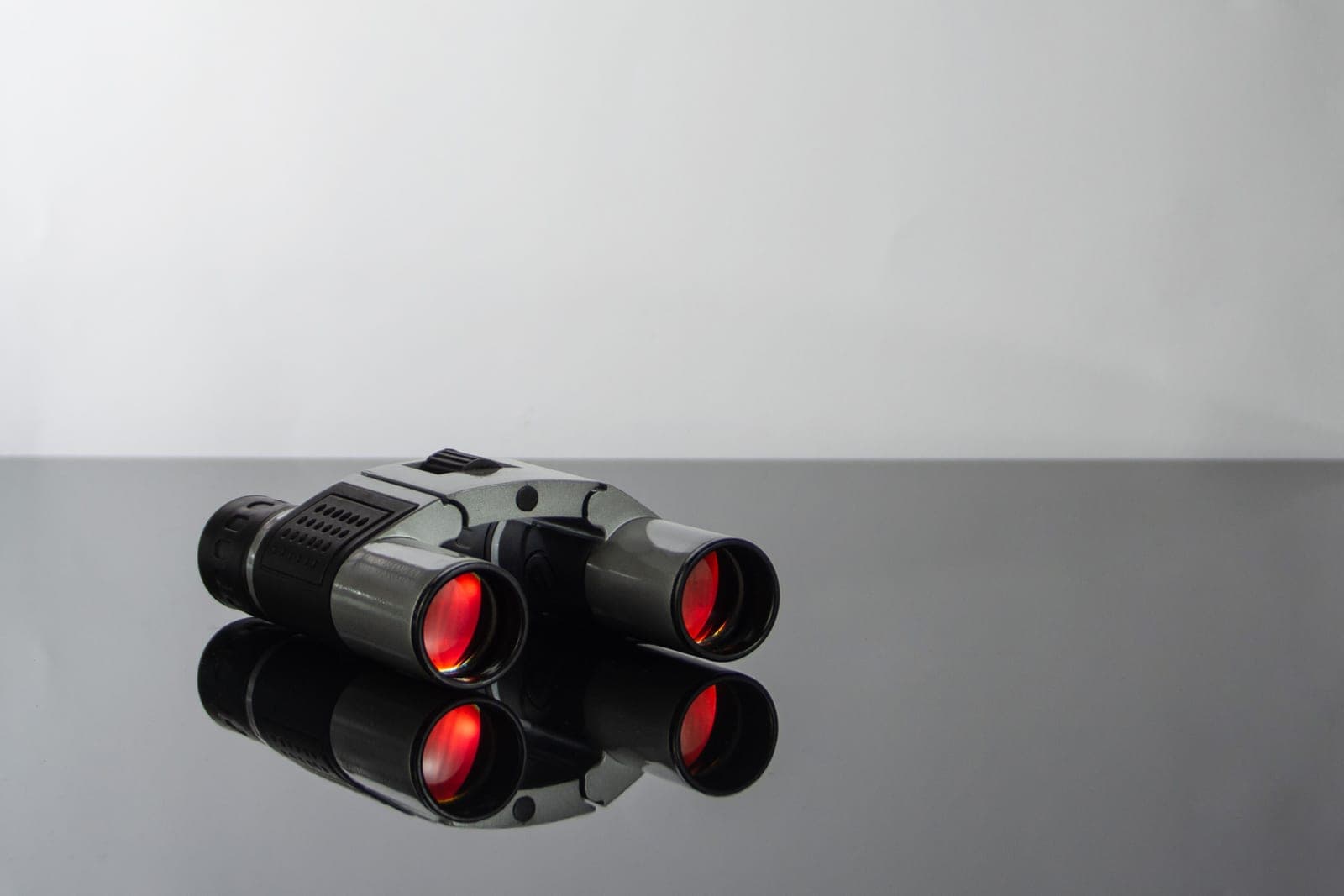
Buy 8x42 unless you specifically bird open country. It is brighter, steadier and easier to find a bird with, and those three things matter more than reach for most people most of the time. Choose 10x42 if you mostly watch shorelines, lakes, fields and distant raptors — and if you know your hands are steady.
Winter Perch is funded by affiliate commission. If you buy through a link on this page we may earn a commission at no extra cost to you, and it never decides a ranking. Full disclosure · how we pick.
Quick picks
Ranked, with the trade-off named. Tap a row for the full write-up; the price button goes straight to Amazon.
| # | Product | Best for | Price |
|---|---|---|---|
| 1 |  Nikon PROSTAFF P3 8x42 BinocularsO-ring sealed and nitrogen purged, which is the spec that matters when you carry glass from a cold yard into a warm kitchen twice a day. | Winter birding, because of the nitrogen purge | $129.95 · See it on Amazon |
| 2 |  Nikon PROSTAFF P3 10x42 BinocularsThe same chassis, coatings and warranty as the 8x42 P3, with the magnification changed. That makes it the cleanest way to see what 10x actually costs you. | The 10x half of a like-for-like comparison | $139.95 · See it on Amazon |
| 3 |  Celestron Nature DX 8x42 BinocularsA 7.4-degree field on fully multi-coated BaK-4 glass, waterproof and fogproof — the widest view in this group, and width is what finds a chickadee in a thicket. | The widest field of view at this price | $129.00 · See it on Amazon |
| 4 |  Celestron Nature DX 10x42 BinocularsThe 10x42 sibling of the Nature DX 8x42 this site already recommends. Same body, same glass, one variable changed. | The other like-for-like 10x | $169.99 · See it on Amazon |
#ad how we are funded · price as of September 13, 2026
The picks in full
Top pick Winter birding, because of the nitrogen purge
Nikon PROSTAFF P3 8x42 Binoculars
O-ring sealed and nitrogen purged, which is the spec that matters when you carry glass from a cold yard into a warm kitchen twice a day.
Specifications
- Configuration
- 8x42
- Field of view
- 377 ft at 1,000 yd
- Sealing
- O-ring sealed, nitrogen purged
- Body
- Rubber armored
- Eye relief
- Long — works over glasses
Trade-offs
- Nitrogen purging stops internal fogging on the cold-to-warm transition that defines winter birding
- 377 ft of field makes finding a moving bird in bare branches far easier
- 8x is steady in gloved, cold hands where 10x is not
- Long eye relief means it works with spectacles on
- 42 mm objectives are bulky for a coat pocket
- 8x is not enough reach for distant waterfowl
- The rubber armor stiffens noticeably in deep cold
Who it is forThe main pair for backyard and local winter birding.
Skip it ifSkip it if you mostly scan a frozen lake for ducks at range. You want 10x and a tripod, not 8x42.
#ad how we are funded · price as of September 13, 2026
No. 2 The 10x half of a like-for-like comparison
Nikon PROSTAFF P3 10x42 Binoculars
The same chassis, coatings and warranty as the 8x42 P3, with the magnification changed. That makes it the cleanest way to see what 10x actually costs you.
Specifications
- Configuration
- 10x42
- Sealing
- Waterproof and fogproof
- Body
- Rubber-armored
Trade-offs
- Identical to the P3 8x42 in everything but magnification, so the comparison is honest
- Fogproof sealing matters more than any other spec when moving between cold and warm
- Nikon's warranty is among the best in consumer optics
- More reach for open water, fields and treetop raptors
- Narrower field of view than the 8x42, which makes finding a moving bird harder
- Dimmer image at the same objective size, in a season with little light to spare
- Shows hand shake that the 8x42 hides
- Shorter eye relief than the 8x, which matters if you wear glasses
Who it is forOpen-country birding — shorelines, lakes, fields — where distance beats field of view.
Skip it ifSkip it for woodland and feeder watching. At close range the narrow field and the shake are pure cost with no benefit.
#ad how we are funded · price as of September 13, 2026
No. 3 The widest field of view at this price
Celestron Nature DX 8x42 Binoculars
A 7.4-degree field on fully multi-coated BaK-4 glass, waterproof and fogproof — the widest view in this group, and width is what finds a chickadee in a thicket.
Specifications
- Configuration
- 8x42
- Field of view
- 7.4 degrees
- Prisms
- BaK-4
- Coatings
- Fully multi-coated
- Sealing
- Waterproof and fogproof
Trade-offs
- 7.4 degrees is a wide field, and width beats magnification for feeder birding
- BaK-4 prisms with full multi-coating at an entry price
- Waterproof and fogproof, so winter condensation is handled
- Rubber armored body survives being set down on a frozen deck rail
- Edge sharpness falls off before the Nikon's does
- Celestron lists several near-identical Nature DX variants, which makes buying confusing
- The focus wheel is stiffer in cold than the Nikon's
Who it is forA first serious pair, where field of view matters more than last-ten-percent sharpness.
Skip it ifSkip it if you already own decent glass. The upgrade from a competent entry pair to this one is small; the upgrade to genuinely good optics is a different budget entirely.
#ad how we are funded · price as of September 13, 2026
No. 4 The other like-for-like 10x
Celestron Nature DX 10x42 Binoculars
The 10x42 sibling of the Nature DX 8x42 this site already recommends. Same body, same glass, one variable changed.
Specifications
- Configuration
- 10x42
- Waterproof
- Yes
- Series
- Nature DX
Trade-offs
- Direct counterpart to the Nature DX 8x42, so the 8-versus-10 question is testable
- Close focus is good for the class, which helps at a feeder even at 10x
- Waterproof and nitrogen-purged
- Same narrower field and dimmer image as any 10x42
- Harder to hold steady than the 8x42 at the same weight
- Costs more than the 8x42 for a benefit that only pays off at distance
Who it is forSomeone who has decided on 10x and wants the Nature DX build.
Skip it ifSkip it if most of your birding is at a feeder or in woodland. The 8x42 is the better tool there and cheaper.
#ad how we are funded · price as of September 13, 2026
What actually changes
Both numbers describe the same 42 mm objective. Changing the magnification changes four things, and only one of them is the one people think about.
| 8x42 | 10x42 | |
|---|---|---|
| Reach | Less | More — the reason to consider it |
| Exit pupil (brightness) | 5.25 mm | 4.2 mm |
| Field of view | Wider — easier to find birds | Narrower |
| Hand shake | Less visible | Magnified along with the bird |
| Eye relief (typical) | Usually longer | Usually shorter |
| Depth of field | Deeper — less refocusing | Shallower |
Three of these six favor 8x42 outright, one is a wash, and one — reach — favors 10x42. That ratio is why 8x42 is the default recommendation in birding.
The exit pupil arithmetic
This is the part that settles the brightness question, and it is one division.
That is why this question matters more on this site than on a general optics site. Winter birding happens in exactly the conditions where the difference shows — short days, flat gray overcast, and the best activity at dawn and dusk. A binocular that is brighter when the light is poor is brighter when you are actually using it.
The shake nobody warns you about
Magnification multiplies the image and the tremor in your hands equally. At 8x, a normal person's hand movement is present but not distracting. At 10x it is visible, and for some people — anyone tired, cold, older, or carrying a bit of caffeine — it is enough to cost more detail than the extra magnification delivered.
This is deeply individual and it is the reason a specification sheet cannot decide this for you. Cold hands make it worse, which means the gap widens in winter. If you can, hold both for a full minute before choosing — a minute is long enough for the difference to become obvious in a way that ten seconds in a shop is not.
Which habitat you actually bird
The honest deciding question is not about your eyes or your hands. It is about where you look at birds.
| Where you bird | Better choice | Why |
|---|---|---|
| At a feeder, from a window | 8x42 | Close range; wide field; less refocusing |
| Woodland and hedgerows | 8x42 | Small fast birds in cover need field of view |
| Lakes, shorelines, estuaries | 10x42 | Distant waterfowl sitting still |
| Open fields and stubble | 10x42 | Distant raptors and sparrow flocks |
| A mix, or you are not sure | 8x42 | The safer default by a wide margin |
| You wear glasses | 8x42 | Usually longer eye relief in the same model line |
Most people bird a mix, and most of that mix is closer than they expect. That is the practical case for 8x.
How we judged these
How we picked
- Exit pupil computed rather than asserted, since brightness at dusk is the crux in winter.
- Field of view, because finding the bird is harder than resolving it.
- Like-for-like model pairs, so the comparison isolates magnification instead of brand.
- Eye relief, which usually differs between magnifications within the same line.
- Habitat-based recommendation, because where you bird decides this more than anything about the optics.
- Live price and availability, refreshed daily.
We have not tested any of these. What we did instead: read the manufacturers’ own listings, compiled the published specifications, computed the running cost at a cited electricity rate, and refreshed the prices daily. The full method is published.
Why these four picks
Comparing an 8x42 from one maker against a 10x42 from another tells you about the makers, not the magnification. So the picks here are two pairs of siblings: the Nikon PROSTAFF P3 in both magnifications, and the Celestron Nature DX in both. Same chassis, same coatings, same warranty, one variable changed.
If you want to understand what 10x actually costs you, that is the only honest way to look at it. And if you are buying a first pair rather than settling an argument, binoculars for beginners covers the wider question of what else to check.
What about 8x32, or 10x50?
Changing the objective instead of the magnification is the other axis, and it is worth a sentence each. 8x32 gives the same steadiness in a lighter body, at the cost of light gathering — a good summer compromise and a poor winter one. 10x50 restores the exit pupil that 10x42 gives up, at the cost of real weight, and weight is what stops people carrying binoculars at all.
For a winter-focused site, 42 mm is the right objective and the only live question is the magnification in front of it.
What we would skip
What we would skip
10x for a first pair
Narrower field, dimmer image at dusk, and visible hand shake — the three things beginners find hardest. Learn on 8x42 and step up later if open country turns out to be your habitat.
10x42 if you mostly watch a feeder
At close range the extra magnification gives you a bird that will not fit in the frame, less depth of field, and more refocusing. The 8x is straightforwardly the better tool there.
Comparing different makers to settle this question
Glass quality, coatings and build differ more between brands than 8x does from 10x. Compare siblings in one model line or you are measuring the wrong thing.
12x or higher handheld
Past about 10x, hand shake costs more detail than the magnification adds. If you genuinely need more reach, a spotting scope on a tripod is the right answer, not a bigger binocular.
8x32 for winter
A 32 mm objective gathers noticeably less light than 42 mm, and winter birding happens in poor light. The weight saving is real and it is the wrong trade for this season.
Choosing on specifications alone if you can hold both
Hand steadiness varies enormously between people and it is the deciding factor for many. A full minute holding each tells you more than any spec sheet can.
Where this fits
This is the spec argument underneath the winter binocular roundup. Binoculars for beginners covers everything else to check on a first pair, and monoculars for birding covers the pocket alternative.
Questions people actually ask
- Is 8x42 or 10x42 better for birding?
- 8x42 for most people. It is brighter at dusk, has a wider field of view and shows less hand shake. Choose 10x42 only if you mainly watch open water, fields or distant raptors.
- What is exit pupil and why does it matter?
- Objective diameter divided by magnification — 5.25 mm for an 8x42 and 4.2 mm for a 10x42. Your pupil opens to around 5 mm in dim light, so the 8x42 looks brighter exactly when winter light is poorest.
- Does 10x42 really shake more?
- Yes. Magnification multiplies hand tremor along with the image, and at 10x it is visible for most people. Cold hands make it worse, which widens the gap in winter.
- Which is better for a feeder or backyard birding?
- 8x42, clearly. At close range you want field of view and depth of field, and 10x gives you a bird too large for the frame plus constant refocusing.
- Are 10x42 binoculars better for glasses wearers?
- Usually the opposite. Within the same model line, the 10x version often has shorter eye relief than the 8x, which is what causes the black ring glasses wearers see.
- Should I get 10x50 instead of 10x42?
- It restores the brightness 10x42 gives up, at the cost of real weight. Binoculars you stop carrying are worse than any specification, so weigh that honestly before choosing.
Sources
Read next
- The Best Binoculars for Beginner Bird Watching
Four binoculars across three price tiers, ranked on the specs that matter for a first pair — with the honest floor below which they are not worth buying.
- The Best Binoculars for Winter Birding
Why 8x42 and nitrogen purging are the winter answer, and two pairs worth the money — plus the honest note about our keyword data.
- The Best Monoculars for Birding
Four monoculars ranked on objective size and honest magnification, with a straight answer on when binoculars are the better buy.
- Feeder Cameras vs Binoculars: Which to Buy First
One perch all day from indoors versus the whole yard from outside — which to buy first, and the household case that flips it.