Winter feeders / Roundup
Heated Hummingbird Feeders for Winter
A genuinely small category: one 7-watt heater, and the flat-bottomed feeders it fits. If hummingbirds leave your area in autumn, this page is not for you.
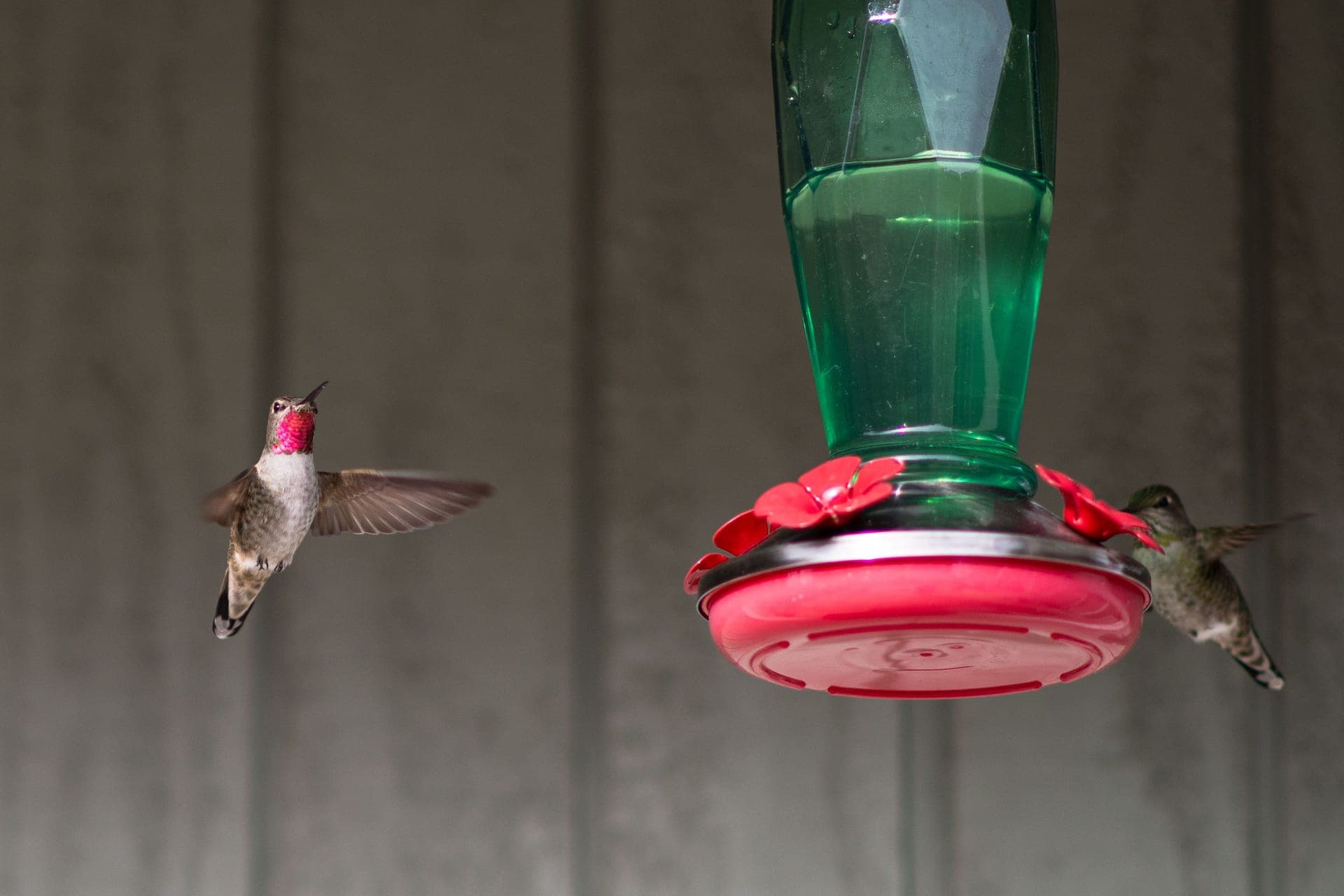
There is no such thing as a heated hummingbird feeder sold as one unit. What exists is a 7 W heater that clips under a flat-bottomed feeder and warms the air beneath it. Buy the Hummer Hearth plus an Aspects HummZinger saucer — and only if hummingbirds actually overwinter where you live.
Winter Perch is funded by affiliate commission. If you buy through a link on this page we may earn a commission at no extra cost to you, and it never decides a ranking. Full disclosure · how we pick.
Quick picks
Ranked, with the trade-off named. Tap a row for the full write-up; the price button goes straight to Amazon.
| # | Product | Best for | Price |
|---|---|---|---|
| 1 | Hummer Hearth Hummingbird Feeder HeaterA 7 W bulb in a housing that clips under a flat-bottomed feeder and warms the air beneath it. Not a feeder — a heater for the feeder you own. | The only purpose-built product in this category | Check price on Amazon |
| 2 | Aspects HummZinger HighView Hummingbird Feeder, 12 ozA dish feeder that twists into two open pieces for cleaning, with the flat base the Hummer Hearth is designed to clip under. | The flat-bottomed saucer a heater actually fits | Check price on Amazon |
| 3 | Aspects 367 HummZinger Ultra Hummingbird Feeder, 12 ozThe plainer HummZinger — four ports, same twist-apart cleaning, same flat base, without the raised HighView perch ring. | The same dish design at a lower price | Check price on Amazon |
#ad how we are funded · no live price right now
The picks in full
Top pick The only purpose-built product in this category
Hummer Hearth Hummingbird Feeder Heater
A 7 W bulb in a housing that clips under a flat-bottomed feeder and warms the air beneath it. Not a feeder — a heater for the feeder you own.
Specifications
- Rated watts
- 7 W
- Cord
- UL exterior-rated, plugs into an outdoor extension cord
- Attachment
- Adjustable elastic cord, clips to the perch
- Fits
- Many flat-bottomed hummingbird feeders
- Feeder
- Not included
- Origin
- Made in USA
Trade-offs
- Genuinely purpose-built for a problem most people solve by bringing the feeder in at dusk
- 7 W is trivial to run — the cheapest heated item on this entire site
- UL exterior-rated cord, which is more than several bird bath products manage
- Removes the dawn scramble to put a thawed feeder back out before the birds wake
- The feeder is not included, and it only fits flat-bottomed designs
- Only relevant where hummingbirds actually overwinter — largely the Pacific Northwest and parts of the Southwest
- Still needs an outdoor extension cord and a GFCI socket
- One product, one supplier: there is no real competition in this category to price it against
Wattage: 7 W
The listing states a 7 W bulb and a UL exterior-rated cord. Seven watts is a rounding error against a bird bath de-icer, and it is enough here because it is warming a small pocket of air under a 12 oz reservoir rather than holding a gallon above freezing.
At full draw for a four-month winter (120 days), plugged in around the clock: 7 W x 2880 h = 20.16 kWh, x $0.1834/kWh = $3.70 — $3.70 at $0.1834/kWh. A thermostatic unit will land under that.
Who it is forPacific Northwest and Southwest yards holding Anna's Hummingbirds through the winter.
Skip it ifSkip it if hummingbirds leave your area in autumn, which is most of the country. Nothing about this helps a yard with no wintering hummingbirds in it.
#ad how we are funded · no live price right now
No. 2 The flat-bottomed saucer a heater actually fits
Aspects HummZinger HighView Hummingbird Feeder, 12 oz
A dish feeder that twists into two open pieces for cleaning, with the flat base the Hummer Hearth is designed to clip under.
Specifications
- Capacity
- 12 oz
- Type
- Saucer / dish, flat-bottomed
- Cleaning
- Twists into two open pieces
- Model
- 429
Trade-offs
- Flat bottom, which is the compatibility requirement for a clip-on heater
- Twists apart into two wipeable pieces — nectar feeders need cleaning constantly and most fight you
- Saucer design keeps nectar below the ports, so it does not leak in the cold
- 12 oz is a few days of nectar, so it does not sit and ferment
- Saucer feeders hold less than the big inverted bottles people expect
- No heater included — that is a separate purchase
- Bright red plastic is not subtle in a winter garden
Who it is forAnyone pairing a feeder with a heater, or who has given up on cleaning bottle feeders.
Skip it ifSkip it if you want capacity above all. An inverted bottle holds more; it is also the design that drips, ferments and resists cleaning.
#ad how we are funded · no live price right now
No. 3 The same dish design at a lower price
Aspects 367 HummZinger Ultra Hummingbird Feeder, 12 oz
The plainer HummZinger — four ports, same twist-apart cleaning, same flat base, without the raised HighView perch ring.
Specifications
- Capacity
- 12 oz
- Ports
- 4
- Type
- Saucer / dish, flat-bottomed
- Model
- 367
Trade-offs
- Same flat base and heater compatibility as the HighView
- Same two-piece cleaning, which is the reason to buy an Aspects saucer at all
- Cheaper than the HighView for functionally identical feeding
- Four ports is plenty; hummingbirds are territorial and will not share anyway
- No raised perch ring, so birds sit lower and are slightly harder to see well
- 12 oz, same as the HighView — this is not the capacity upgrade
- Still no heater included
Who it is forAnyone who wants the Aspects dish design and does not care about the viewing perch.
Skip it ifSkip it if you are buying a heater anyway — at that point the HighView's better viewing is a small addition to an already larger spend.
#ad how we are funded · no live price right now
First: does this apply to you at all?
Most of this site's audience should stop here, and it is worth saying before anything is recommended.
Across most of North America, hummingbirds leave in autumn and there is nothing to feed. The exception is real but geographically narrow: Anna's Hummingbird overwinters along the Pacific Northwest coast, and parts of the Southwest hold wintering hummingbirds too. In those places nectar freezing overnight is a genuine, recurring problem that people solve by bringing the feeder in at dusk and putting it back out before dawn.
That daily routine is what this category exists to remove. If your hummingbirds left in September, no product on this page does anything for your yard.
How the one product works
The Hummer Hearth is a small housing containing a 7 W bulb. It clips to the perch of a flat-bottomed feeder with an adjustable elastic cord and warms a pocket of air directly under the reservoir; that warm air transfers heat through the base into the nectar.
Seven watts sounds trivial next to the 50 to 250 W de-icers elsewhere on this site, and it is. It works because the job is much smaller: warming a twelve-ounce reservoir a few degrees, not holding a gallon of water above freezing in open wind.
Saucer feeders, which you want anyway
The compatibility constraint pushes you toward dish feeders, and that is not a compromise — for winter feeding it is the better design regardless.
- They do not drip. In a saucer the nectar sits below the ports, so there is no pressure pushing it out. Inverted bottles leak, and leaked nectar freezes onto everything.
- They come apart to clean. Nectar feeders need cleaning constantly, and a two-piece dish is a thirty-second job where a bottle feeder is a bottle brush and an argument.
- They hold less, deliberately. Twelve ounces is a few days of nectar, which means it gets used before it ferments rather than sitting.
- They have a flat base, which is the thing the heater needs.
Running it safely
The heater has a UL exterior-rated cord and plugs into an outdoor extension cord, which puts it under exactly the same rules as everything else electrical on this site: GFCI-protected outlet, outdoor-rated cord, drip loop at the connection. The outdoor power guide covers all three.
Seven watts is a trivial electrical load — this is by a wide margin the cheapest heated item on the site to run. The safety requirements are not about the load; they are about a powered device sitting outdoors in weather all winter, which is true at 7 W exactly as it is at 250 W.
The alternatives, honestly assessed
| Approach | Works? | Real cost |
|---|---|---|
| Bring the feeder in at dusk, out at dawn | Yes, completely | Every single day, in the dark, all winter |
| Two feeders, rotated | Yes | Same routine, but no gap while one thaws |
| The 7 W heater | Yes, unattended | The heater, a compatible feeder, and an outdoor socket |
| Wrapping the feeder in insulation | Marginally, briefly | Delays freezing by a little; does not prevent it |
| Stronger sugar solution | No — do not | Altering the ratio is not a safe way to lower a freezing point |
The standard nectar ratio is one part sugar to four parts water. Making it stronger to depress the freezing point changes what the bird is drinking, and it is not a trade worth making. Keep the ratio; heat the feeder or bring it in.
What we would skip
What we would skip
Any of this, if your hummingbirds migrate
Across most of North America hummingbirds leave in autumn and there is nothing to feed. This category only makes sense where Anna's Hummingbird or another species genuinely overwinters.
An inverted-bottle feeder, if you plan to heat it
The heater clips under a flat base and a bottle feeder does not have one. Bottle feeders also drip, and leaked nectar freezing onto the feeder is the problem you were trying to solve.
A stronger sugar solution to lower the freezing point
Altering the standard one-to-four ratio changes what the bird is drinking in order to buy a couple of degrees. Keep the ratio correct and solve the temperature with heat or with a daily routine.
Improvised heat sources under a feeder
Lights, warmers and heat tape rigged under a nectar reservoir are a fire and melting risk with no thermostat and no outdoor rating. The one purpose-built product exists, is 7 W, and has a UL exterior cord.
Where this fits
This is a specialist page for a specific geography. The general winter water problem — which applies everywhere — is open water in a bird bath, and the general winter food problem is fat. If you are in the Pacific Northwest and feeding Anna's Hummingbirds through the winter, you are already doing something most of the country cannot.
Questions people actually ask
- Is there such a thing as a heated hummingbird feeder?
- Not as a single product. What exists is a small 7 W heater that clips under a flat-bottomed feeder and warms the air beneath the reservoir. You buy the heater and a compatible saucer feeder separately.
- Do hummingbirds stay through the winter?
- In parts of the country, yes. Anna's Hummingbird overwinters along the Pacific Northwest coast and parts of the Southwest hold wintering hummingbirds. Across most of North America they migrate and there is nothing to feed.
- Can I add more sugar so the nectar does not freeze?
- No. The standard ratio is one part sugar to four parts water, and altering it changes what the bird is drinking to buy a couple of degrees. Heat the feeder or bring it in overnight.
- Will a heated feeder stop hummingbirds migrating?
- No. Migration is driven by day length, not by food availability. A feeder left up does not persuade a bird to stay that would otherwise have left.
- How much does a nectar heater cost to run?
- Almost nothing — 7 W is by a wide margin the smallest electrical load on this site. The requirements are about outdoor safety rather than consumption: a GFCI outlet, an outdoor-rated cord and a drip loop.
Sources
Read next
- Outdoor Power for a Heated Bird Bath
GFCI protection, cord gauge and jacket ratings for gear that sits outdoors all winter — and the one practice that is genuinely dangerous.
- The Best Bird Bath De-Icers
Five drop-in de-icers from 50 W to 250 W, matched to basin size, with the running cost worked out for each.
- The Best Bird Feeders for Winter
Seed feeders ranked on capacity, roofing and drainage — the specs that decide how often you go out in bad weather.
- Winter Backyard Birds: Who Shows Up, and What Brings Them
The regular winter feeder cast, what each species eats, and the specific feeder or food that brings each one in.