Winter birding / Roundup
The Best Tripods for Winter Birding
This site tells you to put a scope or a 10x binocular on a tripod on nearly every optics page, and has never said which tripod. Four published specifications decide it, and one of them is not the one you would guess.
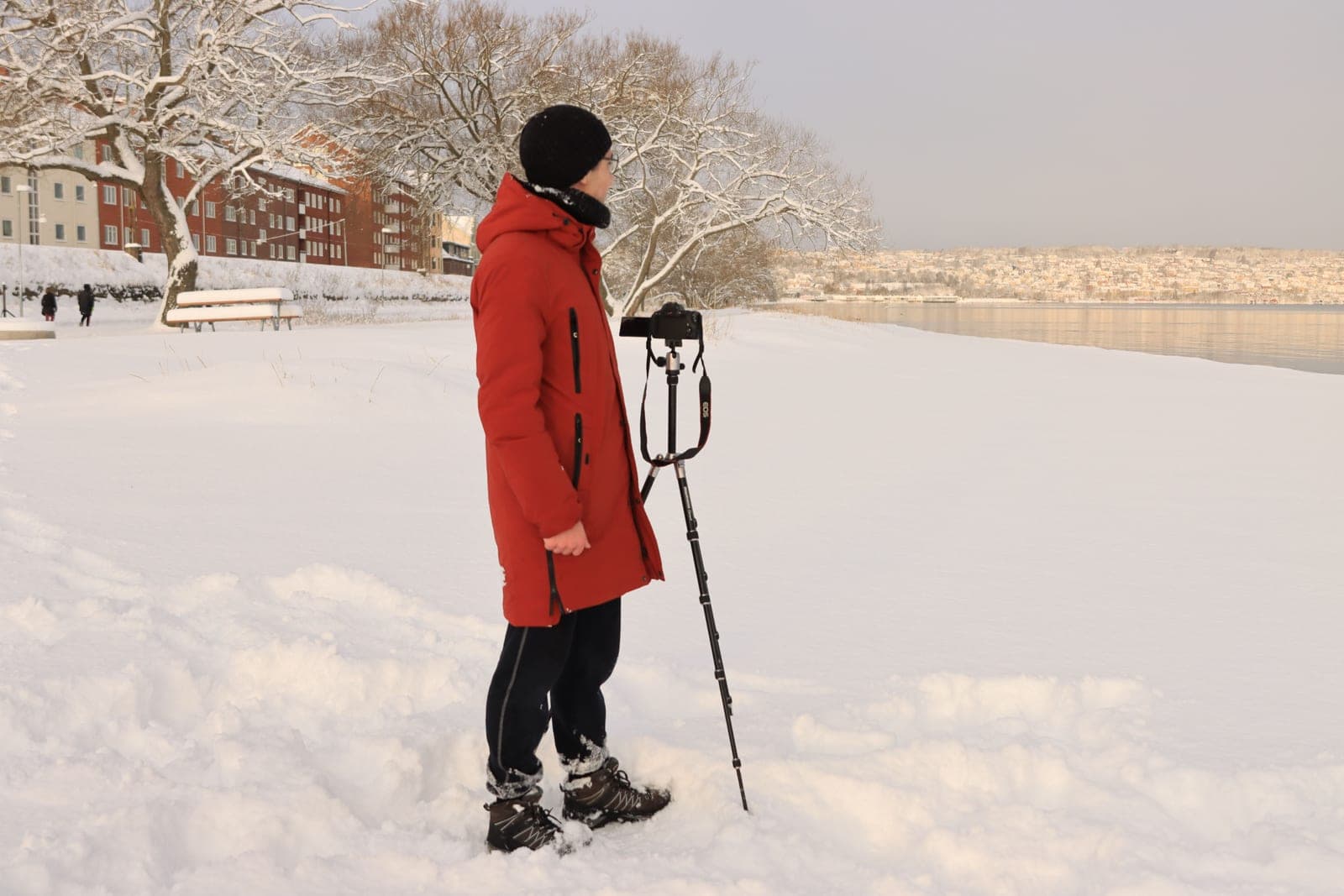
Buy on leg locks first — flip levers work in gloves, twist locks fight you. Then working height with boots on, then the maker's published load, then leg material. The Vortex Mountain Pass is the one to buy if you are buying one; the Celestron Regal Premium is the only one tall enough for a straight-through scope used standing.
Winter Perch is funded by affiliate commission. If you buy through a link on this page we may earn a commission at no extra cost to you, and it never decides a ranking. Full disclosure · how we pick.
Quick picks
Ranked, with the trade-off named. Tap a row for the full write-up; the price button goes straight to Amazon.
| # | Product | Best for | Price |
|---|---|---|---|
| 1 | 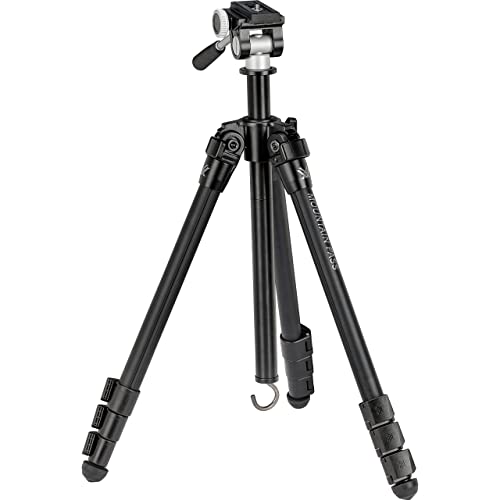 Vortex Mountain Pass Tripod KitThree pounds, a 22 lb published load rating and flip-lever locks you can work in gloves — the specification sheet that matches how winter birding actually goes. | The one to buy if you are buying one | $149.00 · See it on Amazon |
| 2 |  Celestron Regal Premium Tripod for Spotting ScopesA tripod built for the weight and the leverage of a spotting scope. Not glamorous, and it does more for what you actually see than upgrading the scope would. | The half of the purchase people forget | $199.95 · See it on Amazon |
| 3 |  SIRUI 61" Carbon Fiber Tripod with Fluid HeadCarbon legs are the one material difference you feel at ten degrees, and this is the cheapest way here to get them under a fluid head. | Cold hands | $135.00 · See it on Amazon |
| 4 |  K&F Concept 73 in Tripod with Fluid HeadSeventy-three inches and a fluid head, which is the feature that matters — a fluid head pans smoothly enough to follow a bird instead of jerking past it. | A fluid head without a specialist price | $59.99 · See it on Amazon |
| 5 |  K&F Concept Spotting Scope Tripod with Binocular AdapterSixty-eight inches with the binocular adapter already in the box, for less than the adapter alone costs elsewhere — the honest way to test the idea. | Finding out whether you want a tripod at all | $36.99 · See it on Amazon |
#ad how we are funded · price as of October 13, 2026
The picks in full
Top pick The one to buy if you are buying one
Vortex Mountain Pass Tripod Kit
Three pounds, a 22 lb published load rating and flip-lever locks you can work in gloves — the specification sheet that matches how winter birding actually goes.
Specifications
- Max height
- 56"
- Min height
- 9"
- Folded
- 19" x 4"
- Weight
- 3.1 lb
- Published max load
- 22 lb
- Leg locks
- Flip lever
- Legs
- Aluminum, 4 sections, 3 leg angles
- Head
- Pan head, Arca-Swiss mount
Trade-offs
- Flip-lever locks open and close with a gloved hand, which twist locks genuinely do not
- 22 lb published load on a 3.1 lb tripod is the best weight-to-rating ratio on this page
- Three leg angles and a 9 inch minimum height let you work low out of the wind
- Arca-Swiss head mount, so it takes the standard plate most optics adapters already use
- An optics company's tripod rather than a camera tripod pressed into optics duty
- 56 inches is the shortest maximum height here — with boots and layers that is a stoop for a straight-through scope
- Pan head rather than a damped fluid head, so tracking a moving bird is less smooth
- Aluminum legs get painfully cold to handle bare-handed
- The most expensive aluminum tripod on this page
Who it is forThe birder who carries the tripod to the bird rather than standing it in one spot, and who wants one piece of hardware that will not be the weak link.
Skip it ifSkip it if you use a straight-through spotting scope standing up. 56 inches will have you bending, and the taller tripods here cost less.
#ad how we are funded · price as of October 13, 2026
Where these specs came from
- Vortex Mountain Pass Tripod Kit — manufacturer listing, Amazon.com (retrieved 2026-10-13)
- Vortex Optics — Mountain Pass Tripod Kit specifications: 56" max height, 9" min height, 19" x 4" folded, 3.1 lb, 22 lb max load, flip-lever leg locks, aluminum, 4 leg sections, 3 leg angles, Arca-Swiss head mount
No. 2 The half of the purchase people forget
Celestron Regal Premium Tripod for Spotting Scopes
A tripod built for the weight and the leverage of a spotting scope. Not glamorous, and it does more for what you actually see than upgrading the scope would.
Specifications
- Type
- Tripod for spotting scopes, binoculars and cameras
- Series
- Regal Premium
Trade-offs
- Built for the load a scope puts on a head, which a light camera tripod is not
- A steady platform is worth more at 40x than any glass upgrade — shake magnifies exactly as much as the bird does
- Height that lets you stand rather than stoop, which decides how long you last in the cold
- From the same maker as the scope, so the fit and the expectations match
- Costs as much as a budget scope, which is why people skip it and then wonder why the view wobbles
- Heavy — a steady tripod is heavy by definition, and there is no way around that
- Aimed at scopes, so it is more tripod than a pair of binoculars needs
Who it is forAnyone buying an 80 mm scope, as part of the same purchase rather than later.
Skip it ifSkip it if you are buying a 60 mm scope for walking. A lighter tripod suits that combination and is the point of going smaller.
#ad how we are funded · price as of October 13, 2026
No. 3 Cold hands
SIRUI 61" Carbon Fiber Tripod with Fluid Head
Carbon legs are the one material difference you feel at ten degrees, and this is the cheapest way here to get them under a fluid head.
Specifications
- Max height
- 61" (155 cm)
- Folded
- 14.3" (36.4 cm)
- Weight
- 2.93 lb (1.33 kg)
- Published working load
- 11 lb (5 kg)
- Max locking strength
- 22 lb (10 kg)
- Material
- Carbon fiber
- Head
- Fluid head, 360 degree pan, plus or minus 90 degree tilt
Trade-offs
- Carbon fiber does not pull heat out of bare fingers the way aluminum does — the one genuine cold-weather material advantage
- Lightest tripod on this page at 2.93 lb, and it folds to 14.3 inches
- A fluid head at this weight and price is unusual
- 61 inches is a usable working height for an angled scope or binoculars
- SIRUI publishes two different numbers — an 11 lb working load and a 22 lb locking strength — and only the working figure is the one to plan around
- Carbon costs more than aluminum for the same stiffness at this price point, and it chips rather than dents
- 61 inches is still short for a straight-through scope used standing
- A camera-market tripod, so nothing about it is designed around optics specifically
Who it is forThe birder who is out in genuine cold and handles the legs constantly — setting up, moving, collapsing — and feels every degree of it.
Skip it ifSkip it if your tripod lives in one spot in the yard. You are paying a carbon premium for a property that only matters when you keep picking the thing up.
#ad how we are funded · price as of October 13, 2026
No. 4 A fluid head without a specialist price
K&F Concept 73 in Tripod with Fluid Head
Seventy-three inches and a fluid head, which is the feature that matters — a fluid head pans smoothly enough to follow a bird instead of jerking past it.
Specifications
- Height
- 73 in
- Head
- Fluid
- Material
- Aluminum
Trade-offs
- A fluid head is the single feature that separates a usable scope tripod from a frustrating one
- Seventy-three inches is tall enough to use standing, which matters on a cold morning
- Far cheaper than the specialist optics tripods for the same core function
- Doubles as a camera tripod, so it is not single-purpose
- Aluminum and budget-priced, so it is heavier and less rigid than a specialist tripod at the same height
- Extended to full height it will shake in wind — the top section is always the weakest
- Made for cameras, so the load rating is worth checking against a heavy 80 mm scope
- Leg locks at this price wear faster, and a slipping leg on frozen ground is genuinely annoying
Who it is forPairing with a budget or mid-range scope where a specialist tripod would cost more than the optic.
Skip it ifSkip it if you bought an 80 mm scope and plan to use it in wind. The extra rigidity of a scope-rated tripod is what you are paying for there.
#ad how we are funded · price as of October 13, 2026
Where these specs came from
No. 5 Finding out whether you want a tripod at all
K&F Concept Spotting Scope Tripod with Binocular Adapter
Sixty-eight inches with the binocular adapter already in the box, for less than the adapter alone costs elsewhere — the honest way to test the idea.
Specifications
- Max height
- 68"
- Min height
- 17.2"
- Published load capacity
- 8.8 lb (4 kg)
- Weight
- Not stated for this model
- Material
- Aluminum alloy
- Legs
- 4 sections plus center column, flip locks
- Included
- Binocular adapter, 2 quick-release plates, 1/4" top screw
Trade-offs
- The binocular adapter is in the box, which on this site is otherwise a separate purchase
- 68 inches of height for the lowest price on this page
- Flip locks rather than twist locks, so gloves are not a problem
- Cheap enough to find out whether tripod birding suits you before committing properly
- 8.8 lb published capacity, same as the Celestron, on a far less substantial tripod
- K&F does not publish a weight for this specific model, so you cannot plan a carry around it
- No fluid damping — panning is friction, and it shows on a moving bird
- At this price the tolerances are what give: expect play at full extension
Who it is forSomeone who has been told repeatedly that 10x binoculars want support and wants to test that claim before spending real money.
Skip it ifSkip it if you already know you want a scope on a tripod. Buy once at the Vortex or Celestron level instead — this is a trial, not a destination.
#ad how we are funded · price as of October 13, 2026
Why this page exists
A tripod is the only piece of optics hardware this site has recommended on almost every page without ever saying which one to buy. Spotting scopes are unusable handheld. 10x against 8x comes down to whether you can hold the magnification steady. Binocular tripod adapters exist entirely to bolt a binocular to a tripod you were assumed to already own.
So this is the missing piece rather than a new idea. What follows is the tripod ranked the way this site ranks everything else: on figures the maker publishes, with the gaps recorded as gaps.
The four specifications that decide a winter tripod
1. Leg locks, which is the one nobody checks
There are two systems. Twist locks are collars you rotate to clamp each leg section. Flip levers are small cams you flick open and shut. In a shop, in September, with bare hands, the difference is nothing and the twist locks look neater.
In February, in gloves, the difference is the whole product. A twist lock needs a firm grip and a rotation across a smooth cylinder — exactly what a gloved hand cannot do well, and exactly what a cold bare hand will not do for long. A flip lever takes one finger and works through any glove you own. Every tripod on this page that publishes its lock type publishes flip levers — and two of the five publish no lock type at all, which the table records rather than guesses at.
If you take one thing from this page, take that. It is the specification that decides whether the tripod gets set up on the cold morning or stays in the car.
2. Working height, measured with your boots on
Tripod height is published for a tripod standing on hard flat ground, fully extended, center column up. Winter birding is none of those things. You are in boots, standing on snow that the legs sink into, and the center column is the least stable section so you would rather not use it.
The useful number is therefore lower than the headline one. Celestron is honest enough to publish both: 68.75 inches fully extended, 59 inches with the center column down. That second figure is the one to compare against your eye height, and it is why the 56-inch Vortex is a stoop for a straight-through scope and perfectly fine for an angled one or for binoculars.
3. Published load, and why the numbers do not behave
The load figures on this page are not intuitive, and we are printing them exactly as each maker states them rather than normalizing them into a ranking that would imply a test nobody ran.
| Max height | Weight | Published load | Leg locks | Legs | |
|---|---|---|---|---|---|
| Vortex Mountain Pass | 56" | 3.1 lb | 22 lb | Flip lever | Aluminum |
| Celestron Regal Premium | 68.75" | 6.04 lb | 8.8 lb | Flip lever | Aluminum |
| SIRUI Carbon 61 | 61" | 2.93 lb | 11 lb working / 22 lb locking | Not published | Carbon |
| K&F 73 inch Fluid | 73" | 3.1 lb | 6.6 lb | Not published | Aluminum |
| K&F Spotting Scope | 68" | Not published | 8.8 lb | Flip lock | Aluminum |
Read the weight and load columns together. Two tripods here weigh the same 3.1 lb and publish 22 lb and 6.6 lb — a more than three-fold difference in stated rating at an identical weight. The heaviest tripod on the page publishes nearly the lowest figure of all. These numbers come from different test assumptions and are not comparable between brands, which is the honest reason not to rank on them.
What a load rating is genuinely good for is a floor, not a target. Work out what your optic plus its adapter actually weighs, and stay well under the published number — a gust against a scope is a far larger instantaneous load than the static weight you calculated.
4. Leg material, which matters here more than elsewhere
Aluminum and carbon fiber are close enough on stiffness at a given price that photographers argue about it endlessly. In cold weather the argument resolves, because aluminum conducts heat away from your hands and carbon does not.
That is not a comfort footnote. You handle tripod legs constantly — extending, collapsing, repositioning, carrying — and an aluminum leg at well below freezing is genuinely unpleasant to grip bare-handed and cold enough through thin gloves to shorten the session. Carbon costs more and chips where aluminum dents. If your tripod lives in one spot, buy aluminum and save the money. If you keep picking it up, the carbon premium buys something real.
What about a fluid head?
A pan head turns on friction. A fluid head turns against damping, so the movement starts and stops smoothly instead of jerking. On a static bird it changes nothing. On a bird moving along a hedge at 40x magnification, it is the difference between following it and losing it.
Three of the five here publish a fluid or fluid-damped head. The Vortex publishes a pan head instead, which is the one place that otherwise excellent kit gives ground. If you expect to track moving birds at high magnification, weight the head more heavily than you would expect to.
Setting a tripod up in snow
- Push the legs down through the snow to something solid. A tripod standing on snowpack settles unevenly as you work, and the scope drifts off target without you touching it.
- Spread the legs wider than feels necessary. Three leg angles exist for this. A low, wide stance in wind beats a tall narrow one at the same height every time.
- Leave the center column down unless you genuinely need the last few inches. It is the least rigid part of any tripod and it is the first thing wind finds.
- Hang weight from the hook if there is one. A bag on the center hook is free stability and the Celestron publishes a retractable one for exactly this.
- Collapse the legs before carrying it any distance in snow, so you are not swinging a wet, loaded lever against your knees.
- Dry the legs before they go away. Meltwater inside a leg section freezes, and a frozen section does not extend the next morning.
What we would skip
What we would skip
Any tripod with twist locks, for winter use
A twist lock needs a firm grip and a rotation on a smooth collar, which is exactly what a gloved hand cannot do and what a cold bare hand will not do twice. Flip levers are the single most important specification on this page.
Buying on the published load figure alone
The lightest tripod here publishes the highest rating and the heaviest publishes the lowest. The numbers come from different assumptions and are not comparable. Use them as a floor to clear, never as a ranking.
A 56 inch tripod under a straight-through scope
You look through a straight-through eyepiece at eye level, and 56 inches in boots means bending for every view. Either buy the height or buy an angled scope — the scope page covers that choice.
Extending the center column to reach your height
The center column is the least rigid part of any tripod and the first thing a gust finds. If you need the column up to see through the scope, the tripod is too short for you.
A heavy tripod you intend to walk with
On top of winter layers, optics and gloves, weight is what decides whether gear leaves the car. The spread here runs from under 3 lb to over 6 lb for similar height — buy light if the tripod has to travel on foot, and buy heavy only for a fixed position.
Where it fits
A tripod is the second half of a scope purchase, not an accessory to it — budget for both at once or buy neither. Spotting scopes for birding covers the optic, and binocular tripod adapters covers the part that bolts a binocular on top if a scope is not where you are going.
If you are still deciding whether you need support at all, 8x42 against 10x42 is the honest version of that question: 8x is handholdable all day and 10x is where a tripod stops being optional. Binocular harnesses solve the other half of carrying optics in winter layers.
Questions people actually ask
- Do I need a tripod for birding?
- For a spotting scope, yes — they are unusable handheld. For binoculars it depends on magnification: 8x is handholdable all day, and 10x and above is where support starts to pay. 8x42 against 10x42 works through that.
- What is the most important feature on a tripod for winter use?
- The leg locks. Flip levers work through any glove; twist locks need a firm grip and a rotation on a smooth collar, which a gloved hand cannot do well and a cold bare hand will not do for long.
- Is carbon fiber worth it for a birding tripod?
- In genuine cold, yes, if you handle the legs a lot. Aluminum conducts heat away from your hands; carbon does not. If the tripod lives in one spot in the yard, aluminum is the better value.
- How tall should a birding tripod be?
- Tall enough to put the eyepiece at eye level in boots with the center column DOWN. For a straight-through scope that usually means a tripod published at well over 60 inches. An angled eyepiece lets a shorter tripod work, because you look down into it.
- What does a tripod load rating actually mean?
- Less than it appears. The figures on this page are not comparable between brands — the lightest tripod here publishes the highest rating. Treat a load rating as a floor to clear comfortably, not as a measure of quality.
- How do I stop a tripod sinking into snow?
- Push the legs down to something solid before you set up, spread them wider than feels necessary, and leave the center column down. A tripod standing on soft snowpack settles as you work and the scope drifts off target on its own.
Sources
Read next
- The Best Spotting Scopes for Birding
Four scopes and two tripods, ranked on objective size, steadiness and the magnification you can actually use — plus an honest answer on whether you need one.
- Binocular Tripod Adapters
The hinge-socket check that decides whether you can mount at all, screw-in against quick-release, and the winter case for a tripod.
- 8x42 vs 10x42 Binoculars for Birding
Exit pupil, field of view and hand shake decide this, not preference. The arithmetic laid out, plus two same-model pairs so the comparison is honest.
- The Best Binoculars for Winter Birding
Why 8x42 and nitrogen purging are the winter answer, and two pairs worth the money — plus the honest note about our keyword data.
- The Best Binocular Harnesses
Elastic chest harnesses ranked on load spreading and adjustment range, with the winter-coat fit problem stated plainly.