Winter birding / Review
Nikon PROSTAFF P3 8x42 Review: What You Are Actually Buying
Three published numbers decide whether this is your binocular or the wrong one. Nikon prints all three, and one of them is a problem if the bird you most want to watch is eight feet from your window.
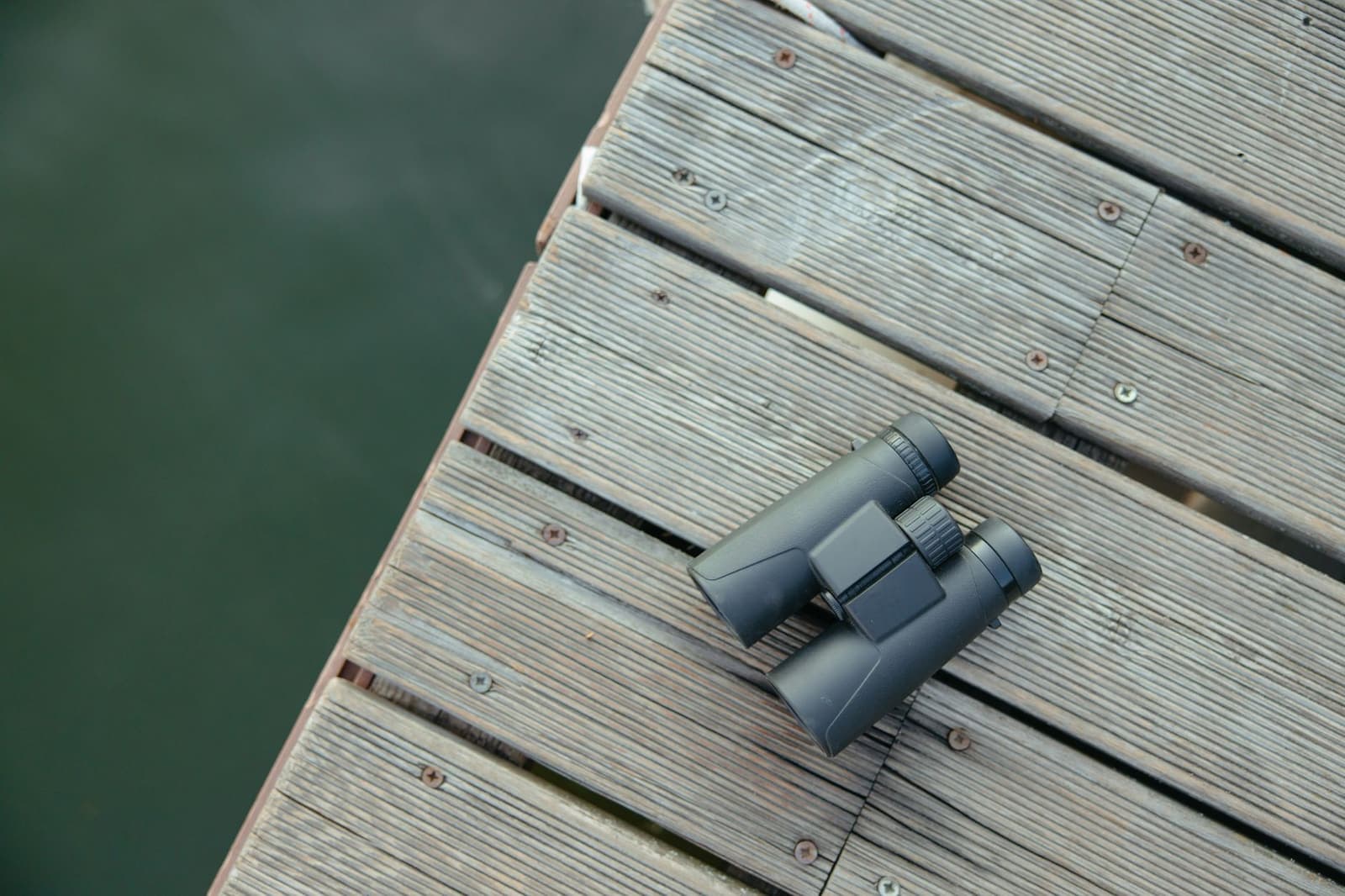
Buy the PROSTAFF P3 8x42 if you wear glasses, or if you carry binoculars for hours at a time. Nikon publishes 20.2 mm of eye relief — long enough to use with spectacles on — and 20.3 oz, which is light for a 42 mm pair. Do not buy it as your window-feeder glass. Its published close focus is 9.8 ft, so a feeder nearer than that will not come into focus at all, and the Celestron Nature DX focuses 3.3 ft closer for less money.
Winter Perch is funded by affiliate commission. If you buy through a link on this page we may earn a commission at no extra cost to you, and it never decides a ranking. Full disclosure · how we pick.
Quick picks
Ranked, with the trade-off named. Tap a row for the full write-up; the price button goes straight to Amazon.
| # | Product | Best for | Price |
|---|---|---|---|
| 1 |  Nikon PROSTAFF P3 8x42 BinocularsO-ring sealed and nitrogen purged, which is the spec that matters when you carry glass from a cold yard into a warm kitchen twice a day. | Winter birding, because of the nitrogen purge | Check price on Amazon |
| 2 |  Celestron Nature DX 8x42 BinocularsA 7.4-degree field on fully multi-coated BaK-4 glass, waterproof and fogproof — the widest view in this group, and width is what finds a chickadee in a thicket. | The widest field of view at this price | Check price on Amazon |
| 3 |  Nikon PROSTAFF P3 10x42 BinocularsThe same chassis, coatings and warranty as the 8x42 P3, with the magnification changed. That makes it the cleanest way to see what 10x actually costs you. | The 10x half of a like-for-like comparison | Check price on Amazon |
| 4 |  Celestron Outland X 8x42 BinocularsA waterproof 8x42 from a real optics maker at the bottom of the sensible range. Below this price the format stops being worth buying at all. | The cheapest 8x42 worth owning | Check price on Amazon |
| 5 | 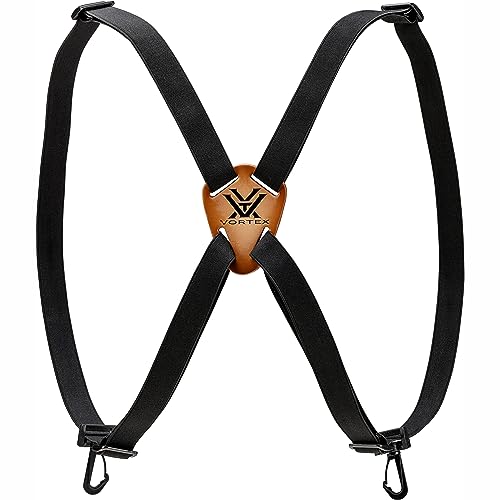 Vortex Binocular Harness StrapAn elastic chest harness that moves the weight of a binocular off your neck and onto your shoulders, backed by the same VIP warranty as Vortex optics. | The harness to buy | Check price on Amazon |
#ad how we are funded · no live price right now
The picks in full
Top pick Winter birding, because of the nitrogen purge
Nikon PROSTAFF P3 8x42 Binoculars
O-ring sealed and nitrogen purged, which is the spec that matters when you carry glass from a cold yard into a warm kitchen twice a day.
Specifications
- Configuration
- 8x42
- Field of view
- 377 ft at 1,000 yd
- Sealing
- O-ring sealed, nitrogen purged
- Body
- Rubber armored
- Eye relief
- Long — works over glasses
Trade-offs
- Nitrogen purging stops internal fogging on the cold-to-warm transition that defines winter birding
- 377 ft of field makes finding a moving bird in bare branches far easier
- 8x is steady in gloved, cold hands where 10x is not
- Long eye relief means it works with spectacles on
- 42 mm objectives are bulky for a coat pocket
- 8x is not enough reach for distant waterfowl
- The rubber armor stiffens noticeably in deep cold
Who it is forThe main pair for backyard and local winter birding.
Skip it ifSkip it if you mostly scan a frozen lake for ducks at range. You want 10x and a tripod, not 8x42.
#ad how we are funded · no live price right now
No. 2 The widest field of view at this price
Celestron Nature DX 8x42 Binoculars
A 7.4-degree field on fully multi-coated BaK-4 glass, waterproof and fogproof — the widest view in this group, and width is what finds a chickadee in a thicket.
Specifications
- Configuration
- 8x42
- Field of view
- 7.4 degrees
- Prisms
- BaK-4
- Coatings
- Fully multi-coated
- Sealing
- Waterproof and fogproof
Trade-offs
- 7.4 degrees is a wide field, and width beats magnification for feeder birding
- BaK-4 prisms with full multi-coating at an entry price
- Waterproof and fogproof, so winter condensation is handled
- Rubber armored body survives being set down on a frozen deck rail
- Edge sharpness falls off before the Nikon's does
- Celestron lists several near-identical Nature DX variants, which makes buying confusing
- The focus wheel is stiffer in cold than the Nikon's
Who it is forA first serious pair, where field of view matters more than last-ten-percent sharpness.
Skip it ifSkip it if you already own decent glass. The upgrade from a competent entry pair to this one is small; the upgrade to genuinely good optics is a different budget entirely.
#ad how we are funded · no live price right now
No. 3 The 10x half of a like-for-like comparison
Nikon PROSTAFF P3 10x42 Binoculars
The same chassis, coatings and warranty as the 8x42 P3, with the magnification changed. That makes it the cleanest way to see what 10x actually costs you.
Specifications
- Configuration
- 10x42
- Sealing
- Waterproof and fogproof
- Body
- Rubber-armored
Trade-offs
- Identical to the P3 8x42 in everything but magnification, so the comparison is honest
- Fogproof sealing matters more than any other spec when moving between cold and warm
- Nikon's warranty is among the best in consumer optics
- More reach for open water, fields and treetop raptors
- Narrower field of view than the 8x42, which makes finding a moving bird harder
- Dimmer image at the same objective size, in a season with little light to spare
- Shows hand shake that the 8x42 hides
- Shorter eye relief than the 8x, which matters if you wear glasses
Who it is forOpen-country birding — shorelines, lakes, fields — where distance beats field of view.
Skip it ifSkip it for woodland and feeder watching. At close range the narrow field and the shake are pure cost with no benefit.
#ad how we are funded · no live price right now
No. 4 The cheapest 8x42 worth owning
Celestron Outland X 8x42 Binoculars
A waterproof 8x42 from a real optics maker at the bottom of the sensible range. Below this price the format stops being worth buying at all.
Specifications
- Configuration
- 8x42
- Waterproof
- Yes
- Prism
- Roof, BaK-4
Trade-offs
- 8x42 is the correct birding configuration, and this is the cheapest honest version of it
- Waterproof at a price where many competitors are not
- Celestron support and warranty behind it, unlike the no-name optics at this price
- Twist-up eyecups, which matters if you wear glasses
- Noticeably dimmer at dusk than the Nature DX, which is exactly when winter birding happens
- More edge softness and color fringing than the step-up models
- Heavier than its price-peers, and that tells after an hour
- Focus wheel is coarser than the better models, which costs you on quick small-bird work
Who it is forA genuine budget where the alternative is no binoculars at all.
Skip it ifSkip it if you can stretch to the Nature DX. The gap in low-light performance is the single biggest step up in the range.
#ad how we are funded · no live price right now
No. 5 The harness to buy
Vortex Binocular Harness Strap
An elastic chest harness that moves the weight of a binocular off your neck and onto your shoulders, backed by the same VIP warranty as Vortex optics.
Specifications
- Type
- Chest harness
- Warranty
- Vortex VIP — unlimited lifetime, transferable
Trade-offs
- Takes the load off the neck, which is the entire point and is felt within an hour
- Holds the binocular against the chest so it does not swing when you walk or bend
- Elastic, so the binocular still lifts to the eyes without unclipping anything
- Covered by Vortex's VIP warranty, which is unlimited, lifetime and transferable
- Over a thick winter coat the straps need re-adjusting, and they are fiddly in gloves
- A chest harness sits over a zip, so getting into a jacket pocket means working around it
- Elastic loses tension over years of use
- Not adjustable enough for every body shape — some people find the X-back sits wrong
Who it is forAnyone who carries binoculars for more than an hour at a time.
Skip it ifSkip it if your birding is from a window or a car. A harness solves a carrying problem you do not have.
#ad how we are funded · no live price right now
What this page is and is not
We have not taken these binoculars to a frozen lake and compared them against a rival on a tripod, and we are not going to imply that we did. What follows is built from Nikon's own published specification, from Celestron's published specification for the pair most buyers weigh it against, and from the one question this whole site is organized around: what happens to equipment used outdoors, in the cold, by someone who mostly watches their own yard.
Every number below is the manufacturer's, cited in the sources at the foot of the page. Where Nikon publishes nothing — and there are two places where it publishes less than Celestron does — this page says so rather than filling the gap.
The winter binocular roundup ranks this pair first and has no room to spend a thousand words on eye relief. This is the long version.
The three numbers that decide it
1. Eye relief: 20.2 mm, which is the headline
Eye relief is the distance your eye can sit behind the eyepiece and still see the whole field. If you wear glasses, your eye is already held 10 to 15 mm back by the lens in front of it, and a binocular with short eye relief shows you a tunnel with a black ring around it.
20.2 mm is generous, and it is the reason this pair gets recommended to spectacle wearers over rivals that are optically similar. The practical test is worth doing on your own pair: with glasses on and the eyecups twisted fully down, you should see a single round field with no dark crescent at the edge. If the crescent is there, the eyecups are still too far up.
In winter it matters twice over, because the other thing on your face is a hat and the other thing in your hands is a glove. A pair you can use without taking your glasses off is a pair you will actually raise when a bird moves.
2. Close focus: 9.8 ft, and the feeder problem
This is the number that should change some readers' minds, and almost nobody writes about it.
Nikon publishes a close focusing distance of 9.8 ft. Inside that distance the image cannot be brought to focus — not blurry but usable, simply unfocusable. Now measure the distance from your window to the feeder. This site's own placement guidance puts feeders either under 3 ft from the glass or over 30 ft from it, for window-strike reasons, and a large number of readers have a window feeder stuck to the pane itself.
At those distances this binocular is the wrong tool and no amount of optical quality fixes it. Celestron publishes 6.5 ft for the Nature DX 8x42 — still too long for a feeder on the glass, but it covers a bath or a pole feeder on a small patio that the Nikon cannot. For the under-3 ft case neither binocular is the answer: that is what a feeder camera and your own eyes are for.
3. Weight: 20.3 oz, and why that is the quiet advantage
Nikon publishes 20.3 oz (575 g). Celestron publishes 22.2 oz (629 g) for the Nature DX. Two ounces sounds like nothing written down, and it is nothing for ten minutes at a window. It is not nothing on a three-hour winter walk with a scarf, a flask and cold hands, which is the use this pair is genuinely good at.
Weight is also the problem a harness solves, for a fraction of the price of the binocular. If you are choosing between a lighter binocular and a heavier one plus a harness, buy the harness — it moves the load off your neck entirely, which two ounces never will.
What Nikon publishes
| Specification | Published figure |
|---|---|
| Configuration | 8x42 |
| Real angular field of view | 7.2 degrees |
| Apparent field of view | 53.4 degrees |
| Field of view at 1,000 yd | 377 ft |
| Exit pupil | 5.3 mm |
| Relative brightness | 28.1 |
| Eye relief | 20.2 mm |
| Close focusing distance | 9.8 ft |
| Length x width | 5.9 in x 5.1 in |
| Weight | 20.3 oz (575 g) |
| Prism type | Roof |
| Focusing | Central |
| Waterproof | Down to 3.3 ft (no duration published) |
| Fogproof | Nitrogen filled |
One wrinkle worth knowing: Nikon's own comparison module gives the length as 6.0 in while the technical specification table gives 5.9 in. We print both rather than picking one. Nikon states a waterproof depth but no duration, and links to its warranty program rather than printing a term — so this page does not quote a warranty length.
The two specs Nikon does not publish, and Celestron does
Read the two product pages side by side and something odd emerges: the cheaper binocular publishes more of its optical specification than the dearer one.
For the Nature DX 8x42, Celestron prints the prism glass (BaK-4), the prism coating (phase coated) and the lens coating (fully multi-coated). For the PROSTAFF P3 8x42, Nikon's specification table lists the prism type as roof and stops there — no phase-correction statement and no coating level on the page we read.
There are two honest readings of that. The generous one: Nikon has sold roof-prism binoculars for decades and does not bother listing what is standard in the class. The skeptical one: phase correction is the single biggest determinant of contrast in a roof-prism binocular, and a maker that has it usually says so. We do not know which reading is right, so we are not going to assert either — but if published optical specification is how you compare, that round goes to Celestron, and this is one of the few places on this site where the cheaper product wins on paper.
Winter sealing is the reason this pair is on the site at all
Nikon publishes waterproof down to 3.3 ft and nitrogen filled, and the second phrase is the one that matters in January.
Internal fogging is the defining equipment failure of cold-weather birding, and it is not caused by weather. It is caused by you: carrying cold glass into a warm kitchen, where moisture condenses on surfaces inside the binocular that no cloth can reach. A nitrogen-purged body has no water vapor inside it to condense, so it clears in seconds instead of hours. An unpurged pair fogs internally on the first cold-to-warm transit of the day and is useless until it equalizes.
Everything else here is about seeing birds better. This one is about being able to see anything at all, which is why it outranks optical specification in the roundup's criteria.
8x42, or the 10x42 version?
Nikon makes the same binocular in 10x42, and it is frequently the cheaper of the two. That is not a reason to buy it. More magnification narrows the field, dims the image at the same objective size, and shows every tremor in a cold hand — three costs paid for reach you mostly do not need in a yard or a wood.
The exception is open country: shorelines, lakes, stubble fields, distant raptors. 8x42 against 10x42 works the decision through with the same chassis on both sides, which is the only honest way to compare a magnification change.
What about the step up to the P7?
Nikon sits the PROSTAFF P7 above the P3, and it is the obvious next question. We checked the catalog while writing this page and the 8x42 P7 was down to a single unit in stock, so it is not a pick here — this site does not write up a product it cannot confirm you will be able to buy. If you find one in stock, ask the question this page is built on: does it publish a longer eye relief and a shorter close focus than the P3, and does that solve a problem you actually have?
Who should buy something else
What we would skip
Anyone whose main subject is a window feeder
A published close focus of 9.8 ft means a feeder nearer than that cannot be focused at all. Window feeders sit on the glass, and a feeder camera is the tool for that range.
Anyone who already owns a competent 8x42
The step from a decent entry pair to this one is small. The step to genuinely good optics is a different budget entirely, and a harness or a tripod adapter will do more for what you see than replacing working glass.
Anyone scanning open water for ducks at range
8x is not enough, and nor is 10x. A scope on a real tripod is the answer, and that page leads by telling most readers they do not need one.
Anyone who wants published optical specifications to compare
Nikon's page lists the prism type and not the coatings. If you want BaK-4, phase coating and full multi-coating printed on the listing, the Nature DX comparison is the page you want.
Anyone buying for a coat pocket
A 42 mm pair is a neck-strap object, not a pocket one. A monocular is the format for that, with the honest warning that it should not be your only glass.
How we judged it
How we picked
- Manufacturer-published figures only, read off Nikon's own product page for this model and cited below. Nothing here is measured by us.
- Eye relief treated as a primary specification, because it decides whether a spectacle wearer can use the binocular at all.
- Close focus treated as a primary specification, because the subject most of our readers watch is close — and no other review of this pair we found mentions it.
- Published gaps reported as gaps. Where Nikon's page does not state a coating or a warranty term, this page says so instead of substituting a plausible figure.
- Winter sealing weighted heavily, since internal fogging on the cold-to-warm transition is the failure that ruins a session.
- Current availability, checked against the Amazon catalog on the day of writing — which is why the P7 is discussed and not recommended.
- Live price, refreshed daily and never typed into this page by hand.
We have not tested any of these. What we did instead: read the manufacturers’ own listings, compiled the published specifications, computed the running cost at a cited electricity rate, and refreshed the prices daily. The full method is published.
Questions people actually ask
- Is the Nikon PROSTAFF P3 8x42 good for bird watching?
- Yes, with one caveat. It is well sealed, light for the class and has long eye relief, which makes it a strong general birding pair. Its published close focus of 9.8 ft makes it a poor choice if the bird you watch most is a feeder a few feet from your window.
- What is the eye relief on the PROSTAFF P3 8x42?
- Nikon publishes 20.2 mm, which is long enough to use with glasses on. Twist the eyecups fully down when wearing spectacles — if you can see a dark crescent at the edge of the field, they are still too far up.
- How close can the PROSTAFF P3 8x42 focus?
- Nikon publishes a close focusing distance of 9.8 ft. Celestron publishes 6.5 ft for the Nature DX 8x42, so if close range matters, that comparison is the page to read.
- Is the PROSTAFF P3 waterproof and fogproof?
- Nikon publishes waterproof down to 3.3 ft and nitrogen filled. The nitrogen purge is the part that matters in winter: it is what stops the inside of the binocular fogging when you carry cold glass into a warm room.
- Should I buy the 8x42 or the 10x42 PROSTAFF P3?
- 8x42 for woodland, yards and feeders; 10x42 only if you mostly watch open water or fields. The 10x is often the cheaper of the two, which is not a reason to buy it — it narrows the field, dims the image and shows hand shake.
- Does the PROSTAFF P3 come with a harness?
- No. It ships with a neck strap, and the neck strap is the thing people complain about. A harness moves the weight onto your shoulders for a fraction of the price of the binocular.
Sources
- Nikon USA — PROSTAFF P3 8x42 technical specifications: 7.2 degree real field, 377 ft at 1,000 yd, 5.3 mm exit pupil, 20.2 mm eye relief, 9.8 ft close focus, 20.3 oz, waterproof to 3.3 ft, nitrogen filled
- Celestron — Nature DX 8x42 specifications: 7.4 degree field, 388 ft at 1,000 yd, 17.5 mm eye relief, 6.5 ft close focus, 22.2 oz, BaK-4 phase-coated prisms, fully multi-coated, nitrogen filled, tripod adaptable
Read next
- Nikon PROSTAFF P3 vs Celestron Nature DX: 8x42 Head to Head
Close focus against eye relief: the Nature DX focuses 3.3 ft nearer, the PROSTAFF P3 gives 2.7 mm more eye relief and weighs two ounces less. The decision in one table.
- The Best Binoculars for Winter Birding
Why 8x42 and nitrogen purging are the winter answer, and two pairs worth the money — plus the honest note about our keyword data.
- 8x42 vs 10x42 Binoculars for Birding
Exit pupil, field of view and hand shake decide this, not preference. The arithmetic laid out, plus two same-model pairs so the comparison is honest.
- The Best Binoculars for Beginner Bird Watching
Four binoculars across three price tiers, ranked on the specs that matter for a first pair — with the honest floor below which they are not worth buying.
- The Best Binocular Harnesses
Elastic chest harnesses ranked on load spreading and adjustment range, with the winter-coat fit problem stated plainly.