Winter feeders / Guide
Why Birds Are Not Coming to Your Feeder
The commonest answer is that nothing is wrong and not enough time has passed. The second commonest is the seed. Work down this list in order and change one thing at a time.
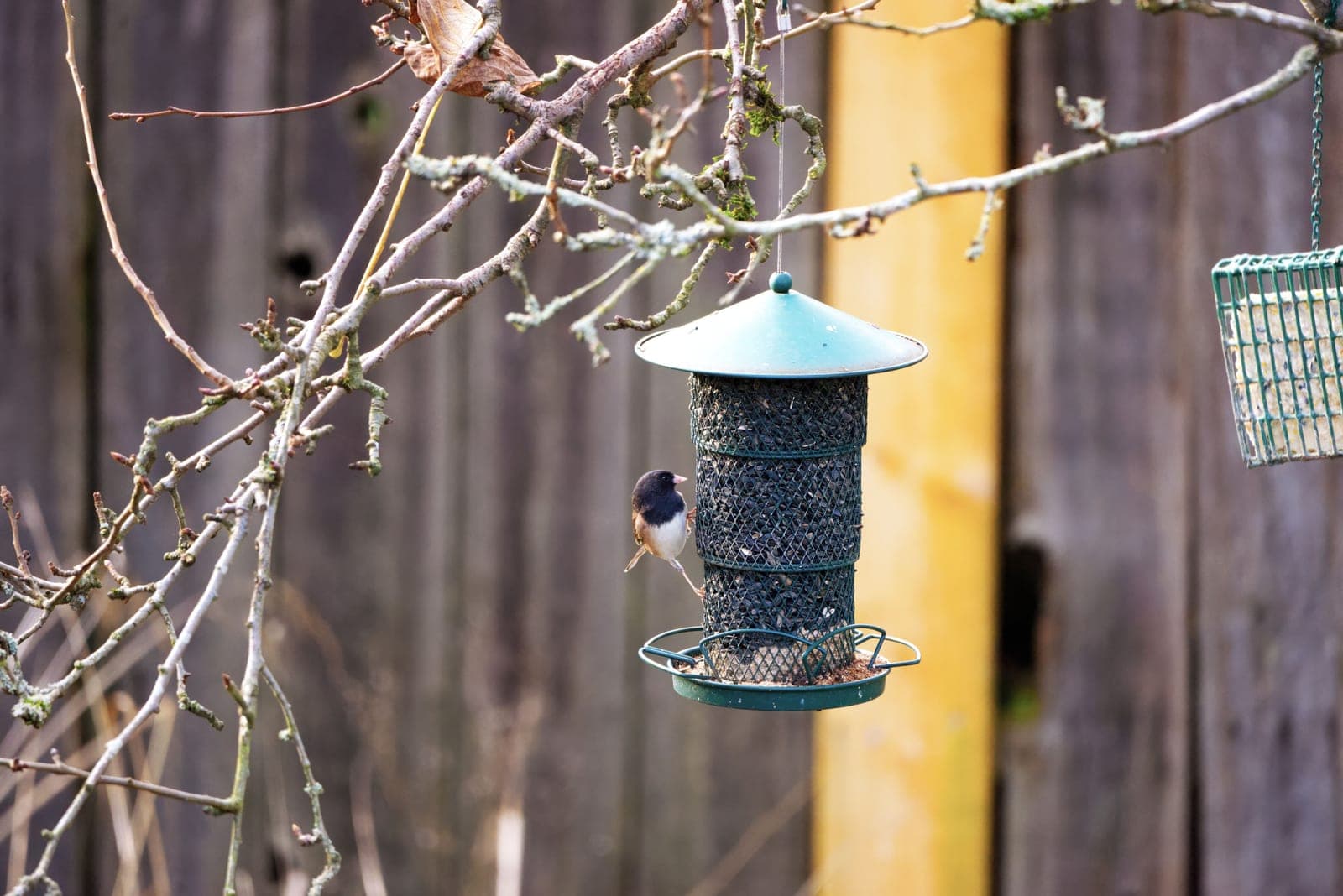
Wait longer before changing anything. Birds can take days to several weeks to find a new feeder, and longer in autumn when wild food is abundant. After that, the order of likelihood is stale seed, then the wrong feeder format, then placement. Change one thing at a time and give each change two weeks.
Winter Perch is funded by affiliate commission. If you buy through a link on this page we may earn a commission at no extra cost to you, and it never decides a ranking. Full disclosure · how we pick.
Quick picks
Ranked, with the trade-off named. Tap a row for the full write-up; the price button goes straight to Amazon.
| # | Product | Best for | Price |
|---|---|---|---|
| 1 |  Wagner's 52023 Black Oil Sunflower Seed, 5 lbThe small bag. Costs the most per pound and is the right purchase for a single small feeder, because seed that goes stale is not cheap at any price. | Balconies, small tubes, and finding out whether you will keep this up | $10.98 · See it on Amazon |
| 2 |  Nature's Way CWF19 Cedar Hopper Feeder with Suet Cages, 6 qtSix quarts of seed with a suet cage on each end — the best single answer to the winter refill problem if you are only hanging one thing. | One feeder that runs seed and suet together | $39.99 · See it on Amazon |
| 3 |  C&S High Energy Delight No-Melt Suet Dough, 8-packNo-melt dough at a price that lets you leave a cake out permanently, in the formulation woodpeckers, nuthatches and chickadees actually work at. | The default winter cake | $24.99 · See it on Amazon |
| 4 |  MIXXIDEA Ground Bird Feeder TrayThe same metal-mesh idea at a lower price — drains properly, and that is most of what a ground tray has to do. | The cheapest way to add ground feeding | $12.34 · See it on Amazon |
| 5 |  K&H Super Ice Eliminator Bird Bath De-Icer, 80 WThe 50 W unit with enough extra element to cope with a bigger basin and a colder night. If you are buying one de-icer without measuring anything, buy this one. | Most yards, most winters — the default de-icer | $28.91 · See it on Amazon |
| 6 |  Gamma2 Vittles Vault Bird Seed Storage Container, up to 35 lbAn airtight bin sold specifically for bird seed and rated in pounds rather than gallons, which means you can buy it against the bag you actually buy. The default answer. | The one container most yards need | $28.15 · See it on Amazon |
#ad how we are funded · price as of September 22, 2026
The picks in full
Top pick Balconies, small tubes, and finding out whether you will keep this up
Wagner's 52023 Black Oil Sunflower Seed, 5 lb
The small bag. Costs the most per pound and is the right purchase for a single small feeder, because seed that goes stale is not cheap at any price.
Specifications
- Type
- 100% black oil sunflower
- Bag
- 5 lb
- Shell
- Thin
- Origin
- Made in USA
Trade-offs
- Gets used before it stales in a low-traffic yard or a balcony feeder
- No storage problem — it fits in a cupboard
- The sensible way to test whether feeding birds is something you will actually keep doing
- By far the most expensive per pound of the Wagner's sizes
- A busy yard will empty it in under two weeks
Who it is forA single small feeder, a balcony, or a first bag.
Skip it ifSkip it once you know you are committed and have dry storage. You are paying a large premium per pound for a bag size you have outgrown.
#ad how we are funded · price as of September 22, 2026
No. 2 One feeder that runs seed and suet together
Nature's Way CWF19 Cedar Hopper Feeder with Suet Cages, 6 qt
Six quarts of seed with a suet cage on each end — the best single answer to the winter refill problem if you are only hanging one thing.
Specifications
- Seed capacity
- 6 quarts
- Suet
- Integrated cages
- Material
- Cedar
- Roof
- Yes — covers seed and both cages
Trade-offs
- Six quarts is the longest refill interval on this page
- Seed and suet in one visit, which matters when the visit is in a blizzard
- The roof covers everything, so wet seed is much less of an issue
- Cedar, and it looks like furniture rather than kit
- No squirrel exclusion at all — it is a hopper, and hoppers are open
- A full six quarts of damp seed is a lot of seed to spoil at once
- Big and heavy on a hanger
Who it is forThe single-station yard, where one feeder has to do everything.
Skip it ifSkip it if squirrels run your yard. A hopper feeder with no mechanism is the easiest meal on this site.
#ad how we are funded · price as of September 22, 2026
No. 3 The default winter cake
C&S High Energy Delight No-Melt Suet Dough, 8-pack
No-melt dough at a price that lets you leave a cake out permanently, in the formulation woodpeckers, nuthatches and chickadees actually work at.
Specifications
- Format
- Standard 11.75 oz cake
- Pack
- 8
- Type
- No-melt dough
- Targets
- Woodpeckers, nuthatches, chickadees
Trade-offs
- No-melt dough holds shape above freezing, so an early thaw does not dump it on the ground
- Standard cake size fits every cage feeder on this site
- Eight cakes is roughly a winter for one feeder
- Plain high-fat formulation with nothing gimmicky in it
- No-melt dough is firmer than raw suet and slower going for small birds in deep cold
- Nothing in it deters squirrels or starlings
Who it is forThe first suet you buy, and the one you re-order without thinking about it.
Skip it ifSkip it if starlings have found your feeder. A plain cake in an open cage is a starling buffet — go to an upside-down feeder or a hot pepper cake.
#ad how we are funded · price as of September 22, 2026
No. 4 The cheapest way to add ground feeding
MIXXIDEA Ground Bird Feeder Tray
The same metal-mesh idea at a lower price — drains properly, and that is most of what a ground tray has to do.
Specifications
- Base
- Mesh wire — drains, keeps seed dry
- Material
- Metal
- Targets
- Juncos, doves, sparrows, squirrels
Trade-offs
- Drains, which is the one non-negotiable feature of a ground tray
- Cheap enough to buy two and try both ends of the yard
- Nothing to break — it is a tray
- Lighter than the Gray Bunny, so more prone to shifting in wind
- No stated dimensions in the listing detail, so match it to your space carefully
- Same cat and snow caveats as any ground feeder
Who it is forAdding ground feeding cheaply, or running a second tray in a big yard.
Skip it ifSkip it in an exposed windy yard. A light tray with no anti-tip bars ends up upside down, and you will be picking seed out of the grass.
#ad how we are funded · price as of September 22, 2026
No. 5 Most yards, most winters — the default de-icer
K&H Super Ice Eliminator Bird Bath De-Icer, 80 W
The 50 W unit with enough extra element to cope with a bigger basin and a colder night. If you are buying one de-icer without measuring anything, buy this one.
Specifications
- Rated watts
- 80 W
- Form
- Submersible, natural rock shape
- Control
- Automatic
- Finish
- Paintable enamel
- Safety
- Safety listed for outdoor submersible use
Trade-offs
- 80 W is the sweet spot: enough for a 20-inch basin, well under a 150 W bath
- Automatic, so there is no switch to forget
- Same drop-in convenience as the 50 W, same paintable finish
- Works in the bath you already own, at any mount height
- 60 percent more draw than the 50 W for buyers with a small basin who did not need it
- Still a cord in the water
- The rock shape takes up basin space small birds could be standing in
Wattage: 80 W
K&H states 80 watts, and the listing is explicit that the unit is safety listed and automatic. Eighty watts holds a typical 16 to 20 inch basin open through a normal northern winter night.
At full draw for a four-month winter (120 days), plugged in around the clock: 80 W x 2880 h = 230.40 kWh, x $0.1834/kWh = $42.26 — $42.26 at $0.1834/kWh. A thermostatic unit will land under that.
Who it is forThe default buyer: an existing 16 to 20 inch bath, a normal northern winter, no interest in replacing the bath itself.
Skip it ifSkip it if your basin is under about 14 inches. The 50 W version does that job and costs less to run every single day of the winter.
#ad how we are funded · price as of September 22, 2026
No. 6 The one container most yards need
Gamma2 Vittles Vault Bird Seed Storage Container, up to 35 lb
An airtight bin sold specifically for bird seed and rated in pounds rather than gallons, which means you can buy it against the bag you actually buy. The default answer.
Specifications
- Capacity
- Up to 35 lb, as stated by the maker
- Lid
- Threaded screw-on seal with double gaskets
- Material
- BPA-free HDPE plastic
- Origin
- Made in USA
Trade-offs
- Rated in pounds, so it is easy to match to a bag — metal cans are sold in gallons and are not
- A threaded, double-gasketed lid keeps damp out, and damp is what turns stored seed moldy over a winter
- Seals in the smell of the seed, which is a large part of what draws mice to a garage in the first place
- Gamma2 is the established name in airtight feed storage
- Plastic: a rodent with time and no alternative can chew through it — keep it off the floor and away from walls
- Not the choice for an outbuilding with a real rat problem, where metal is the only honest answer
- A screw-top lid is slower to open than a flip lid, and fiddly in gloves
- Tough HDPE is still plastic, so the seal is doing most of the work — it is not a physical barrier the way steel is
Who it is forA garage or utility room with occasional mice, and seed bought by the bag in autumn.
Skip it ifSkip it for a shed or barn with a proper rodent problem. Buy a locking metal can there and accept that it is not airtight.
#ad how we are funded · price as of September 22, 2026
First: how long has it actually been?
This is the answer for most people asking the question, and it is worth getting out of the way before you spend anything.
Birds find food by moving through their range and noticing things. A new feeder is an unfamiliar object in a place they already know, and they are cautious about unfamiliar objects. Days to a few weeks is normal. In a yard that has never had a feeder, with no established birds passing through, it can be longer still.
There is also a seasonal effect that catches people out every year. Autumn is the hardest time to start a feeder, because natural food is at its annual peak — seed heads, berries, insects, and a heavy mast crop in a good year. The same feeder that is ignored in October can be busy in January, when that food is gone or under snow. If you have just put a feeder up in autumn, the honest advice is to keep it stocked and wait for the weather to do the work.
The causes, in order of how often they are the problem
| # | Cause | Test |
|---|---|---|
| 1 | Not enough time | Has it been under two weeks? Wait |
| 2 | Stale or filler-heavy seed | Smell it; squeeze it; check what is in the bag |
| 3 | Wrong feeder format | Are birds on the ground beneath it? |
| 4 | Placement | Is it exposed, or buried in cover? |
| 5 | No water anywhere | Is there open water in the yard? |
| 6 | Predator or bully pressure | Cat, hawk, squirrel monopoly, starling flock |
| 7 | Seasonal abundance | Is it autumn in a good mast year? |
| 8 | A dirty feeder | When did you last wash it? |
Note what is not on this list: nothing here is about the brand of feeder. Expensive feeders do not attract birds faster than cheap ones.
How we ranked the fixes
How we picked
- Ranked by how often each cause is actually the problem, not by how interesting it is — which is why 'wait longer' is first and hardware is fourth.
- Cheapest test first. Fresh seed in a small bag costs little and eliminates the commonest real cause.
- One variable at a time, because simultaneous changes diagnose nothing.
- Format over price on feeders, since a tray reaches species a tube never will and cost does not.
- Water weighted heavily, because in a freeze it is scarcer than food and changes a visitor list faster than another feeder.
- Live price and availability, refreshed daily.
We have not tested any of these. What we did instead: read the manufacturers’ own listings, compiled the published specifications, computed the running cost at a cited electricity rate, and refreshed the prices daily. The full method is published.
2. Seed — the commonest real cause
If time is not the answer, this usually is, and it splits into two separate problems.
The seed is stale. Sunflower and nyjer are oil-rich, and those oils go rancid. Seed that has sat in a warm garage since last spring, or in a store's back room for a year, is seed birds will reject outright. Fresh black oil sunflower has a faint oily sheen and a clean smell; old seed is dusty, pale and smells flat or sour. This is invisible to you and obvious to them.
The seed is mostly filler. Cheap mixes are padded with milo, wheat, oats and red millet, which almost nothing at a northern feeder eats. Birds pick out the few sunflower seeds and kick the rest to the ground, so a feeder can look busy-ish and empty slowly while the birds are actually unimpressed. The winter seed roundup covers what to buy instead; the short version is straight black oil sunflower.
The test is cheap: buy a small bag of fresh straight sunflower, empty the feeder completely, wash it, and refill. If that does not change anything in two weeks, the seed was not the problem — and you have not wasted much. Then store it properly so the new seed does not become the old seed.
3. The feeder is the wrong shape for your birds
A hanging tube feeder suits clinging birds — chickadees, titmice, nuthatches, finches. It suits almost nobody else.
Roughly a third of a typical winter list feeds on the ground and will not use a hanging feeder at all: juncos, mourning doves, most sparrows, towhees. Cardinals need somewhere to stand and cannot use a short peg perch. So a yard can be full of birds that are politely ignoring the only feeder in it.
- Look underneath. If birds are feeding on spilled seed on the ground, the birds are there and the feeder shape is wrong. Add a low tray or platform.
- Add a hopper or a ledge if cardinals are around — they need standing room.
- Add suet. It reaches woodpeckers, nuthatches and creepers that seed feeders never will, and it is the fastest way to broaden the visitor list.
- Two simple feeders beat one complicated one. A tube and a tray cover far more species than any single feeder can.
4. Placement
Birds balance two risks at a feeder: being caught in the open, and having nowhere to escape to. Both extremes fail.
Too exposed — a feeder on a pole in the middle of a lawn with nothing within thirty feet — and small birds will not commit to it, because there is no cover to dive into. Too enclosed — pushed into a dense shrub — and it becomes an ambush point for cats. The working compromise is roughly ten feet from cover: close enough to escape, far enough that nothing can spring from it.
Wind matters too. A feeder on an exposed corner in a January gale is unpleasant to feed at and gets emptied by weather rather than birds. Feeder placement in snow and wind has the distances, and the feeding station guide covers the whole layout.
5. No water
This is the one most people never consider, and on this site it is close to a founding argument.
In a freeze, food is easier to find than water. Seed and suet stay edible under snow; standing water does not stay liquid. Birds get much of their winter water from snow and dripping ice, and eating snow costs body heat to melt it — so open water is often the scarcest thing in a neighborhood, and the yard that has it gets the traffic.
If your feeders are quiet and there is no open water for a distance, a heated bath or a de-icer will frequently change the visitor list faster than any feeder change will. Heated bath vs de-icer covers which one you need, and what it costs to run is published in full.
6. Something is scaring or monopolizing them
- A cat. The single most disruptive thing in a feeding yard. Birds will abandon a feeder a cat patrols, and no change of seed fixes it.
- A hawk. Sharp-shinned and Cooper's hawks hunt feeders deliberately. A few quiet days after a hawk visit is normal and self-correcting — it is one of the few causes where the right response is to do nothing.
- Squirrels. A feeder held by squirrels all day is a feeder birds stop bothering with. The mechanisms that actually exclude one.
- Starlings or grackles. A flock strips a feeder and holds it. They are birds, so none of the squirrel tactics work.
- Building work, a new structure, a flapping tarp. Anything novel and moving near the feeder suppresses visits until it stops being novel.
8. A dirty feeder
Less common as a cause of *no* birds, but real: a feeder with damp, caked seed in the ports, mold in the base, or fat residue gone rancid is one birds avoid. It is also a genuine health risk to the birds that do use it. If yours has not been washed in a month, that is worth fixing regardless of whether it is the cause — the cleaning guide has the schedule and the method.
When it is working and you cannot tell
Two situations look like failure and are not.
You are watching at the wrong time. Feeder activity peaks early in the morning and again before dusk. Cardinals in particular are characteristically the first and last birds of the day, feeding in light too poor for most species. A feeder checked at midday can look abandoned and be busy twice a day.
The birds are on the ground. Juncos and sparrows under the feeder are birds using your feeding station — they are simply using the part of it you did not intend. That is a sign to add a tray, not a sign that nothing is working.
What we would skip
What we would skip
Changing three things at once
New seed, a new feeder and a new position in the same week tells you nothing. If birds arrive you will not know why, and if they do not you have eliminated nothing. One change, two weeks, then the next.
Buying a more expensive feeder
Price has almost no bearing on whether birds come. Format does — a tray reaches ground feeders a tube never will — but a costlier tube feeder is still a tube feeder.
Cheap mixes with milo, wheat and red millet
Birds pick out the sunflower and kick the rest to the ground, where it rots and draws rodents. A feeder emptying slowly on a filler mix is not evidence that birds like it.
Topping up rather than emptying
Old seed settles at the bottom, absorbs damp and goes rancid, and fresh seed poured on top does not fix it. Empty the feeder completely, wash it, then refill.
Giving up in autumn
Autumn is the hardest time to start, because wild food is at its annual peak. The same feeder ignored in October is often busy in January. Keep it stocked and let the weather do the work.
Panicking after a hawk
A few quiet days following a hawk visit is normal and self-correcting. It is one of the few causes on this page where the correct response is to change nothing at all.
Where this fits
If you are starting from nothing rather than troubleshooting, the winter feeding station setup guide is the better starting point, and what to feed birds in winter covers the food in order of usefulness. Winter backyard birds covers who you should realistically expect to see.
Questions people actually ask
- How long does it take birds to find a new feeder?
- Days to several weeks, and longer in autumn when wild food is abundant. In a yard that has never had a feeder it can take longer still. This is the answer for most people asking why nothing is coming.
- Why are birds not coming to my feeder?
- In order of likelihood: not enough time has passed, the seed is stale or mostly filler, the feeder is the wrong format for the birds present, or the placement is too exposed or too enclosed. Change one thing at a time.
- Can bird seed go bad?
- Yes. Sunflower and nyjer are oil-rich and those oils go rancid. Stale seed is dusty and smells flat or sour, and birds reject it outright. Buy fresh, in a size you will use in a season, and store it sealed.
- Why are birds on the ground but not on my feeder?
- Because roughly a third of a winter list feeds on the ground and will not use a hanging feeder — juncos, doves, most sparrows. The birds are there; the feeder shape is wrong. Add a low tray or platform.
- Did a hawk scare the birds away from my feeder?
- Probably, and it fixes itself. Sharp-shinned and Cooper's hawks hunt feeders deliberately, and a few quiet days afterwards is normal. This is one case where the right response is to change nothing.
- Should I stop feeding if no birds come?
- Not in autumn or early winter. Wild food peaks in autumn and disappears by midwinter, so a feeder ignored in October is often busy in January. Keep it stocked, keep it clean, and let the weather do the work.
- Will adding water bring more birds?
- Often faster than another feeder will. In a freeze, open water is scarcer than food — seed stays edible under snow and standing water does not stay liquid — so the yard with open water gets the traffic.
Sources
Read next
- How to Set Up a Winter Bird Feeding Station
The complete winter station: feeders, water and cover, with the distances and the order to build it in.
- The Best Bird Seed for Winter
Five winter seeds ranked on usable fat, shell thickness and species reach — plus the cheap mix that is worth avoiding.
- The Best Platform and Ground Feeders
Ground trays and platform feeders ranked on drainage, stability and how they behave after a snowfall.
- Heated Bird Bath vs De-Icer: Which One You Need
Complete heated bath or drop-in de-icer? The decision in one table, plus the concrete-basin case that changes the answer.