Winter feeders / Comparison
Baffle or Squirrel-Proof Feeder?
Every guide says fit a baffle first because it costs less than a mechanism. That is true only if you already own a pole — and if you do not, the arithmetic reverses.
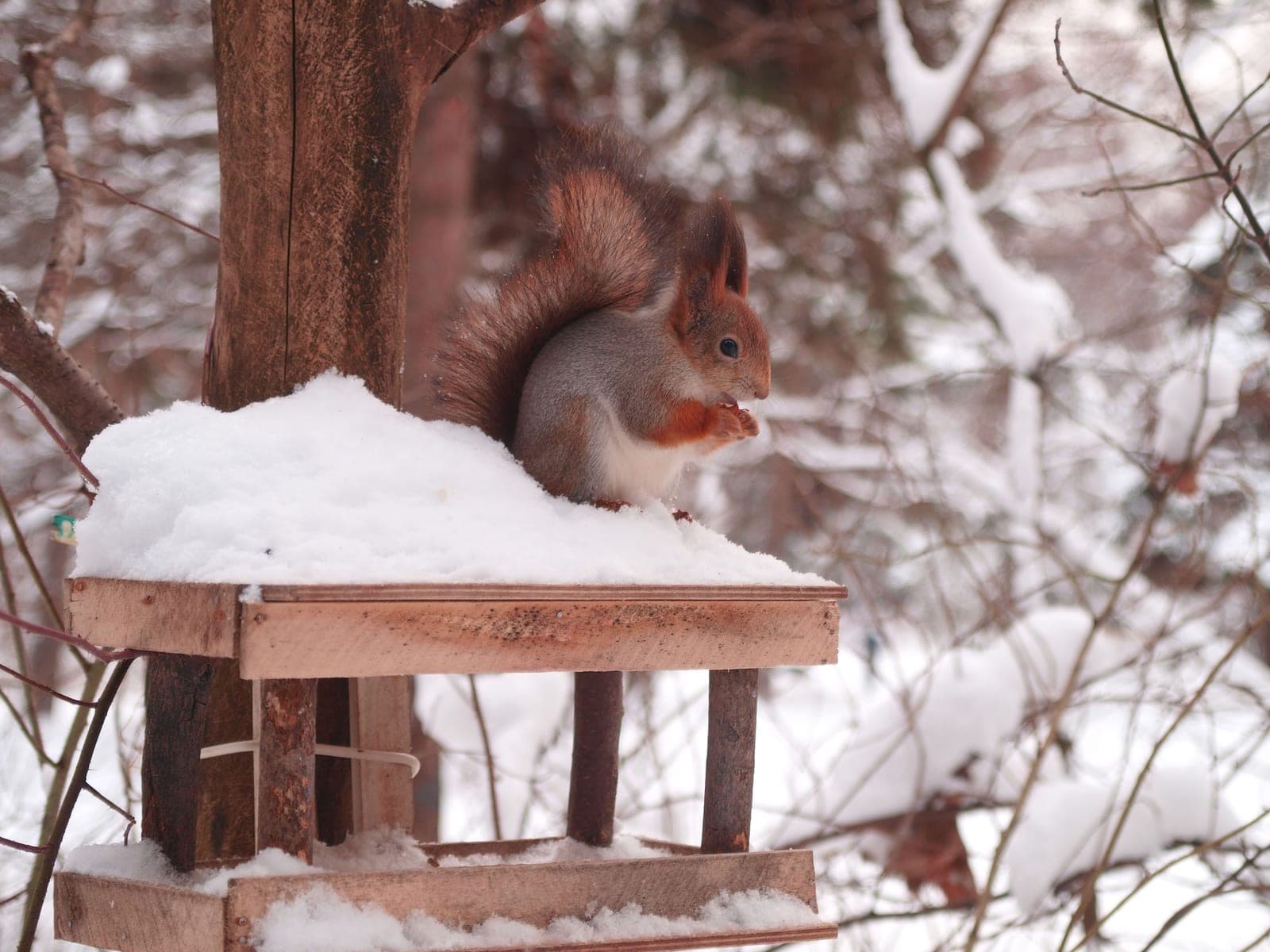
Already own a pole? Fit a baffle. It is the cheaper half of the job and it protects every feeder on that pole at once. Feeder hanging from a branch, hook or eave, with no pole? A weight-activated feeder is usually the cheaper route, because the baffle answer quietly requires buying a pole as well — and a pole costs more than the mechanism does.
Winter Perch is funded by affiliate commission. If you buy through a link on this page we may earn a commission at no extra cost to you, and it never decides a ranking. Full disclosure · how we pick.
Quick picks
Ranked, with the trade-off named. Tap a row for the full write-up; the price button goes straight to Amazon.
| # | Product | Best for | Price |
|---|---|---|---|
| 1 |  Brome Squirrel Buster Evolution, double cardinal ringThe same weight-activated shroud as the rest of the Squirrel Buster line, with two cardinal rings, at well under what the Plus costs. If one feeder has to do everything, this is it. | The best price-to-mechanism ratio Brome makes | $73.08 · See it on Amazon |
| 2 | 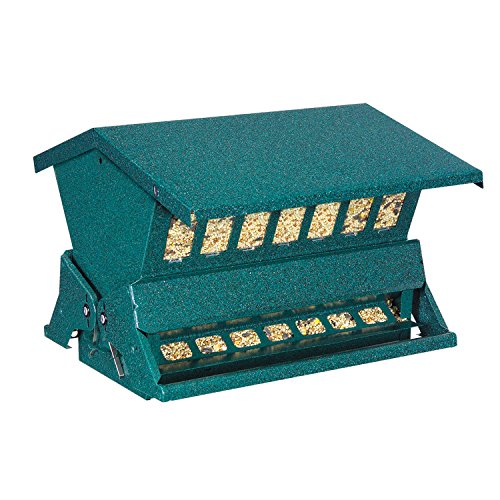 Woodlink Absolute II Squirrel-Resistant Feeder, 12 lbTwelve pounds of seed behind a weight-activated steel shield — the only feeder here you can fill before a storm and forget about until it clears. | The longest refill interval on the page | $84.00 · See it on Amazon |
| 3 |  Kingsyard Hanging Dome Baffle and Rain GuardA dome that hangs above the feeder rather than sitting below it. The only baffle geometry that works when the threat comes from above, and it keeps snow off as a bonus. | Feeders hung from a branch or a hook | $20.99 · See it on Amazon |
| 4 |  Woodlink BCBAF22 Wrap-Around Squirrel BaffleWraps around an installed pole and closes, so nothing has to come apart. That is the whole argument for it, and in January it is a very good argument. | A pole that is already in the ground | $62.80 · See it on Amazon |
| 5 |  Erva FP5TLM4B 4-Arm Premium Feeder Pole SetA sectional made-in-USA pole on a twist-in ground socket, in tubing the maker states is nearly twice the industry-standard wall thickness. The system you extend rather than replace. | Buying once, and adding to it later | $129.80 · See it on Amazon |
#ad how we are funded · price as of October 15, 2026
The picks in full
Top pick The best price-to-mechanism ratio Brome makes
Brome Squirrel Buster Evolution, double cardinal ring
The same weight-activated shroud as the rest of the Squirrel Buster line, with two cardinal rings, at well under what the Plus costs. If one feeder has to do everything, this is it.
Specifications
- Mechanism
- Weight-activated shroud
- Perches
- Double cardinal ring
- Chew-proof
- Metal ports and shroud
Trade-offs
- Weight-activated exclusion is the only approach that reliably stops a determined squirrel
- The cardinal rings give big birds somewhere to stand, which most tube feeders refuse to do
- Metal ports mean a squirrel that fails to get in cannot chew its way in instead
- Brome sells spare parts, so this is a feeder you repair rather than replace
- A mechanism is a thing that can jam; wet seed and grit need cleaning out or the shroud sticks
- Heavier birds can trip the shroud themselves, which some owners find frustrating
- Costs several times what a plain tube feeder costs
- The spring needs adjusting for your local squirrel weight, and that is trial and error
Who it is forA yard with a real squirrel problem and cardinals worth feeding.
Skip it ifSkip it if you have no squirrels. You are paying for a mechanism you do not need and adding a part that can jam in winter.
#ad how we are funded · price as of October 15, 2026
No. 2 The longest refill interval on the page
Woodlink Absolute II Squirrel-Resistant Feeder, 12 lb
Twelve pounds of seed behind a weight-activated steel shield — the only feeder here you can fill before a storm and forget about until it clears.
Specifications
- Seed capacity
- 12 lb
- Dimensions
- 16"W x 11.25"H x 13.5"D
- Material
- Steel
- Mechanism
- Spring-activated perches; a metal shield covers the seed tray under weight
- Perches
- Two counterbalance perches, adjustable to three positions
- Top
- Locking
- Included
- Steel hanging rod; 5 ft sectional pole kit with mounting bracket
- Warranty
- 1 year limited
Trade-offs
- 12 lb is far and away the largest capacity on this page, and capacity is the winter specification
- The counterbalance perches adjust across three settings, so you choose the weight at which the shield closes
- Steel body and a locking top — nothing here for a squirrel to chew through or lift off
- Ships fully assembled with both a hanging rod and a pole kit, so no second purchase to mount it
- Takes mixed seed, sunflower, safflower and peanut halves rather than one narrow seed type
- The most expensive feeder on this page by a wide margin
- The shield is a moving mechanism outdoors all winter, and seed dust and freezing rain are what it has to keep working through
- A 1-year limited warranty is short next to the lifetime cover on some simpler feeders
- Set the perches too light and you exclude cardinals and jays along with the squirrels
- Woodlink publishes no drainage or ventilation detail for the seed tray
Who it is forSomeone running a feeder they cannot top up daily — a second property, a long driveway, or simply a yard where February refills are the thing that defeats them.
Skip it ifSkip it if your yard has no squirrel problem. You are paying mostly for the mechanism, and a plain hopper with a good drainage screen feeds the same birds for a third of the money.
#ad how we are funded · price as of October 15, 2026
Where these specs came from
- Woodlink Absolute II Squirrel Resistant Bird Feeder Model 7536, 12 lb — manufacturer listing, Amazon.com (retrieved 2026-10-10)
- Tractor Supply — Woodlink 12 lb Absolute II Squirrel-Resistant Bird Feeder: 12 lb capacity, 16" x 11.25" x 13.5", steel, locking top, spring-activated perches, two counterbalance perches with three positions, 1-year limited warranty, hanging rod and 5 ft pole kit included
No. 3 Feeders hung from a branch or a hook
Kingsyard Hanging Dome Baffle and Rain Guard
A dome that hangs above the feeder rather than sitting below it. The only baffle geometry that works when the threat comes from above, and it keeps snow off as a bonus.
Specifications
- Type
- Hanging dome
- Material
- Metal
- Second use
- Rain and snow guard
Trade-offs
- Solves the case a pole baffle cannot — a squirrel coming down a branch or a hook
- Doubles as a weather guard, which keeps seed dry and is worth having on its own
- Cheap relative to the pole baffles, and no installation beyond threading the hanger
- A dome is easier to defeat than a stovepipe; an athletic squirrel can swing past one
- Only works if the feeder hangs well below it, which shortens your usable height
- Unbranded manufacture, and the metal is thinner than the Woodlink and Erva baffles
- Does nothing about a squirrel climbing up from the ground
Who it is forA feeder hanging from a tree limb, a bracket or a shepherd's hook.
Skip it ifSkip it if your feeder is pole-mounted. A baffle below the feeder blocks the route squirrels actually use there, and does it better.
#ad how we are funded · price as of October 15, 2026
No. 4 A pole that is already in the ground
Woodlink BCBAF22 Wrap-Around Squirrel Baffle
Wraps around an installed pole and closes, so nothing has to come apart. That is the whole argument for it, and in January it is a very good argument.
Specifications
- Type
- Wrap-around baffle
- Model
- BCBAF22
- Material
- Steel
Trade-offs
- Fits without lifting the feeder, the pole or anything else out of frozen ground
- Steel rather than the thin aluminum most budget baffles use
- Woodlink build quality, and the finish survives a wet winter
- The retrofit answer, which is the situation most people are actually in
- Costs several times what a generic cone baffle costs
- A wrap-around seam is a weakness a determined squirrel can work at
- Still needs the clearance rule — ten feet from anything jumpable, or it does nothing
- Heavier than a cone, so a light pole may need re-seating afterwards
Who it is forRetrofitting a baffle to a station you already built and do not want to dismantle.
Skip it ifSkip it if the pole is not yet in the ground. A one-piece torpedo baffle threaded on first is cheaper and has no seam.
#ad how we are funded · price as of October 15, 2026
No. 5 Buying once, and adding to it later
Erva FP5TLM4B 4-Arm Premium Feeder Pole Set
A sectional made-in-USA pole on a twist-in ground socket, in tubing the maker states is nearly twice the industry-standard wall thickness. The system you extend rather than replace.
Specifications
- Pole height
- 80 in (98 in overall in-ground height)
- Pole diameter
- 1 in
- Construction
- 6-piece sectional
- Arms
- 4, forged twist
- Anchor
- Twist-in ground socket
- Origin
- Made in USA
Trade-offs
- Wall thickness is the spec Erva competes on, and it is the one that decides whether a pole bows under a snow-loaded feeder
- A twist-in socket means the pole lifts out of the socket — you can bring it in, move it, or swap the top without re-digging
- 1-inch diameter is the size most aftermarket baffles are built for, so you are not locked to one accessory
- Sectional, so you can extend it or change the arm top rather than buying a second pole
- Made in USA, and Erva is the one maker in this category that publishes real numbers
- No baffle included — budget for one separately, and it is not optional if you have squirrels
- 1 inch is the narrowest pole here; fine for four feeders, less happy carrying eight
- A sectional pole has joints, and joints are where a pole develops a lean over a wet winter
- Assembly is more involved than a one-piece hook
Who it is forSomeone building a station deliberately who wants a pole that accepts standard baffles and can be extended.
Skip it ifSkip it if you want one box that solves squirrels today. This is a pole, not a system — the baffle is a second purchase and a second decision.
#ad how we are funded · price as of October 15, 2026
Why this page exists
This site has said the same thing on page after page: placement first, then a baffle, then a mechanism. It is good advice and we stand behind the order. What we never did was price it, and when you do, the usual justification for that order stops holding in one very common case.
The claim behind "baffle first" is that a baffle is the cheap fix and a squirrel-proof feeder is the expensive one. Check the live prices in the cards above before reading on. A pole-mounted baffle and a weight-activated feeder are in the same bracket as each other — and the baffle only works if something is holding your feeder up that a squirrel has to climb.
The decision in one table
| Baffle on a pole | Weight-activated feeder | |
|---|---|---|
| What you buy | Baffle, plus a pole if you have none | One feeder |
| Protects | Every feeder on that pole | That feeder only |
| Works hanging from a branch | Only a wide dome, and imperfectly | Yes, anywhere |
| Moving parts outdoors in winter | None | A shroud and springs |
| Excludes large birds too | No — jays and cardinals still feed | Often yes, depending on setting |
| Stops raccoons | A tall baffle can | No |
| Fails if sited wrong | Yes — height and clearance are everything | Largely no |
Read the first and second rows together. A baffle is bought once and protects the whole station, which is why it wins outright for anyone already running a pole. The mechanism protects one feeder and travels with it.
Fit a baffle if...
- You already own a pole. This is the whole case. The baffle is then genuinely the cheap half of the job and it covers every feeder on the pole at once.
- You run more than one feeder. One baffle under a multi-arm pole protects the lot; buying a mechanism per feeder does not scale.
- You want jays and cardinals to keep feeding. A baffle is indifferent to bird weight — it only stops something climbing the pole. Bird feeders for cardinals covers why weight mechanisms can exclude them.
- Raccoons are part of the problem. A tall pole baffle is the only thing on this page that addresses one.
- You would rather own nothing mechanical that has to keep working through freezing rain and seed dust.
The baffle roundup ranks them, and it matters that you buy the right shape: a stovepipe or wrap-around for a pole, a wide dome for a hanging line, and a 4x4 model for a wooden post. They are not interchangeable.
Buy a weight-activated feeder if...
- Your feeder hangs from a branch, a hook or an eave. A squirrel arrives from above, and there is no pole for a baffle to interrupt.
- You have one feeder and no plans for a station. You are buying one thing instead of two.
- You cannot get the siting right. A baffle needs real clearance around the pole; a mechanism does not care what is near it.
- You want it to work the day it arrives, without measuring heights or moving the station away from a fence.
The squirrel-proof feeder roundup ranks the mechanisms. The honest caveat on all of them is in the next section.
Why siting beats both, and is free
A squirrel jumps roughly ten feet horizontally and drops considerably further than people expect. A baffle fitted at the correct height on a pole that stands within jumping range of a fence, a shed roof or a low branch does nothing at all, because the squirrel never touches the pole.
This is why the order of operations is placement, then hardware. Moving the pole costs nothing and it is the step that decides whether either purchase on this page works. Feeder placement in snow and wind has the clearances, and they are larger than most yards allow for.
What a mechanism does not do
A weight-activated feeder closes its ports when something heavy stands on the perch. That is genuinely effective against squirrels, and it has two consequences the listings do not lead with.
First, it is weight-blind, not species-aware. Set the mechanism light enough to shut out a gray squirrel and you may also shut out jays, grosbeaks and sometimes cardinals — the heavier birds a lot of people are specifically feeding. The adjustable models let you tune this; the fixed ones decide for you.
Second, it is a moving assembly living outdoors all winter. Seed dust, freezing rain and a thaw-refreeze cycle are what it has to keep working through, and a shroud that sticks is a feeder that is either permanently open or permanently shut. A baffle is a piece of bent metal with nothing to seize.
Neither of these makes a mechanism the wrong buy. They are the trade you are accepting in exchange for not needing a pole.
The case where both are wrong
If squirrels are reaching your feeder from a roof, a fence top or an overhanging branch and you cannot move the feeder away from any of them, neither product solves it. A baffle protects a pole nobody is climbing, and a mechanism on a feeder a squirrel can simply sit beside and raid from the tray still loses seed.
The honest answer in that situation is to move the feeding station, or to accept the squirrels and reduce what they cost you — a seed catcher keeps spill off the ground, and cheap feeders are the rational purchase for a yard that eats hardware.
What we would buy, either way
If you are starting from nothing and building a station, buy the pole and the baffle — in that order, and budget for both at once. The pole decides everything downstream, including which baffle diameters will fit it, and it is the piece that has to go into the ground before the ground freezes.
If you are hanging one feeder from a branch this winter and do not want a station, buy the mechanism and skip the rest. It is the cheaper, simpler and more portable answer, and it is the case where the standard advice on this topic is simply wrong about cost.
What we would skip
What we would skip
Buying a baffle with no pole to put it on
A baffle is not a standalone product — it interrupts a climb. With no pole, the purchase quietly becomes a pole as well, which is the single most expensive item on this page and the reason the usual cost argument does not hold.
Fitting a baffle low on the pole
The top of the baffle wants to sit four to five feet up with clear space around it. Lower than that and a squirrel jumps straight past it. A badly sited baffle is not a partial fix; it is no fix.
A pole baffle under a hanging feeder
A stovepipe baffle interrupts something climbing from below. A squirrel on a branch arrives from above, so the only baffle shape that applies is a wide dome fitted over the feeder, and even that is imperfect.
Setting a weight mechanism to its lightest setting by default
It will close on jays, grosbeaks and sometimes cardinals as well as squirrels. Start at the heaviest setting that still excludes the squirrel and work down only if you have to.
Buying either before moving the feeder
A squirrel jumps roughly ten feet horizontally. If your station sits within range of a fence, a shed or a branch, neither a baffle nor a mechanism is being given a fair chance, and relocating it is free.
Questions people actually ask
- Is a baffle cheaper than a squirrel-proof feeder?
- Only if you already own a pole. A pole-mounted baffle and a weight-activated feeder sit in a similar bracket, and the baffle route also requires a pole — which costs more than either. Check the live prices on this page rather than trusting the general claim.
- Do I need both a baffle and a squirrel-proof feeder?
- Almost never. They solve the same problem by different means. If you run a pole, the baffle is the better value because it protects every feeder on it; if you hang a single feeder, the mechanism is the one that works at all.
- How high should a squirrel baffle be?
- The top of the baffle wants to sit four to five feet above the ground, on a pole with real clearance around it. Fitted lower, a squirrel jumps past it from the ground — which is why a badly sited baffle is no baffle.
- Will a squirrel-proof feeder keep out big birds too?
- Often, yes — it reacts to weight, not species. Set light enough to exclude a squirrel it can also close on jays, grosbeaks and sometimes cardinals. Adjustable models let you tune where the line falls.
- Does a baffle work on a feeder hanging from a tree branch?
- A stovepipe baffle does not — it is designed to interrupt a climb from below, and a squirrel on a branch arrives from above. A wide hanging dome is the only baffle shape that applies, and it is less reliable than a pole baffle.
- What should I do before buying either one?
- Move the feeder. A squirrel jumps roughly ten feet horizontally, so a station near a fence, shed roof or low branch defeats both products. Relocating it costs nothing and decides whether the purchase works.
Sources
Read next
- The Best Squirrel Baffles for Feeder Poles
Stovepipe, wrap-around, post and hanging-dome baffles ranked by what they mount to, plus the height and clearance numbers that decide whether one works.
- The Best Squirrel-Proof Bird Feeders
Weight-activated shrouds, tipping perches and cages, ranked on which mechanism actually excludes a squirrel — plus the placement fix that is free.
- The Best Bird Feeder Poles for Winter
Auger, prong or clamp — the anchor is the spec that decides whether a pole survives winter. Seven mounts ranked, plus the diameter question that decides which baffles fit.
- Feeder Placement in Snow and Wind
Wind shelter, drift lines, roof drip and height above snow — where to hang a feeder so the weather does not close it.
- The Best Bird Feeders for Cardinals
Perch width is the spec that decides whether cardinals use a feeder. Six picks ranked on it, plus the one seed that brings cardinals and repels squirrels.