Winter feeders / Roundup
The Best Bird Feeders for Cardinals
A cardinal weighs twice what a chickadee does and cannot cling to a vertical port. Almost every tube feeder sold is the wrong shape for one — here is what is not.
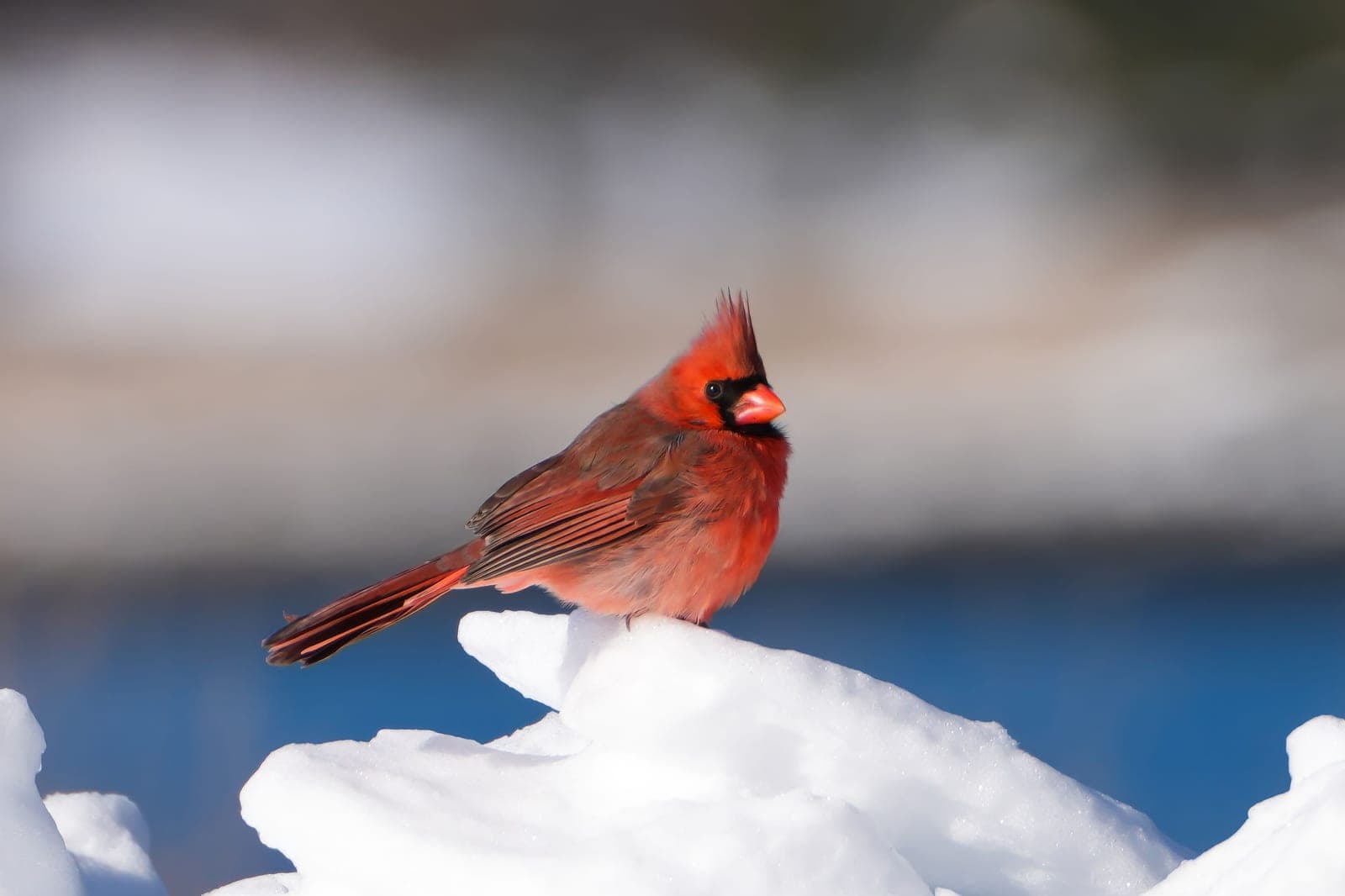
Cardinals need somewhere to stand — a hopper ledge, a platform tray, or a tube with a cardinal ring. They will not cling to a vertical port like a chickadee. Pair it with safflower, which cardinals eat readily and squirrels and grackles mostly refuse. Feed early and late: cardinals are usually the first bird at the feeder and the last to leave.
Winter Perch is funded by affiliate commission. If you buy through a link on this page we may earn a commission at no extra cost to you, and it never decides a ranking. Full disclosure · how we pick.
Quick picks
Ranked, with the trade-off named. Tap a row for the full write-up; the price button goes straight to Amazon.
| # | Product | Best for | Price |
|---|---|---|---|
| 1 |  DutchCrafters Poly Hanging Hopper Feeder, largeRecycled poly lumber, a wide hopper and a ledge a cardinal can actually stand on. Expensive, and the last feeder of its kind you will buy. | Cardinals, and buying once | $89.00 · See it on Amazon |
| 2 |  Nature's Way CWF19 Cedar Hopper Feeder with Suet Cages, 6 qtSix quarts of seed with a suet cage on each end — the best single answer to the winter refill problem if you are only hanging one thing. | One feeder that runs seed and suet together | $39.99 · See it on Amazon |
| 3 | 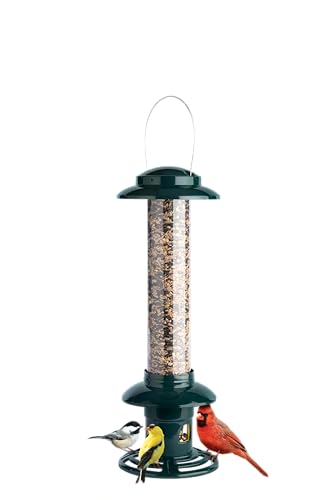 Brome Squirrel Buster Evolution, double cardinal ringThe same weight-activated shroud as the rest of the Squirrel Buster line, with two cardinal rings, at well under what the Plus costs. If one feeder has to do everything, this is it. | The best price-to-mechanism ratio Brome makes | $76.45 · See it on Amazon |
| 4 |  DutchCrafters Poly Covered Platform Ground FeederThe only covered option here, in recycled poly with a removable tray — it answers the two complaints about ground feeders, snow and cleaning, and costs accordingly. | Ground feeding that survives snowfall | $236.00 · See it on Amazon |
| 5 |  Wagner's 57075 Safflower Seed, 5 lbThe one seed on this page that solves a pest problem through taste rather than hardware — squirrels and grackles largely leave safflower alone, and cardinals prefer it. | Cardinals, when squirrels and grackles have taken over | $11.98 · See it on Amazon |
| 6 |  Audubon Park Cardinal Wild Bird Seed, 8 lbA blend put together for cardinals rather than a general mix with cardinals on the bag. Convenient, and you pay a little for the convenience over buying straight seed. | A ready-made cardinal blend | $15.01 · See it on Amazon |
#ad how we are funded · price as of September 13, 2026
The picks in full
Top pick Cardinals, and buying once
DutchCrafters Poly Hanging Hopper Feeder, large
Recycled poly lumber, a wide hopper and a ledge a cardinal can actually stand on. Expensive, and the last feeder of its kind you will buy.
Specifications
- Material
- Recycled poly lumber
- Type
- Hanging hopper
- Ledge
- Full-width perching ledge
Trade-offs
- A wide standing ledge is what cardinals need and what tube feeders deny them
- Poly lumber does not rot, split, fade or absorb fat, and it wipes clean
- Hopper capacity means fewer trips outside in bad weather
- Amish-built in the USA, and it will outlast several cedar feeders
- The most expensive seed feeder on this site by a wide margin
- A wide ledge is equally comfortable for squirrels, starlings and grackles
- Heavy when loaded, so it needs a properly anchored pole or a strong branch
- No exclusion of any kind — this is a feeder for a yard that has already solved squirrels
Who it is forA yard with cardinals and a solved squirrel problem, buying for the long term.
Skip it ifSkip it if squirrels are unsolved. A wide open ledge is the easiest feeder in the world to raid, and the cost makes that an expensive lesson.
#ad how we are funded · price as of September 13, 2026
No. 2 One feeder that runs seed and suet together
Nature's Way CWF19 Cedar Hopper Feeder with Suet Cages, 6 qt
Six quarts of seed with a suet cage on each end — the best single answer to the winter refill problem if you are only hanging one thing.
Specifications
- Seed capacity
- 6 quarts
- Suet
- Integrated cages
- Material
- Cedar
- Roof
- Yes — covers seed and both cages
Trade-offs
- Six quarts is the longest refill interval on this page
- Seed and suet in one visit, which matters when the visit is in a blizzard
- The roof covers everything, so wet seed is much less of an issue
- Cedar, and it looks like furniture rather than kit
- No squirrel exclusion at all — it is a hopper, and hoppers are open
- A full six quarts of damp seed is a lot of seed to spoil at once
- Big and heavy on a hanger
Who it is forThe single-station yard, where one feeder has to do everything.
Skip it ifSkip it if squirrels run your yard. A hopper feeder with no mechanism is the easiest meal on this site.
#ad how we are funded · price as of September 13, 2026
No. 3 The best price-to-mechanism ratio Brome makes
Brome Squirrel Buster Evolution, double cardinal ring
The same weight-activated shroud as the rest of the Squirrel Buster line, with two cardinal rings, at well under what the Plus costs. If one feeder has to do everything, this is it.
Specifications
- Mechanism
- Weight-activated shroud
- Perches
- Double cardinal ring
- Chew-proof
- Metal ports and shroud
Trade-offs
- Weight-activated exclusion is the only approach that reliably stops a determined squirrel
- The cardinal rings give big birds somewhere to stand, which most tube feeders refuse to do
- Metal ports mean a squirrel that fails to get in cannot chew its way in instead
- Brome sells spare parts, so this is a feeder you repair rather than replace
- A mechanism is a thing that can jam; wet seed and grit need cleaning out or the shroud sticks
- Heavier birds can trip the shroud themselves, which some owners find frustrating
- Costs several times what a plain tube feeder costs
- The spring needs adjusting for your local squirrel weight, and that is trial and error
Who it is forA yard with a real squirrel problem and cardinals worth feeding.
Skip it ifSkip it if you have no squirrels. You are paying for a mechanism you do not need and adding a part that can jam in winter.
#ad how we are funded · price as of September 13, 2026
No. 4 Ground feeding that survives snowfall
DutchCrafters Poly Covered Platform Ground Feeder
The only covered option here, in recycled poly with a removable tray — it answers the two complaints about ground feeders, snow and cleaning, and costs accordingly.
Specifications
- Type
- Covered platform, standing
- Material
- Plastic poly lumber
- Tray
- Removable seed tray
- Origin
- Amish made in USA
Trade-offs
- A roof over a ground feeder is genuinely rare and solves the snow problem outright
- The removable tray makes cleaning a two-second job instead of a chore you skip
- Poly lumber does not rot, crack or fade — it will outlast several wooden trays
- Standing rather than flat on the ground, which keeps it above shallow snow
- Several times the price of a bare metal tray
- The cover restricts access for the largest ground birds
- Bulky to store out of season
- Still ground level, so the cat caveat is unchanged
Who it is forSnowy yards where an open tray needs clearing every morning.
Skip it ifSkip it if you get little snow. In a mild winter you are paying a large premium for a roof that is not doing much.
#ad how we are funded · price as of September 13, 2026
No. 5 Cardinals, when squirrels and grackles have taken over
Wagner's 57075 Safflower Seed, 5 lb
The one seed on this page that solves a pest problem through taste rather than hardware — squirrels and grackles largely leave safflower alone, and cardinals prefer it.
Specifications
- Type
- 100% safflower
- Bag
- 5 lb (a 2-pack and a 50 lb bag are also listed)
- Shell
- Thick, white
- Origin
- Made in USA
- Targets
- Cardinals, chickadees, titmice, grosbeaks, doves
Trade-offs
- Most squirrels dislike it, which makes it the cheapest squirrel answer on the site — no mechanism, no baffle
- Grackles and starlings largely ignore it too, so it thins two pest problems at once
- Cardinals genuinely prefer it, and cardinals are the bird most people are trying to attract
- A 5 lb bag is a sensible way to test whether it works in your yard before committing
- Costs noticeably more per pound than black oil sunflower
- The thick white shell is harder work for the smallest bills than thin-shelled sunflower
- Fewer species eat it, so it narrows your feeder traffic rather than widening it
- Squirrel avoidance is a preference, not a barrier — a hungry animal will still eat it
Who it is forA yard with cardinals and a squirrel or grackle problem, run as a second feeder alongside sunflower.
Skip it ifSkip it as your only seed. You will lose the finches, and you are paying a premium to feed a narrower list than sunflower brings in.
#ad how we are funded · price as of September 13, 2026
No. 6 A ready-made cardinal blend
Audubon Park Cardinal Wild Bird Seed, 8 lb
A blend put together for cardinals rather than a general mix with cardinals on the bag. Convenient, and you pay a little for the convenience over buying straight seed.
Specifications
- Size
- 8 lb
- Type
- Cardinal-targeted blend
Trade-offs
- Saves buying and mixing two or three straight seeds yourself
- 8 lb is a sensible trial size rather than a 25 lb commitment
- Aimed at the species rather than at the widest possible label claim
- Any blend costs more per usable pound than buying straight safflower or sunflower
- Blends always contain something your birds will kick to the ground
- 8 lb does not last long once a flock finds it
Who it is forSomeone who wants one bag for cardinals without assembling a blend themselves.
Skip it ifSkip it if you already buy straight black oil sunflower and safflower. You are paying for mixing you can do yourself in a bucket.
#ad how we are funded · price as of September 13, 2026
Where these specs came from
Why most feeders are the wrong shape
This is a body-mechanics problem, not a preference.
A chickadee weighs about a third of an ounce and can cling sideways to a vertical surface indefinitely. A northern cardinal weighs roughly an ounce and a half to two ounces, has a heavy conical bill, and feeds perched upright. Given a short peg sticking out of a tube, it cannot get comfortable, and it leaves for the ground underneath.
That is why so many people conclude cardinals do not visit their yard when what is actually happening is that cardinals are visiting the *spilled seed* below the feeder. The birds are there; the perch is wrong.
| Feeder type | Perch | Cardinal verdict |
|---|---|---|
| Hopper with a ledge | Full-width standing ledge | Best. Room to stand and turn |
| Platform or tray | Open surface | Excellent, and it suits ground-feeders too |
| Tube with a cardinal ring | Circular perch below the ports | Good, and the only tube shape that works |
| Plain tube with pegs | Short peg | Poor. Too small to stand on |
| Cage feeder | Inside mesh | No. The mesh excludes them entirely |
| Nyjer or thistle tube | Small ports | No. Wrong seed and wrong perch |
A cardinal ring is a retrofit on many tube feeders, which makes it the cheapest route if you already own a tube you otherwise like.
How we judged these
How we picked
- Perch width first, because a cardinal feeds standing upright and most feeders give it nowhere to stand.
- Whether the design excludes cardinals, which rules out cage feeders however good they are at their own job.
- Seed compatibility, with safflower weighted heavily for its squirrel and grackle resistance.
- Weather protection, since cardinals feed at dawn and dusk when a snow-covered tray is likeliest.
- Drainage, because an open ledge or tray collects everything falling from above.
- Live price and availability, refreshed daily.
We have not tested any of these. What we did instead: read the manufacturers’ own listings, compiled the published specifications, computed the running cost at a cited electricity rate, and refreshed the prices daily. The full method is published.
Safflower: the seed that solves two problems
If you take one thing from this page, take this. Safflower is bitter to most mammals and to grackles, and cardinals eat it readily. That single fact does more for a cardinal-focused yard than any feeder on this list.
- Squirrels largely refuse it, which means a wide open ledge stops being a liability.
- Grackles and starlings mostly avoid it, which is the other half of the bullying problem.
- Cardinals, chickadees, titmice, nuthatches and doves take it, so you are not narrowing your list much.
- It costs more than black oil sunflower per pound, which is the honest trade.
- Expect a transition period. Birds used to sunflower may take a week or two to switch, and some never fully do.
Black oil sunflower is still the better all-round default — we argue that at length — but for this specific bird, in a yard with squirrels, safflower is the smarter buy.
Placement and timing
Cardinals are more cautious than chickadees and less willing to feed in the open. Two habits make a measurable difference:
- Site the feeder near cover. Roughly ten feet from a shrub or a hedge — close enough that a cardinal has an escape route, far enough that a cat has nowhere to wait. Feeder placement in snow and wind works through the distances.
- Fill for dawn and dusk. Cardinals are characteristically the first bird at a feeder in the morning and the last at night, feeding in light too poor for most species. A feeder emptied by noon misses them entirely.
- Keep something on the ground. Even with a good perch, cardinals will use a low tray happily. A platform or ground feeder covers that side.
- Do not cage it. Whatever you do about squirrels, a cage is the one solution that excludes the bird you are trying to attract.
Squirrels, without losing the cardinals
The usual squirrel fixes work against you here. A cage excludes cardinals. A weight-activated shroud can be tripped by a cardinal if the spring is set too light, because a cardinal is among the heaviest birds at a feeder.
The combination that works: safflower seed, a weight-activated feeder with a cardinal ring, adjusted so a two-ounce bird does not close it, on a baffled pole with clear space around it. The squirrel-proof feeder roundup covers the mechanisms in full.
What we would skip
What we would skip
Any cage feeder
Cage mesh is sized to exclude bodies larger than a chickadee, and a cardinal is exactly that. It is an effective squirrel measure that excludes the bird this page is about.
A plain tube with peg perches
A cardinal cannot stand comfortably on a short peg and will not cling like a chickadee. Fit a cardinal ring to the tube you own instead of buying a new feeder.
Nyjer or thistle feeders
Wrong seed and wrong perch. Nyjer is for goldfinches and siskins; a cardinal's heavy conical bill is built for sunflower and safflower.
Cheap mixes with milo and red millet
Cardinals pick out the sunflower and kick the rest to the ground, where it rots and draws rodents. Buy straight safflower or straight black oil sunflower.
A weight-activated feeder set too light
A cardinal is one of the heaviest birds at a feeder, and a shroud calibrated aggressively will close on it. Adjust the spring or the mechanism works against you.
An unbaffled open hopper in a squirrel yard
The wide ledge cardinals need is the easiest raiding platform a squirrel could ask for. Safflower and a baffled pole make the open design safe; nothing else does.
Where this fits
Cardinals are one of the birds that makes a winter yard worth watching — winter backyard birds covers who else turns up. The feeding station guide puts a cardinal feeder into a layout, and the winter seed roundup covers safflower alongside everything else.
Questions people actually ask
- What kind of bird feeder do cardinals like?
- One they can stand on: a hopper with a full-width ledge, an open platform tray, or a tube fitted with a cardinal ring. Cardinals feed perched upright and will not cling to a vertical port the way a chickadee does.
- What seed attracts cardinals?
- Black oil sunflower and safflower. Safflower is the smarter choice in a yard with squirrels, because most mammals and grackles find it bitter while cardinals eat it readily.
- Why are cardinals not using my feeder?
- Usually the perch. Check whether they are feeding on spilled seed on the ground beneath it — if so the birds are present and the feeder shape is the problem. A cardinal ring or a ledge fixes it.
- Do cardinals use cage feeders?
- No. Cage mesh is sized to admit chickadees and titmice and to exclude anything larger, and a cardinal is larger. A caged feeder will keep squirrels out and cardinals out with them.
- What time of day do cardinals feed?
- Early morning and late evening, characteristically first and last at the feeder, in light too dim for most species. A feeder that runs empty by afternoon misses them.
- Will safflower stop squirrels?
- It deters most of them — safflower is bitter to mammals — but it is not a barrier. Combine it with a baffled pole and clear space if squirrels are determined.
Sources
Read next
- The Best Platform and Ground Feeders
Ground trays and platform feeders ranked on drainage, stability and how they behave after a snowfall.
- The Best Squirrel-Proof Bird Feeders
Weight-activated shrouds, tipping perches and cages, ranked on which mechanism actually excludes a squirrel — plus the placement fix that is free.
- The Best Bird Seed for Winter
Five winter seeds ranked on usable fat, shell thickness and species reach — plus the cheap mix that is worth avoiding.
- Winter Backyard Birds: Who Shows Up, and What Brings Them
The regular winter feeder cast, what each species eats, and the specific feeder or food that brings each one in.