Winter feeders / Roundup
The Best Bird Seed Catchers and No-Mess Feeding
The ground under a feeder is where the winter problems start — mold, mice, and a flock that will not leave. Two ways to stop it: catch what falls, or stop feeding hulls in the first place.
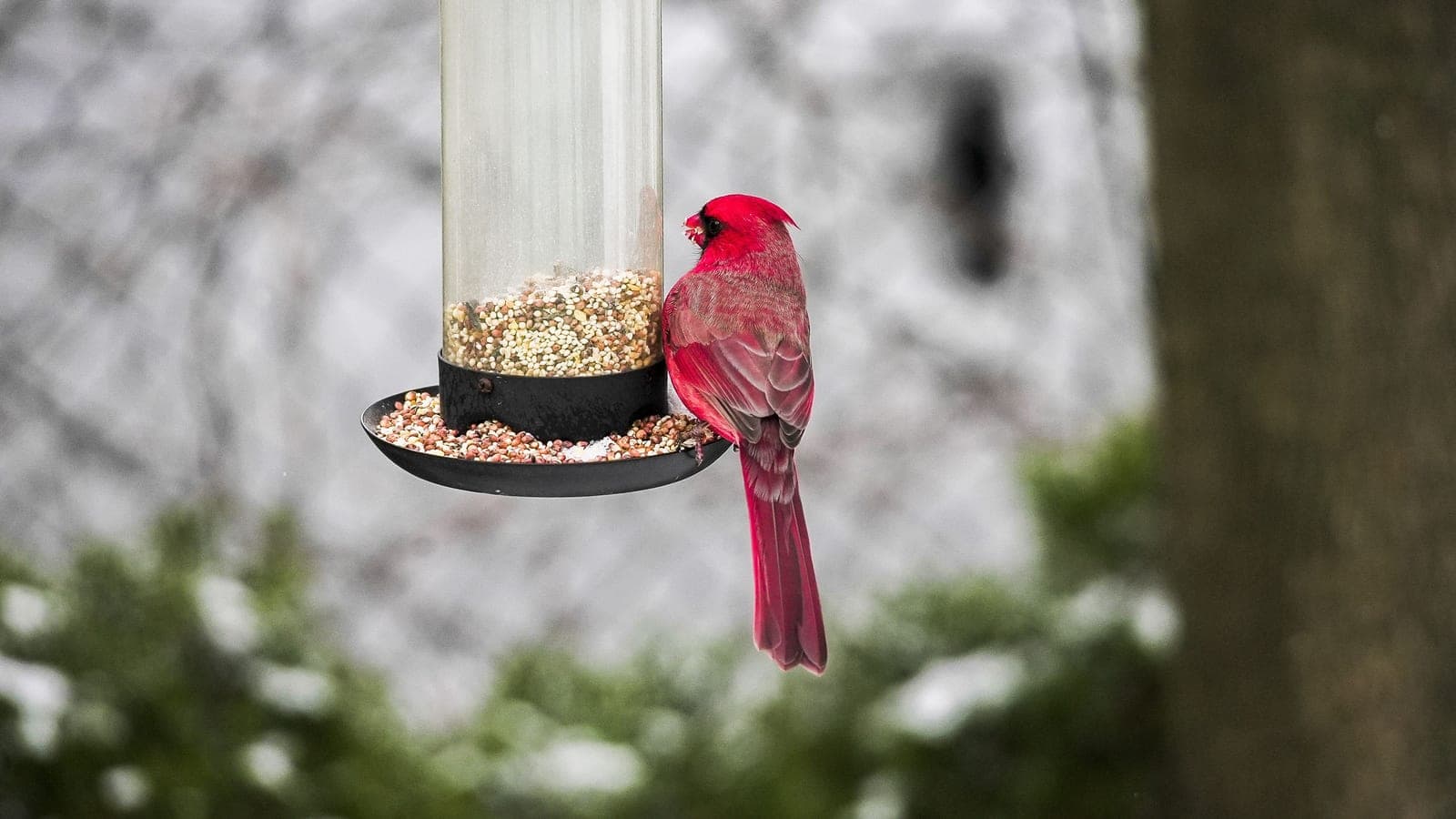
Match the catcher to the mount. A wide hoop under a hanging feeder, a tube tray fixed to a tube, a center-hole tray on a pole. The Songbird Essentials Seed Hoop is the pick for a hanging feeder. Or remove the mess at source: hulled seed leaves nothing behind, at a real premium per pound. And whatever you catch has to be emptied, or you have moved the problem two feet up.
Winter Perch is funded by affiliate commission. If you buy through a link on this page we may earn a commission at no extra cost to you, and it never decides a ranking. Full disclosure · how we pick.
Quick picks
Ranked, with the trade-off named. Tap a row for the full write-up; the price button goes straight to Amazon.
| # | Product | Best for | Price |
|---|---|---|---|
| 1 | 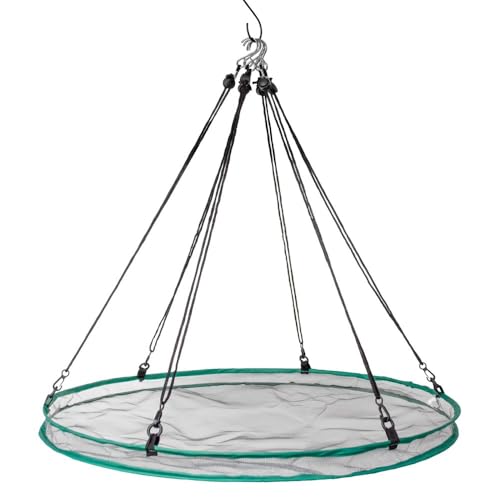 Songbird Essentials SEIA30024 Seed Hoop, 24 inA 24-inch mesh hoop on a flexible steel frame that straps beneath almost any hanging feeder. Wide enough to actually catch what falls, and it collapses to a third of its size for storage. | The original, and the widest | $20.95 · See it on Amazon |
| 2 |  Woodlink NATUBETRAY Tube Seed Catch TrayAttaches to the base of a tube feeder rather than hanging beneath it, so it moves with the feeder and cannot swing out of line. The neatest solution for a tube. | A tray that fixes to the tube, not to the hook | $19.45 · See it on Amazon |
| 3 | 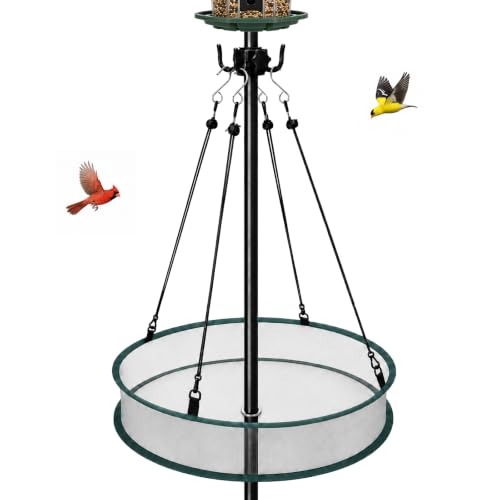 Berrihop 20 in Seed Catcher Tray for 1 in PolesA 20-inch tray with a center hole that slides down a 1-inch pole and sits below the feeders. No cords, level by design, and the one format that works under a multi-arm pole. | A pole-mounted station | $15.99 · See it on Amazon |
| 4 |  Woodlink Audubon Seed Catch TrayA rigid catch tray from the Audubon line, hung beneath the feeder. Less reach than the hoop and far less fiddly to fit — the sensible middle of the category. | A simple hanging tray from a real maker | $13.93 · See it on Amazon |
| 5 |  Kaytee Ultimate No Mess Wild Bird Seed, 9.75 lbEvery seed pre-hulled, so nothing accumulates underneath. The right answer over a deck or a path, and the wrong one if you are buying on price per pound. | Decks, patios and balconies where hulls are not welcome | $21.99 · See it on Amazon |
| 6 |  SWISSINNO Hanging Feeder with Seed Catcher TrayA hanging feeder with the catch tray built in, so the two are matched and level from the start. The tidy option if you are buying a feeder anyway, and the wrong one if you already own a feeder you like. | Buying the feeder and the catcher as one piece | $48.99 · See it on Amazon |
#ad how we are funded · price as of September 18, 2026
The picks in full
Top pick The original, and the widest
Songbird Essentials SEIA30024 Seed Hoop, 24 in
A 24-inch mesh hoop on a flexible steel frame that straps beneath almost any hanging feeder. Wide enough to actually catch what falls, and it collapses to a third of its size for storage.
Specifications
- Diameter
- 24 in
- Mesh
- Vinyl-coated fiberglass, exterior grade
- Frame
- Flexible tempered steel wire
- Attachment
- Six 36 in cords
- Model
- SEIA30024
Trade-offs
- Twenty-four inches across is wide enough to catch seed that bounces, which the small trays are not
- Mesh drains, so snowmelt and rain go through instead of pooling in the caught seed
- Straps to nearly any hanging feeder rather than fitting one model
- Collapses to a third of its size, which matters if it comes in for the summer
- Six cords to tie on, and the hoop needs leveling or everything rolls to one side
- Mesh that drains also sags under a wet, heavy load of hulls
- A wide hoop under a feeder is a wide hoop for a squirrel to stand on
- Catches wind as well as seed; on an exposed hook it swings
Who it is forA hanging feeder that drops seed onto ground you want to keep clear.
Skip it ifSkip it if the feeder is pole-mounted. A pole tray with a center hole sits level without any cords and is the better fit there.
#ad how we are funded · price as of September 18, 2026
No. 2 A tray that fixes to the tube, not to the hook
Woodlink NATUBETRAY Tube Seed Catch Tray
Attaches to the base of a tube feeder rather than hanging beneath it, so it moves with the feeder and cannot swing out of line. The neatest solution for a tube.
Specifications
- Type
- Tube-mounted catch tray
- Fits
- Tube feeders
- Model
- NATUBETRAY
Trade-offs
- Fixed to the tube, so it stays centered under the ports where seed actually falls
- No cords, no leveling, and nothing to swing in wind
- Gives a tube feeder a perch ring that cardinals can stand on — a second benefit
- Woodlink build and finish
- Tube feeders only; useless under a hopper or a platform
- Fit depends on the tube diameter — check yours against the listing before buying
- A tray at the base of the tube is a tray a squirrel stands on to reach the ports
- Small enough that a busy feeder overflows it quickly
Who it is forA tube feeder with a mess underneath, especially one that also gets cardinals.
Skip it ifSkip it if your tube is inside a cage or a weight-activated shroud. Those mechanisms usually have no room for a tray at the base.
#ad how we are funded · price as of September 18, 2026
Where these specs came from
No. 3 A pole-mounted station
Berrihop 20 in Seed Catcher Tray for 1 in Poles
A 20-inch tray with a center hole that slides down a 1-inch pole and sits below the feeders. No cords, level by design, and the one format that works under a multi-arm pole.
Specifications
- Diameter
- 20 in
- Mount
- Center hole for a 1 in pole
- Type
- Pole-mounted catch tray
Trade-offs
- Sits on the pole, so it is level and centered without any adjustment
- Catches under several feeders on a multi-arm pole at once
- One inch is the pole diameter most feeder poles use and most aftermarket baffles fit
- Nothing hangs, so nothing swings
- Fits 1-inch poles only — a 1-1/4 or 2-inch system pole will not take it
- Unbranded manufacture, and the tray is thinner than the Woodlink and Songbird parts
- A tray on the pole above the baffle is exactly what a squirrel that clears the baffle wants
- Has to slide on from the top, so the feeder arms come off to fit it
Who it is forA pole station on a 1-inch pole where the ground beneath has become the problem.
Skip it ifSkip it if your pole is not one inch. Measure first — this is the single spec that decides whether it fits at all.
#ad how we are funded · price as of September 18, 2026
No. 4 A simple hanging tray from a real maker
Woodlink Audubon Seed Catch Tray
A rigid catch tray from the Audubon line, hung beneath the feeder. Less reach than the hoop and far less fiddly to fit — the sensible middle of the category.
Specifications
- Type
- Hanging catch tray
- Maker
- Woodlink, Audubon line
Trade-offs
- A rigid tray stays level where a strapped hoop has to be trimmed
- Woodlink build, in a category otherwise full of unbranded mesh
- Doubles as a platform that ground-feeders will actually use
- Cheap enough to fit under every hanging feeder rather than one
- Narrower than the hoop, so seed that bounces still reaches the ground
- A solid tray holds water unless it drains, and wet hulls in a tray freeze into a slab
- Sized for a single feeder, not a station
Who it is forA single hanging tube or hopper where the mess underneath is the complaint.
Skip it ifSkip it if you are trying to catch seed from a wide hopper that flings it. The hoop's extra width is what that needs.
#ad how we are funded · price as of September 18, 2026
Where these specs came from
No. 5 Decks, patios and balconies where hulls are not welcome
Kaytee Ultimate No Mess Wild Bird Seed, 9.75 lb
Every seed pre-hulled, so nothing accumulates underneath. The right answer over a deck or a path, and the wrong one if you are buying on price per pound.
Specifications
- Type
- Hull-free blend
- Bag
- 9.75 lb
- Hulls
- None — 100% edible
- Waste
- No shell debris under the feeder
- Targets
- Cardinals, finches, chickadees, nuthatches, woodpeckers, juncos
Trade-offs
- Nothing to sweep up, which is the entire point over a deck, a patio or a path
- 100% edible means you are not paying to ship and then dispose of shells
- No hulls also means no seed hull mat killing the grass under the feeder
- Broad species appeal, unlike the single-seed options here
- Considerably more expensive per pound than sunflower in the shell
- Hulled seed absorbs moisture faster and spoils sooner once it is damp — a real issue in a wet winter
- Because nothing is discarded, squirrels and starlings get full value from every beakful too
- 9.75 lb goes faster than the weight suggests, since none of it is shell
Who it is forFeeders over a deck, patio, balcony or path, where the mess under the feeder is the deciding factor.
Skip it ifSkip it if your feeder hangs over lawn or a border and you do not mind the hulls. You are paying a real premium purely for tidiness, and a wet week will spoil it faster than shelled seed.
#ad how we are funded · price as of September 18, 2026
No. 6 Buying the feeder and the catcher as one piece
SWISSINNO Hanging Feeder with Seed Catcher Tray
A hanging feeder with the catch tray built in, so the two are matched and level from the start. The tidy option if you are buying a feeder anyway, and the wrong one if you already own a feeder you like.
Specifications
- Type
- Hanging feeder with integral catch tray
- Maker
- SWISSINNO
Trade-offs
- The tray is sized and centered for the feeder above it, which is the thing retrofits get slightly wrong
- One hanger, one unit — no cords, no leveling
- A built-in tray means the feeder was designed with the drainage in mind
- You are buying a feeder to get a tray; if you already have one you like, this replaces it
- An integral tray cannot be removed if it turns out to attract starlings or squirrels
- A less established brand in this market than Woodlink or Songbird Essentials
Who it is forStarting a hanging feeder from nothing and wanting the mess handled from day one.
Skip it ifSkip it if you already own a feeder. A tray under the one you have costs a fraction of this.
#ad how we are funded · price as of September 18, 2026
Why the ground under a feeder is a winter problem
In summer, spilled seed is untidy. In winter it is where several of the site's other problems begin, and it is worth being specific.
- It rots. Hulls and dropped seed under snow stay damp for weeks. When the snow goes, what is underneath is a moldy mat, and mold at a feeder is a genuine risk to birds rather than an aesthetic one.
- It draws mice and rats. Rodents move toward buildings as it gets cold. A steady supply of seed on the ground a few yards from the house is exactly the invitation they are looking for — the storage page covers the indoor half of that problem; this is the outdoor half.
- It holds a flock in the yard. Starlings and grackles feed on the ground between raids. Ground scatter is what keeps them around, and clearing it does more than most hardware.
- It cannot be raked. In summer you sweep it up. In January it is under snow, then frozen into the ground, then part of a spring clean-up nobody enjoys.
A catcher does not make seed disappear. It moves it to somewhere you can empty. That distinction runs through everything below.
Match the catcher to the mount
This is the decision that matters and it is the one most listings skip. A catcher that hangs, a catcher that clips to a tube, and a catcher that slides down a pole are three different products, and each is the wrong purchase for the other two mounts.
| Your feeder | Catcher type | Why |
|---|---|---|
| Hanging from a hook or branch | Wide hoop, strapped on | Width is what catches seed that bounces; the cords let it fit any feeder |
| Tube feeder | Tray fixed to the tube base | Stays centered under the ports and moves with the feeder |
| Pole station, several arms | Center-hole tray on the pole | Level by design, and one tray catches under all the arms |
| Hopper or platform | Wide hoop or a large hanging tray | Hoppers fling seed; a narrow tray under one misses most of it |
| Starting from nothing | A feeder with the tray built in | Sized and centered from the factory — the tidy answer if you are buying anyway |
Check the pole diameter before buying a pole tray. Most are made for 1-inch poles, and the system poles are often 1-1/4 or 2 inches.
Width, drainage and the two things that decide it
Once the mount is settled, two specifications separate a catcher that works from one that decorates.
Width. Seed does not fall straight down. It bounces off perches, gets flicked sideways by a feeding bird, and drifts in wind. A tray a few inches wider than the feeder catches what drops; a hoop two feet across catches what bounces. If the ground underneath is the whole reason you are buying, width is the spec to pay for.
Drainage. A solid tray fills with rain and snowmelt, and wet hulls in a tray freeze into a slab that has to be chipped out. Mesh drains, and it is the right material for winter — with the honest trade that mesh sags under a wet load and wears faster than a rigid tray. A rigid tray with drainage holes splits the difference.
How we judged these
How we picked
- Mount compatibility first — hanging, tube-fixed or pole-mounted — because a catcher for the wrong mount does not fit at all.
- Width relative to the feeder, since seed bounces and a narrow tray misses most of it.
- Drainage, which in winter decides whether the tray holds hulls or a frozen slab.
- Whether it adds a platform squirrels and starlings can use, stated as a cost rather than hidden.
- Maker-stated dimensions and materials, quoted rather than estimated.
- The hulled-seed alternative weighed honestly, because for some yards it is the better answer and no hardware is needed.
- Live price and availability, refreshed daily.
We have not tested any of these. What we did instead: read the manufacturers’ own listings, compiled the published specifications, computed the running cost at a cited electricity rate, and refreshed the prices daily. The full method is published.
The other way: stop feeding hulls
Most of what lands under a feeder is not seed. It is hull — the shell a bird drops after taking the kernel. A catcher deals with that after the fact. Hulled seed removes it from the yard entirely.
| Seed catcher | Hulled seed | |
|---|---|---|
| Mess on the ground | Caught, then emptied | Very little — there is no hull |
| Ongoing cost | One purchase | A real premium on every bag |
| Spoilage | Hulls sit in the tray | Hulled seed spoils faster once wet |
| Works with the feeder you own | Yes, with the right mount | Yes, any feeder |
| What you still have to do | Empty it | Buy smaller bags, more often |
Hulled sunflower and no-mess blends are covered alongside the alternatives in the winter seed roundup. The short version: they are the right answer on a deck, a balcony or over paving, and an expensive one over a lawn.
The two approaches also combine. Hulled seed in a feeder with a small tray under it is close to genuinely no-mess, because what little falls is kernel rather than shell and gets eaten from the tray.
What a catcher changes about the birds
A tray under a feeder is also a platform, and the birds treat it as one. That is mostly good and partly not.
- Juncos, doves and cardinals use it. The third of the winter list that ignores hanging feeders will feed from a tray — cardinals in particular need somewhere to stand.
- So do starlings and grackles, which prefer a flat surface. If they are your problem, a wide tray under the feeder is a step backward, and the honest fix is hulled seed instead.
- And so do squirrels. A tray at the base of a feeder is a standing platform for reaching the ports. A tray sitting above a pole baffle is inside the baffle's protection; a tray hung from a branch is not.
Empty it, or you have moved the problem
This is the part that decides whether a catcher was worth buying.
Caught seed and hulls sit in the tray, get wet, and start to mold — the same process as on the ground, only now concentrated where birds are standing to feed. A catcher that is never emptied is worse than no catcher. Tip it out when you refill the feeder, and wash it on the same schedule as everything else in the cleaning guide. In freezing weather, knock the frozen slab out before it becomes part of the tray.
What we would skip
What we would skip
A catcher that does not match your mount
A pole tray under a hanging feeder, a tube tray on a hopper, a hoop on a 2-inch pole — none of them fits, and this is the commonest wasted purchase in the category. Decide the mount first.
A narrow tray under a hopper
Hoppers fling seed sideways, and a tray a few inches wider than the feeder catches almost none of it. Width is the specification that matters under a hopper, and a small tray is decoration.
A solid tray with no drainage, in winter
It fills with snowmelt, and wet hulls freeze into a slab. Mesh drains; a rigid tray with holes drains. A sealed tray under a feeder in January is a bucket.
Any catcher you will not empty
Caught seed molds in the tray exactly as it would on the ground, concentrated where birds stand. If you will not tip it out at each refill, buy hulled seed instead.
A wide tray if starlings and grackles are the problem
Both prefer to feed standing on a flat surface, and a broad tray under the feeder is an invitation. Hulled seed removes the ground scatter without adding a platform.
Hulled seed as the default over a lawn
It costs a real premium on every bag and spoils faster once wet. It is the right choice over a deck or paving; over grass, a catcher and ordinary black oil sunflower is the cheaper answer.
Where this fits
A catcher is the last piece of hardware on a station, after the pole and the baffle. The feeding station guide covers where everything goes, and keeping feeders clear of snow and ice covers the maintenance that keeps seed dry before it falls.
Questions people actually ask
- What is the best seed catcher for a bird feeder?
- It depends on the mount. A wide hoop for a hanging feeder, a tray fixed to the base of a tube feeder, and a center-hole tray for a pole station. The Songbird Essentials Seed Hoop is the pick for a hanging feeder because its width catches seed that bounces.
- Do seed catchers actually work?
- A wide one under the right mount catches most of what falls. A narrow tray under a hopper that flings seed sideways catches very little. Width and drainage are the two specifications that separate the ones that work.
- How do I stop bird seed mess on the ground?
- Either catch it with a hoop or tray matched to your feeder, or stop feeding hulls by switching to hulled sunflower or a no-mess blend. Over a deck or paving, hulled seed is usually the better answer; over a lawn, a catcher is cheaper.
- Will a seed catcher attract squirrels or starlings?
- It can. A tray is a platform, and squirrels stand on one to reach ports while starlings and grackles prefer to feed on a flat surface. Keep a tray inside a pole baffle's protection, and if starlings are the problem, use hulled seed instead of a wide tray.
- Does a seed catcher work in winter?
- Yes, if it drains. A solid tray fills with snowmelt and the hulls freeze into a slab. Mesh or a tray with drainage holes stays usable, and either one has to be emptied at each refill.
- Is hulled seed worth the extra cost?
- Over a deck, balcony or paving, usually yes — there is nothing to sweep. Over a lawn it is an expensive way to solve a problem a catcher solves once, and hulled seed spoils faster once wet.
- What size seed catcher do I need?
- Wider than you think. Seed bounces off perches and is flicked sideways by feeding birds, so a tray only slightly larger than the feeder misses most of it. Around two feet across is what it takes under a hopper.
Sources
Read next
- The Best Bird Feeder Poles for Winter
Auger, prong or clamp — the anchor is the spec that decides whether a pole survives winter. Seven mounts ranked, plus the diameter question that decides which baffles fit.
- The Best Bird Seed for Winter
Five winter seeds ranked on usable fat, shell thickness and species reach — plus the cheap mix that is worth avoiding.
- The Best Starling- and Grackle-Proof Bird Feeders
Why squirrel hardware fails on starlings, the three approaches that work, and six picks ranked on which birds each one lets through.
- Cleaning Bird Feeders and Baths in Winter
The winter cleaning schedule, the bleach-versus-enzyme question answered plainly, and the brushes and cleaners that make the job quick enough to actually do.