Winter feeders / Roundup
The Best Starling- and Grackle-Proof Bird Feeders
Every squirrel trick you have already tried fails here, and for one reason: a starling is not a mammal. What works instead is geometry, mesh size and what you put in the feeder.
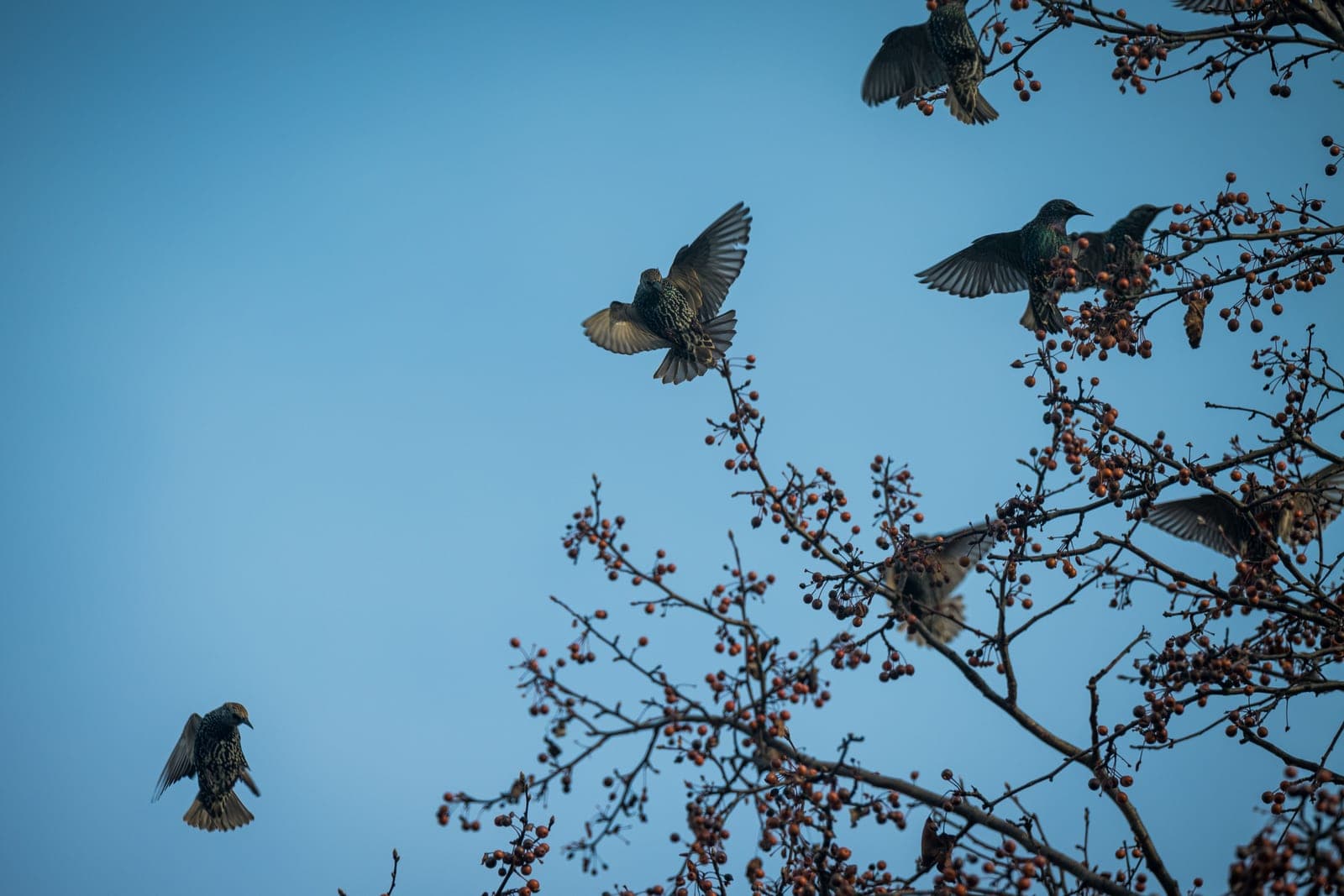
Nothing you bought for squirrels will work. Starlings and grackles are birds, so baffles, weight-activated shrouds and hot pepper are all irrelevant to them. Three things do work: upside-down geometry on suet, cage mesh on seed, and safflower, which grackles largely refuse. The upside-down suet feeder is the cheapest and most reliable of the three.
Winter Perch is funded by affiliate commission. If you buy through a link on this page we may earn a commission at no extra cost to you, and it never decides a ranking. Full disclosure · how we pick.
Quick picks
Ranked, with the trade-off named. Tap a row for the full write-up; the price button goes straight to Amazon.
| # | Product | Best for | Price |
|---|---|---|---|
| 1 |  Birds Choice Upside-Down Suet Feeder, multi-cakeRecycled poly lumber, a roof, and room for more than one cake — the upside-down feeder for a yard where one cake lasts three days. | Multi-cake capacity in recycled poly that will outlive the cedar | $54.99 · See it on Amazon |
| 2 | 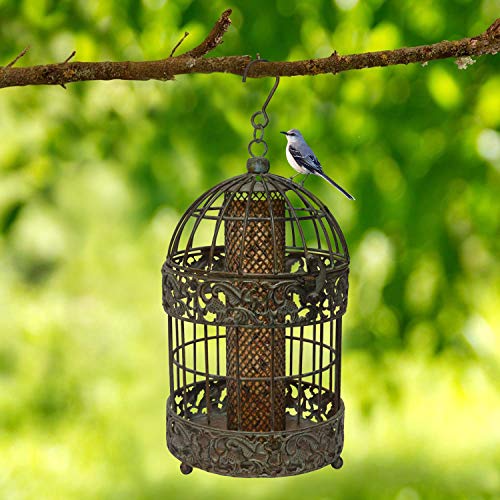 Westcharm 13 in Caged Feeder for Small SongbirdsA seed tube inside a metal cage. Mesh sized for chickadees and finches is the only thing that reliably keeps a starling flock off a seed feeder, and this is a well-built version of it. | Excluding starlings and grackles from seed | $39.99 · See it on Amazon |
| 3 | 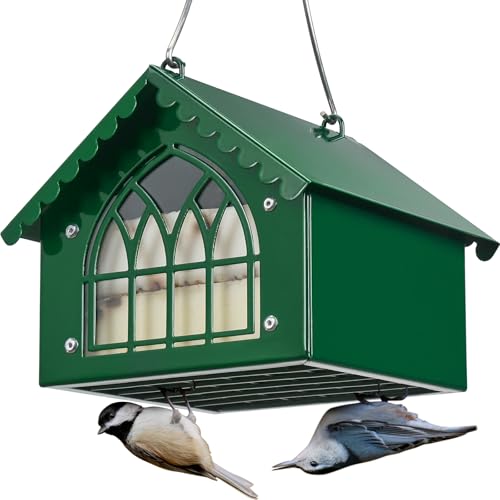 Kingsyard Metal Upside-Down Double Suet FeederTwo cakes facing downward, in metal, at a budget price. The upside-down geometry is the most reliable starling fix there is, and it costs almost nothing to try. | The cheapest way to stop starlings taking suet | $19.99 · See it on Amazon |
| 4 |  Brome Squirrel Buster Plus Seed Feeder, 5.1 lbFive pounds of seed, six ports, a cardinal ring for the big birds and the same weight-activated shroud. In winter, the refill interval is the point. | The main winter seed feeder | $127.99 · See it on Amazon |
| 5 |  Erva Starling-Proof Barrier Guard Bluebird FeederA barrier guard that forces birds to enter through a restricted opening, with a glass mealworm cup inside. Starlings will not negotiate the entry; bluebirds will. | Mealworms, and keeping starlings out of them | $83.99 · See it on Amazon |
| 6 |  Wagner's 57075 Safflower Seed, 5 lbThe one seed on this page that solves a pest problem through taste rather than hardware — squirrels and grackles largely leave safflower alone, and cardinals prefer it. | Cardinals, when squirrels and grackles have taken over | $11.98 · See it on Amazon |
#ad how we are funded · price as of September 14, 2026
The picks in full
Top pick Multi-cake capacity in recycled poly that will outlive the cedar
Birds Choice Upside-Down Suet Feeder, multi-cake
Recycled poly lumber, a roof, and room for more than one cake — the upside-down feeder for a yard where one cake lasts three days.
Specifications
- Capacity
- Multiple standard cakes
- Dimensions
- 11.75" x 8.75" x 4"
- Material
- Recycled poly lumber
- Roof
- Yes
- Color
- Taupe with green roof
Trade-offs
- Poly lumber does not crack, split, fade or rot — it will outlast several cedar feeders
- Multiple cakes means fewer trips out in weather you would rather not be in
- Roofed and upside-down: weather protection and starling exclusion together
- Wipes clean, which cedar never really does
- Heavier than cedar, so it needs a solid hanger
- Plastic-looking up close, whatever the finish
- Multi-cake capacity is wasted on a quiet yard, and unused suet goes rancid
Who it is forA busy yard that is tired of refilling a one-cake feeder every other day.
Skip it ifSkip it if a single cake currently lasts you a week. Loading four cakes into a slow feeder just means three of them go off before they get eaten.
#ad how we are funded · price as of September 14, 2026
No. 2 Excluding starlings and grackles from seed
Westcharm 13 in Caged Feeder for Small Songbirds
A seed tube inside a metal cage. Mesh sized for chickadees and finches is the only thing that reliably keeps a starling flock off a seed feeder, and this is a well-built version of it.
Specifications
- Type
- Caged seed tube
- Height
- 13 in
- Material
- Metal cage and housing
Trade-offs
- A cage works on birds, which weight-activated mechanisms cannot — a starling is far too light to trip a shroud
- Excludes grackles and starlings together, which is usually the same problem arriving in one flock
- No moving parts at all, so nothing to jam or freeze through a winter
- Metal construction survives the attention a besieged feeder gets
- It excludes cardinals, jays and most woodpeckers along with the pests — that is the trade, and it is not small
- Cage mesh collects seed debris and needs cleaning more often than a plain tube
- Modest capacity for its size, since the cage takes up space the seed could use
- Young squirrels can sometimes squeeze through mesh sized for songbirds
Who it is forA seed feeder under sustained pressure from starlings or grackles, in a yard where small birds are the point.
Skip it ifSkip it if cardinals are what you are feeding for. A cage excludes them as effectively as it excludes the birds you are trying to stop.
#ad how we are funded · price as of September 14, 2026
No. 3 The cheapest way to stop starlings taking suet
Kingsyard Metal Upside-Down Double Suet Feeder
Two cakes facing downward, in metal, at a budget price. The upside-down geometry is the most reliable starling fix there is, and it costs almost nothing to try.
Specifications
- Design
- Upside-down, downward-facing cakes
- Capacity
- 2 standard cakes
- Material
- Metal
Trade-offs
- Upside-down feeding is the cleanest starling exclusion in the category — no mechanism, no seed change, no cost after purchase
- Woodpeckers, nuthatches and chickadees hang beneath a cake without hesitating
- Two cakes means fewer refills through a cold spell
- Metal rather than the coated wire that starlings and squirrels eventually work open
- Not total: some starlings do learn to hang, particularly if they are hungry and the feeder is the only one
- Excludes nothing else — grackles are less of a problem on suet, but squirrels are unaffected
- Unbranded manufacture, so build consistency is less predictable than Birds Choice or Nature's Way
- A downward-facing cake sheds crumbs, which feeds the ground below
Who it is forA suet feeder being stripped by starlings, on a budget.
Skip it ifSkip it if squirrels rather than starlings are emptying your suet. Upside-down geometry does nothing about a mammal that can hang by its feet.
#ad how we are funded · price as of September 14, 2026
No. 4 The main winter seed feeder
Brome Squirrel Buster Plus Seed Feeder, 5.1 lb
Five pounds of seed, six ports, a cardinal ring for the big birds and the same weight-activated shroud. In winter, the refill interval is the point.
Specifications
- Seed capacity
- 5.1 lb
- Ports
- 6
- Height
- 28" base to hanger
- Mechanism
- Weight-activated shroud, adjustable
- Mounting
- Hang or pole (pole adaptor sold separately)
Trade-offs
- 5.1 lb means you refill once a week in a hard winter, not every other day
- The adjustable weight setting excludes grackles as well as squirrels
- The cardinal ring gives perching room to birds a bare port rejects
- Comes fully apart for the cleaning that winter feeders genuinely need
- The pole adaptor is a separate purchase and most buyers do not notice until it arrives
- 28 inches is a big object to hang from a slim branch
- Premium price
Who it is forThe main seed station in a yard where squirrels are a standing problem.
Skip it ifSkip it if you feed one small tube on a balcony. The Squirrel Buster Classic does the same trick in a 2.4 lb body for less.
#ad how we are funded · price as of September 14, 2026
No. 5 Mealworms, and keeping starlings out of them
Erva Starling-Proof Barrier Guard Bluebird Feeder
A barrier guard that forces birds to enter through a restricted opening, with a glass mealworm cup inside. Starlings will not negotiate the entry; bluebirds will.
Specifications
- Mechanism
- Barrier guard over a restricted entry
- Food
- Glass mealworm cup
- Target
- Bluebirds, and other small cavity-nesters
- Origin
- Erva, made in USA
Trade-offs
- Solves the specific problem mealworm feeders have — starlings find mealworms faster than bluebirds do and clear them in minutes
- A physical barrier works on birds where no weight mechanism can
- Glass cup is easy to clean and does not hold residue the way plastic does
- Erva builds properly, and the site's baffles from them have held up
- Among the most expensive feeders on the site, for a narrow job
- Bluebirds take time to learn the entry, and some individuals never commit to it
- Only relevant if bluebirds are in your area and already interested
- Mealworms are a supplement rather than a winter staple, so this feeds a small part of the yard
Who it is forA yard with bluebirds and a starling flock competing for the same dish.
Skip it ifSkip it if you have never seen a bluebird at your feeders. This solves a competition problem, not an attraction problem.
#ad how we are funded · price as of September 14, 2026
No. 6 Cardinals, when squirrels and grackles have taken over
Wagner's 57075 Safflower Seed, 5 lb
The one seed on this page that solves a pest problem through taste rather than hardware — squirrels and grackles largely leave safflower alone, and cardinals prefer it.
Specifications
- Type
- 100% safflower
- Bag
- 5 lb (a 2-pack and a 50 lb bag are also listed)
- Shell
- Thick, white
- Origin
- Made in USA
- Targets
- Cardinals, chickadees, titmice, grosbeaks, doves
Trade-offs
- Most squirrels dislike it, which makes it the cheapest squirrel answer on the site — no mechanism, no baffle
- Grackles and starlings largely ignore it too, so it thins two pest problems at once
- Cardinals genuinely prefer it, and cardinals are the bird most people are trying to attract
- A 5 lb bag is a sensible way to test whether it works in your yard before committing
- Costs noticeably more per pound than black oil sunflower
- The thick white shell is harder work for the smallest bills than thin-shelled sunflower
- Fewer species eat it, so it narrows your feeder traffic rather than widening it
- Squirrel avoidance is a preference, not a barrier — a hungry animal will still eat it
Who it is forA yard with cardinals and a squirrel or grackle problem, run as a second feeder alongside sunflower.
Skip it ifSkip it as your only seed. You will lose the finches, and you are paying a premium to feed a narrower list than sunflower brings in.
#ad how we are funded · price as of September 14, 2026
Why the squirrel playbook fails
This is the single most useful thing on the page, and it explains a lot of wasted money.
Every mainstream anti-pest measure at a bird feeder is designed around the fact that mammals are heavy and mammals taste capsaicin. A starling weighs about three ounces. A grackle weighs about four. A chickadee weighs a third of an ounce — so there is a weight gap, but it is nothing like the tenfold gap between a cardinal and a squirrel, and no spring can be calibrated inside it without excluding cardinals and jays too.
| Measure | Works on squirrels | Works on starlings and grackles |
|---|---|---|
| Pole baffle | Yes | No. They fly in |
| Weight-activated shroud | Yes — huge weight gap | Barely. Adjusting tight enough also excludes cardinals |
| Hot pepper seed or suet | Yes — capsaicin affects mammals | No. Birds cannot taste it at all |
| Ten feet of clearance | Yes | No. Irrelevant to anything with wings |
| Slick or domed housings | Somewhat | No |
If you have already baffled the pole and switched to hot pepper suet and the feeder is still being stripped, this is why — and it means the problem was never squirrels. The squirrel page covers the other animal.
Identify the bird first
Three different birds get blamed for the same behavior and they do not respond to the same fixes. Watching for a few minutes is worth more than any purchase.
- European starlings arrive as a tight flock, are chunky and short-tailed with a straight pointed bill, look black at distance and speckled up close, and go for suet above everything. A flock can strip a cake in an afternoon.
- Common grackles are larger, glossy, long-tailed with a heavy bill and a pale eye. They favor seed and platform trays, and they bully at ports rather than emptying a cake.
- House sparrows are small, brown and permanent, and they crowd tube feeders rather than raiding them. A cage will not stop them — they fit through the mesh easily.
The three things that work
1. Upside-down geometry, for suet
This is the best answer in the category and it is close to free. A feeder that faces the cake downward forces a bird to hang beneath it and feed upside down. Woodpeckers, nuthatches and chickadees do this constantly in the wild and settle onto one without hesitation. Starlings are poorly built for clinging upside down and largely will not.
It is not absolute — a determined, hungry starling will sometimes learn it, particularly if yours is the only suet for a distance. But it is passive, has nothing to jam or freeze, costs no more than an ordinary cage, and it works the day you hang it. Upside-down versus cage suet feeders compares the two designs in detail.
2. Cage mesh, for seed
A cage around a seed tube, with mesh sized for small songbirds, physically excludes a starling or grackle body. Unlike a weight mechanism it has no calibration to get wrong and no moving parts to ice up.
The cost is real and worth stating plainly: a cage excludes cardinals, jays, grosbeaks and most woodpeckers too. You are choosing to feed chickadees, titmice, nuthatches and finches and to exclude everything larger. If cardinals matter to you, the cardinal page explains why a cage is the wrong tool and safflower is the right one.
3. Safflower, for grackles
Grackles and starlings largely refuse safflower, and cardinals, chickadees, titmice and nuthatches eat it readily. It is the only approach here that costs nothing in hardware and excludes nothing you want.
It also deters squirrels, which makes it the rare measure that works on both the mammal and the bird problem at once. The trade is price per pound and a transition period of a week or two while birds used to sunflower adjust. The winter seed roundup covers it alongside the alternatives.
How we judged these
How we picked
- Whether the mechanism works on birds at all, which rules out every weight-activated and capsaicin-based measure straight away.
- Which birds it excludes as collateral, stated plainly — cages in particular cost you cardinals.
- Passive over mechanical, since a design that works by geometry has nothing to jam or freeze in winter.
- Whether the fix is free, because seed choice and perch length beat hardware in several cases.
- Build material, since a besieged feeder takes sustained physical attention.
- Live price and availability, refreshed daily.
We have not tested any of these. What we did instead: read the manufacturers’ own listings, compiled the published specifications, computed the running cost at a cited electricity rate, and refreshed the prices daily. The full method is published.
Free adjustments worth making first
Before buying anything, four changes cost nothing and each one measurably reduces starling and grackle pressure.
- Shorten or remove perches. Grackles need a solid perch; chickadees and nuthatches cling. A tube with short pegs or no perches at all is much harder for a big bird to work.
- Take away the platform tray. Grackles and starlings prefer to feed standing on a flat surface. A tray under a feeder is an invitation, and removing it shifts the balance immediately.
- Stop offering the foods they want most. Cracked corn, bread, mixed seed with millet and whole peanuts are starling and grackle magnets. Straight sunflower or safflower is far less interesting to them.
- Clean up the spill. Ground scatter is what holds a flock in the yard between raids. Keeping the area clear does more than it sounds like it should.
A word about which birds these are
European starlings and house sparrows are introduced species in North America and are not protected under the Migratory Bird Treaty Act. Common grackles are native and are protected.
That distinction matters less than it might seem, because everything recommended here is exclusion rather than harm. Making a feeder inconvenient for a bird is a design decision; interfering with a bird directly is not something this site will help with. Grackles in particular are native birds doing what native birds do, and outside the few weeks they descend on a feeder they are part of the same yard everything else lives in.
What we would skip
What we would skip
Hot pepper suet, for starlings
Capsaicin binds to a receptor mammals have and birds do not. It is genuinely effective against squirrels and raccoons and has precisely zero effect on a starling. This is the commonest wasted purchase in the category.
A pole baffle, for starlings or grackles
A baffle blocks a climb. These birds fly in. If you have baffled the pole and the feeder is still being stripped, the animal was never a squirrel.
Tightening a weight-activated feeder to exclude grackles
A grackle weighs about four ounces and a cardinal about two. Adjusting a shroud tight enough to shut out one will shut out the other, along with jays and grosbeaks.
A cage feeder if you want cardinals
Cage mesh excludes cardinals, jays, grosbeaks and most woodpeckers along with the starlings. It is the right tool only when small clinging birds are what you are feeding for.
Cheap mixes, cracked corn and bread
These are what hold a starling and grackle flock in a yard. Switching to straight sunflower or safflower removes the attraction rather than fighting it.
Anything that harms the birds
Common grackles are native and federally protected, and everything on this page is exclusion rather than harm in any case. Making a feeder inconvenient is a design decision; the other thing is not one this site will help with.
Where this fits
This is the bird half of the pest problem; squirrel-proof bird feeders and squirrel baffles cover the mammal half, and the two need completely different hardware. The suet cake roundup covers what goes in an upside-down feeder, and the feeding station guide covers the layout that keeps a flock from dominating everything at once.
Questions people actually ask
- What is the best starling-proof bird feeder?
- An upside-down suet feeder. Starlings are poorly built for clinging beneath a downward-facing cake, while woodpeckers, nuthatches and chickadees do it without hesitating. For seed, a caged feeder is the equivalent answer.
- Does hot pepper suet keep starlings away?
- No. Capsaicin acts on a receptor that mammals have and birds do not, so it deters squirrels and raccoons and has no effect at all on starlings. It is the most commonly wasted purchase for this problem.
- How do I keep grackles off my bird feeder?
- Switch to safflower seed, which grackles largely refuse and cardinals eat readily, and remove the platform tray and long perches that big birds need to feed comfortably. A caged feeder works too, at the cost of excluding cardinals.
- Will a squirrel baffle stop starlings?
- No. A baffle blocks a climbing animal and starlings arrive by air. If you have baffled a pole and the feeder is still being emptied, the problem was never squirrels.
- Can a weight-activated feeder exclude grackles?
- Not cleanly. A grackle weighs roughly four ounces against a cardinal's two, so a shroud set tight enough to exclude grackles will exclude cardinals, jays and grosbeaks as well.
- Is it legal to get rid of starlings?
- European starlings and house sparrows are introduced and not protected under the Migratory Bird Treaty Act; common grackles are native and are protected. Everything recommended here is exclusion rather than harm, which sidesteps the question entirely.
- Why did taking my feeders down help?
- Starlings and grackles are highly mobile and move to the next reliable food source. Chickadees, titmice and nuthatches are resident and hold small territories, so they return as soon as you rehang. A week down often resets the yard.
Sources
Read next
- Upside-Down vs Cage Suet Feeders
Starling exclusion by geometry versus an open cage — which design your yard actually needs, and what each one costs you.
- The Best Squirrel-Proof Bird Feeders
Weight-activated shrouds, tipping perches and cages, ranked on which mechanism actually excludes a squirrel — plus the placement fix that is free.
- The Best Bird Feeders for Cardinals
Perch width is the spec that decides whether cardinals use a feeder. Six picks ranked on it, plus the one seed that brings cardinals and repels squirrels.
- The Best Suet Cakes for Winter Birds
Seven suet cakes ranked on fat, no-melt behavior and who they actually attract, with pack-size advice.