Winter birding / Roundup
The Best Gloves for Winter Birding
Nearly every optics page on this site assumes you are wearing gloves — the tripod page ranks leg locks on it, the adapter page warns you about the screw you have to bare a hand for — and none of them has ever said which gloves. These five, and the two-layer system that matters more than any of them.
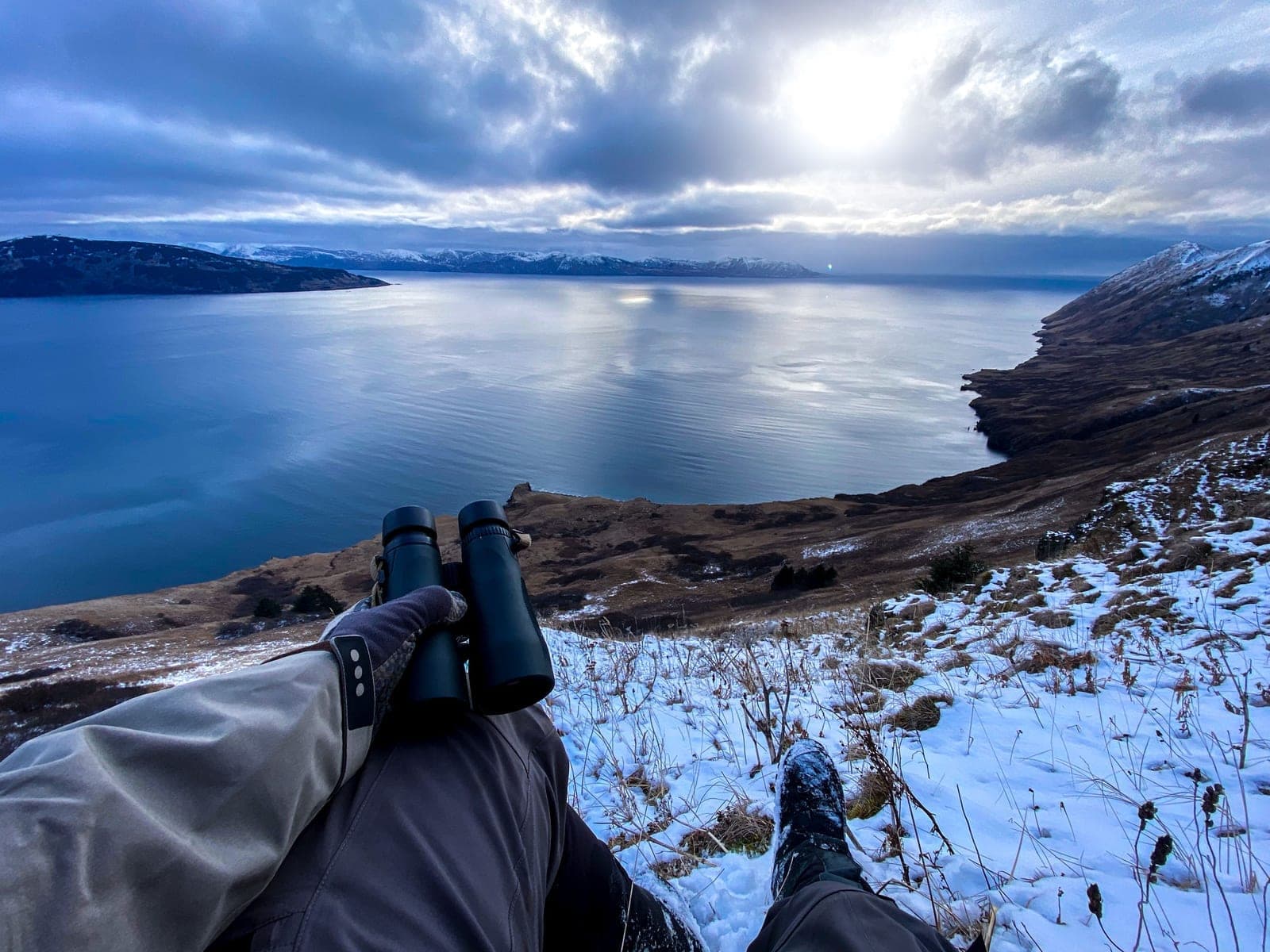
The problem is not cold hands. It is the three seconds it takes to get a hand out of a mitten while the bird leaves. The fix is a thin merino liner worn under the mittens you already own, or a glove with flip-back finger caps. Buying a thicker glove makes it worse.
Winter Perch is funded by affiliate commission. If you buy through a link on this page we may earn a commission at no extra cost to you, and it never decides a ranking. Full disclosure · how we pick.
Quick picks
Ranked, with the trade-off named. Tap a row for the full write-up; the price button goes straight to Amazon.
| # | Product | Best for | Price |
|---|---|---|---|
| 1 |  Vallerret Djuke Photography GloveMagnet-held finger caps that fold back in one motion and stay back, which is the only mechanism here that solves the actual problem. Vallerret rates it for mild winter, not deep cold, and says so themselves. | Reaching a focus wheel without taking a glove off | $94.95 · See it on Amazon |
| 2 |  Vallerret Skadi LRS Zipper MittA mitt that unzips to let the whole hand out, with a removable Polartec inner glove that can be worn on its own. Rated Deep Winter by the maker, and the only pick here built for stationary cold. | Standing still in real cold and still being able to focus | $129.95 · See it on Amazon |
| 3 |  Smartwool Liner GloveThin enough to work a focus wheel and knit with a touchscreen thumb and index, which is what you want if half your birding is logged on a phone. Read the blend before you buy it for warmth. | A liner you can leave on to use your phone | $28.00 · See it on Amazon |
| 4 | 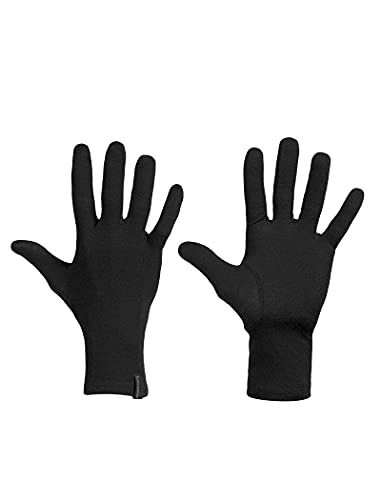 Icebreaker Merino 200 Oasis Glove LinersNinety-six percent merino in a 200 g/m2 jersey — the most actual wool of any liner here, and the one that still works warm when it is damp. Icebreaker states it has no touchscreen fingertips. | The warmest liner, if you can live without a touchscreen | $40.00 · See it on Amazon |
| 5 |  Minus33 Merino Wool Glove Liner, style 3600Eighty-five percent merino at under twenty dollars and 45 grams a pair. The least you can spend to stop taking a whole mitten off every time a bird lands. | The cheapest thing that fixes cold-hand fumbling | $19.99 · See it on Amazon |
#ad how we are funded · price as of November 5, 2026
The picks in full
Top pick Reaching a focus wheel without taking a glove off
Vallerret Djuke Photography Glove
Magnet-held finger caps that fold back in one motion and stay back, which is the only mechanism here that solves the actual problem. Vallerret rates it for mild winter, not deep cold, and says so themselves.
Specifications
- Exterior
- DWR-treated goat leather, PFC-free
- Lining
- 100% merino wool
- Insulation
- Thinsulate C100/C70, at the back of the wrist
- Finger access
- FlipTech caps held open by magnets
- Touchscreen
- Index and thumb, without flipping the caps
- Cuff
- Knit
- Designed for
- Mild Winter — two snowflakes of five on Vallerret's own scale
Trade-offs
- The finger caps stay folded back on their magnets, so you are not holding them out of the way while you focus
- Touchscreen index and thumb work with the caps still closed, which covers Merlin and eBird without opening anything
- Leather palm grips a cold metal focus wheel and a tripod collar better than fleece does
- Vallerret publishes a warmth level instead of implying the glove handles anything
- Rated by the maker for mild winter only — two of five on their scale — so this is not the glove for a dawn count at 10F
- Leather needs its DWR refreshed, and the finger slits let water in during sustained rain
- Around a hundred dollars for a glove, which is more than most birders have ever spent on one
- Sold as separate per-size listings, so the page you land on may not be your size
Who it is forA birder who already owns warm mittens and keeps missing birds in the seconds it takes to pull a hand out of one.
Skip it ifSkip it if your birding is mostly below freezing and stationary. The Skadi mitt is the honest answer there, and this glove will leave your fingertips cold.
#ad how we are funded · price as of November 5, 2026
No. 2 Standing still in real cold and still being able to focus
Vallerret Skadi LRS Zipper Mitt
A mitt that unzips to let the whole hand out, with a removable Polartec inner glove that can be worn on its own. Rated Deep Winter by the maker, and the only pick here built for stationary cold.
Specifications
- Shell
- Laminated DWR twill, bluesign and OEKO-TEX Standard 100
- Insulation
- PrimaLoft Gold
- Inner glove
- Polartec Power Stretch Pro, removable
- Lining
- 100% merino wool
- Access
- Waterproof zipper, plus a magnet-held FlipTech thumb
- Touchscreen
- Finger and thumb on the inner glove
- Extras
- Storm leash, and a tripod key in a back-of-hand pocket
- Designed for
- Deep Winter — four snowflakes of five on Vallerret's scale
Trade-offs
- A mitt is warmer than any glove at the same bulk, because the fingers share heat
- The zipper means the whole hand comes out, not just two fingertips — which is what you need for a tripod collar or a cold battery change
- The inner glove is removable, so one purchase covers a mild November and a hard January
- The storm leash keeps the shell hanging at your wrist instead of dropped in snow, which is the real-world failure
- The most expensive thing on this page by a wide margin
- A mitt costs you dexterity whenever it is closed — you cannot work a focus wheel through it
- The published warmth level is the maker's own scale, not a temperature rating; there is no stated comfort range to check against your climate
- Sold per size as separate listings, and sizing on a two-layer mitt is less forgiving than on a liner
Who it is forAnyone who stands still outdoors in a hard freeze — a FeederWatch count, a scope on a frozen lake, a dawn hour at a hide.
Skip it ifSkip it if you walk while you bird. Moving generates hand heat, and you will be paying for insulation you spend the morning venting.
#ad how we are funded · price as of November 5, 2026
No. 3 A liner you can leave on to use your phone
Smartwool Liner Glove
Thin enough to work a focus wheel and knit with a touchscreen thumb and index, which is what you want if half your birding is logged on a phone. Read the blend before you buy it for warmth.
Specifications
- Fiber content
- 48% polyester, 48% merino wool, 1% elastodiene, 1% elastane, 2% other
- Touchscreen
- Thumb and index finger
- Cuff
- Rib-knit
- Style
- RJ4FW
Trade-offs
- Touchscreen thumb and index, so Merlin and eBird do not cost you a bare hand
- Thin enough to work a focus wheel, a flip lever and a zipper without coming off
- Rib-knit cuff sits under a shell mitt without bunching
- The least expensive route to the two-layer system if you already own mittens
- It is 48% polyester despite the Smartwool name — closer to half synthetic than to a wool liner
- A thin knit liner is wind-permeable; on its own it is a dexterity layer, not a warmth layer
- Touchscreen knits lose conductivity as the fingertips wear and pill
- Sold per size and colorway as separate listings, and the blend has varied between colorways
Who it is forA birder who logs sightings on a phone and wants one layer that does both jobs.
Skip it ifSkip it if you want the warmest liner for the money. At this price the merino content is the thing you are giving up, and Minus33 gives you more of it for less.
#ad how we are funded · price as of November 5, 2026
No. 4 The warmest liner, if you can live without a touchscreen
Icebreaker Merino 200 Oasis Glove Liners
Ninety-six percent merino in a 200 g/m2 jersey — the most actual wool of any liner here, and the one that still works warm when it is damp. Icebreaker states it has no touchscreen fingertips.
Specifications
- Fiber content
- 96% merino wool, 4% elastane
- Fabric
- 200 g/m2 jersey knit
- Fiber diameter
- 18.9 microns
- Weight
- About 26-27 g a pair in medium and large
- Touchscreen
- No — Icebreaker states these liners have no touchscreen fingertips
Trade-offs
- Highest merino content here, and wool is the fiber that stays warm after it gets damp
- 200 g/m2 is a real fabric weight, published, rather than a vague 'lightweight'
- 18.9 micron wool is fine enough not to itch on bare hands all day
- Light enough to carry a spare pair, which is the honest fix for a liner that gets wet
- No touchscreen fingertips, confirmed by Icebreaker — every phone check costs you a bare hand
- Twice the price of the Minus33 liner for a difference most people will not feel through a mitt
- A jersey knit this fine snags on velcro, zips and tripod hardware
- Sold per size as separate listings
Who it is forA birder who wants wool rather than a blend, and who uses a notebook or a clicker rather than a phone.
Skip it ifSkip it if you log on your phone. Taking a liner off forty times in a morning defeats the whole point of wearing one.
#ad how we are funded · price as of November 5, 2026
No. 5 The cheapest thing that fixes cold-hand fumbling
Minus33 Merino Wool Glove Liner, style 3600
Eighty-five percent merino at under twenty dollars and 45 grams a pair. The least you can spend to stop taking a whole mitten off every time a bird lands.
Specifications
- Fiber content
- 85% merino wool, 10% stretch nylon, 5% elastic
- Weight
- 1.6 oz (45 g)
- Style
- 3600
- Intended use
- Layering under a shell glove or mitt
Trade-offs
- More merino than the Smartwool liner at roughly two-thirds the price
- Minus33 publishes the exact blend and the weight, which most liner makers do not
- Cut as a liner, so it goes under a mitt without bunching at the knuckles
- Cheap enough to own two pairs, which is the only real answer to a wet liner
- No published touchscreen capability — assume you will be taking it off for your phone
- A thin liner alone is not a cold-weather glove and Minus33 does not pretend otherwise
- Light merino of this weight wears through at the fingertips within a season or two of hard use
- Sold per size as separate listings
Who it is forAnyone testing whether the liner-and-mitt system works for them before spending more.
Skip it ifSkip it if you need a touchscreen fingertip. Nothing here is published about conductivity, and it is a short walk back to the house with cold hands to find out.
#ad how we are funded · price as of November 5, 2026
The failure is not cold hands
It goes like this. Something lands. You get the binoculars up, and the focus wheel will not move under a gloved finger — or it moves, but not finely enough to land on the bird. You pull the glove off with your teeth, focus, and the bird has gone. Now you have a bare hand in the wind and a glove somewhere in the snow.
Cold hands are the *consequence* of that sequence, not a separate problem. And the instinctive fix — a thicker, warmer glove — makes the first part worse every time. This site has been circling the point for a while without ever naming it: the tripod roundup ranks leg locks on whether you can work them in gloves and puts flip levers above twist collars for exactly that reason; the tripod adapter page warns you about the small knurled screw you will take a glove off to use, and where that glove ends up; the binocular comparison notes that 8x stays steady in gloved hands where 10x wobbles.
Three pages, three versions of the same assumption, and no page saying which gloves. This is that page.
The two-layer system, and the layer you are missing
The winter birding tips page already states the answer in one line — liner gloves under mittens — and it is worth spelling out why it works, because the mechanism is not warmth.
The point of a liner is that your hand is never bare. The mitt comes off for twenty seconds, the liner stays on, you focus, the mitt goes back on and your hand rewarms from a starting point that was never actually cold. Compare that with the bare-hand version, where you lose heat down to the bone in those same twenty seconds and then spend ten minutes getting it back. Over a two-hour morning the difference is not subtle, and it is not about how warm either layer is.
Which brings up the pick we are not making. We are not recommending an overmitt, because you almost certainly already own one. The outer layer is the easy part — a ski mitt, a work mitt, the thing you shovel in. It does not need to be good, it needs to come off fast and go back on. The layer missing from most birders' kit is the thin one underneath, and it is the cheapest thing on this page.
The honest other half: a liner on its own is not a cold-weather glove. A fine knit is wind-permeable and none of these three claims otherwise. Minus33 describes its liner as a layering piece and nothing more. If you buy a liner and wear it alone in a February wind you will conclude that liners do not work, and you will be drawing the wrong lesson from the right experiment.
What we ranked on
- Can you reach the control without a bare hand? Flip-back finger caps, a zipper that opens the whole mitt, or a liner thin enough to focus through. Everything else is secondary, because this is the problem.
- Thickness at the fingertips, not overall warmth. A glove can be genuinely warm and completely useless here. The back of the hand can carry all the insulation you like.
- Does the fingertip work a phone? Merlin and eBird are part of birding now, and a FeederWatch count is logged on something. A liner you have to remove for your phone is a liner you will stop wearing.
- What the fiber does when it is damp, which is where wool and polyester genuinely differ and where most liners get judged.
- Whether it survives being taken off and put on fifty times — a cuff that does not bunch, and a leash if the maker thought about it.
- Published specifications at all. Gloves are one of the worst categories for this, and a maker who prints the fiber content and a warmth level is telling you they expect to be held to it.
What the blends actually say
Three of the picks here are sold as merino wool liners. They contain three quite different amounts of merino, and only one of them publishes a fabric weight. This is the table nobody puts on the box.
| Liner | Published fiber content | Fabric or item weight | Touchscreen |
|---|---|---|---|
| Icebreaker Merino 200 Oasis | 96% merino wool, 4% elastane | 200 g/m2 jersey, 18.9 micron | No — stated by Icebreaker |
| Minus33 style 3600 | 85% merino wool, 10% stretch nylon, 5% elastic | 1.6 oz (45 g) a pair | Not published |
| Smartwool Liner Glove | 48% polyester, 48% merino wool, 1% elastodiene, 1% elastane, 2% other | Not published | Thumb and index finger |
Smartwool's blend has varied between colorways and seasons; the figures above are from the current RJ4FW listing. Check the one you are buying.
The Smartwool number is the one worth sitting with. A glove sold under a wool brand name, called a liner, is 48 percent polyester — more or less an even split with the merino. That is not a scandal; the recycled polyester is there for durability and the yarn is marketed on exactly that. But if you bought it believing you were buying a wool liner for warmth, you bought something else, and the trade you made was warmth-when-damp for abrasion resistance.
Vallerret publishes a warmth level, which almost nobody does
The two purpose-built picks come from the same maker, and they are not close to each other. Vallerret rates its gloves on a five-snowflake scale and prints it on the product page. The Djuke is Mild Winter, two of five. The Skadi LRS Zipper Mitt is Deep Winter, four of five.
That is a maker telling you, in public, what one of its own products does not do — and it is the single most useful thing on either listing. It is also why both are here rather than one: they answer different mornings. The Djuke is for a walk in the high twenties where your hands are generating heat; the Skadi is for standing still in a hard freeze, which is what a stationary count or an hour on a scope actually is.
Sizing, and the thing that goes wrong when you order gloves online
Everything on this page is apparel, and apparel is listed differently from the rest of the gear on this site. Each size and color is usually its own separate listing, which has two consequences worth knowing before you click anything.
- The link lands you on one size. Change it on the page before you buy. The live price shown here is for the listing we pinned, and other sizes are sometimes priced differently.
- A liner wants to be snug — a loose liner bunches at the knuckles the moment you pull a mitt over it, and a bunched liner is why people decide the system does not work.
- The outer layer wants room for the liner. If you are between sizes on a shell or mitt, go up. Compressing an insulating layer against your hand is the most common way a perfectly good glove runs cold, and sizing up is free.
- Two thin pairs beat one thick pair, and a spare liner is the only real answer to a wet one.
What we would skip
What we would skip
Battery-heated gloves
They put the bulk at the fingertips, which is the one place you cannot afford it, and they solve cold rather than dexterity. You still cannot feel a focus wheel through one. Add a battery to remember to charge and a run time to ration, and the thing you bought for a cold morning is the thing that dies halfway through it.
Ski gloves
Designed around gripping a pole and keeping snow out of a gauntlet cuff. Both goals are the opposite of fingertip feel, and the cuff fights every jacket sleeve you own. They are warm, and they will cost you birds.
Fingerless gloves worn on their own
Bare fingertips in a wind is precisely the state you were trying to avoid. The flip-top version — fingerless with a mitten hood that folds over — is the usable form of this idea, and the folding part is the whole product.
A thicker glove
The instinct that creates the problem. If your hands are cold while birding, the question is almost never how much insulation you have, it is how many times an hour you are taking it all off.
Buying on the touchscreen badge alone
There is no standard behind it and no specification to compare. Of the three liners here, one states it has no touchscreen fingertips, one publishes nothing either way, and only Smartwool names the fingers that work. Treat a touchscreen claim as a maker's statement, not a measurement.
How we picked
How we picked
- Whether there is a mechanism for reaching a control without baring a hand — flip-back caps, a zipper, or a liner thin enough to focus through. This is the ranking criterion, not warmth.
- Published fiber content, quoted from the maker or its authorized retailer. Where a maker publishes nothing, the row says so rather than guessing.
- Published warmth level where one exists, and an explicit note that it is a brand scale rather than a temperature.
- Touchscreen capability only where the maker states it. We do not infer it from a product photo.
- Current availability, checked against the retailer before a pick went on this page.
- We did not wear any of these. This site does not test products, and nothing here is a field report — these are published specifications and the reasoning that follows from them.
- Live price and availability, refreshed daily.
We have not tested any of these. What we did instead: read the manufacturers’ own listings, compiled the published specifications, computed the running cost at a cited electricity rate, and refreshed the prices daily. The full method is published.
Where this fits
Gloves are the cheapest fix on a page of expensive gear, and the one nobody thinks to buy. Once your hands work, the rest of the winter optics advice on this site starts behaving the way it is supposed to: flip-lever leg locks are worth paying for because you can actually use them, a tripod adapter stops being a small metal thing you drop in the snow, and the 8x versus 10x question gets easier because a steady gloved grip is no longer the limiting factor. If you are mostly watching from indoors anyway, the winter birding tips page is the better starting point and none of this is urgent.
Questions people actually ask
- What gloves do birders wear in winter?
- The system that works is two layers: a thin merino liner that never comes off, under whatever warm mitt you already own. The mitt comes off for twenty seconds to focus, the liner keeps your hand off bare metal and bare air, and the mitt goes back on. A single thick glove fails because you end up removing all of it, every time.
- Can you use binoculars with gloves on?
- With thin gloves, yes — the focus wheel is the limit, not the eyecups. Thick gloves lose the fine control that landing focus on a small bird needs. An 8x binocular is more forgiving of a gloved grip than a 10x, which is one of the reasons 8x42 is the usual winter recommendation.
- Are heated gloves worth it for birding?
- They solve the wrong problem. Heated gloves address cold, and the thing costing you birds is dexterity — you still cannot work a focus wheel through one, and they add bulk exactly at the fingertips. A liner plus a mitt costs far less and addresses the actual failure.
- What is the warmest glove liner?
- Of the three here, the Icebreaker Merino 200 Oasis has the most wool — 96% merino in a published 200 g/m2 jersey. The catch is that Icebreaker states it has no touchscreen fingertips, so every phone check costs you a bare hand.
- Do I need photography gloves for birding?
- Only if the liner-and-mitt system has not solved it for you. Photography gloves exist because the same problem exists behind a camera, and the flip-back finger caps are a genuinely better mechanism than taking a mitt off. They also cost several times what a liner costs, so start with the cheap fix.
- What temperature are birding gloves rated for?
- Almost none of them are rated at all. Vallerret is unusual in publishing a five-level warmth scale — the Djuke is Mild Winter and the Skadi LRS is Deep Winter — but that is a within-brand scale, not a comfort range in degrees, and it cannot be compared with another maker's claim.
Sources
- Vallerret — Djuke Photography Glove, published materials and warmth level
- Vallerret — Skadi LRS Zipper Mitt, published materials and warmth level
- Icebreaker — 200 Oasis Glove Liners, published fiber content and fabric weight
- Minus33 — Merino Wool Glove Liner style 3600, published fiber content and weight
- Gear Exchange — Smartwool Liner Glove RJ4FW, published fiber content
Read next
- The Best Tripods for Winter Birding
Leg locks you can work in gloves, working height in boots, published load and leg material — the four specs that decide a winter tripod, with five ranked on them.
- Binocular Tripod Adapters
The hinge-socket check that decides whether you can mount at all, screw-in against quick-release, and the winter case for a tripod.
- 8x42 vs 10x42 Binoculars for Birding
Exit pupil, field of view and hand shake decide this, not preference. The arithmetic laid out, plus two same-model pairs so the comparison is honest.
- Winter Birding Tips
Why winter birding is easier than it looks, how to stay out long enough to enjoy it, and where the birds concentrate.
- Project FeederWatch: What You Are Signing Up For
Season dates, the counting rule most people get wrong, the participation fee, and the honest answer on what gear you need — which is less than you would think.