Winter birding / Guide
Project FeederWatch: What You Are Signing Up For
We cite FeederWatch data on page after page of this site. This is the page that says you can take part — what the season asks of you, the one counting rule that is genuinely counter-intuitive, and the fact that it is not free.
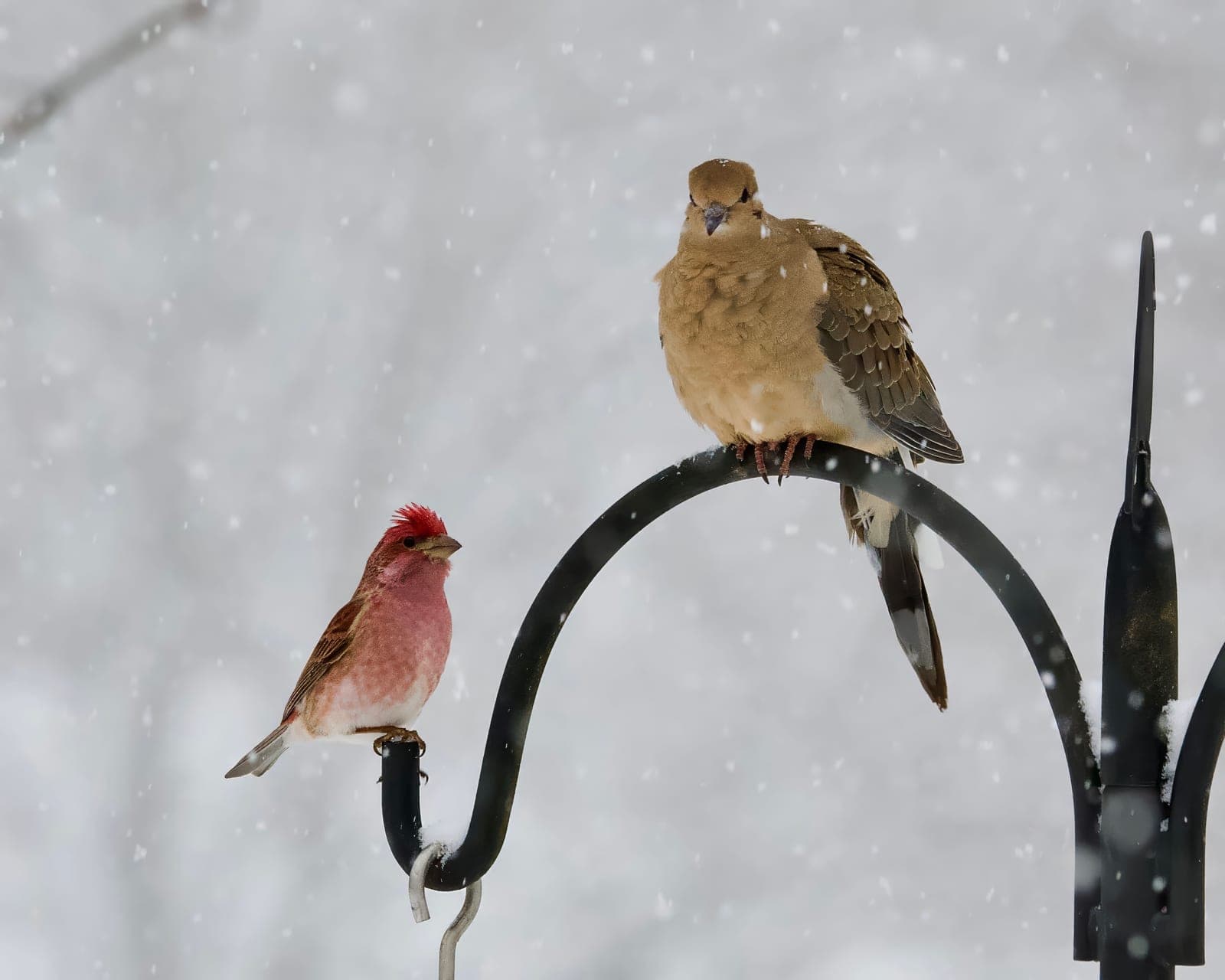
FeederWatch runs November 1 to April 30. You pick two consecutive days, as often as once a week, and record the maximum number of each species visible at the same moment — not the total that visited. It is not free: a participation fee is reported at $18 for US residents, and Canadian participation goes through Birds Canada. You do not need a feeder, which is Cornell's own position, not ours.
Winter Perch is funded by affiliate commission. If you buy through a link on this page we may earn a commission at no extra cost to you, and it never decides a ranking. Full disclosure · how we pick.
Quick picks
Ranked, with the trade-off named. Tap a row for the full write-up; the price button goes straight to Amazon.
| # | Product | Best for | Price |
|---|---|---|---|
| 1 |  Nikon PROSTAFF P3 8x42 BinocularsO-ring sealed and nitrogen purged, which is the spec that matters when you carry glass from a cold yard into a warm kitchen twice a day. | Winter birding, because of the nitrogen purge | $156.95 · See it on Amazon |
| 2 |  Kaufman Field Guide to Birds of North AmericaDigitally edited photographs rather than paintings, in a compact continent-wide book — the easiest of these to use quickly, and the least detailed. | A first guide, and the whole continent in one book | $12.99 · See it on Amazon |
| 3 | 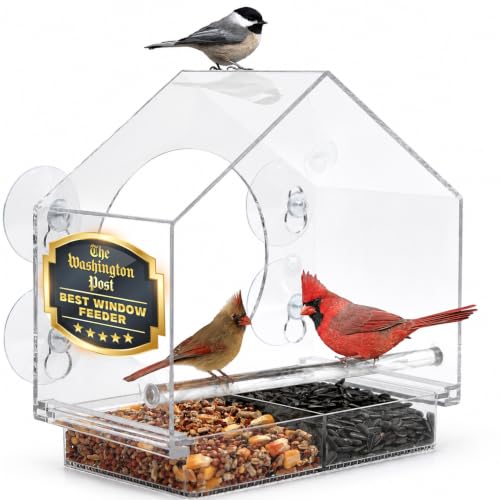 Nature Anywhere Window Bird FeederThe established name in the category, with a sliding seed tray and suction cups that actually hold. Everything else here is judged against it. | The window feeder to buy if you buy one | $29.99 · See it on Amazon |
| 4 |  Kingsyard 15" Metal Tube Feeder, 6 PortsAn all-metal body and ports for under twenty dollars, with one real catch: the perch is sized for small birds and is meant to turn larger ones away. | Metal ports at a plastic-tube price | $18.89 · See it on Amazon |
#ad how we are funded · price as of November 3, 2026
The picks in full
Top pick Winter birding, because of the nitrogen purge
Nikon PROSTAFF P3 8x42 Binoculars
O-ring sealed and nitrogen purged, which is the spec that matters when you carry glass from a cold yard into a warm kitchen twice a day.
Specifications
- Configuration
- 8x42
- Field of view
- 377 ft at 1,000 yd
- Sealing
- O-ring sealed, nitrogen purged
- Body
- Rubber armored
- Eye relief
- Long — works over glasses
Trade-offs
- Nitrogen purging stops internal fogging on the cold-to-warm transition that defines winter birding
- 377 ft of field makes finding a moving bird in bare branches far easier
- 8x is steady in gloved, cold hands where 10x is not
- Long eye relief means it works with spectacles on
- 42 mm objectives are bulky for a coat pocket
- 8x is not enough reach for distant waterfowl
- The rubber armor stiffens noticeably in deep cold
Who it is forThe main pair for backyard and local winter birding.
Skip it ifSkip it if you mostly scan a frozen lake for ducks at range. You want 10x and a tripod, not 8x42.
#ad how we are funded · price as of November 3, 2026
No. 2 A first guide, and the whole continent in one book
Kaufman Field Guide to Birds of North America
Digitally edited photographs rather than paintings, in a compact continent-wide book — the easiest of these to use quickly, and the least detailed.
Specifications
- Coverage
- North America, single volume
- Images
- Digitally edited photographs
- Format
- Compact
- Extras
- Official names, range maps, beginner orientation
Trade-offs
- One book for the whole continent — no east/west decision to get wrong
- Photographs edited for consistency, which avoids the usual photo-guide lighting problem
- Designed around fast identification, with real beginner guidance built in
- Compact enough to actually carry
- Continent-wide coverage means less depth per species than a regional guide
- Fewer winter and immature plumages than Sibley
- Photographs, however well edited, never isolate a field mark as cleanly as a painting
Who it is forA first field guide, or a single book for someone who travels across regions.
Skip it ifSkip it if you bird one region seriously. A regional guide gives you far more of what you will actually encounter, in the same page count.
#ad how we are funded · price as of November 3, 2026
No. 3 The window feeder to buy if you buy one
Nature Anywhere Window Bird Feeder
The established name in the category, with a sliding seed tray and suction cups that actually hold. Everything else here is judged against it.
Specifications
- Mount
- Suction cups
- Tray
- Removable sliding tray
- Body
- Clear acrylic
Trade-offs
- A removable tray is the difference between a feeder you clean and one you abandon
- Suction cups rated for the load, which is the single most common failure in this category
- Clear acrylic puts birds at arm's length from indoors — the best view on this site
- Small enough that seed turns over quickly and does not sit and spoil
- Suction cups lose grip in freezing weather and need re-seating on a warmed, clean pane
- Small capacity, so refills are frequent
- Droppings and seed hulls end up on the glass below it
- No squirrel exclusion at all, and squirrels reach windows more often than people expect
Who it is forApartment and balcony feeding, and anyone who wants birds close enough to see detail.
Skip it ifSkip it if your windows are north-facing and never get above freezing — suction cups and permanent cold do not mix.
#ad how we are funded · price as of November 3, 2026
No. 4 Metal ports at a plastic-tube price
Kingsyard 15" Metal Tube Feeder, 6 Ports
An all-metal body and ports for under twenty dollars, with one real catch: the perch is sized for small birds and is meant to turn larger ones away.
Specifications
- Seed capacity
- Up to 2 lb
- Feeding ports
- 6
- Height
- 15"
- Material
- Metal, anti-rust powder-coated finish
- Ports, lid and base
- Metal, stated chew-resistant
- Perch
- 1.7", stated to suit finches and chickadees and to discourage larger birds
- Seed
- Stated to suit sunflower, safflower, milo, millet, thistle and peanuts
Trade-offs
- Metal ports, lid and base at a price where everything else is plastic
- Six ports and 2 lb is a genuinely usable winter combination
- Powder-coated rather than bare steel, which is what rusts at the ports first
- Takes thistle as well as sunflower, so it covers the finch case without a second feeder
- The 1.7 inch perch is deliberately short — cardinals, jays and grosbeaks are designed out, not accommodated
- No roof or weather guard, and no drainage detail is published
- Kingsyard is an Amazon-native brand with no warranty figure we could find
- Metal conducts, so the ports ice up as readily as anything else here
Who it is forSomeone feeding chickadees, finches and nuthatches who wants the squirrel-chewing problem solved at the port without paying for a mechanism.
Skip it ifSkip it if cardinals are the point of your feeder. The short perch is the design, not a flaw, and no cardinal is going to use it comfortably.
#ad how we are funded · price as of November 3, 2026
Why this page exists
If you have read much of this site you have read a lot of FeederWatch. It is the source behind a large share of what we cite about which birds use which feeders and what turns up in a northern winter. We have leaned on that data constantly and never once mentioned that the data comes from ordinary people counting birds out of their own windows, and that you can be one of them.
This page fixes that. It is not sponsored and we get nothing from it — FeederWatch is run by the Cornell Lab of Ornithology and Birds Canada, and the fee goes to them, not to us.
The counting rule, which is the part people get wrong
This is the single most useful thing on the page, so it goes first. The instinct is to count every bird that visits — a running total through the day. That is not what FeederWatch asks for, and doing it corrupts the data.
What Cornell actually asks for is "the maximum number of individuals visible simultaneously during your two-day count". If you see three chickadees at once in the morning, then five at once in the afternoon, then two the next day, you report five. Not ten, not twenty. You keep "one running tally across both days" so the same bird is never counted twice.
It feels like under-reporting and it is not. It is the only way to count birds that look identical and come and go all day without inventing a population that is not there — which is exactly the kind of discipline that makes the resulting data worth citing.
What the season asks of you
- The season runs November 1 through April 30. That is the window; you do not have to use all of it.
- Pick two consecutive days, and Cornell suggests doing so as often as once a week.
- Leave gaps between counts. The guidance recommends at least five days without counting between each two-day count, so the counts stay independent of each other.
- Counting less often is fine. That is Cornell's own wording, and it matters — this is not a commitment that punishes you for missing a week.
- Count only your own site, the area you are watching from.
What counts and what does not
Count the birds attracted to resources you provide, and Cornell is explicit that this includes birds "even if they don't visit feeders" — the ones working the ground under the feeder, the shrub you planted, the water you keep open. All of that is your site.
Ignore birds that "simply fly over your count site." A flock of geese passing overhead is not using your yard, and reporting it would put birds in the dataset that were never there.
That distinction is why open water and cover count as resources alongside the feeder. A heated bath pulls in birds that would never touch seed, and on a count day they are yours to report.
It is not free, and we are going to say so
Most writing about citizen science skips this. There is an annual participation fee, reported at $18 for US residents and $15 for Cornell Lab members, with Canadian participants taking part by donating to Birds Canada.
One honest caveat on that figure: Cornell's own instructions page does not state a fee at all — it links to a join-and-donate section instead, and older pages carry lower numbers. So treat $18 as the reported rate and check the current price on the join page before you sign up rather than taking it from us.
What the fee covers is published: website and database maintenance, data analysis, participant support, printing and shipping project materials, and getting the findings back out. Whether that is worth it to you is a judgment about supporting the research, not a purchase that gets you a product.
What you actually need
Less than the gear pages on this site might lead you to expect, and we would rather say so than sell you a setup. Cornell's position is plain: "Even if you don't provide feeders, you can still count birds for FeederWatch." All you strictly need is somewhere you like watching birds from, and the patience to sit at it.
That said, three things genuinely make a count easier and more accurate, and they are the three above:
- Binoculars, because the rule is maximum seen *simultaneously* and you cannot count what you cannot identify. A distant sparrow you had to guess at is a data point you should not submit. Which binoculars covers the choice, and 8x against 10x is the decision behind it.
- A field guide, for the same reason. The counting is easy; the identification is the work. Field guides for winter bird ID ranks them.
- Something that brings birds within view, if your window currently looks at an empty yard. A window feeder puts birds a few feet from the glass; a seed feeder on a pole brings in more species at a distance you will need the binoculars for.
You do not need a camera, an app subscription or a smart feeder. A feeder camera is a pleasant thing to own and it is not what this project is asking for — the protocol is built around a person watching, which is the whole point of it.
Is it worth doing?
Honestly: it depends on whether you were going to sit and watch your feeder anyway. If you were, FeederWatch costs you the fee and a little structure, and turns an hour you were already spending into something a researcher can use. That is a good trade.
If you are hoping it will make you a better birder, it probably will, but slowly and as a side effect of being made to identify things properly rather than glancing at them. And if you are not going to sit still at a window for an hour at a time, do not pay the fee — the project needs counts it can rely on more than it needs another lapsed account.
The 2026-27 season is the project's fortieth, which is the real argument for it: a dataset that long is rare, and it only exists because people kept counting.
What we would skip
What we would skip
Counting every bird that visits
The protocol asks for the maximum number of a species visible at one moment across your two-day count, with one running tally so no bird is counted twice. A running total of visits inflates the data and is the most common mistake.
Reporting birds flying over
Cornell says to ignore birds that simply fly over the count site. A passing flock is not using your yard, and including it puts birds in the dataset that were never there.
Submitting an identification you are not sure of
The value of this data is that it is reliable. A bird you could not identify is not a data point to guess at — leave it out, or get close enough with binoculars and a guide to be certain.
Buying a feeder in order to join
Cornell states plainly that you can count without providing feeders. Buy a feeder because you want birds in your yard, not because you think the project requires one.
Paying the fee if you will not sit and watch
This asks for attention more than money. If two consecutive days of real watching is not something you will do, the fee buys you a lapsed account and the project gets nothing usable.
Where it fits
A count is only as good as the yard it is counting. The winter feeding station setup covers putting one together, winter backyard birds covers who is likely to turn up, and winter birding tips covers the watching itself.
Questions people actually ask
- When does Project FeederWatch run?
- November 1 through April 30. Within that window you choose two consecutive count days, as often as once a week, and Cornell recommends leaving at least five days between each two-day count. Counting less often is fine.
- How do you count birds for FeederWatch?
- Record the maximum number of each species visible at the same moment during your two-day count, keeping one running tally across both days. You are not counting total visits — if you see five chickadees at once at the busiest point, you report five.
- Does Project FeederWatch cost money?
- Yes. A participation fee is reported at $18 for US residents and $15 for Cornell Lab members, with Canadians taking part via a donation to Birds Canada. Cornell's instructions page does not state a fee, so check the current rate on the join page.
- Do you need a bird feeder to do FeederWatch?
- No. Cornell states that even if you do not provide feeders you can still count birds for FeederWatch. You count birds attracted to resources you provide — which can be water, cover or plantings — at a site you like watching from.
- What birds do you not count?
- Birds that simply fly over the count site. A flock passing overhead is not using your yard. You do count birds drawn to your site that never touch a feeder.
- What equipment do you need for FeederWatch?
- Strictly, somewhere to watch from. In practice binoculars and a field guide matter most, because the counting is easy and the identification is the work. A camera or smart feeder is not required — the protocol is built around a person watching.
Sources
- Project FeederWatch (Cornell Lab of Ornithology) — Instruction summary: season dates, the two-consecutive-day protocol, the five-day spacing recommendation, the maximum-seen-simultaneously counting rule, what to include and exclude, and the statement that feeders are not required
- Project FeederWatch — Project overview: what the project is, how the data is used, and what the participation fee supports
- Project FeederWatch — Calendar of events, including the 2026-27 season
Read next
- Winter Backyard Birds: Who Shows Up, and What Brings Them
The regular winter feeder cast, what each species eats, and the specific feeder or food that brings each one in.
- The Best Field Guides for Winter Bird ID
Four field guides ranked on plumage coverage — the thing that decides whether a drab January bird is identifiable — and when Merlin beats all of them.
- The Best Binoculars for Winter Birding
Why 8x42 and nitrogen purging are the winter answer, and two pairs worth the money — plus the honest note about our keyword data.
- Winter Birding Tips
Why winter birding is easier than it looks, how to stay out long enough to enjoy it, and where the birds concentrate.
- How to Set Up a Winter Bird Feeding Station
The complete winter station: feeders, water and cover, with the distances and the order to build it in.